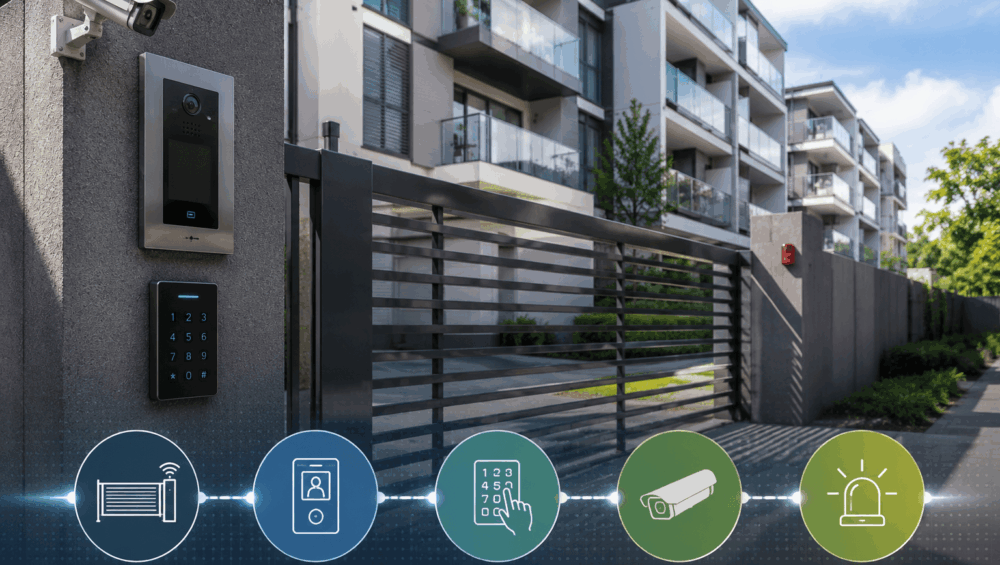
In strata buildings, resident expectations shift, delivery access changes, technologies age, and security risks evolve over time. Meanwhile, many apartment complexes still rely on outdated security systems that no longer match modern access requirements. A well-planned strata security upgrade roadmap helps committees, managers, and contractors make smarter long-term decisions. Rather than replacing systems only after failures occur, a roadmap enables upgrades in manageable stages.
Whether the property is a small apartment block, a gated residential estate, or a mixed-use development, planning security infrastructure can reduce maintenance headaches and support smoother building operations for years to come.
Why Strata Properties Need a Security Upgrade Roadmap
Many strata properties across Australia are operating with ageing infrastructure installed years, even decades, ago. Intercom systems become unreliable, gate motors struggle under constant use, and alarm systems may no longer integrate properly with modern access control technologies. Unfortunately, many buildings react only after systems begin failing regularly.
This reactive approach often leads to inconsistent upgrades, rushed purchasing decisions, and higher long-term maintenance costs. One contractor replaces the gate motor, another upgrades the intercom, while alarm systems remain disconnected from the rest of the property’s security setup. Over time, the building ends up with a patchwork of incompatible technologies.
A structured strata security upgrade roadmap creates clarity around priorities, budgets, and timelines. It allows committees to assess what needs immediate attention and what can be staged over several financial periods. This is important in strata environments where approvals, funding discussions, and resident communication all take time.
Resident expectations are also changing rapidly. People now expect reliable visitor communication, remote gate operation, and better delivery management. Older systems often cannot support these requirements without upgrades or integration planning.
There is also the challenge of balancing security improvements with financial responsibility. Committees may not have the budget to replace every system at once. A roadmap allows for staged investment while ensuring that each upgrade supports future expansion.
For example, many Australian strata committees now refer to guidance from organisations such as Strata Community Association Australasia when reviewing long-term building maintenance and operational planning. Security infrastructure is increasingly part of broader discussions around asset management.
What a Strata Security Upgrade Roadmap Should Cover
A strong strata security roadmap should look beyond a single product replacement. It should evaluate how all entry, communication, and security systems interact across the property.
Key areas often included in a roadmap include:
- Main vehicle gates and pedestrian gates
- Apartment intercom systems
- Access control credentials and resident access methods
- Door automation and electric locking hardware
- Alarm systems and external sirens
- Visitor access and delivery management
- Emergency and after-hours access
- Network and cabling infrastructure
- Integration capability for future technologies
- Ongoing maintenance and monitoring requirements
Each area should be reviewed not only for current performance but also for future suitability. For instance, a gate motor might still operate today, but if spare parts are no longer readily available, it may become a major risk in the near future.
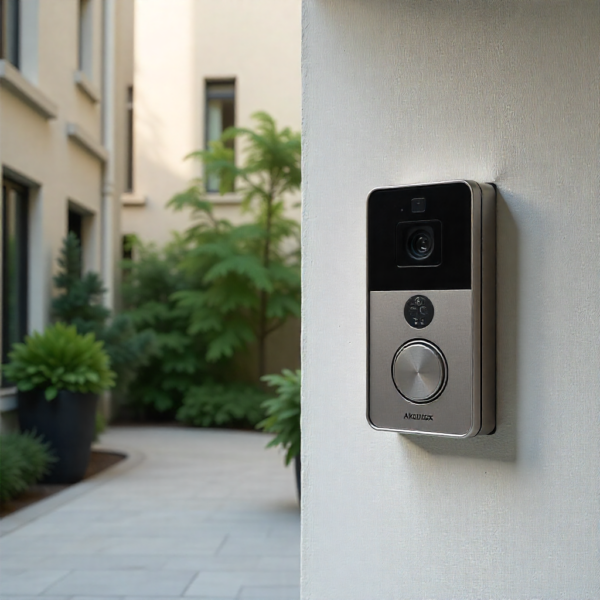
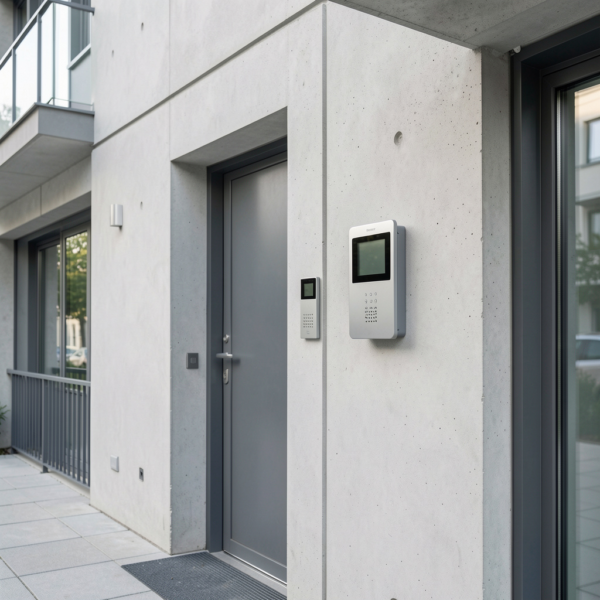
Intercom systems are another common issue. Older analogue setups may struggle with audio quality, resident turnover, or smartphone integration. As apartment living becomes more connected, committees increasingly consider modern apartment entry upgrades that enable remote visitor management and easier resident communication.
Alarm infrastructure also deserves attention. Some strata buildings have standalone alarms that do not properly integrate with gates, cameras, or access control systems. A roadmap helps identify where these systems can work together more effectively.
Gate, Intercom and Alarm Upgrade Roadmaps for Strata Properties
A successful strata security project rarely happens through a single large upgrade. Most apartment buildings benefit from a staged approach. By breaking the process into manageable phases, committees can prioritise urgent risks first while planning smarter improvements for the future. The following strata security upgrade roadmap outlines a practical approach to gates, intercoms, alarms, and access systems.
Step 1: Audit Current Gates, Doors, Intercoms and Alarm Points
Before planning any upgrades, strata committees need a clear understanding of what currently exists onsite. Many buildings operate with incomplete records, undocumented cabling, or outdated maintenance histories.
An initial audit commonly includes checking:
- Gate motor condition and duty cycle performance
- Intercom functionality and resident usability
- Door hardware wear and locking reliability
- Existing alarm coverage areas
- External siren placement and visibility
- Cabling condition and available conduits
- Power supply stability and backup power capability
- Network availability for IP-based systems
- Historical fault reports and recurring service issues
- Resident complaints and operational frustrations
- Security blind spots and unauthorised access points
- Existing maintenance agreements and support arrangements
This audit phase often reveals hidden problems that are not visible during day-to-day building operation. For example, an intercom may appear functional, but poor cabling or ageing power supplies could already be causing intermittent failures.
Resident feedback is also extremely valuable during this stage. Committees frequently discover ongoing frustrations around delivery access, visitor call reliability, or gate delays.
A thorough audit lays the foundation for a more practical strata security upgrade roadmap by prioritising real operational issues over assumptions.
Read more: Intercom Planning For Strata Committees: 7 Key Questions Before You Upgrade
Step 2: Prioritise Risks Before Choosing Products
One of the biggest mistakes strata committees make is selecting products before properly identifying the building’s highest risks. Effective planning should always focus on solving operational and security problems first.
Some buildings struggle primarily with unauthorised pedestrian access. Others may experience constant gate failures, unreliable communication with visitors, or concerns about after-hours intrusion. The right priorities depend entirely on the property’s layout, usage patterns, and resident expectations.
Older apartment buildings often experience tailgating through vehicle gates because existing systems close too slowly or lack proper monitoring. In other cases, intercom call failures become a major issue because residents increasingly rely on remote access management.
Committees should also assess how security incidents affect daily operations. A failed gate motor can disrupt dozens of residents within minutes, while an unreliable intercom may create ongoing frustration every single day.
Rather than focusing solely on product brands or features, the strata security upgrade roadmap should classify risks by urgency and long-term operational cost. Once priorities are clearly defined, selecting suitable technologies becomes far easier.
This staged approach also supports more realistic budgeting. Instead of attempting a full replacement project immediately, committees can first address critical weaknesses while logically planning future phases.
Step 3: Plan Phased Strata Security Improvements
Most strata properties cannot replace every security system at once. That is why successful projects often follow staged implementation plans built around practical priorities and available budgets.
- Phase 1: Immediate Reliability Fixes
The first stage usually focuses on stabilising existing systems. This may include repairing unreliable gate hardware, replacing failed intercom components, improving lighting, or correcting obvious access-control issues.
- Phase 2: Entry Communication Improvements
Once immediate faults are under control, many properties move toward upgrading intercom functionality. This may involve mobile app integration, improved visitor call management, directory modernisation, or improved resident access methods.
These types of apartment entry upgrades often deliver noticeable improvements in resident satisfaction quickly.
- Phase 3: Gate and Door Automation
The next stage typically focuses on automating or modernising gates, pedestrian entries, and access control hardware. This can include higher-duty-cycle gate motors, automatic door operators, improved credential systems, or integrated access readers.
- Phase 4: Alarm and External Siren Upgrades
The alarm infrastructure is then reviewed to improve intrusion response, after-hours protection, and site-wide alerting capabilities. External sirens, detection devices, and monitoring integration are commonly addressed during this phase.
- Phase 5: Integrated Monitoring and Long-Term Maintenance
The final phase often focuses on integrating systems through integrated monitoring and preventive maintenance planning. This may include remote diagnostics, centralised management, scheduled servicing, and ongoing lifecycle planning.
These staged approaches for a strata security upgrade roadmap support more manageable phased strata security improvements while helping committees avoid large one-off financial burdens.
Read more: Ultimate Guide For Creating A Staged Upgrade Plan For Gates Intercoms And Alarms
Matching Upgrade Options to Different Strata Property Types
Not all strata buildings require the same security approach. The right strata security upgrade roadmap depends heavily on property size, infrastructure limitations, resident demographics, and operational complexity.
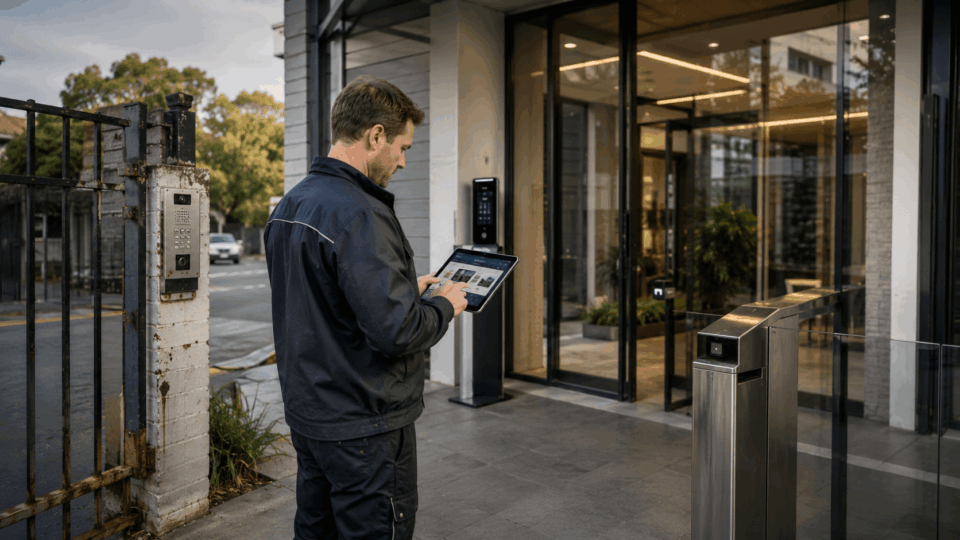
Smaller apartment blocks often prioritise reliable visitor communication and simple access control upgrades. These buildings may not require highly advanced integrations, but still benefit greatly from modern intercom systems and secure gate & door automation.
Mixed-use developments usually need more layered access management because residential, retail, and commercial users all interact differently with the property. Separate access zones, delivery management, and after-hours controls become far more important in these environments.
Older apartment buildings can present unique challenges because of limited cabling pathways or ageing electrical infrastructure. Wireless technologies and retrofit-friendly systems may reduce installation disruption while still improving security functionality.
Gated communities typically focus heavily on perimeter management. Vehicle gates, resident credential systems, and visitor entry workflows often become top priorities due to high traffic volumes.
Premium residential complexes may look beyond basic functionality toward integrated experiences that combine intercoms, mobile access, concierge workflows, and building-wide monitoring into a unified platform.
A tailored strata security roadmap helps ensure that each building type receives practical solutions rather than generic upgrades that fail to address real operational requirements.
Budgeting and Approval Tips for Strata Committees
Budget discussions are often one of the most difficult parts of security upgrade planning. Committees must balance resident expectations, capital works budgets, and long-term building needs while avoiding unnecessary spending.
Clear communication is critical during this process. Residents are far more likely to support upgrades when committees explain the reasons behind staged improvements and demonstrate long-term operational value.
Obtaining multiple quotes is also important, but the cheapest option is not always the best decision. Low-cost systems may create future compatibility limitations, shorter lifespans, or higher maintenance costs over time.
Committees should also document how proposed upgrades reduce future risk. Improved reliability, reduced emergency callouts, easier resident access, and lower maintenance costs can all support stronger approval outcomes.
Staged budgeting is often the most practical approach. Instead of requesting approval for a full-site replacement immediately, committees may secure funding progressively as different roadmap stages are completed.
It is also valuable to involve technical specialists early in the process. Experienced suppliers and integrators can help committees understand which upgrades provide the best long-term scalability and where future compatibility risks may exist.
Read more: Budget Security Upgrades: How To Prioritise Entry, Security And Communication Improvements
Working With Integrators and Suppliers on the Roadmap
Successful strata security planning requires collaboration between committees, building managers, installers, and suppliers. Strong technical guidance helps ensure systems work together properly instead of becoming isolated upgrades.
Digital Home Systems (DHS) supports installers, automation professionals, builders, and property stakeholders across Australia, New Zealand, and the Pacific with practical product advice, integration support, and training.
By working with experienced integrators and distributors, strata projects can better evaluate compatibility, future scalability, and staged upgrade strategies. This becomes especially important when combining gates, intercoms, alarms, access control, and automation technologies into a cohesive long-term plan.
Technical support and product selection guidance also help reduce costly mistakes during rollout stages, particularly in older buildings where retrofit limitations may affect installation methods.

FAQs
What is a strata security upgrade roadmap?
A strata security upgrade roadmap is a staged plan that outlines how gates, intercoms, alarms, and access systems will be improved over time to support better security, budgeting, and long-term building management.
Should strata upgrade gates, intercoms or alarms first?
It depends on the property’s biggest risks. Many committees prioritise addressing systems that cause the most operational disruption first, such as failed gates, unreliable intercom communication, or recurring after-hours access issues.
Can older apartment buildings be upgraded without major rewiring?
Yes. Many modern systems support retrofit-friendly installation methods, including wireless technologies, IP-based upgrades, and hybrid integration approaches that minimise disruption to existing infrastructure.
How can strata committees manage upgrade costs?
Committees often manage costs through staged implementation plans, capital works budgeting, prioritised risk management, and the selection of systems designed for future expansion rather than repeated short-term replacements.
What security upgrades improve resident convenience?
Mobile intercom access, reliable gate automation, remote visitor management, delivery access solutions, and integrated access control systems can significantly improve day-to-day convenience for residents.
Summing Up
A practical strata security upgrade roadmap helps committees move away from reactive spending and toward smarter long-term planning. By assessing existing infrastructure, prioritising operational risks, and carefully staging upgrades, strata properties can improve building reliability without unnecessary disruption. From gates and intercoms to alarms and integrated access systems, every upgrade should support future scalability and smoother building operations.
If your team is planning security improvements for a strata property, contact DHS for expert support, product guidance, technical advice, and access to trusted automation and security solutions designed for modern residential environments.