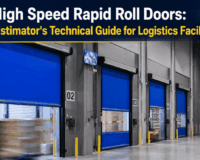
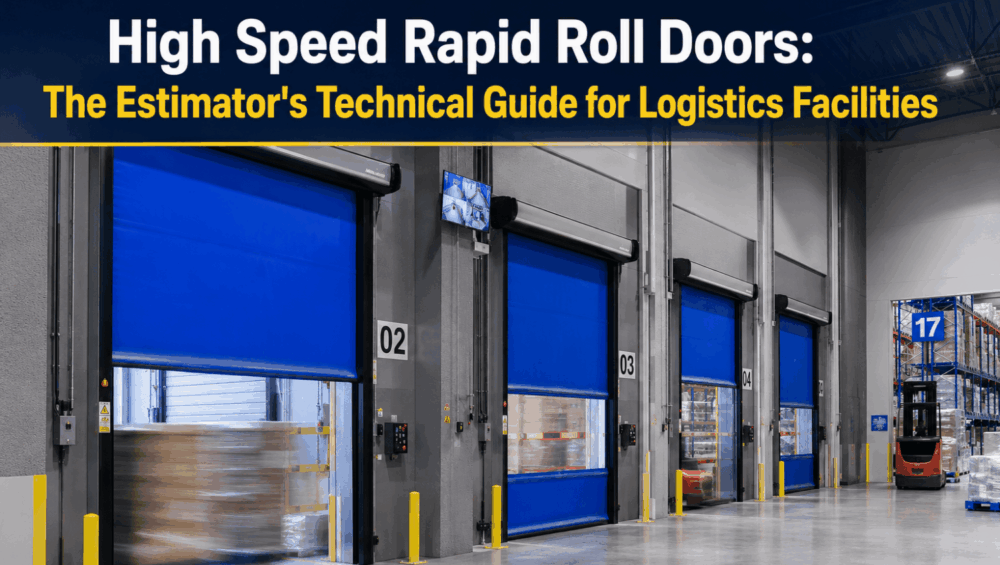
Warehouses, distribution centres, and industrial logistics facilities are often under pressure to move products fast while still required to reduce energy consumption and maintain workplace safety. That’s why high speed rapid roll doors have evolved from optional equipment into essential infrastructure that supports continuous operations.
For estimators and quantity surveyors, specifying high speed rapid roll doors involves far more than measuring an opening. Every technical decision influences project costs and long-term operational performance.
This guide explains the key technical specifications, cost drivers and application requirements estimators should evaluate before preparing a logistics facility equipment schedule.
Takeaways:
- High speed rapid roll doors have become essential in modern logistics facilities because they improve traffic flow, reduce energy loss, enhance workplace safety and support continuous warehouse operations with minimal downtime.
- Evaluating door dimensions, operating speed, traffic volume, environmental conditions, safety systems and motor technology ensures high speed rapid roll doors are correctly specified and accurately priced from the outset.
- Looking beyond the door itself and considering structural work, electrical upgrades, automation integration and installation conditions helps estimators prepare more accurate tenders while reducing costly project variations.
- Matching high speed rapid roll doors to the facility’s operating environment, traffic intensity and environmental requirements delivers better performance, lower maintenance costs and improved long-term operational efficiency.
- Careful review of technical specifications, site conditions and compliance requirements helps estimators avoid common oversights, minimise unexpected costs and produce more reliable, competitive tenders.
Why High Speed Rapid Roll Doors Have Become Standard in Modern Logistics Facilities
Modern logistics facilities are designed around efficiency, with forklifts, automated guided vehicles (AGVs), conveyors and warehouse management systems working to ensure uninterrupted movement between work areas. While conventional industrial doors often become operational bottlenecks in this environment, high-speed rapid roll doors help minimise waiting times while improving environmental control.
Below are several industry trends that have accelerated the adoption of high-speed rapid roll doors in modern logistics facilities:
- Warehouse automation – Automated storage and retrieval systems require doors that can open and close quickly without slowing conveyor or vehicle movements.
- Higher forklift traffic – Busy warehouses may record hundreds of door cycles every day, making rapid operation essential for maintaining productivity.
- Temperature-controlled environments – Cold storage and refrigerated warehouses rely on fast door cycles to reduce warm air infiltration and maintain stable temperatures.
- Reduced air exchange – Faster closing speeds minimise conditioned air loss, helping HVAC systems operate more efficiently.
- Improved energy efficiency – Less air leakage reduces heating and cooling loads, lowering ongoing operating costs.
- Enhanced workplace safety – Modern safety sensors and predictable opening cycles reduce the likelihood of vehicle or pedestrian collisions.
- Faster truck movements – Loading docks process vehicles more efficiently when doors open immediately as trucks arrive.
- Reduced operational downtime – Commercial-grade drive systems are engineered for continuous operation with minimal maintenance interruptions.
As logistics facilities continue to operate around the clock, these operational advantages often justify the higher initial investment through improved productivity and lower lifecycle costs.
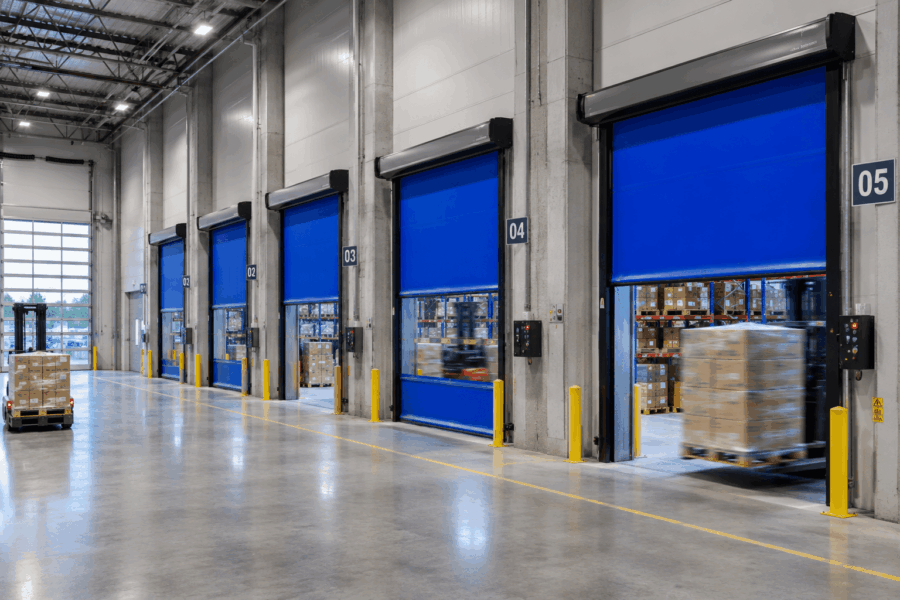
Technical Specifications Estimators Should Review Before Pricing
Preparing an accurate estimate starts with understanding how each technical specification affects the installation process and long-term operating performance. Factors such as operating speed, traffic frequency, environmental conditions and control systems all influence the final equipment cost.
Door Dimensions and Opening Speed
The clear opening width and height directly affect the design of high speed rapid roll doors. Larger openings require stronger guide rails, heavier curtain materials, and higher-capacity motors that can maintain fast operating speeds without sacrificing reliability. In some cases, larger doors may also require additional structural steel to support the increased loads.
Opening speed is equally important. Most logistics facilities specify operating speeds between 1.0 and 2.5 metres per second, allowing forklifts and warehouse vehicles to move efficiently. Faster operating speeds generally require premium drive systems, increasing the overall equipment cost while delivering improved operational efficiency.
Traffic Volume and Wind Resistance
A warehouse processing hundreds of pallet movements each shift places more demands on the operator than a storage facility with occasional vehicle access. High-cycle applications require commercial-grade motors, bearings and control electronics specifically designed for continuous operation, which increases the initial investment.
For external loading docks, wind resistance becomes another major consideration. Wind pressure affects curtain stability, guide rail strength and motor sizing. Doors installed on exposed warehouse facades often require reinforced curtains and additional structural support to ensure safe operation during adverse weather conditions.
Curtain Materials and Drive Systems
Curtain selection depends largely on the operating environment. Standard PVC curtains may be suitable for general warehouse applications, while reinforced curtains offer improved durability in high-traffic areas. Cold storage facilities often require insulated curtain systems to reduce heat transfer, whereas food manufacturing environments may specify food-grade PVC materials.
The motor and drive system also influence both performance and lifecycle costs. Modern high speed rapid roll doors commonly utilise direct-drive systems, servo motors or inverter-controlled operators that provide smooth acceleration, precise positioning and reduced mechanical wear. Although these technologies increase the purchase price, they typically deliver lower maintenance costs over many years of operation.
Safety Systems
Industrial high speed rapid roll doors incorporate several safety devices that protect both personnel and vehicles during operation. Depending on the application, estimators should allow for:
- Presence sensors that automatically detect approaching vehicles or pedestrians before the door opens.
- Light curtains that monitor the full doorway opening and prevent the curtain from closing if an obstruction is detected.
- Bottom safety edges that immediately reverse the door if contact occurs during closing.
- Photoelectric beams providing an additional layer of obstruction detection across the doorway.
The number and type of safety devices required will affect equipment costs, wiring requirements and commissioning time.
Read more: Emergency Guide: What to Do When a Commercial Warehouse Roller Door Jams
Environmental Requirements
The operating environment often determines the final specification of high speed rapid roll doors. For instance, cold rooms require insulated curtains and effective sealing to minimise temperature loss, while food processing plants need hygienic materials that withstand frequent washdowns. Meanwhile, pharmaceutical facilities and cleanrooms demand tighter environmental control, improved sealing performance and reduced airborne contamination.
Each of these environmental requirements influences not only the equipment supplied but also installation methods, commissioning procedures and ongoing maintenance requirements.
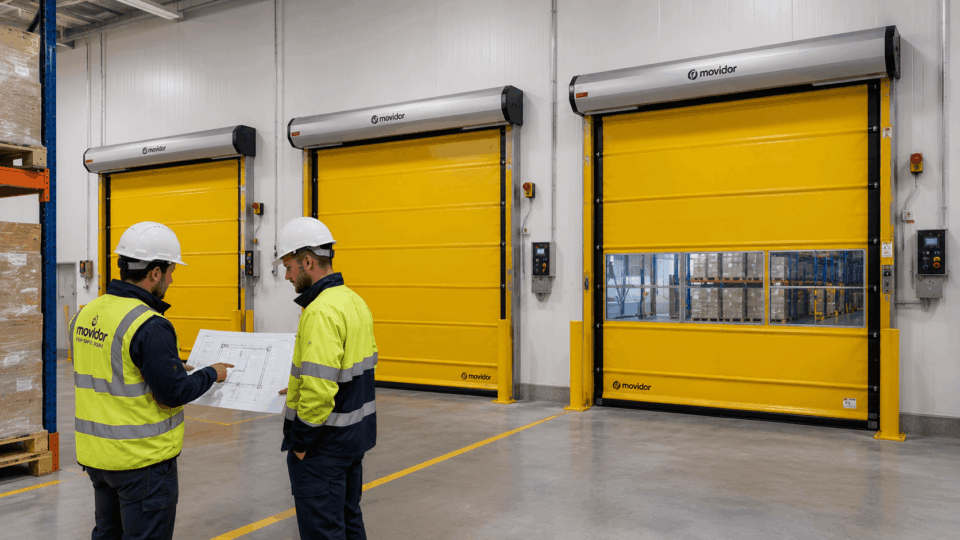
Cost Drivers That Influence High Speed Rapid Roll Door Estimates
Although many tenders begin with door dimensions, experienced estimators know that the total project cost depends on numerous installation and operational factors. Understanding these variables early helps reduce pricing discrepancies and minimises costly contract variations.
- Door size – Larger openings require heavier curtain assemblies, stronger side frames and higher-capacity drive systems. As door dimensions increase, the structural support and lifting forces also increase, making larger doors significantly more expensive than simply scaling up a smaller model.
- Duty cycle – Warehouses operating around the clock require motors and control systems specifically designed for continuous operation. Investing in commercial-grade equipment increases the initial cost but substantially reduces future maintenance and unplanned downtime.
- Internal versus external installation – External doors are exposed to wind, rain and temperature fluctuations, requiring reinforced curtains, improved weather sealing and stronger guide systems. Internal warehouse doors generally have lower environmental demands and therefore lower equipment costs.
- Structural steel requirements – Existing building openings may require additional lintels, support columns or reinforcement before a rapid roll door can be installed safely. These structural works are frequently overlooked during early estimating but can represent a significant portion of the installation budget.
- Electrical infrastructure – Installing new power circuits, switchboard upgrades or long cable runs often adds considerable cost to industrial projects. Electrical requirements should always be confirmed before preparing the final estimate.
- Control and automation systems – Push buttons, radar sensors, induction loops, remote controls and access control integration all expand the project scope. More advanced warehouse automation may also require PLC interfaces or building management system integration, increasing engineering and commissioning costs.
- Installation conditions – Restricted access, elevated work platforms, after-hours installation or operating within a live warehouse environment all increase labour time and project complexity. These site-specific factors should be allowed for during tender preparation rather than treated as unforeseen variations later.
Selecting the Right Rapid Roll Door for Different Logistics Applications
Every logistics facility operates differently, which means the same door specification rarely suits every project. Selecting the most appropriate high speed rapid roll doors requires understanding traffic volumes, environmental conditions and the operational priorities of each application.
- Distribution centres – These facilities typically experience continuous forklift and pallet movement throughout the day. High operating speeds, reliable drive systems and low maintenance requirements are essential to maintain productivity and minimise delays.
- Cross-docking facilities – With trucks arriving and departing throughout the day, doors must withstand frequent opening cycles while maintaining rapid response times. Durable curtain materials and high-duty motors help reduce downtime in these demanding environments.
- Manufacturing plants – Production facilities often separate work zones to improve workflow and environmental control. Rapid roll doors help maintain efficient movement between production areas while reducing dust, noise and temperature transfer.
- Cold storage warehouses – Insulated curtain systems and fast closing speeds reduce warm air infiltration, helping refrigeration equipment maintain stable temperatures and lowering ongoing energy consumption.
- Food processing facilities – Hygiene is a major priority, so doors often feature food-grade curtain materials, corrosion-resistant components and designs that simplify regular cleaning and maintenance.
- Pharmaceutical warehouses and clean production areas – These environments require excellent sealing performance, precise environmental control and reliable operation to minimise airborne contamination while supporting strict quality standards.
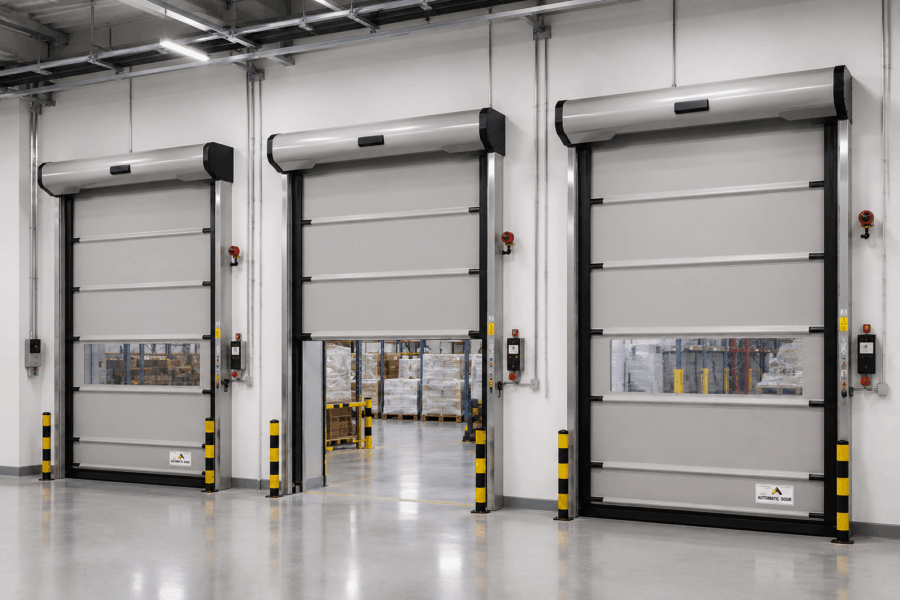
Common Estimating Mistakes That Increase Project Costs
Even experienced estimators can overlook technical details that later result in expensive project variations. Understanding the most common estimating mistakes helps improve tender accuracy and reduce construction risk.
- Pricing only by opening size – Door dimensions provide only a starting point. Traffic volume, environmental conditions and control systems often have a much greater influence on equipment selection and total project cost.
- Ignoring traffic frequency – Selecting equipment designed for occasional use in a high-cycle warehouse can lead to premature component wear, increased maintenance costs and unexpected equipment replacement.
- Underestimating structural works – Existing openings frequently require additional steel framing or reinforcement to safely support the new door system. Allowing for structural modifications early reduces costly variations later.
- Forgetting electrical upgrades – Additional power circuits, isolation switches, control wiring and communications cabling are commonly required but easily overlooked during preliminary pricing.
- Overlooking safety devices – Presence sensors, light curtains and photoelectric beams are often mandatory for industrial applications. Omitting them from the initial estimate usually results in avoidable cost increases during construction.
- Not allowing for commissioning – Programming controllers, testing safety systems and verifying operating performance require specialist labour. Commissioning should always be included as a separate estimating allowance.
- Missing compliance requirements – Industrial doors may need to satisfy Australian safety standards, electrical regulations and workplace safety obligations. Understanding compliance requirements early helps prevent specification changes later.
- Excluding future maintenance considerations – Choosing equipment solely on purchase price can increase servicing costs throughout the door’s lifecycle. Estimators should consider durability, spare parts availability and long-term maintenance when comparing different systems.
Final Thoughts
While selecting high speed rapid roll doors, estimators must balance operational efficiency, safety, environmental performance, durability and lifecycle costs while considering installation complexity and future maintenance requirements. Well-specified high speed rapid roll doors help logistics facilities operate more efficiently, reduce ongoing energy costs and deliver reliable long-term performance.
Looking for expert advice on industrial door automation? Digital Home Systems supplies high-quality high speed rapid roll doors and provides technical guidance to help builders, estimators and warehouse operators specify the right gate and door solution for every logistics project.
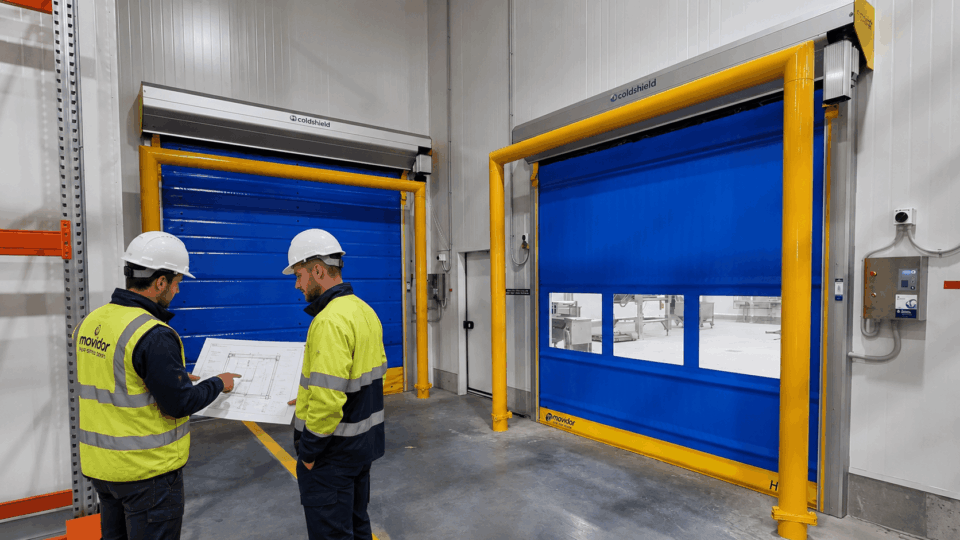
Frequently Asked Questions
What are high speed rapid roll doors?
High speed rapid roll doors are industrial doors that use flexible curtains and high-performance drive systems to provide rapid opening and closing while improving operational efficiency, environmental control and workplace safety.
How fast do rapid roll doors operate?
Most logistics applications operate between 1.0 and 2.5 metres per second, although specialised facilities may specify higher operating speeds.
Are rapid roll doors suitable for cold storage facilities?
Yes. Insulated high speed rapid roll doors are widely used in refrigerated warehouses because they minimise temperature loss and reduce HVAC energy consumption.
Do rapid roll doors improve warehouse energy efficiency?
Yes. Their rapid closing action reduces conditioned air loss, helping heating and cooling systems operate more efficiently while lowering energy costs.
What safety systems are normally included?
Typical systems include presence sensors, light curtains, bottom safety edges and photoelectric beams that protect vehicles, equipment and pedestrians during operation.
Read more: Secure Sliding Gates for Warehouses and Logistics Centres