
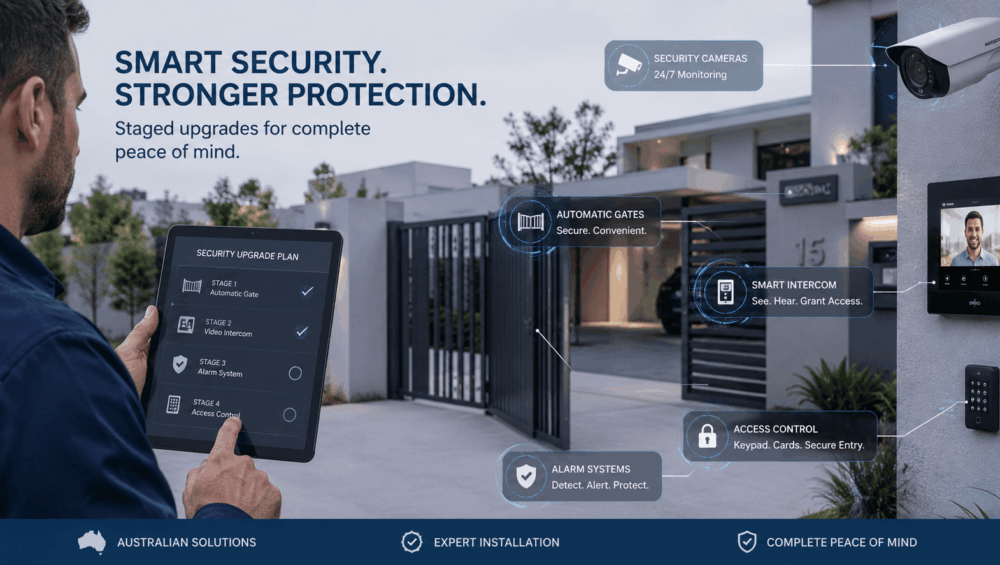
When budgets are tight, it can be difficult to decide which security system upgrades should happen first. Many businesses, strata properties, and commercial facilities face the same challenge: ageing systems, recurring faults, but limited funding to solve everything at once.
The good news is that effective budget security upgrades do not require replacing every system immediately. A staged approach allows you to create a pathway for future expansion without wasting money on short-term fixes. Whether you are managing gates, intercoms, alarms, access control or automation systems, smart planning makes a major difference. Let’s check it out!
Identify the Biggest Operational or Security Weaknesses First
The most effective approach to budget security upgrades starts with identifying the areas that pose the greatest risk or operational disruption today. Too often, businesses replace equipment simply because it is old, rather than because it is causing the most serious problems.
A risk-first assessment helps avoid unnecessary spending and focuses attention on systems that directly affect security and daily operations. In many sites, the biggest problems are not always the most obvious ones. A poorly functioning intercom or unreliable gate motor can create ongoing operational delays.
Common high-priority issues include uncontrolled access points through which visitors or vehicles can enter without proper verification. It is also failing intercom systems that reduce communication reliability, or unsafe manual gates or doors that create accessibility concerns, alarm blind spots that leave vulnerable areas exposed. Also, systems experiencing repeated breakdowns generate ongoing repair expenses.
A staged approach supports smarter phased site improvements, allowing businesses to spread investment over time while still making measurable progress.
Before spending money, it helps to ask a few practical questions:
- What system fails most often?
- Which issue creates the biggest security risk?
- What affects daily operations the most?
- Which upgrade improves both safety and usability?
Answering these questions creates a much clearer roadmap for prioritisation and reduces the likelihood of spending money on low-impact upgrades first.
Read more: Entry System Upgrade Vs Patching Failures: The Ultimate Guide For Smarter Access Reliability
Why Entry Control Usually Delivers the Fastest Value
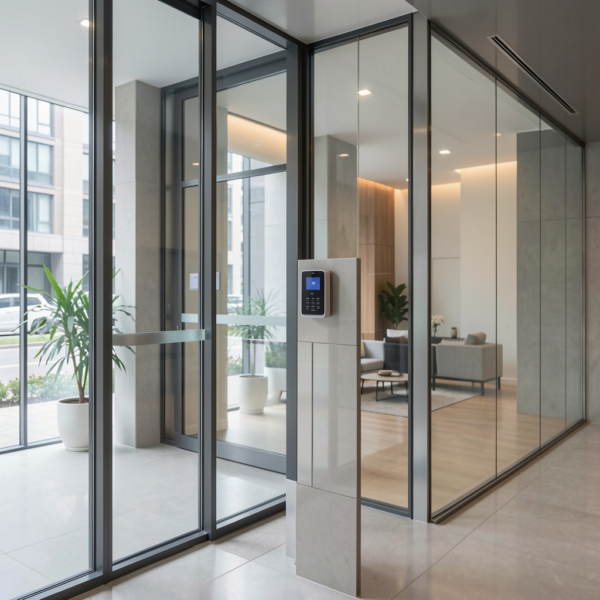
Entry systems affect nearly every person who interacts with a building. Staff, visitors, contractors, residents, deliveries and vehicles all rely on entrances functioning smoothly and securely. That is why entry control upgrades often deliver the strongest immediate return on investment.
Gate and door automation influences daily traffic flow. A single unreliable gate or poorly controlled entrance can create bottlenecks and security vulnerabilities across the entire site.
Improving entry automation also reduces manual handling. Staff no longer need to manually open gates or constantly assist visitors with access. In busy environments, even small operational improvements can save significant time over months and years.
Automatic gates, for example, can simultaneously improve security and vehicle flow. Smart intercom systems reduce missed deliveries and improve visitor management. Modern access control systems simplify permission management and eliminate many of the problems associated with lost keys.
Another major advantage is scalability. Entry systems are often the foundation for wider automation and security integration later. Choosing integration-ready technology early allows future upgrades to connect more smoothly without requiring a complete replacement.
This is especially important for businesses planning gradual upgrades over time. Systems that support future expansion help avoid duplicate installation costs and minimise disruption during later upgrade stages.
For example, a warehouse upgrading vehicle access today may later integrate the same platform with cameras, alarms and mobile credential management. Planning for compatibility from the start protects future budgets.
According to ASIAL (Australian Security Industry Association Limited), integrated security planning can significantly improve operational efficiency while reducing long-term infrastructure costs across commercial environments.
Intercom Systems Are Often the Communication Backbone
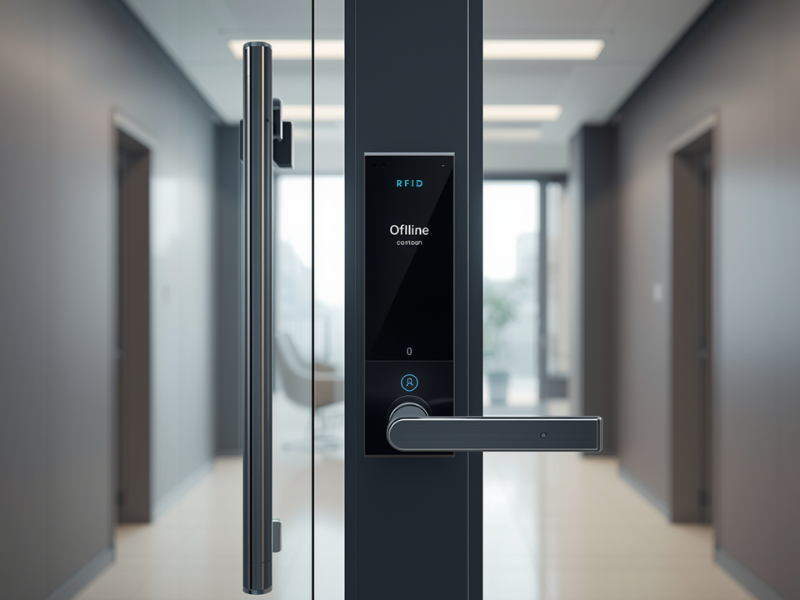
Intercom systems are sometimes overlooked during upgrade planning, but they often sit at the centre of daily site communication and access verification. In many facilities, intercom reliability directly affects security, visitor management and operational efficiency.
This is particularly true in multi-tenant buildings, schools, healthcare environments, supported living facilities and warehouses. In these environments, poor communication creates delays and increased security exposure.
When considering gate intercom alarm priorities, intercom performance should often be given higher priority if communication issues are already affecting operations.
| Situation | Priority Level | Why It Matters |
| Audio failures | High | Security and visitor verification |
| No mobile access | Medium | Convenience limitation |
| No video capability | Medium-High | Visitor identification |
| Legacy wiring issues | High | Reliability and maintenance |
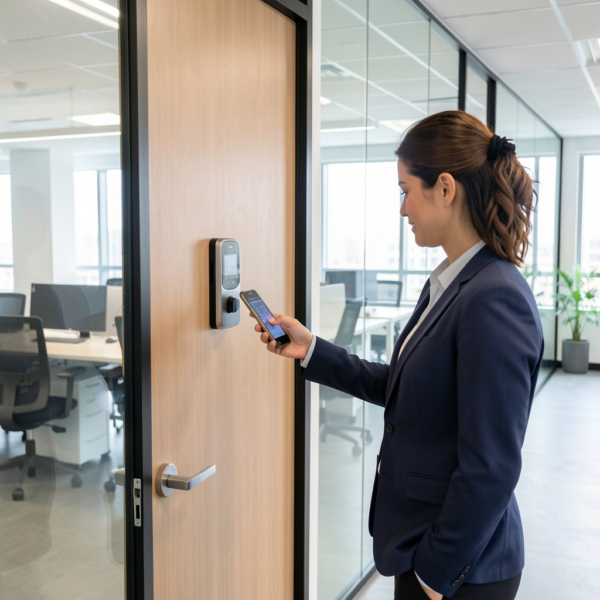
Modern intercom systems also offer important future benefits beyond communication. Many now support mobile apps, remote access, cloud connectivity and integration with wider access control systems.
Choosing integration-ready systems allows intercoms to become part of a broader automation ecosystem later. This reduces future infrastructure duplication and creates more flexibility for ongoing site expansion.
Importantly, prioritising intercom upgrades is not simply about convenience. In many environments, reliable visitor verification directly affects safety, response times and operational control.
Focus on Visibility and Response Before Expanding Coverage
One of the most common mistakes in security planning is attempting to expand coverage before improving visibility and response capability. Large-scale replacements are not always necessary immediately. In many cases, targeted budget security upgrades can deliver stronger outcomes at a lower cost.
For many sites, improving notifications, monitoring visibility, and response speed creates more operational value than simply adding additional devices.
High-impact upgrades often include smarter notifications, mobile monitoring capability, improved sensor placement, entry-linked alarm integration and strategically positioned cameras at critical access points.
Rather than replacing every component immediately, businesses can focus on strengthening the areas where incidents are most likely to occur or where operational blind spots currently exist.
Some practical and cost-effective security wins include:
- Replace outdated control panels
- Upgrade vulnerable access sensors
- Add remote visibility first
- Improve perimeter awareness before adding more devices
This type of staged security strategy supports smarter budgeting while still improving operational awareness and incident response capability.
A focus on practical upgrade sequencing also prevents businesses from overspending on lower-priority features before resolving core vulnerabilities.
How to Plan Phased Site Improvements Without Wasting Money
Effective phased site improvements require structure and long-term thinking. Without a roadmap, staged budget security upgrades can easily become fragmented, incompatible or unnecessarily expensive.
The goal is to create a sequence that improves reliability and security immediately while supporting future scalability.
Step 1: Stabilise Critical Failures
The first priority should always be reliability. Systems experiencing repeated failures create operational disruption and growing security risks.
Addressing unstable gates, failing intercoms, faulty access control hardware or unreliable alarm components reduces ongoing maintenance expenses and creates a stronger foundation for future upgrades.
Step 2: Improve Entry Control
Once critical reliability issues are stabilised, attention can shift toward improving entry management.
This may include upgrading gates, doors, intercoms or access permissions. Entry control improvements often deliver immediate operational benefits because they affect daily movement throughout the site.
Automation and remote access capability can also reduce labour demands and improve overall convenience.
Step 3: Add Smarter Automation and Monitoring
After core access systems are functioning reliably, additional automation and monitoring features can be gradually layered in. This may include mobile apps, remote management, smart notifications, integrated cameras and cloud-based monitoring tools.
Because earlier upgrade stages already established compatible infrastructure, adding these features becomes simpler and more cost-effective.
Step 4: Expand for Long-Term Scalability
The final stage focuses on long-term expansion capability. This may involve adding buildings, supporting more users, integrating broader automation systems, or introducing advanced monitoring and analytics.
Choosing compatible systems early dramatically reduces replacement costs later. This is one reason many installers prioritise retrofit-friendly platforms that support hybrid and wireless integration pathways.
At Digital Home Systems (DHS), we work with a wide range of technologies and brands, helping businesses plan scalable budget security upgrades that support both current needs and future expansion.
Read more: Ultimate Guide For Creating A Staged Upgrade Plan For Gates Intercoms And Alarms
Mistakes That Can Increase Costs Later
Poor upgrade planning often creates unnecessary expenses later. Even small mistakes can lead to duplicate installations, compatibility problems and avoidable replacement costs.
Here are some of the most common issues to avoid during budget security upgrades and phased site improvements:
- Replacing devices without checking compatibility. Upgrading isolated devices without considering future integration can force complete system replacement later.
- Choosing the cheapest hardware only. Low-cost products may reduce upfront spending but often create reliability and maintenance problems over time.
- Ignoring cabling and infrastructure condition. Old wiring and damaged infrastructure can undermine otherwise good equipment upgrades.
- Installing isolated systems with no integration pathway. Disconnected systems reduce scalability and limit future automation capability.
- Delaying upgrades until complete failure. Waiting too long often increases emergency repair costs and operational disruption.
- Over-investing in low-impact features first. Expensive features provide little value if core security or access issues remain unresolved.
Avoiding these mistakes helps ensure staged budget security upgrades remain practical, scalable and financially sustainable.
Future-Proofing Matters Even on a Small Budget
Even modest upgrade projects should consider future compatibility. Technology changes quickly, and systems selected today should still support expansion several years from now.
Open integration ecosystems provide greater flexibility and reduce vendor lock-in. Wireless retrofit options can minimise installation disruption and reduce cabling costs. Hybrid cloud and local systems allow businesses to balance the convenience of remote access with on-site reliability.
Expandable access control platforms also make it easier to add users, buildings or automation features over time.
Technologies such as Z-Wave, KNX and modern Wi-Fi integrations now support increasingly flexible smart access ecosystems that work across residential, commercial and mixed-use environments.
The key advantage of staged budget security upgrades is flexibility. When systems are selected with future integration in mind, businesses can gradually improve functionality without having to start from scratch each time new requirements emerge.
Frequently Asked Questions About Budget Security Upgrades
What security upgrade should I prioritise first on a limited budget?
Start with the area creating the biggest operational or security risk. Entry systems, failing intercoms and unreliable access points often provide the greatest immediate improvement.
Are intercom upgrades worth doing before replacing gates?
Yes, especially when communication failures affect visitor verification, deliveries or site management. Intercom improvements can sometimes resolve operational problems without immediately requiring a full gate replacement.
Can old alarm systems be upgraded instead of replaced?
In many cases, yes. Control panels, sensors and monitoring capability can often be upgraded progressively while retaining parts of the existing infrastructure.
What are phased site improvements?
Phased site improvements involve upgrading systems gradually over time instead of replacing everything at once. This approach helps spread costs while maintaining operational continuity.
How do I avoid replacing systems twice?
Choose integration-ready platforms from the beginning. Compatibility planning reduces future replacement costs and supports smoother long-term expansion.
In Conclusion
Successful budget security upgrades are not about replacing everything immediately. They are about prioritising the systems that create the biggest operational, security and usability challenges first.
Risk-first planning helps reduce wasted spending, minimise disruption and improve long-term scalability. In many environments, entry systems deliver the strongest immediate operational benefits because they affect security, visitor flow and daily usability all at once.
A well-planned staged strategy also protects future budgets by ensuring new systems remain compatible as requirements grow.
If you are planning phased site improvements, upgrading intercoms, gates, alarms, or access control systems, speak with us today to determine retrofit-friendly solutions, scalable automation platforms, and integration-ready security systems designed for your long-term flexibility.

1 Comment
[…] Read more: Budget Security Upgrades: How To Prioritise Entry, Security And Communication Improvements […]