
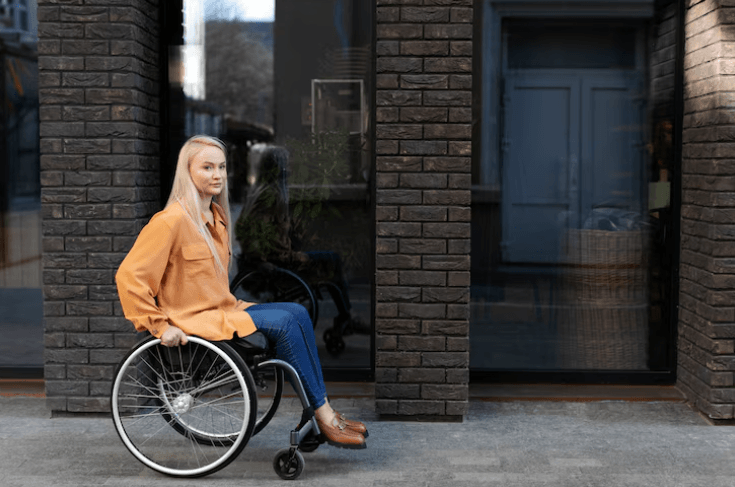
For many Australians living with fatigue conditions and balance challenges, entering and leaving the home is not always simple. Tasks that most people barely think about, such as opening a heavy front door, walking through a gate, carrying groceries, or unlocking an entrance during bad weather, can quickly become exhausting or unsafe.
Creating safer home entry for disability support will help improve safety, reduce fall risks, preserve dignity, and help participants maintain independence in their daily routines. Simple automation upgrades can dramatically reduce physical strain while making homes more accessible and comfortable. With the right accessibility planning, even existing homes can often be upgraded with practical solutions without major renovations.
Why Home Entry Can Become a Daily Safety Risk
Home entry can become really demanding for individuals living with fatigue, instability, or reduced stamina. Every-day entry tasks often involve multiple movements at once – walking, balancing, lifting items, managing locks, navigating thresholds, or operating gates. These small actions can become high-risk moments.
Fatigue Can Turn Simple Entry Tasks Into High-Risk Moments
Conditions involving chronic fatigue, neurological disorders, post-surgical recovery, cancer treatment, muscular weakness, or reduced endurance can make even short periods of physical exertion overwhelming. Repeatedly pushing open heavy doors, walking long driveways, or manually opening gates can increase exhaustion throughout the day.
For many households, creating fatigue friendly home access means reducing unnecessary physical effort at key entry points. Automated systems can help participants conserve energy for more important daily activities while lowering the risk of overexertion.
Balance Challenges Increase Fall Risks at Doorways
Entry areas are transitional spaces where slips, stumbles, and falls commonly occur. Uneven pathways, awkward door swings, poor lighting, and narrow clearances can all increase the likelihood of accidents.
People who use mobility aids or experience delayed movement often need extra time and stability when entering the home. Automatic doors, smoother pathways, and properly designed access areas can significantly improve safer home entry for disability support while reducing physical stress.
Entry Barriers Often Affect Independence and Confidence
Many participants feel frustrated when they need assistance just to enter or leave their own home. Over time, repeated difficulties at entry points can reduce confidence and increase reliance on carers or family members.
Improving safer home entry for disability support helps preserve autonomy and supports a stronger sense of independence. Even small upgrades can make a major difference to daily confidence and comfort.
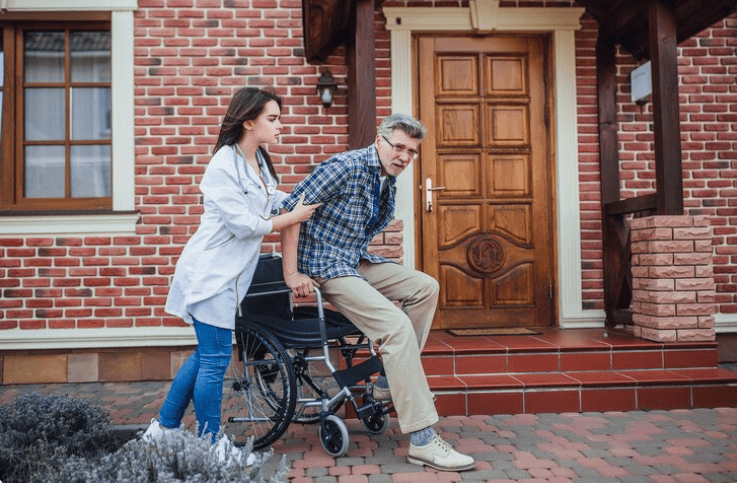
Common Home Entry Problems That Families Overlook
Many accessibility barriers develop gradually and become normalised over time. Families often adapt to these issues without realising the physical strain they place on participants.
Below are some of the most common entry-related challenges often overlooked in residential environments.
- Heavy swing doors. Standard doors can require considerable force to open, particularly for people with fatigue, joint pain, weakness, or limited balance.
- Narrow entry clearances. Tight entryways may restrict movement for users of mobility aids or create awkward turns.
- Manual gates. Walking to open them manually can increase exertion and create unsafe vehicle-to-home transitions.
- Poor lighting near entrances. Inadequate visibility increases trip hazards, especially during evening hours or bad weather.
- Uneven pathways. Cracked paving, steep gradients, loose surfaces, or uneven thresholds can affect balance and mobility.
- Difficult lock mechanisms. Small keys, stiff locks, or complicated handles can become difficult during fatigue episodes.
- Long walking distances from parking areas. Extended walking distances can drain energy before participants even enter the home.
- Weather exposure while unlocking doors. Standing outside while handling locks or gates can increase stress and instability.
Many of these problems appear minor individually, but together they can significantly affect comfort and independence.
Homeowners are increasingly exploring automation systems that reduce physical effort without compromising security or functionality. Retrofitting automated entry systems into existing homes is often more achievable than many families expect.
Read more: Retrofit Apartment Entry Communication In Older Buildings With Limited Cabling
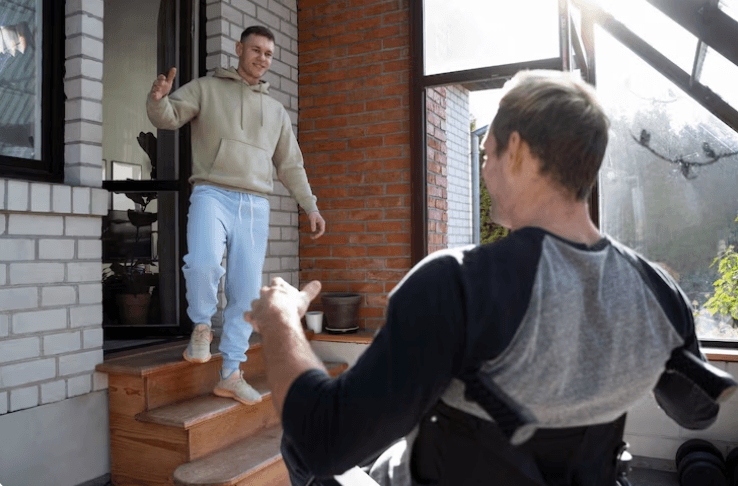
Accessibility Features That Improve Safer Home Entry For Disability Support
Modern automation technology offers practical ways to reduce physical strain while providing safer home entry for disability support. The best solutions will make daily routines smoother, safer, and more manageable.
Automatic Doors That Reduce Physical Strain
Automatic doors are one of the most effective upgrades for reducing physical effort at entry points. They allow participants to enter and exit without the need for forceful pushing or pulling movements.
Hands-free entry systems can be activated using:
- Motion sensors
- Push-button controls
- Wireless remotes
- Smartphone access
- Touch-free activation panels
For people experiencing fatigue, dizziness, reduced balance, or limited strength, automatic doors help minimise awkward movements and reduce the risk of falls. Low-force door systems can also improve access for users of mobility aids while creating smoother transitions through entryways.
Automated Gates for Easier Arrival and Departure
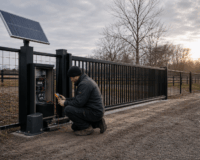
Automated gates improve both convenience and safety by reducing unnecessary walking and physical exertion. Participants can open the gates remotely from a vehicle, smartphone, or an indoor monitor, allowing smoother, safer home entry for disability support.
This is especially valuable for participants who:
- Experience reduced stamina
- Use mobility aids
- Have difficulty walking long distances
- Struggle with balance on uneven outdoor surfaces
- Need safer vehicle-to-home transitions
Remote-controlled gate systems can also improve security while reducing exposure to rain, heat, or slippery conditions. For properties with difficult layouts, specialised gate systems may be required.
Read more: Loading Area Gates vs Main Entrance Gates: Different Automation Priorities
Smart Access Options That Support Independence
Smart access control systems allow participants and carers to manage entry more flexibly while improving overall independence.
Popular smart access features include:
- Video intercom systems
- Smartphone-controlled access
- Remote unlocking for carers or visitors
- Voice assistant compatibility
- Timed automation schedules
- Cloud-based access management
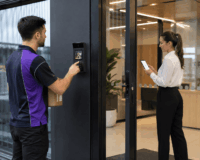
Integrated intercom systems can help participants verify visitors without rushing to the door or physically checking at the entrance. To make a safer home entry for disability support solutions, you can also integrate with broader home automation systems for improved convenience and accessibility.
Safer Entry Design Beyond Automation
While automation plays a major role, good accessibility design also includes practical environmental improvements.
Important design upgrades may include:
- Slip-resistant surfaces
- Wider entry paths
- Handrails for additional support
- Improved lighting
- Covered entrances for weather protection
- Reduced threshold heights
- Clear visibility around gates and doorways
These accessible entrance solutions help create safer, more predictable movement throughout the property.
For participants with instability or reduced mobility, combining automation with physical safety improvements often delivers the best long-term outcomes.

Who Benefits Most From Fatigue-Friendly Home Access Solutions?
Accessibility upgrades can benefit a wide range of people with different physical, neurological, or mobility-related challenges.
| User Group | Common Entry Challenge | Helpful Upgrade |
| Older adults | Reduced stability | Automatic doors |
| Neurological conditions | Fatigue episodes | Remote access systems |
| Mobility aid users | Door handling difficulty | Wider automated entry |
| Supported living participants | Reliance on carers | Smart entry systems |
| Rehabilitation patients | Reduced endurance | Low-effort access solutions |
| People with chronic illness | Energy conservation | Automated gates |
Many participants experience fluctuating symptoms, meaning accessibility needs may change from day to day. During fatigue episodes, even simple entry tasks can become physically draining.
This is why balance support entry upgrades should focus not only on current needs, but also on future flexibility. Systems that are easy to operate and scalable can continue supporting participants as their circumstances evolve.
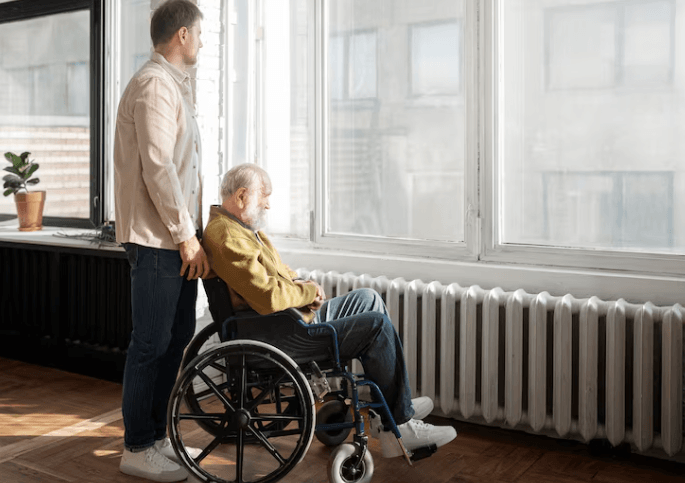
Important Considerations Before Installing Automated Entry Solutions
Before selecting an automation system, it is important to carefully assess both the participant’s needs and the property layout. The right system should improve safety and usability without adding unnecessary complexity.
Safety and Compliance
Automated entry systems should prioritise reliable and safe operation.
Important safety features include:
- Obstacle detection sensors
- Emergency override functionality
- Reliable backup access methods
- Smooth and predictable operation
- Compliance with Australian safety standards
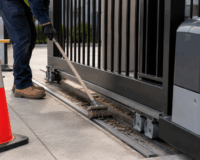
Professional installation is essential to ensure systems function correctly and safely.
Integration With Existing Home Layouts
Not every home is designed with accessibility in mind. However, many systems can still be retrofitted into existing properties.
Key considerations may include:
- Available wall or gate space
- Door swing clearances
- Power supply access
- Existing fencing or gate structures
- Pathway width and gradients
- Vehicle access positioning
Modern retrofit solutions are often more flexible than homeowners expect.
The Australian Government’s accessibility guidance around home modifications and assistive technology can also provide useful information for families planning accessibility improvements: National Disability Insurance Scheme (NDIS)
Ease of Use for Participants and Carers
Accessibility technology should simplify daily life rather than complicate it. The best systems are easy to operate, simple to maintain, flexible, and reliable during daily use.
Remote access management can also help carers support participants more effectively while reducing unnecessary physical assistance.
Questions to Ask Before Choosing a System
Before proceeding with an installation, families and support coordinators should consider:
- Will this system reduce physical strain?
- Can it operate effectively during fatigue episodes?
- Is the system easy to use independently?
- Can carers manage access remotely?
- Is the system future-proof for changing needs?
- Will the upgrade improve overall safety?
Careful planning helps ensure the solution genuinely improves day-to-day accessibility.
Learn more: Cloud-Based Vs Local Access Control: Pros, Cons & Security Differences
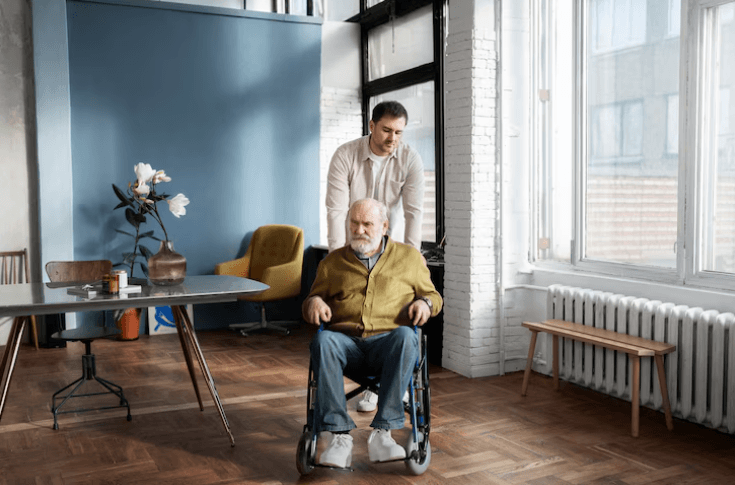
How Entry Automation Supports Independent Living Goals
For many participants, accessibility upgrades directly support independence, dignity, and quality of life.
Reducing the physical effort required to enter or leave the home can significantly improve daily confidence. Participants may feel more comfortable managing their own routines without relying on constant assistance.
Creating safer home entry for disability support also helps reduce stress for carers and family members. Automated systems can provide reassurance that participants can move through entry points more safely, particularly during periods of fatigue, instability, or reduced mobility.
Long-term accessibility planning is becoming increasingly important for many Australian households. Rather than waiting until mobility challenges worsen, families are proactively exploring smart upgrades that improve safety early.
Professional accessibility consultations can help identify which solutions will provide the greatest benefit based on individual movement patterns, property layouts, and support needs.
Choosing the Right Accessibility Partner for Entry Upgrades
Choosing the right automation provider is critical when planning safer home entry for disability support. Experience with residential accessibility needs can make a major difference to both system usability and long-term reliability.
When evaluating providers, look for:
- Experience with accessibility-focused automation systems
- Understanding of residential retrofits and existing homes
- Reliable, proven automation products
- Ongoing support and servicing options
- Flexible system customisation
- Knowledge of intercoms, gates, doors, and smart access integration
It is also valuable to work with providers who understand how automation systems can support independent living outcomes rather than simply delivering standard security installations.
Digital Home Systems (DHS) supports a national network of automation professionals across Australia, New Zealand, and the Pacific region. Through trusted automation technologies, training, and installer support, DHS helps make smarter and more accessible entry solutions available for residential and supported living projects.
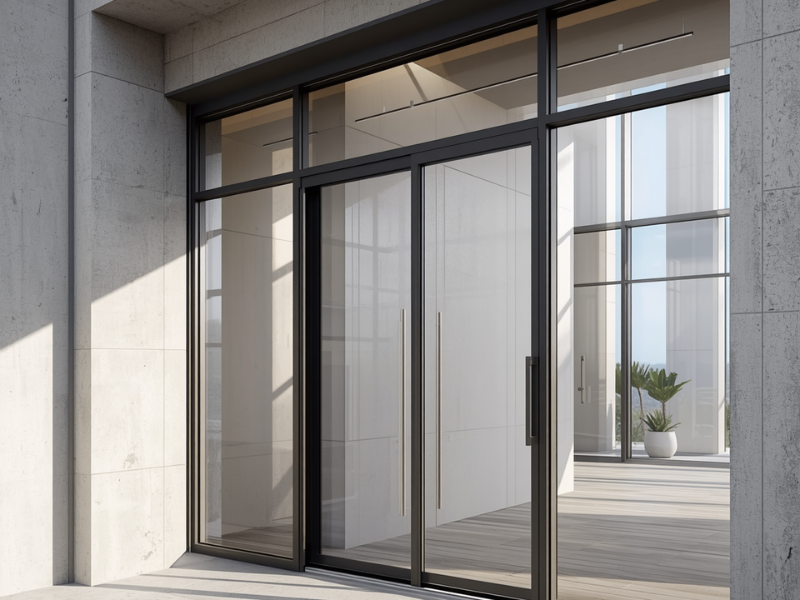
Discover Safer Entry Solutions Designed for Comfort and Confidence
Improving home accessibility starts with identifying the daily challenges that affect comfort, safety, and independence. Whether you are supporting a family member, planning NDIS SDA Communication Systems, or exploring fatigue-friendly access solutions, the right automation systems can make a meaningful difference.
From automatic doors and smart intercoms to remote-controlled gates and integrated access systems, modern accessibility technology can help create safer home entry for disability support while reducing physical strain and improving confidence.
DHS works with trusted automation professionals and installer networks across Australia to support smarter, safer, and more accessible entry solutions. Contact us today to explore tailored entry upgrades designed for comfort, independence, and long-term usability.
FAQ
What are the best entry solutions for safer home entry for disability support?
Automatic doors, remote-controlled gates, smartphone access systems, and low-force entry solutions are all highly effective at reducing physical effort when entering the home.
Can automatic doors help reduce fall risks?
Yes. Automatic doors can reduce awkward pushing and pulling movements that may affect balance or stability, particularly during episodes of fatigue.
Are automated gates suitable for disability support homes?
Automated gates are often an excellent option for disability support homes because they reduce walking distances and improve the safety of vehicle-to-home transitions.
What accessibility upgrades improve home independence?
Smart intercom systems, automated entry systems, improved lighting, wider pathways, slip-resistant surfaces, and remote access technologies can all support greater independence.
Can entry automation be retrofitted into existing homes?
Yes. Many automation systems can be retrofitted into existing homes without requiring major structural changes, depending on the property layout.
1 Comment
[…] Read more: Creating Safer Home Entry For Disability Support | Fatigue-Friendly Access […]