
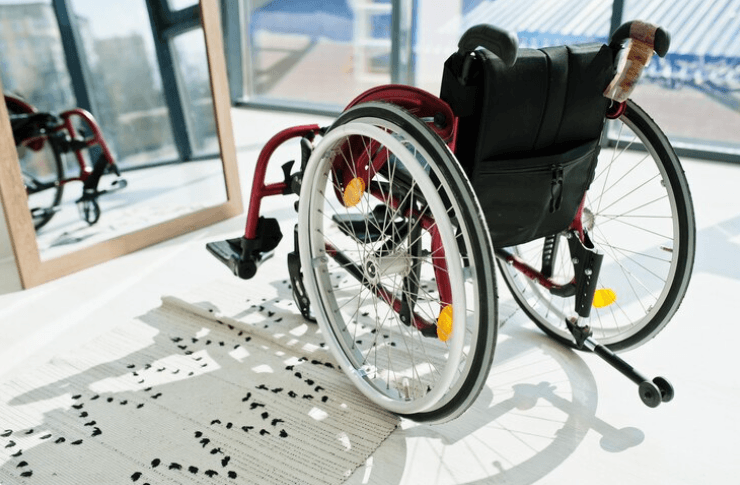
For people who use wheelchairs, walkers, rollators, mobility scooters, or other mobility aids, something as simple as opening a door can become a frustrating daily challenge. In addition, heavy doors and poorly designed entryways can create unnecessary stress. That is why more homes, therapy clinics, and healthcare facilities are investing in automatic doors for mobility aids. These systems are designed to reduce physical strain, improve independence, and create smoother, safer movement for both residents and visitors.
Modern automatic door systems also offer flexible retrofit options, allowing many existing buildings to improve accessibility without major structural changes. At DHS, we help clients across Australia design practical, user-friendly entry systems tailored to real accessibility needs.
Why Standard Doors Can Be Difficult for People Using Mobility Aids
Many people do not realise how challenging standard doors are for people with mobility limitations. The issue is not only about convenience. Difficult doors can reduce confidence, increase the risk of falls, and make daily movement more exhausting than necessary.
Challenges for Wheelchair Users
Wheelchair users often need extra manoeuvring space to approach and open a standard swing door safely. Pulling a heavy door while positioning a wheelchair correctly can be difficult.
Traditional handles may also require awkward reaching or twisting movements. In many cases, users need to reverse their chair, reposition, and try again simply to pass through safely.
For people with reduced upper-body strength or limited dexterity, this can quickly become physically draining.
Difficulties for Walker and Rollator Users
People using walkers or rollators often rely on both hands for balance and support. Opening a heavy door while maintaining stability can increase the risk of slips, trips, or loss of balance.
This challenge becomes even more noticeable in wet weather, on uneven surfaces, or when carrying personal items. Even lightweight residential doors can feel difficult when someone is already concentrating on safe movement.
Accessibility Issues for Carers and Families
Accessibility challenges also affect carers, support workers, and family members.
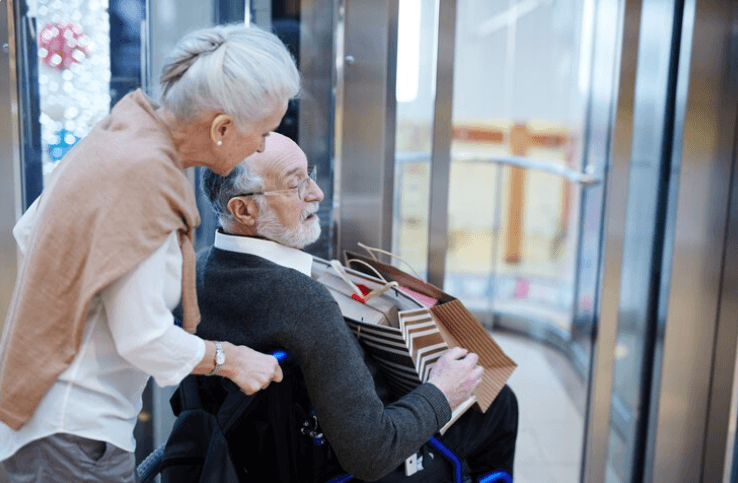
Supporting someone through a doorway while managing wheelchairs, medical equipment, shopping bags, or therapy supplies can be awkward and time-consuming. During appointments or emergencies, delays caused by difficult doorways can add unnecessary stress.
Well-designed independent entry solutions help everyone move more efficiently while supporting safer, more comfortable daily routines.
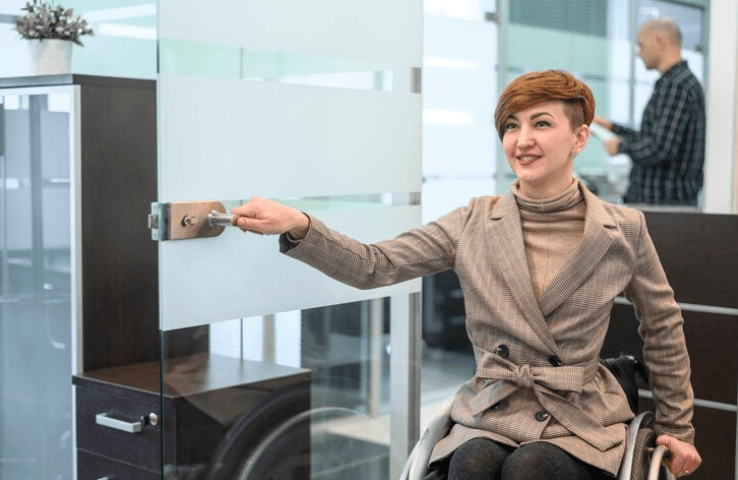
What Are Automatic Doors for Mobility Aids and How Do They Work?
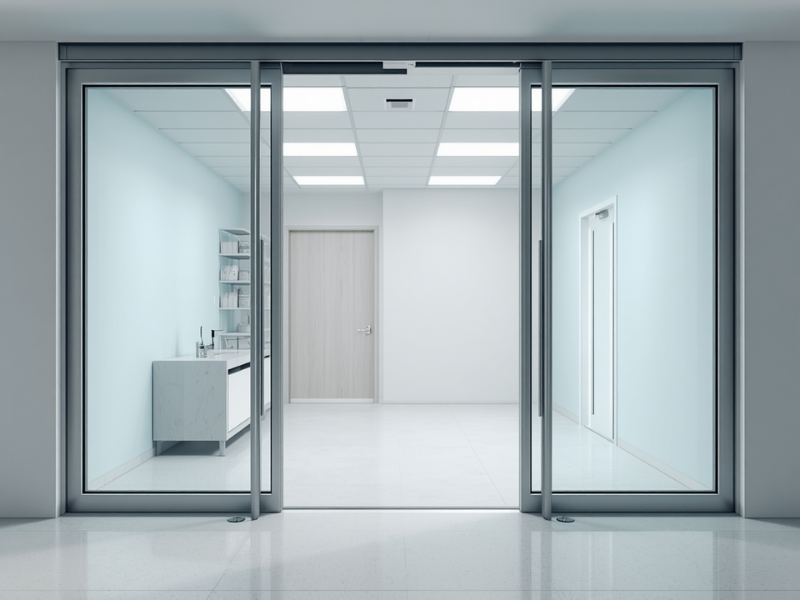
Modern automatic doors are designed to make entry and movement easier for people of all mobility levels. They use powered operators, sensors, and access controls to open and close doors automatically with minimal physical effort.
Today’s systems can be adapted for homes, healthcare facilities, supported accommodation, commercial spaces, and therapy clinics. Depending on the environment, doors can be activated using motion sensors, push buttons, touchless controls, mobile apps, or integrated smart access systems.
The goal of accessible door automation is simple: create smooth, reliable, and safe movement through entrances without requiring physical strain.
Common automatic door options include:
- Swing automatic doors – ideal for many residential and light commercial applications.
- Sliding automatic doors – useful where space is limited or high traffic flow is expected.
- Low-energy door operators – slower-moving systems designed for accessibility and safer controlled movement.
- Touchless access systems – sensor-based activation that reduces physical contact.
- Push-button accessibility controls – simple activation methods positioned for wheelchair-friendly access.
Many systems also include timed opening functions, obstacle detection, and adjustable speeds to improve safety and usability.
For larger accessibility projects, automatic doors can also integrate with intercoms, smart home controls, and access control systems. DHS regularly helps clients combine accessible entry technology with broader automation and security solutions.
Read more: SDA Communication Systems for NDIS Housing: Room-to-Room Communication Systems
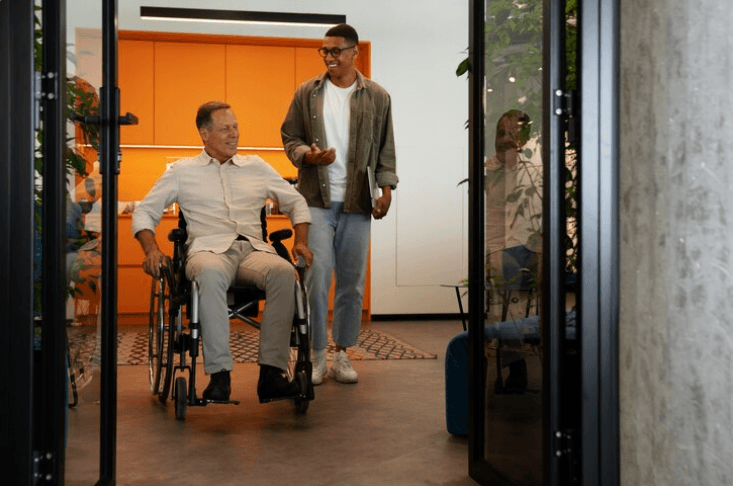
Key Benefits of Automatic Doors for Mobility Aids
When properly designed, automatic doors for mobility aids create smoother movement throughout a property, reduce physical strain, and improve accessibility for everyone.
Greater Independence
One of the biggest advantages of automated entry systems is the ability to move more freely without constantly relying on assistance.
People using wheelchairs, walkers, or mobility scooters can navigate entrances more comfortably and confidently when doors open automatically. This can reduce feelings of frustration and increase overall independence.
For many users, small improvements like automatic doors help restore dignity and autonomy in daily life.
Safer Everyday Movement
Heavy doors can place significant strain on shoulders, wrists, and arms, particularly for wheelchair users or people with limited strength.
By reducing the need to push, pull, or balance during entry, accessible systems help lower the risk of falls and injuries.
Automatic doors for mobility aids also improve the flow of movement in busy areas where people may already be navigating ramps, mobility equipment, or uneven surfaces.
Many modern systems include advanced safety sensors that stop or reverse door movement if an obstruction is detected.
Improved Access for Visitors and Support Workers
Support workers, therapists, nurses, cleaners, delivery drivers, and family visitors all move more efficiently through accessible entrances.
In therapy environments, easier entry can help appointments run more smoothly and reduce stress for clients arriving with mobility equipment.
In supported accommodation and aged care settings, better accessibility also reduces physical strain on staff assisting residents.
Better Accessibility Compliance
Modern accessibility expectations continue to evolve across residential, healthcare, and commercial sectors.
Installing accessible door automation supports inclusive design principles and helps properties become more welcoming to a broader range of users.
For NDIS and SDA projects, accessible entry systems may also contribute to safer, more functional environments that align with participant needs.
The Australian Disability Network highlights that accessible environments improve participation and independence across many areas of life, making accessibility upgrades increasingly important for modern buildings.
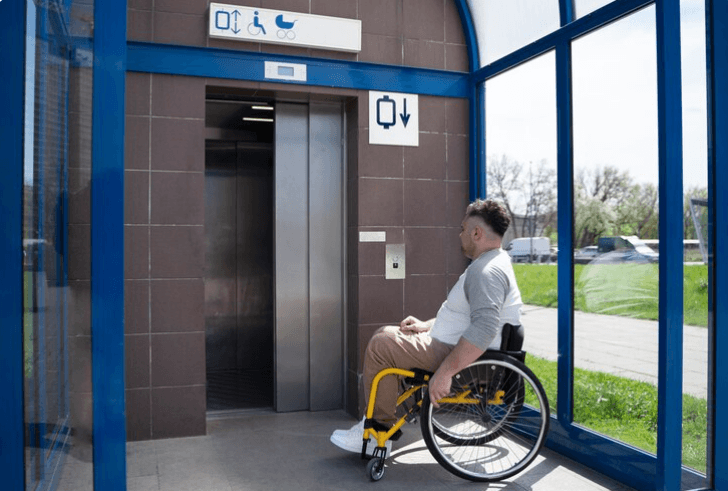
Where Automatic Doors Make the Biggest Difference
Not every property requires a large commercial entrance system. In fact, many homes and care environments benefit from compact, low-energy door automation that quietly improves daily movement.
The right accessibility solution depends on the user’s mobility requirements, the building layout, and how the space is used day to day.
Private Homes
In residential settings, automatic doors for mobility aids can improve movement between key areas of the home.
Common applications include:
- Front entry doors
- Internal garage access doors
- Patio or backyard doors
- Laundry and utility areas
- Home therapy spaces
For example, a homeowner using a walker may struggle to safely carry groceries while opening a heavy garage entry door. A low-energy automatic operator can simplify the process and reduce physical strain every single day.
Automatic doors also help future-proof homes for ageing in place, allowing residents to maintain independence for longer.
Supported Living & SDA Housing
Supported accommodation environments often involve multiple residents, carers, and support workers moving through shared spaces.
Automatic doors help improve access to:
- Shared living areas
- Accessible bathrooms
- Outdoor common spaces
- Therapy rooms
- Main building entrances
For SDA housing providers, accessible door systems can support safer movement while helping residents maintain greater independence.
Many facilities also combine automatic entry systems with intercom systems and smart access controls to improve security and convenience.
Therapy Rooms & Clinics
Therapy centres and healthcare clinics benefit significantly from smoother patient entry experiences.
Clients arriving with wheelchairs, walkers, crutches, or mobility scooters often need additional space and time to navigate entrances safely.
Automated doors reduce congestion at reception areas and help create a more welcoming first impression.
For allied health providers, accessible entry systems can also support compliance goals while improving comfort for both clients and staff.
Read more: Automatic Doors For Allied Health Clinics
Aged Care Environments
Aged care facilities regularly manage residents with varying levels of mobility.
Automatic doors for mobility aids improve safety and reduce physical effort for residents while also assisting staff in transporting wheelchairs, trolleys, meals, and medical equipment.
Quiet low-energy operators are particularly useful in aged care settings where comfort, calm movement, and safety are priorities.
Choosing the Right Accessible Door Automation Solution
Every building has different accessibility requirements. The best solution depends on user mobility levels, available space, traffic flow, environmental conditions, and integration requirements.
DHS works closely with builders, care providers, homeowners, and automation professionals to match the right system to each environment.
| Consideration | Why It Matters |
| Door weight | Heavier doors may require stronger operators |
| Space available | Determines whether swing or sliding systems are more suitable |
| User mobility level | Impacts the best activation method |
| Indoor vs outdoor use | Influences weather protection and durability requirements |
| Traffic volume | Determines residential vs commercial operator suitability |
| Retrofit or new build | Affects installation complexity and wiring requirements |
| Smart integrations | Allows future connection with intercoms or automation systems |
| Backup power needs | Helps maintain access during outages |
Many existing doors can also be retrofitted rather than fully replaced, helping reduce installation costs and disruption.
Wireless controls, touchless activation, and smart home integration are also becoming increasingly popular for both residential and healthcare accessibility upgrades.
Important Accessibility Features to Look For
When selecting a system, it is important to prioritise features that enhance comfort, safety, and ease of use for people who rely on mobility support equipment.
Important features to consider include:
- Touchless activation sensors
- Push-button accessibility controls
- Adjustable opening and closing speeds
- Safety obstacle sensors
- Wide opening clearances
- Quiet operator performance
- Battery backup options
- Smart access integrations
- Remote monitoring capabilities
- Soft-close safety functions
The right combination of features can significantly improve mobility aid access while helping create safer, more user-friendly spaces.
Choosing properly configured accessible automatic doors also helps ensure long-term reliability and smoother day-to-day operation.
Why Professional Installation Matters for Accessibility
Accessibility systems are only effective when they are installed and configured correctly.
Professional installation helps ensure that smart sensors, opening speeds, activation methods, and safety settings are properly adjusted for the people actually using the space.
For example, a sensor placed too high or a door that closes too quickly may create unnecessary challenges for wheelchair or walker users.
Working with experienced specialists also helps ensure compliance with relevant accessibility and safety considerations.
At DHS, we support accessibility-focused projects across residential, healthcare, commercial, and supported living environments. Our team helps clients identify the most suitable door automation systems based on practical user needs, building layouts, and future integration plans.
We also provide guidance on integrating automatic doors for mobility aids with:
- Intercom systems
- Smart home controls
- Access control platforms
- Security systems
- Remote entry management
Whether you are upgrading a private home or designing a larger care environment, professional planning helps deliver safer, more reliable long-term outcomes.
Talk to DHS about designing an automatic door solution tailored to your accessibility needs.
Improving Accessibility Starts at the Door
By reducing physical strain, improving safety, and simplifying entry, automatic doors for mobility aids help create more accessible and welcoming environments across homes and supported accommodation.
The right system does not always require a major commercial installation. Many residential and care environments can benefit from compact, low-energy accessibility upgrades tailored to real-world mobility needs.
If you are planning an accessibility upgrade, retrofitting a care environment, or exploring smarter independent entry solutions, DHS can help you choose a practical system that fits your space and users.
Contact DHS today and explore automatic door solutions designed for safer, more independent living.
Frequently Asked Questions
Are automatic doors for mobility aids suitable for residential homes?
Yes. Many modern systems are specifically designed for homes and smaller residential applications, including retrofit installations.
Can automatic doors work with wheelchairs and walkers?
Absolutely. Modern systems are commonly used to improve accessibility for wheelchair users, walker users, and people with limited mobility.
What is the best type of automatic door for mobility access?
It depends on the available space, traffic flow, and user requirements. Swing operators and sliding systems are both popular accessibility options.
Can existing doors be automated?
In many cases, yes. Existing doors can often be retrofitted with low-energy automatic operators without replacing the entire doorway.
Are automatic doors safe for elderly users?
Yes. Properly configured systems include safety sensors, controlled opening speeds, and obstacle detection features to improve safety.
3 Comments
[…] Read more: Automatic Doors For Mobility Aids | Safer & Easier Accessible Entry Solutions […]
[…] Read more: Automatic Doors For Mobility Aids | Safer & Easier Accessible Entry Solutions […]
[…] Read more: Automatic Doors For Mobility Aids | Safer & Easier Accessible Entry Solutions […]