
Safety devices are among the most important components in any automated door system, and the effectiveness of anti-crush protection depends heavily on proper automatic door safety edge adjustment.
Safety edges are designed to detect obstructions and immediately stop or reverse door movement when contact occurs. When correctly calibrated, they help protect users from injury and reduce liability risks. However, incorrect adjustment can create a range of problems, from nuisance triggering to delayed response times that compromise safety.
For installers, understanding how to perform accurate automatic door safety edge adjustment is an essential part of commissioning and maintenance. This guide explains how safety edges function and the correct adjustment procedure that helps maintain reliable anti-crush protection throughout the life of the door system.
Understanding How Safety Edges Meet Anti-Crush Requirements
Automatic doors generate significant force during opening and closing cycles. Without appropriate safety measures, users can become trapped between moving doors and surrounding structures. This is why safety edges remain a critical component of modern automatic door installations.
What Is a Safety Edge?
A safety edge is a pressure-sensitive device mounted along the leading edge of a moving door. When contact is made with an obstacle, the safety edge sends a signal to the controller, instructing the operator to stop or reverse the movement.
Several technologies are commonly used across automatic door systems, including resistive edges, monitored safety edges, optical systems, and wireless safety edge solutions. The objective is reliable obstacle detection before excessive crushing force develops.
Why Anti-Crush Protection Matters
Automatic doors are frequently used in commercial buildings, industrial facilities, apartment complexes, and public access environments. During closing cycles, users may unexpectedly enter the doorway, deliveries may obstruct the opening, or objects may be left in the path of travel.
Without properly functioning anti-crush protection, the risk of injury and property damage increases significantly. Installers play a critical role in ensuring safety devices perform as intended during every operational cycle.
Relevant Australian Compliance Considerations
Australian automatic door installations are expected to minimise crushing hazards and provide appropriate safety protection throughout normal operation. While specific compliance requirements vary by door type and application, manufacturers provide detailed programming and commissioning guidance that installers must follow.
A successful automatic door safety edge adjustment process involves more than simply changing sensitivity values. Installers must ensure the complete safety system operates correctly, verify performance through testing, and document all commissioning results for future maintenance records.
Related: Automatic Door Safety Requirements in Australia: What Homeowners & Businesses Must Know

Components That Affect Automatic Door Safety Edge Adjustment
Several interconnected components influence how a safety edge responds to an obstruction. Understanding these elements helps installers perform more accurate calibration.
| Component | Function | Impact on Calibration |
| Safety edge profile | Detects contact | Sensitivity range |
| Controller board | Processes signals | Response timing |
| Resistance monitor | Supervises circuit integrity | Fault detection |
| Wireless transmitter (if fitted) | Sends activation signals | Signal reliability |
| Door operator | Executes reversal | Reaction speed |
| End stops and travel limits | Defines movement range | Crush force exposure |
Different manufacturers implement safety edge technologies in different ways. Some systems use hard-wired monitored edges, while others use wireless transmitters to eliminate cabling on moving doors.
Resistive safety edges remain common in many installations, while monitored systems provide additional fault-detection capabilities. Some operators integrate safety monitoring directly into the controller, while others utilise external safety modules.
Because these variations affect programming methods and calibration procedures, installers should always review manufacturer documentation before beginning any automatic door safety edge adjustment process.
Automatic Door Safety Edge Adjustment Procedure
Rushing through adjustment settings without inspecting the entire system often leads to recurring faults and unreliable operation. Instead, correct calibration requires a structured commissioning approach.
Reviewing Manufacturer Programming Parameters
Before making any changes, review the manufacturer’s installation manual and programming documentation.
Every operator platform uses different parameter structures, terminology, and adjustment methods. Some systems allow direct sensitivity adjustment, while others use force monitoring, timing parameters, or safety response thresholds.
Understanding the intended operating range helps avoid unnecessary adjustments that may reduce reliability or compromise safety performance.
Inspecting the Safety Edge Before Calibration
A physical inspection should always precede any programming changes. Examine the safety edge profile for signs of wear, cracking, impact damage, compression deformation, or contamination. Check mounting channels for secure attachment and verify the edge moves freely when pressure is applied.
Many adjustment issues originate from mechanical damage rather than incorrect settings. Adjusting parameters cannot compensate for a damaged safety edge.
Verifying Electrical Integrity
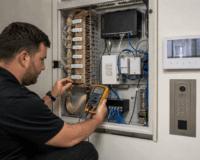
Inspect all wiring connections, resistance monitoring circuits, connectors, and cable routing. Where wireless transmitters are installed, verify battery condition and communication quality.
Use appropriate test equipment to confirm resistance values align with manufacturer specifications. Incorrect resistance readings may trigger controller faults or prevent proper obstacle detection.
Accessing Controller Programming Settings
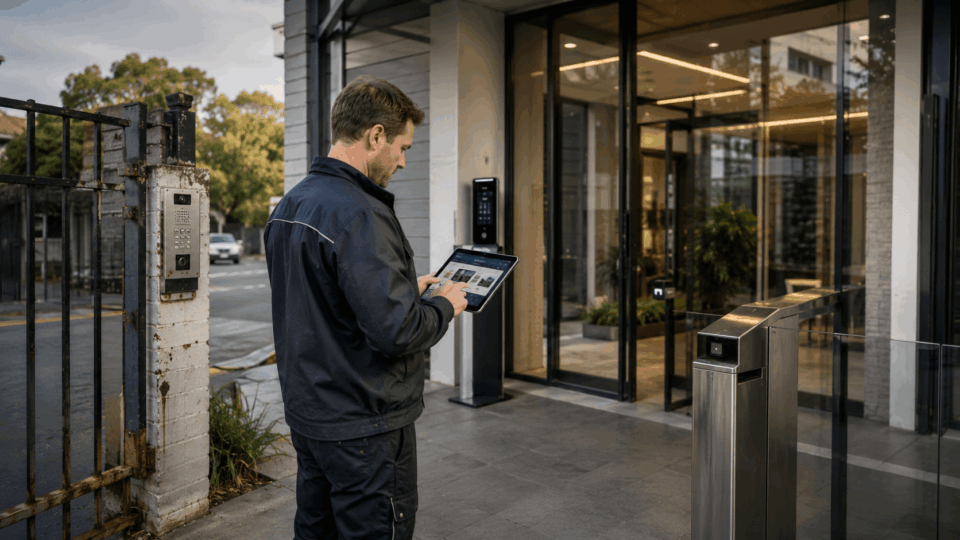
Once the physical inspection is complete, access the operator programming interface. Depending on the manufacturer, this may involve:
- LCD display menus
- Mobile applications
- Configuration software
- DIP switch settings
- Commissioning interfaces
Record existing values before making adjustments. This allows installers to restore previous settings if unexpected behaviour occurs.
Configuring Safety Edge Sensitivity
Excessively sensitive settings often result in nuisance reversals caused by vibration, environmental influences, or minor movement within the door assembly. Insufficient sensitivity may delay activation and reduce anti-crush effectiveness.
The goal of automatic door safety edge adjustment is not maximum sensitivity but reliable detection within manufacturer-approved operating parameters. Adjust sensitivity incrementally and verify results after each change. Small adjustments typically produce more predictable outcomes than large parameter changes.
Testing Door Reversal Response
After configuration changes are completed, conduct comprehensive operational testing. Initiate multiple closing cycles and simulate obstructions at various positions along the safety edge. Confirm that contact immediately triggers the required stop or reversal function.
Testing should be repeated at different door speeds where applicable and under typical operating conditions. Reliable performance must be demonstrated consistently, not just during a single successful test.
Particular attention should be paid to reaction speed. Even when a safety edge activates correctly, a delayed reversal may indicate additional controller, programming, or operator issues that require investigation.
Recording Final Commissioning Settings
Documentation is an essential part of professional installation practice. Record all relevant settings, test results, component specifications, and observations. Include any sensitivity values, fault monitoring parameters, wireless device details, and verification procedures completed during commissioning.
Comprehensive records simplify future maintenance, assist troubleshooting, and demonstrate that proper commissioning procedures were followed. A well-documented automatic door safety edge adjustment process also provides valuable reference information when servicing the system years later.
Related: How to Set Up Safety Beams for Sliding Door Systems
Common Calibration Problems and How to Troubleshoot Them
Even correctly installed systems occasionally experience faults. Understanding common causes can significantly reduce diagnostic time.
| Problem | Likely Cause | Corrective Action |
| Door reverses randomly | Sensitivity too high | Reduce threshold |
| Edge not detected | Wiring fault | Inspect circuit |
| Intermittent faults | Moisture or damaged cable | Replace affected section |
| Controller alarms | Incorrect resistance value | Verify edge specification |
| Delayed reversal | Programming issue | Review response settings |
Sometimes adjustment alone cannot solve the underlying problem. Mechanical issues such as misaligned doors, damaged tracks, excessive operator force, or worn hardware may create abnormal operating conditions that affect safety performance.
Similarly, damaged safety edges, failed controllers, defective transmitters, or communication faults often require component replacement rather than recalibration.
When troubleshooting, installers should always investigate the entire system rather than assuming calibration settings are the sole cause of the problem.
Commissioning Tests Installers Should Perform Before Handover
Final commissioning verifies that the complete safety system operates reliably under normal operating conditions.
Functional testing should include multiple activation cycles to confirm a consistent safety edge response. Installers should test both opening and closing operations, verify obstruction detection at multiple positions, and confirm correct reversal behaviour following activation.
Power interruption and restoration testing should also be performed to ensure the operator resumes safe operation after electrical supply interruptions. Any integrated safety monitoring functions should be verified to confirm fault detection operates correctly.
Finally, calibration settings should be recorded, test outcomes logged, and commissioning records completed before handover. A properly documented automatic door safety edge adjustment procedure provides confidence for both installers and clients while supporting future maintenance activities.
Preventive Maintenance to Keep Safety Edge Performance Consistent
Routine inspections should be scheduled according to manufacturer recommendations and site usage levels. High-cycle commercial doors often require more frequent inspections than low-traffic applications.
Cleaning safety edge surfaces helps prevent contamination from affecting operation. Installers should also inspect cables, connectors, wireless devices, mounting channels, and resistance monitoring circuits during maintenance visits.
Environmental conditions can influence performance over time. Moisture, dust, temperature fluctuations, and physical impacts may gradually affect reliability.
Periodic automatic door safety edge adjustment reviews should be performed whenever significant repairs, controller replacements, operator upgrades, or safety component changes occur.
If repeated adjustments become necessary, replacement may be more appropriate than continual recalibration. Persistent faults often indicate ageing components approaching the end of their service life.
Related: Automatic Door Operators for Busy Entrances: What Specifiers Should Check
FAQs
How often should automatic door safety edges be adjusted?
Adjustment is typically required only during commissioning, after major repairs, during component replacement, or when operational testing identifies performance issues. Routine inspections should verify correct operation even when recalibration is unnecessary.
What causes false triggering after calibration?
Common causes include excessive sensitivity settings, damaged cables, moisture ingress, electrical interference, worn safety edges, or wireless communication issues.
Can safety edge sensitivity be set to maximum for better protection?
No. Excessive sensitivity often causes nuisance trips and unreliable operation. Calibration should always follow manufacturer specifications and operational testing requirements.
How do wireless safety edges differ during adjustment?
Wireless systems require additional verification of signal quality, transmitter operation, battery condition, and communication reliability, in addition to standard sensitivity checks.
What should installers record after commissioning?
Installers should document calibration settings, test results, component details, fault monitoring verification, commissioning dates, and client handover information.
In Conclusion
Correct automatic door safety edge adjustment plays a vital role in achieving reliable anti-crush protection, maintaining safe operation, and supporting long-term system performance. While calibration settings are important, successful commissioning also depends on proper inspection, electrical verification, operational testing, and documentation.
Installers who follow a structured automatic door safety edge adjustment process can significantly reduce nuisance faults. Also, thorough commissioning records simplify future servicing and demonstrate professional installation practices.
As technologies continue to evolve, manufacturer-specific programming requirements remain essential. Always follow approved documentation, conduct comprehensive testing, and maintain accurate records to ensure every automatic door system delivers the performance clients expect.
DHS Automatic Door Safety Solutions
Looking for reliable automatic door safety components, monitored safety edges, door operators, access control integration, and installer support? DHS supplies professional-grade automatic door automation solutions backed by expert technical guidance, product training, and ongoing support across Australia and New Zealand.
Contact us today to explore industry-proven automatic door safety systems that help you deliver compliant, reliable, and professionally commissioned installations every time.
Related: Fire-Rated Automatic Doors: How They Work & When You Need Them