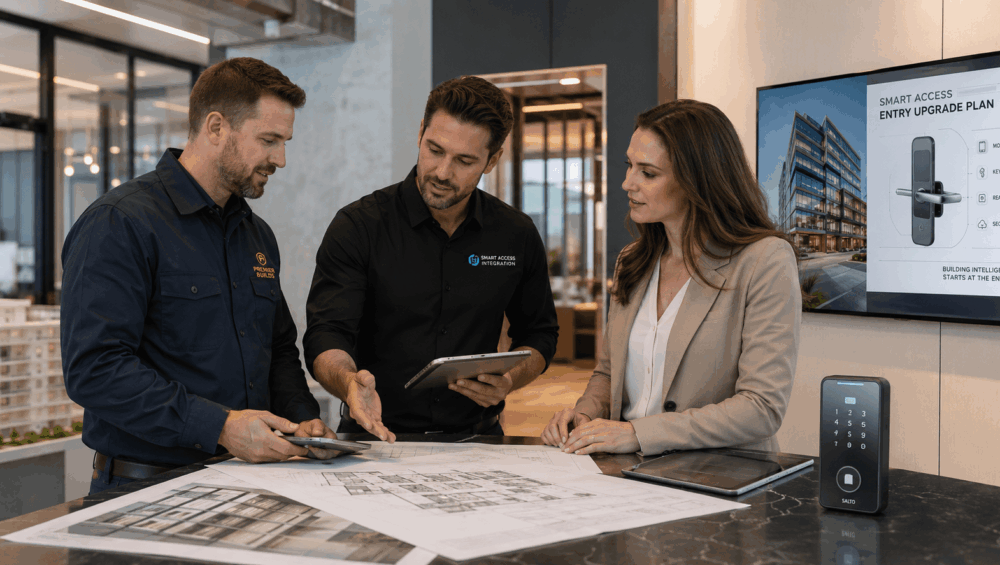
In entry upgrade projects, builders may prioritise deadlines, owners may focus on appearance and usability, while integrators concentrate on infrastructure and long-term performance. Problems begin when communication breaks down between the people involved, and even a straightforward automation upgrade can quickly become stressful.
Across residential homes, multi-unit developments, commercial buildings, and retrofit projects, successful outcomes depend heavily on how well entry upgrade stakeholders coordinate before work begins. Strong project coordination automation planning helps avoid confusion.
Whether the upgrade involves intercoms, automatic doors, gate automation, or integrated access control, early planning creates smoother installations and a far better experience for everyone involved.
Why Entry Upgrade Projects Often Become Difficult Midway
Many entry upgrade projects begin with good intentions but become complicated once construction is already underway. In most cases, the issue is not faulty hardware. The real challenge is that different stakeholders often assume completely different project outcomes.
Builders typically focus on construction schedules, trade sequencing, and keeping the project moving efficiently. Property owners usually care most about convenience, appearance, and ease of use. Integrators, meanwhile, focus on infrastructure reliability, future scalability, and system compatibility.
When these priorities are not discussed early, misunderstandings emerge quickly.
This is common during access upgrade planning for retrofit environments where the existing infrastructure is unknown until walls or ceilings are opened. Cabling routes may not support new devices. Network requirements may not have been considered. Power availability can be overlooked until installation day.
Another major issue is late decision-making. Some owners postpone choosing hardware until construction is nearly complete. As a result, mounting locations, conduits, or power requirements were never planned properly. And, trades may need to revisit completed work, creating delays and extra costs.
Responsibilities also become unclear when communication is fragmented. Who is approving hardware selections? Who coordinates electricians and network installers? Who signs off on testing and commissioning? Without clear ownership, projects stall while stakeholders wait for decisions from someone else.
Entry systems affect multiple trades and user experiences simultaneously. Early collaboration between builders, owners, and technology specialists significantly reduces the risk of expensive rework later.

The Main Entry Upgrade Stakeholders Involved
Every upgrade project involves several people with different responsibilities. Understanding how entry upgrade stakeholders view the project helps prevent confusion and unrealistic expectations later.
| Stakeholder | Main Priority | Common Risks |
| Property Owner | Budget and usability | Scope misunderstandings |
| Builder | Timeline and trade coordination | Late variations |
| Integrator | System performance | Missing infrastructure |
| Electrician | Power and wiring | Incomplete documentation |
| Security Consultant | Compliance and coverage | Integration gaps |
While these roles may appear straightforward, problems occur when conversations happen separately rather than collaboratively. For example, a builder may approve wall finishes before the integrator confirms cable requirements. An owner may select a premium intercom system without understanding the network infrastructure required to support it.
This is why aligning entry upgrade stakeholders early is critical. One missing conversation can impact the entire rollout. A delayed decision about access credentials may affect electricians, security installers, and software configuration simultaneously.
Retrofit environments introduce additional complexity because existing systems may not be documented accurately. Integrators often discover hidden limitations only after installation begins. In these situations, proactive communication becomes even more important.
Projects that succeed typically involve regular collaboration between all parties rather than isolated decision-making. When builders, owners, and automation specialists share information early, upgrades become far easier to manage.
What Should Be Agreed Before Any Upgrade Work Begins
Before any physical work begins, entry upgrade stakeholders should agree on the practical experience the upgraded entry system is expected to deliver. This helps reduce assumptions that later create delays or costly changes.
Important discussions should include:
- Desired entry experience: Clarify how residents, staff, visitors, and contractors will interact with the system daily.
- User access methods: Decide whether access will use PIN codes, cards, mobile apps, remotes, biometrics, or a combination of these.
- Visitor communication workflows: Determine how visitors contact occupants and how calls are answered remotely.
- Remote access requirements: Confirm whether owners want remote unlocking, notifications, or cloud-based management.
- Delivery and courier handling: Discuss how parcel deliveries, trades, or temporary visitors will safely gain access.
- Security escalation process: Identify what occurs during alarms, forced-entry attempts, or system failures.
- Integration expectations: Confirm whether gates, intercoms, CCTV, alarms, and automation platforms must work together.
- Budget limitations: Establish realistic allowances for infrastructure, labour, and future expansion.
- Timeline milestones: Coordinate upgrade stages with other construction activities to minimise disruption.
- Future scalability: Plan for additional users, buildings, or upgraded technology later.
Poor assumptions frequently create avoidable setbacks. For example, owners may assume mobile access is automatically included, while integrators may assume the network infrastructure already exists on-site. Without clearly documenting decisions, misunderstandings surface late in the project.
Strong project coordination automation processes ensure everyone works from the same expectations throughout the installation.
Read more: Entry System Upgrade Vs Patching Failures: The Ultimate Guide For Smarter Access Reliability

How Builders and Integrators Can Coordinate More Effectively
Effective collaboration between builders and integrators can dramatically improve upgrade outcomes. Communication does not need to be overly technical, but it does need to be consistent and proactive.
Hold Early Site Walkthroughs Together
Early walkthroughs allow all entry upgrade stakeholders to identify potential issues before work begins. Builders can explain construction timelines, while integrators assess mounting locations, power availability, and cable paths.
This process often uncovers hidden challenges that would otherwise appear later during installation. In retrofit projects, early inspections are especially important because existing infrastructure may not match current documentation.
Share Scope Documents Across Trades
One of the biggest causes of project confusion is fragmented documentation. Builders, electricians, and integrators may all work from separate plans with conflicting assumptions.
Centralising scope documents helps everyone understand:
- Device locations
- Infrastructure responsibilities
- Cabling pathways
- Power requirements
- Network expectations
- Access workflows
Clear documentation reduces duplicated work and prevents trades from unintentionally interfering with each other’s installations.
Confirm Infrastructure Before Finishes Begin
Infrastructure verification should happen before walls, ceilings, and finishes are completed. This includes confirming:
- Network availability
- Power supply locations
- Internet connectivity
- Conduit capacity
- Mounting clearances
- Weather protection requirements
Failing to confirm these details early often results in expensive rework later.
For example, if a video intercom requires Power over Ethernet but only standard cabling was installed, additional work may be needed after the finishes are complete.
Industry resources such as Standards Australia can also help stakeholders understand broader infrastructure and compliance considerations during planning.
Establish One Point of Communication
Projects run much more smoothly when one person coordinates communication among entry upgrade stakeholders. This central contact helps reduce conflicting instructions and speeds up approvals.
Without a designated communication lead, trades may receive inconsistent directions from multiple parties. Delays increase as entry upgrade stakeholders attempt to clarify responsibilities after work has already started.
A single point of communication improves accountability and keeps projects moving efficiently.
Common Coordination Problems During Retrofit Entry Upgrades
Retrofit projects present unique challenges because existing infrastructure was often never designed for modern automation systems.
One common issue is limited infrastructure capacity. Older buildings may lack sufficient cabling, conduit space, or network availability for advanced entry systems. Integrators frequently discover these limitations only after installation begins.
Another challenge is incomplete documentation. Legacy systems may have been modified multiple times over many years, making it difficult to understand how components are interconnected. This creates uncertainty during upgrades and troubleshooting.
Retrofit projects also become more complicated when residents or staff remain onsite during installation. Access windows may be limited, noise restrictions may apply, and temporary disruptions must be managed.
Multiple contractors attending separately can create further confusion. If electricians, builders, automation specialists, and security providers work independently without coordination, critical tasks may be duplicated or missed.
Hardware incompatibility is another frequent problem. Older gates, intercoms, or access systems may not integrate cleanly with newer technologies. Discovering these limitations late in the project often forces last-minute redesigns.
Several strategies help minimise these risks:
- Conduct detailed pre-upgrade audits
- Use staged rollout planning
- Document existing infrastructure carefully
- Establish escalation procedures early
- Provide temporary access solutions during works
- Coordinate contractors through shared schedules
Read more: Automation Retrofit Mistakes That Create More Support Tickets Later
Questions Owners Should Ask Before Approving an Upgrade
Property owners do not need extensive technical knowledge to make smart decisions about entry upgrades. Asking the right questions early can help avoid confusion and unexpected costs. These discussions also help ensure all entry upgrade stakeholders are aligned before installation begins.
What happens if internet connectivity fails?
Many modern intercoms, gates, and access control systems use internet connectivity for mobile apps, cloud management, and remote notifications. However, owners should confirm whether essential entry functions will still operate locally during an outage. A well-designed system may continue supporting keypads, remotes, cards, or local door release even if remote access features temporarily stop working.
Can the system expand later?
An entry system should ideally support future growth rather than forcing a complete replacement later. Owners should ask whether additional doors, gates, apartments, users, cameras, or automation features can be added over time. Scalability is important in multi-unit developments or staged renovation projects where infrastructure needs may evolve over several years.
Who provides ongoing support?
Support responsibilities should be clearly understood before the project begins. Owners should ask who handles future servicing, software updates, troubleshooting, and emergency callouts. In some projects, the installer manages ongoing support directly, while in others, multiple contractors may be involved.
Will all users need training?
Even highly intuitive systems may require some level of user onboarding. Owners should ask how residents, staff, tenants, or facility managers will learn to operate the system confidently. This may include mobile app setup, credential management, visitor handling, or emergency override procedures.
What maintenance is required?
Automatic doors, gates, intercoms, and access systems require periodic maintenance to remain reliable and safe over time. Owners should ask about recommended service intervals, whether software updates are required, and which components may wear out with regular use. Preventive maintenance planning is an important part of long-term access upgrade planning and helps reduce unexpected breakdowns.
How will deliveries and visitors be managed?
Visitor access workflows should suit the property’s day-to-day reality. Owners should discuss how couriers, contractors, guests, and temporary visitors will communicate with occupants and, when appropriate, gain access. In residential settings, this may involve mobile app notifications or remote unlocking. In commercial environments, visitor verification and after-hours access may require additional planning.
Is there a backup access method?
Every entry system should include a practical fallback option in case of power loss, hardware failure, or communication issues. Owners should ask whether backup batteries, physical keys, emergency release procedures, or offline credentials are included in the design. Reliable contingency planning improves both security and user confidence.

Creating a Smoother Upgrade Experience for Everyone Involved
Successful entry upgrades depend on quality hardware and on people, processes, and technology working together from the beginning.
Clear communication reduces long-term support issues by aligning expectations early. Builders understand infrastructure needs before finishes begin. Integrators gain access to accurate project information. Owners receive systems that match their practical requirements rather than assumptions made during construction.
Good planning also improves user adoption. Entry systems are part of everyday life, so usability matters just as much as technical performance. When workflows are discussed early, systems become easier for residents, staff, visitors, and contractors to use confidently.
Rushing installations rarely improves outcomes. In fact, most avoidable support problems originate from incomplete planning or fragmented communication before installation even starts.
Whether working with intercoms, gate & door automation, or integrated access systems, experienced automation specialists help entry upgrade stakeholders coordinate more effectively across every stage of the project.
Read more: Ultimate Guide For Creating A Staged Upgrade Plan For Gates Intercoms And Alarms
Final Thoughts
Aligning entry upgrade stakeholders early creates smoother installations. Builders, owners, electricians, and integrators all approach projects differently, but successful outcomes happen when communication starts. Strong planning helps avoid rework, reduces support issues, and ensures entry systems meet both practical and technical expectations.
Whether upgrading gates, intercoms, automatic doors, or integrated access systems, early coordination between builders, owners, and automation specialists can significantly improve project outcomes. To discuss smarter upgrade planning, staged rollout strategies, or integrated automation solutions, contact us today to speak with experienced entry and automation specialists.