Automatic sliding gate tracks sit directly across the driveway, collecting leaves, mud, and general site debris throughout the day. Knowing how to clean automatic gate track safely helps maintain reliable access and identify developing problems before they cause a full breakdown.
A blocked track can interrupt opening and closing cycles, place unnecessary strain on the operator and disrupt access. This guide explains what facility teams can safely inspect and remove, how to isolate the work area and when the problem should be referred to a qualified gate automation technician.
Cleaning can remove accessible debris, but it will not correct damaged wheels, alignment problems, electrical faults or structural damage.
Why Automatic Gate Tracks Become Blocked
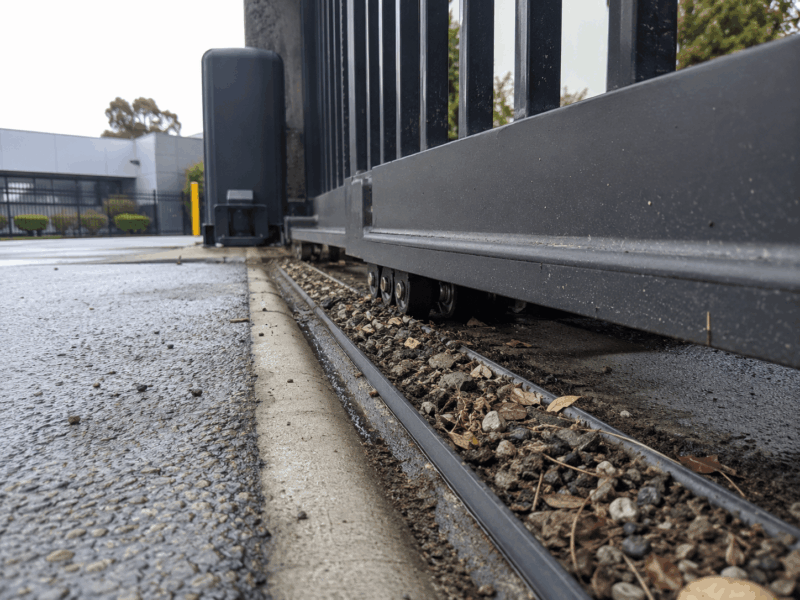
Ground tracks naturally collect material because they sit at driveway level and are constantly exposed to general site activity; small amounts of debris are repeatedly pushed towards the rail.
Specifically, vehicle tyres often displace gravel, sand and dirt onto the track. Wind can carry leaves, twigs, packaging and light construction material across the driveway. During heavy rain, mud and stormwater residue may settle around the rail.
Common obstructions include leaves, garden mulch, small stones, displaced gravel, cable ties, packaging, compacted soil and construction debris. Material may also become lodged near the gate wheels.
Some properties face higher blockage risks than others. Warehouses and loading areas may experience loose wrapping, pallet fragments and packaging material. Landscaped office complexes may have mulch, soil and falling leaves near the entrance. Construction-adjacent sites can be exposed to concrete fragments and temporary cable ties.
A small quantity of loose, readily accessible debris may be suitable for routine staff cleaning. However, if the same material keeps returning, the problem may involve poor drainage or an incorrectly positioned track. In those cases, learning how to clean automatic gate track sections is only part of the solution. The underlying site condition also needs to be addressed.
Prepare the Gate and Work Area Before Cleaning
The most important part of the task happens before anyone touches the track. Maintenance staff must ensure the gate is secure and that vehicles and pedestrians cannot enter the work area.
A person cleaning the rail may be bending down, working close to the gate leaf or concentrating on debris near the wheels. Even slow gate movement can create crushing, trapping and impact hazards.
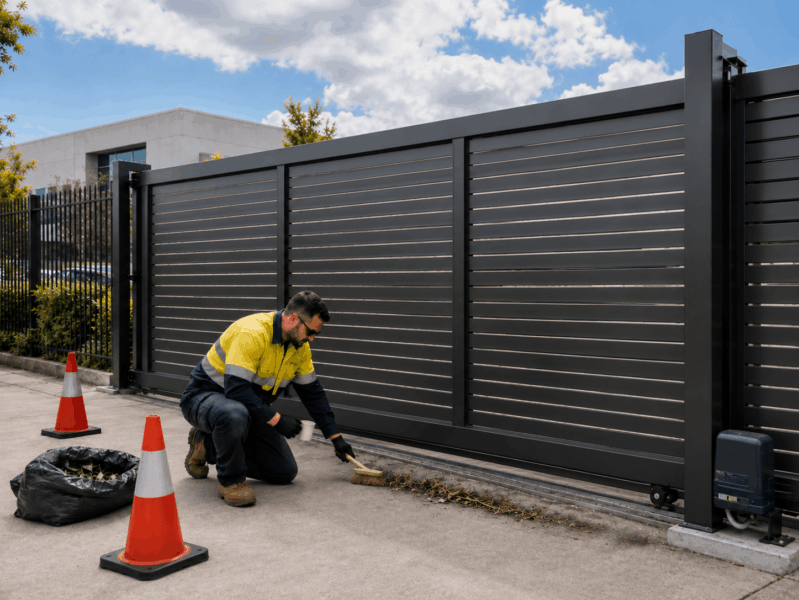
Before cleaning begins, notify reception, security personnel and any affected staff that the entrance will be temporarily unavailable. Cones or temporary barriers should be placed on both sides of the gate to prevent drivers and pedestrians from entering the travel path.
Follow the property’s approved shutdown or isolation procedure. Confirm that the gate cannot be activated by remotes, keypads, intercom release, automatic timers or access-control commands. Where the entrance is used regularly, make sure an alternative access route remains available.
Staff should wear enclosed footwear and gloves. Eye protection may also be appropriate where loose grit, dust or sharp fragments are present.
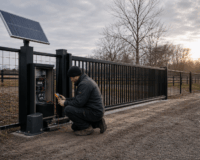
Turning off a nearby wall switch may not fully isolate the system. Some gates include battery backup, solar power, separate control circuits or emergency power arrangements. The system may therefore remain capable of moving even when the main supply appears to be disconnected.
Facility teams should follow the system-specific isolation instructions supplied by the installer or maintenance provider. When those instructions are unavailable, the safer option is to seek professional assistance rather than guessing.
No person should stand, kneel or place tools within the gate’s travel path unless movement has been positively prevented.
Staff should also understand the limits of their role. They must not open control cabinets, disconnect wiring or bypass safety devices simply to stop the gate. Electrical isolation, controller access and safety-circuit work should only be completed by appropriately qualified personnel.
How to Clean Automatic Gate Track Safely
The correct way to clean automatic gate track areas is to remove loose, accessible material without modifying the gate system.
Before starting, confirm that the gate is stable, the entrance is isolated, and the gate cannot receive an activation command.
Step 1: Inspect the Full Track Before Removing Anything
Begin at one end and visually inspect the full length of the gate’s travel path. Look for loose debris, compacted dirt, sharp objects, damaged fasteners or anything trapped near the wheels.
Do not immediately reach into a pile of leaves or mud, as broken glass, screws, sharp metal offcuts, or electrical cable may be hidden underneath. In addition, observe the position of the gate leaf and any visible wheel assemblies. Stop the task if the gate appears to be leaning, unstable or partially off the rail.
Step 2: Remove Loose Surface Debris
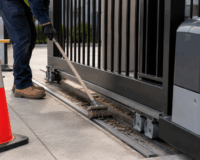
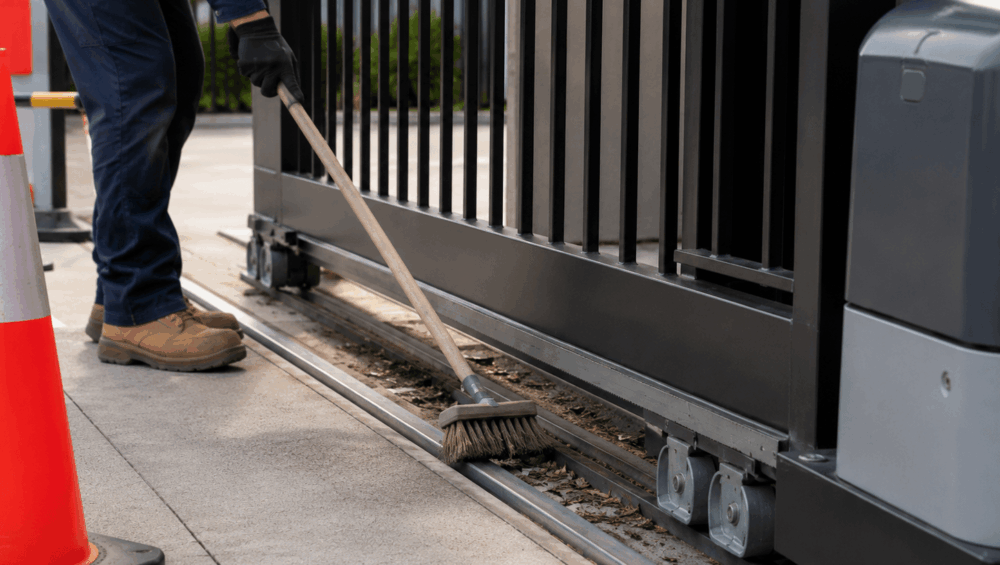
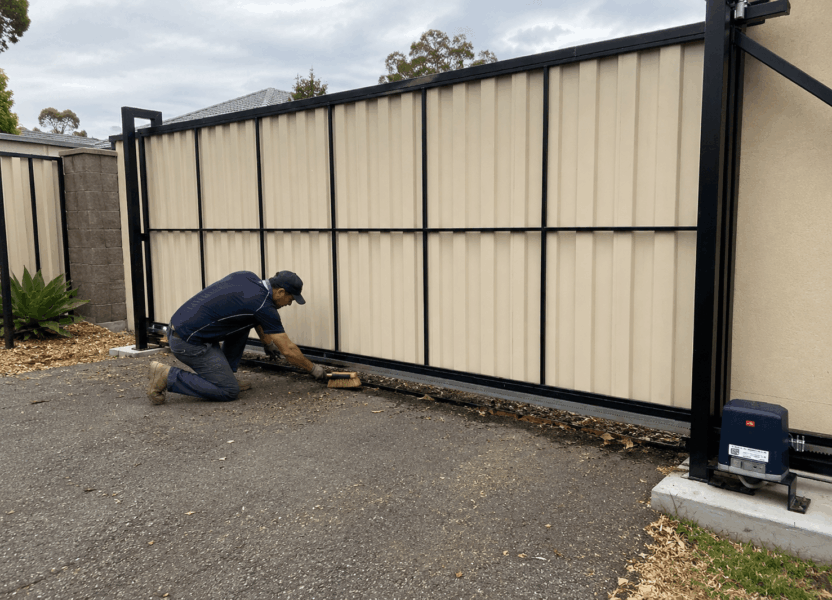
Use a stiff hand brush or narrow broom to move leaves, dust, mulch and loose gravel away from the running surface.
Work away from the wheels rather than pushing debris underneath them. The objective is to clear material from the gate path without placing hands near moving or load-bearing components.
When you clean automatic gate track sections, use simple tools and light pressure. A plastic or wooden hand tool may be used carefully to loosen compacted soil where permitted by the site’s maintenance procedure. Moreover, avoid screwdrivers, chisels and sharp metal scrapers, as they can damage protective coatings or contact nearby wiring and equipment.
Step 3: Clear the Track Edges
Debris often gathers beside the rail rather than directly on top of it. If this material is left in place, passing vehicles or wind can quickly push it back into the wheel path.
Brush dirt and loose material away from both sides of the track. Pay attention to low points, corners and areas where the driveway meets gravel surfaces or landscaped zones.
If the track includes visible drainage openings, carefully remove loose surface obstructions. Do not dismantle grates, open underground drainage components, or dig around the rail.
A drainage point that repeatedly blocks may require assessment by a drainage or civil maintenance contractor.
Step 4: Avoid Flooding the Area
Using a pressure washer may seem like an efficient way to clean automatic gate track surfaces, but it can create additional problems.
High-pressure water can force grit beneath wheels, into bearings or around mechanical components. It may also enter gate motors, junction boxes, cable entries, photocells or access-control equipment located near the driveway.
A hose should also be avoided where water could flow towards electrical equipment or collect around the gate foundation.
For light surface residue, a slightly dampened cloth may be suitable after the loose debris has been removed. The area should not be saturated.
If mud repeatedly forms after rain, the cause may be poor drainage, erosion or landscaping runoff. Continued washing will not correct the source of the problem and may make the ground around the rail less stable.
Step 5: Inspect the Track After Cleaning
Once the accessible material has been removed, inspect the full track again. Look for bent sections, raised fixings, corrosion, cracked concrete or unusual gaps around the rail. Fresh scraping marks may also indicate that the gate is rubbing against the track, guide posts or surrounding structure.
Do not hammer the rail, grind raised sections or tighten unfamiliar fasteners. A seemingly simple repair may affect wheel alignment, gate balance, or safe operation.
In addition, photos taken from a safe position can help the service provider understand the issue before attending the site.
Step 6: Restore Operation From a Safe Position
Before restoring the system, remove brushes, tools, loose debris and temporary equipment from the travel path. Confirm that no person or vehicle remains inside the controlled area.
Restore the gate in accordance with the approved site procedure.
Supervise one full opening and closing cycle from a safe position. The gate should travel consistently without scraping, jumping, shuddering or stopping unexpectedly.
If abnormal movement remains after staff clean automatic gate track sections, do not continue experimenting with the system. Stop using the gate where practical and arrange a professional inspection.
What Facility Staff Should Never Do
Routine maintenance should have clear limits. Facility staff may remove loose and accessible debris when the gate is safely isolated, but they should not dismantle or adjust the automation system.
Staff should never clean the track while the gate remains active, reach under the gate leaf, push a powered gate against motor resistance or remove wheels, guards, covers or motor components.
They should also avoid adjusting limit switches, force settings, photocells or safety devices. These components affect how the gate stops, reverses and responds to obstacles.
General-purpose grease or oil should not be applied directly to the ground track. Lubricant attracts dust, sand and small particles, creating a sticky abrasive residue around the running surface.
The track should generally remain clean rather than coated in grease. Any lubrication of wheels, bearings, hinges, gear racks or internal drive components must follow the manufacturer’s instructions and is usually completed during professional servicing.
Facility staff should not grind, hammer or straighten a damaged rail. They should also never bypass safety edges, photocells or access control inputs to keep the gate operating.
Cleaning is appropriate only when the gate is structurally stable and the obstruction is clearly accessible. Anything requiring component removal, adjustment or force should be referred to a technician.
When a Blocked Track Requires a Gate Technician
Debris may be the most visible part of the fault, but not the actual cause. A gate that stops near a pile of leaves may also have worn wheels, poor alignment, damaged guide rollers or a safety-device problem.
Professional inspection is recommended if the gate continues to stop or reverse after cleaning. Assistance is also required if a wheel climbs or leaves the track, the gate leans during travel or the motor sounds strained.
Scraping against the rail, guide posts, or concrete may indicate alignment or structural damage. Bent, loose or heavily corroded track sections should not be repaired by general maintenance staff.
Cracked or sinking concrete around the rail can change the track level and place uneven loads on the wheels. This may cause the gate to jump, shudder or place additional strain on the operator.
Recurring blockages after rain or landscaping work may indicate poor drainage or site runoff. If the fault involves damaged photocells, access-control commands, or unreliable entry permissions, the technician may also need to review the site’s broader security solutions to ensure the gate, safety devices, and access system continue to work together correctly.
A qualified technician may need to inspect wheel alignment, guide rollers, rack engagement, motor force, track condition, drainage and safety-system performance. Where the problem extends beyond the ground track, integrated gate & door solutions may also be required to address access control, safety devices, automation hardware, and ongoing site reliability as a single, coordinated system.
Repeated attempts to clean automatic gate track areas will not correct an underlying mechanical, electrical, or structural fault.
Read more: The Financial Cost of Facility Downtime: When to Repair vs. Replace Commercial Gates
Frequently Asked Questions
How often should an automatic gate track be cleaned?
There is no single schedule for every property. High-traffic, landscaped, or exposed sites may benefit from weekly visual checks. Other entrances may only need inspection after storms, gardening, construction activity or reports of unusual gate movement.
Can staff use a pressure washer on a gate track?
Pressure washing is generally not recommended. Water can enter electrical equipment, spread grit into moving parts and force debris underneath the wheels. A dry brush and controlled hand cleaning are safer for most routine maintenance tasks.
Should grease be applied to an automatic sliding gate track?
The running surface should generally remain clean and free from general-purpose grease. Lubricant can trap sand, grit and dirt. Any required lubrication should follow the manufacturer’s servicing instructions and be completed by a technician.
Why does the gate still stop after the track has been cleaned?
The cause may be wheel misalignment, a bent rail, motor strain, safety-device activation, rack engagement problems or a controller fault. If cleaning does not restore normal movement, arrange a professional assessment rather than making further adjustments.
Can the gate remain in use when the track is damaged?
Continuing to operate a gate on a damaged track may worsen the rail, wheels or motor and create a safety risk. The entrance should be managed in accordance with the site’s safety procedure, with alternative access provided as required until the system has been inspected.
Final Thoughts
Knowing how to clean automatic gate track areas can help facility teams reduce preventable access interruptions and identify visible defects early. The task should always begin with proper isolation, traffic control and confirmation that the gate cannot move unexpectedly.
Digital Home Systems supports commercial properties with automatic gate equipment, access-control products, safety devices, replacement components and integrated gate and door solutions.
Explore DHS gate & door automation products or speak with our team about suitable motors, photocells, access-control equipment and replacement parts for your commercial entrance.