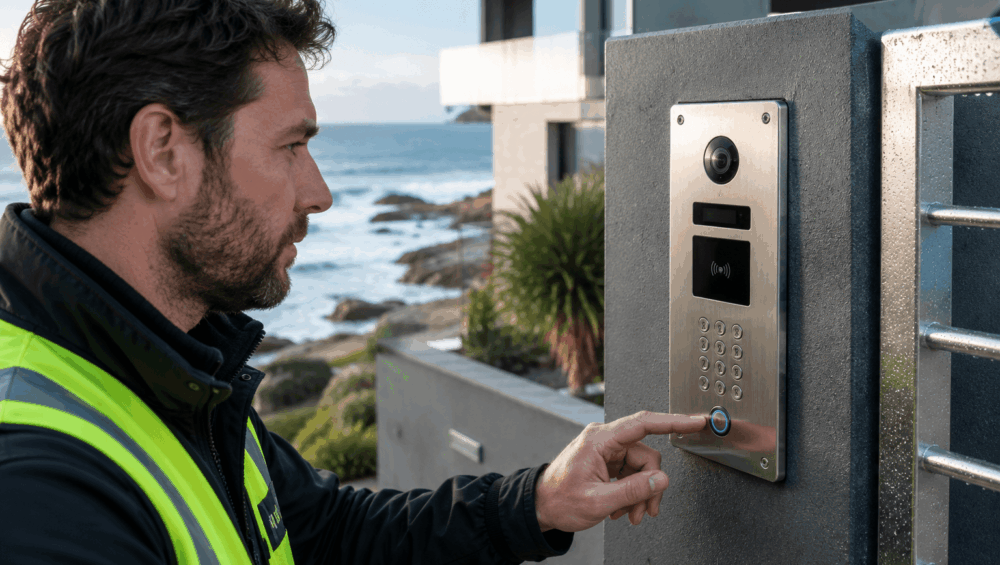
Coastal environments present some of the most challenging operating conditions for access control equipment. Constant exposure to salt-laden air, wind-driven rain, intense UV radiation, humidity, and airborne contaminants can shorten the lifespan of poorly specified intercom systems. For installers, selecting the right equipment is critical to avoiding costly callbacks and premature product failures.
One of the most important considerations is choosing appropriate weatherproof IP rated intercoms that can withstand the environmental demands. However, while IP ratings are an essential part of the specification process, they are only one piece of the puzzle.
This guide explains how to evaluate weatherproof IP rated intercoms for different coastal applications, helping installers deliver long-term reliability and performance.
Why Coastal Locations Are Tough on Intercom Hardware
Coastal installations experience more severe environmental stresses than those in typical suburban environments. Even when an intercom is installed under cover, the surrounding atmosphere can accelerate wear and corrosion.
Salt particles carried by sea breezes settle on exposed surfaces and gradually attack metals, connectors, seals, and electronic components. Unlike simple rain exposure, salt contamination remains active long after surfaces appear dry.
Wind-driven rain presents another challenge. Moisture can be forced into tiny openings and vulnerable points that would otherwise remain protected during normal rainfall. UV radiation can also degrade plastics, rubber seals, and protective coatings over time, reducing their effectiveness.
Humidity and condensation create additional risks. Temperature fluctuations can cause moisture to form inside enclosures, potentially damaging circuit boards and electronic assemblies. These combined environmental factors make coastal projects particularly demanding for installers specifying access control equipment.
Certain components are especially vulnerable in coastal environments:
- Speaker grilles
- Microphone openings
- Call buttons
- Cable entry points
- Mounting hardware
- Faceplate seals
Understanding IP Ratings and What They Actually Mean
When evaluating weatherproof IP rated intercoms, installers should understand that ingress protection ratings measure resistance to specific environmental conditions rather than overall durability.
An IP rating indicates how effectively an enclosure prevents the intrusion of solid particles and water. The rating is based on internationally recognised testing standards and provides a useful benchmark for comparing products, such as the official ingress protection classification system published by the International Electrotechnical Commission (IEC).
Every IP rating consists of two numbers that indicate different types of protection.
- The first digit measures protection against solid particles such as dust, dirt, and debris.
- The second digit measures resistance to water ingress.
The first digit ranges from 0 to 6 and indicates resistance to dust and solid particles. The second digit ranges from 0 to 9 and measures resistance to moisture and water penetration. In general, the higher the number, the greater the level of protection provided by the enclosure.
Common Intercom IP Ratings Explained
Several IP ratings are commonly found on outdoor intercom systems, including:
- IP54 provides basic protection against dust and water splashes and is generally only suitable for sheltered outdoor locations.
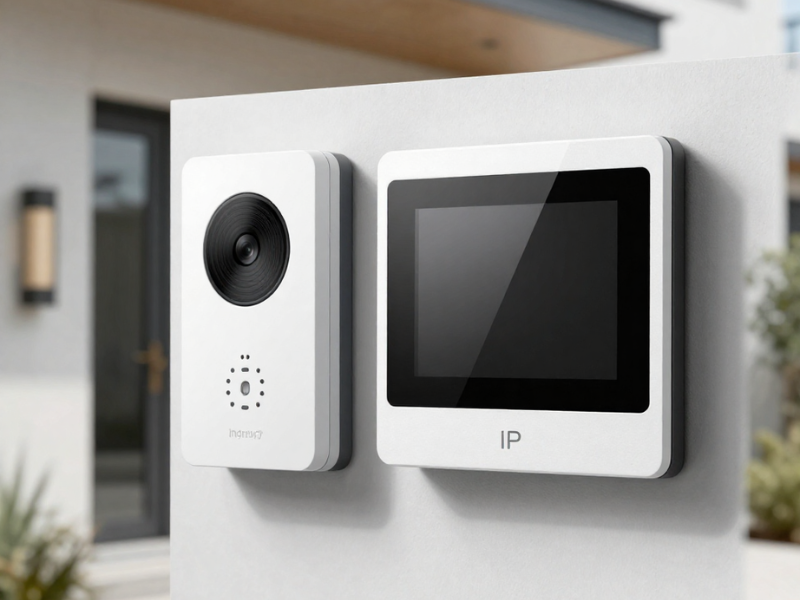
- IP65 offers complete dust protection and resistance to water jets, making it suitable for many coastal installations. Akuvox 2‑Wire IP Intercom Kit
- IP66 provides increased resistance to powerful water jets and is often preferred for exposed environments.
- IP67 adds protection against temporary immersion and is well suited to harsh coastal conditions where severe weather exposure is expected.
- IP68 offers extended immersion protection, although suitability depends on the manufacturer’s specific testing parameters and intended application.
For most coastal projects, installers typically select weatherproof IP rated intercoms with ratings between IP65 and IP67, depending on the level of environmental exposure.
Read more: IP-Based Intercom Systems: A Comprehensive Guide (2026 Updated)
Why Higher Isn’t Always Better
A common misconception is that the highest available IP rating automatically provides the best solution. In reality, installation conditions and product design often matter just as much.
The installation location may significantly reduce exposure. An intercom installed beneath a deep canopy may not require the same level of protection as a unit mounted on an exposed gate post facing prevailing coastal winds.
Maintenance also remains important regardless of IP rating. Salt accumulation, damaged seals, and ageing components can eventually compromise protection levels.
Mechanical durability should also be considered alongside water resistance. A highly rated enclosure may still be vulnerable to vandalism, impact damage, or corrosion if inappropriate materials are used.
Selecting the Right Weatherproof IP Rated Intercoms for Different Coastal Applications
Choosing weatherproof IP rated intercoms requires assessing the specific environmental conditions of each project rather than applying a one-size-fits-all approach.
Apartment Entry Systems Near Beachfront Locations
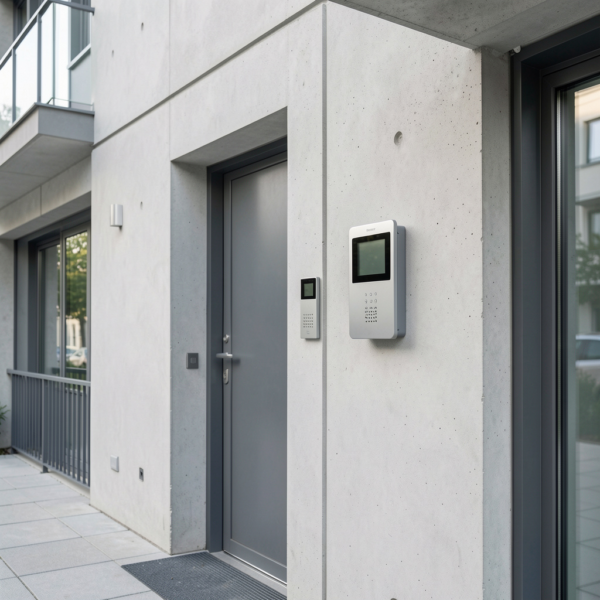
Apartment buildings near the beach often experience heavy pedestrian traffic and ongoing exposure to airborne salt. In these environments, intercom systems must withstand regular use and frequent cleaning. Faceplates and buttons should resist corrosion and wear from repeated use.
For beachfront apartment entrances, installers commonly favour IP65 or IP66-rated units with robust construction materials and sealed electronics.
Related: Intercom Gate Door Release Workflows For Apartment Entry
Residential Gate Intercoms Exposed to Wind and Spray
Residential gate automation systems often face some of the harshest environmental exposure conditions. Unlike wall-mounted entry panels positioned beneath eaves, gate intercoms may be completely exposed to wind, rain, and ocean spray. These installations require higher levels of environmental protection.
For exposed coastal driveways, installers should generally consider weatherproof IP rated intercoms with a minimum IP66 rating. In particularly exposed locations, IP67-rated products may provide additional protection against severe weather conditions.
Marina and Waterfront Facilities
Marinas, jetties, and waterfront facilities are among the most demanding operating environments for electronic equipment. Continuous exposure to moisture, salt deposits, and marine air can quickly damage inadequately specified products. Even high IP ratings may not compensate for poor material selection.
In these applications, marine-grade stainless steel construction, sealed connectors, and corrosion-resistant mounting hardware become essential. Installers should evaluate both ingress protection and corrosion resistance when selecting weatherproof IP rated intercoms for marine facilities.
Commercial and Industrial Coastal Sites
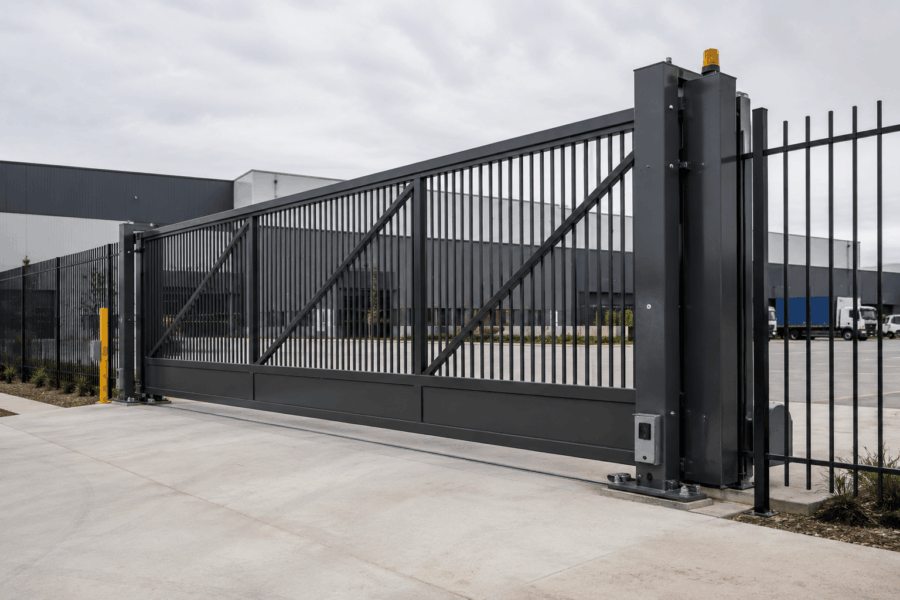
Vehicle access systems, delivery gates, service entrances, and staff access points may operate hundreds of times per day while remaining exposed to harsh weather conditions. Heavy-duty construction, robust electronics, and compatibility with access control systems become important considerations. Long-term maintenance planning should also form part of the specification process.
For these projects, installers should prioritise weatherproof IP rated intercoms designed specifically for demanding commercial applications rather than residential-grade products.
Beyond IP Ratings: Materials That Improve Coastal Durability
While ingress protection ratings are important, material selection often determines how well an intercom survives years of coastal exposure. Many failures occur not because water enters the enclosure but because corrosion gradually damages external components and mounting systems.
The materials used in an intercom system can significantly affect its performance in coastal environments.
- Standard steel generally performs poorly because it is highly susceptible to corrosion.
- Powder-coated steel offers moderate protection but can become vulnerable if the coating is scratched or damaged.
- Aluminium provides good corrosion resistance and is commonly used in outdoor installations.
- Marine-grade stainless steel delivers excellent long-term durability and is often the preferred choice for beachfront and waterfront projects.
- UV-stabilised polymers perform well in coastal conditions by resisting both ultraviolet degradation and moisture exposure.
Selecting corrosion-resistant materials is often just as important as choosing the correct IP rating when specifying weatherproof IP rated intercoms for coastal installations.
Installation Practices That Preserve Weather Resistance
Even the best weatherproof IP rated intercoms can lose their effectiveness if installed incorrectly. Proper installation techniques are essential for maintaining protection.
Installers should carefully follow mounting instructions and ensure all sealing systems remain intact throughout the installation process. Small mistakes can significantly reduce long-term reliability.
Cable entry locations are often the weakest point in an outdoor installation. Water can travel through conduits, collect inside wall cavities, or enter through poorly sealed penetrations. Selecting appropriate cable glands, maintaining drip loops, and ensuring all conduit terminations are correctly sealed can prevent many common moisture-related failures.
Attention should also be given to mounting hardware. Coastal environments accelerate corrosion, making stainless steel or marine-grade fixings essential for long-term reliability.
In addition, many weatherproof intercoms rely on compression gaskets and seals to maintain their IP rating. During installation, these components can be damaged through over-tightening, uneven mounting surfaces, or accidental contamination with dust and debris.
Before commissioning the system, installers should inspect all seals, verify drainage paths remain unobstructed, and confirm that faceplates sit flush against the mounting surface. A few extra minutes during installation can prevent years of corrosion-related service calls.
Maintenance Strategies for Coastal Intercom Systems
Even premium weatherproof IP rated intercoms require regular maintenance in coastal environments. Salt accumulation and environmental exposure gradually affect all equipment.
Salt carried by coastal winds can gradually accumulate on exposed intercom surfaces, accelerating corrosion and degrading protective coatings. Even weatherproof equipment will experience increased wear when exposed to constant humidity, airborne salt particles, and seasonal storms.
For this reason, coastal intercom systems should be included in a scheduled preventive maintenance program rather than inspected only after faults occur.
A structured maintenance program helps identify small issues before they develop into costly equipment failures. Regular cleaning removes salt deposits that can attack exposed metals and compromise seals, while routine inspections allow installers to detect early signs of moisture ingress or component deterioration.
Key inspection areas include:
- Faceplate condition and protective coatings
- Gasket and seal integrity
- Fastener corrosion
- Speaker and microphone openings
- Audio and call button performance
Finally, discolouration, rust staining, intermittent audio performance, and visible deterioration around cable entry points often indicate that environmental protection is beginning to fail. Addressing these warning signs early can significantly extend the service life of weatherproof IP rated intercoms installed in coastal locations.
Specifier’s Checklist for Choosing Weatherproof IP Rated Intercoms
Before purchasing any intercom for coastal applications, installers should verify several key factors.
✓ What IP rating is independently tested?
✓ What materials are used in exposed components?
✓ Is the unit suitable for direct weather exposure?
✓ What maintenance is recommended?
✓ Are replacement components available?
✓ Does the warranty cover coastal installations?
Using this checklist helps ensure the selected weatherproof IP rated intercoms are genuinely suitable for the intended environment.
Learn more: Apartment & Strata Solutions With 2-Wire Intercoms
Frequently Asked Questions
Is IP65 sufficient for coastal intercom installations?
IP65 can be suitable for many coastal installations, particularly when the intercom is mounted under some form of shelter. However, highly exposed locations such as open gate posts and beachfront sites may benefit from IP66 or IP67 protection.
What’s the difference between IP66 and IP67?
IP66 protects against powerful water jets, while IP67 adds protection against temporary immersion in water. Both offer excellent weather resistance, but IP67 provides an additional level of moisture protection.
Do stainless steel faceplates completely prevent corrosion?
No material is entirely immune to corrosion. However, marine-grade stainless steel offers significantly better resistance than standard steel and remains one of the best choices for coastal environments.
Can an intercom lose its IP rating after installation?
Yes. Damaged seals, improper installation, ageing components, or modifications can compromise the original level of protection and reduce weather resistance over time.
How often should coastal intercoms be inspected?
Quarterly inspections are generally recommended for coastal installations, although highly exposed sites may benefit from more frequent maintenance checks.
In Conclusion
Selecting the right weatherproof IP rated intercoms for coastal projects requires installers to evaluate environmental exposure levels, material selection, installation quality, and ongoing maintenance requirements. Additionally, while ingress protection ratings provide valuable guidance, they should be considered alongside factors such as corrosion resistance, UV durability, and product construction quality. Matching the intercom specification to the specific coastal environment helps reduce failures, minimise maintenance costs, and improve customer satisfaction.
At DHS, we supply professional-grade intercom and access control solutions designed for Australia’s harsh coastal conditions. Explore our range of premium intercom systems and speak with our team for expert guidance on selecting the ideal solution for your next coastal project!