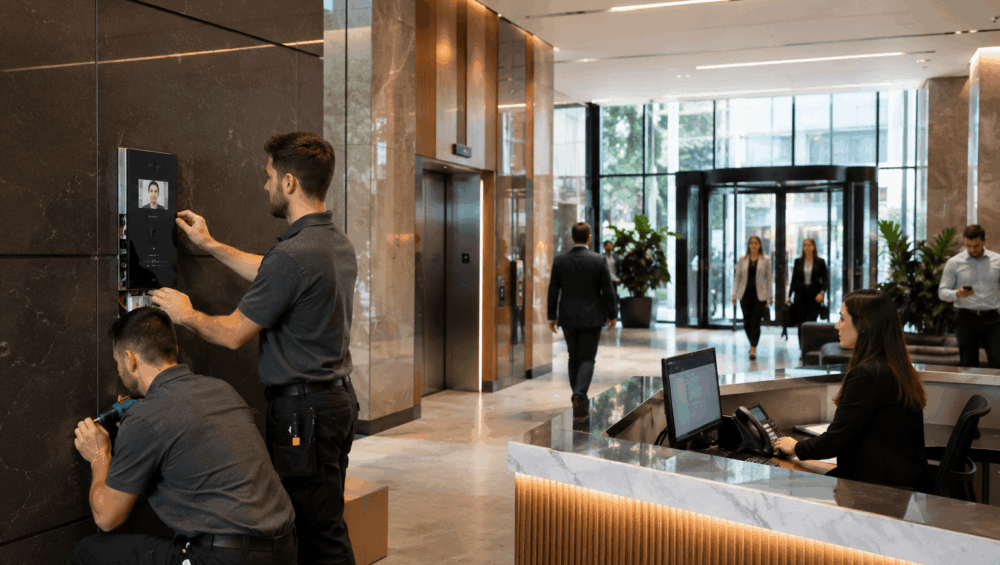
Performing a multi tenant office intercom upgrade is among the most challenging building improvement projects for office managers. Unlike upgrades in single-occupancy facilities, upgrades in commercial office buildings often involve multiple businesses that depend on uninterrupted access throughout the working day. Any disruption to these systems can quickly lead to tenant complaints, lost productivity, missed appointments, and security concerns.
The good news is that a successful multi tenant office intercom upgrade does not require major operational disruption, with careful planning, staged implementation, clear communication, and thorough testing.
This guide outlines a proven workflow that helps ensure a smooth transition from legacy systems to modern intercom technology while keeping tenants informed, secure, and productive.
Multi Tenant Office Intercom Upgrades Are More Complex Than Single-Tenant Projects
A multi tenant office intercom upgrade involves more coordination than a standard commercial intercom replacement. In a single-tenant building, decisions can often be made quickly by one organisation. In contrast, multi-tenant environments introduce a broad range of stakeholders, each with unique operational requirements.
Businesses within the building may have different working hours, visitor volumes, security procedures, and access requirements. Reception teams need reliable visitor communications. Building managers must maintain security and operational continuity. Contractors require access for installation work, while delivery services and visitors continue to use the premises throughout the project.
The challenge is managing change across multiple organisations without negatively affecting their daily operations, such as:
- Missed visitor calls
- Tenant access issues
- Delivery interruptions
- Temporary security gaps
- Confusion around new procedures
Without proper planning, even minor interruptions can create frustration among occupants and damage confidence in the upgrade project.
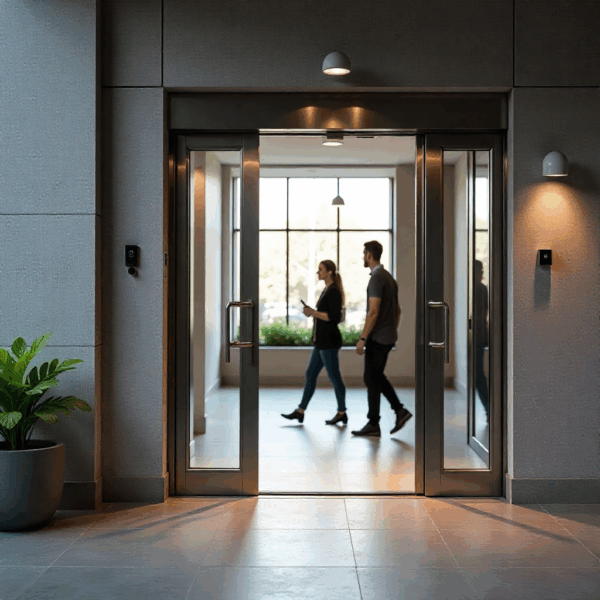
The 7-Step Operational Workflow for a Successful Multi Tenant Office Intercom Upgrade
A successful multi tenant office intercom upgrade requires a structured workflow that prioritises business continuity at every stage. While every building presents unique challenges, the most effective projects follow a consistent process.
Step 1 – Audit Existing Tenant Communication Requirements
Every upgrade should begin with a detailed assessment of how occupants currently use the intercom system. Building managers need to understand where visitor calls are routed, how deliveries are managed, which tenants operate reception services, and what after-hours access arrangements are in place. Some businesses may rely heavily on visitor traffic, while others require secure access outside normal business hours.
By documenting these requirements early, project teams can ensure the replacement system supports existing operational needs while identifying opportunities for improvement. A thorough audit also helps prevent important communication pathways from being overlooked during migration.
Step 2 – Create a Tenant Communication Plan
Once operational requirements have been established, attention should shift to tenant communication. One of the most common causes of dissatisfaction during a multi tenant office intercom upgrade is uncertainty around what will happen and when.
Providing clear information before work begins helps tenants prepare for upcoming changes and reduces unnecessary concerns. Occupants should receive advance notice of installation schedules, expected impacts, temporary procedures, and key contact details. Regular updates throughout the project maintain confidence and allow potential issues to be addressed before they escalate.
Step 3 – Schedule Work Around Building Activity Patterns
Careful scheduling plays a major role in minimising disruption. Rather than treating the building as a single environment, project teams should analyse how occupants use different areas throughout the day.
Peak visitor periods, delivery schedules, tenant operating hours, and staff arrival patterns all influence the best times for installation work. In many cases, after-hours activities, weekend works, or staged floor-by-floor deployment strategies can significantly reduce operational impacts. By aligning installation activities with building usage patterns, office managers can maintain normal business operations while upgrade works proceed in the background.
Step 4 – Maintain Temporary Visitor Access Procedures
Even with careful planning, there may be periods when portions of the intercom system need to be taken offline. During these times, temporary visitor management procedures become essential.
Alternative arrangements might include manual reception check-ins, temporary contact numbers, concierge assistance, or designated access points for visitors and delivery personnel. The objective is to ensure that guests can continue entering the building efficiently while maintaining appropriate security controls.
Having these contingency measures established before installation begins prevents confusion and helps businesses continue operating normally throughout the project.
Step 5 – Migrate Tenant Directories in Controlled Phases
Tenant directory migration is often one of the most sensitive components of an intercom replacement project. Incorrect listings, outdated contact information, or routing errors can quickly lead to tenant complaints and operational issues.
Rather than attempting a complete migration in a single stage, successful projects typically transfer directory information in controlled phases. Each tenant’s details should be verified before activation, and call routing should be tested to confirm that visitors can reach the correct destination. This measured approach reduces the likelihood of errors and provides opportunities to correct issues before they affect multiple occupants.
Step 6 – Conduct Live Testing Before Full Cutover
Before the new system becomes fully operational, comprehensive testing should be conducted under real-world conditions. Technical commissioning alone is rarely sufficient because users often identify issues that may not appear during standard system checks.
Live testing allows tenants, reception staff, and building managers to verify visitor communications, access permissions, call routing functions, and emergency procedures. Any identified problems can then be addressed before the final transition. This step significantly reduces post-installation support requests and helps build confidence in the new platform.
Step 7 – Deliver Training and Post-Installation Support
The final stage of a multi tenant office intercom upgrade focuses on user adoption. Even the most advanced system can create frustration if occupants are unfamiliar with new features or procedures.
Training should be tailored to different user groups, including tenants, reception staff, facilities personnel, and building managers. Clear documentation, quick-reference guides, and ongoing support resources help users adapt more quickly and reduce the likelihood of avoidable service calls. Providing assistance during the first few weeks after activation ensures a smoother transition.
Related: Creating a Staged Upgrade Plan for Gates, Intercoms and External Alarms

Creating an Upgrade Timeline That Minimises Business Disruption
A carefully structured timeline is one of the most important elements of a successful multi tenant office intercom upgrade. Rather than attempting a building-wide replacement in a single day, most commercial projects benefit from a staged approach that spreads activities across multiple phases. This allows contractors to complete their work while maintaining building operations. It also provides opportunities to identify and resolve issues before they affect a larger group of occupants.
The following timeline illustrates how most upgrade projects are typically structured, and the level of disruption tenants can expect at each stage.
| Project Phase | Typical Activities | Tenant Impact |
| Planning | Site surveys, audits | Minimal |
| Preparation | Cabling, infrastructure work | Low |
| Installation | Hardware deployment | Moderate |
| Testing | User validation | Low |
| Cutover | System activation | Moderate |
| Support | Training and optimisation | Minimal |
Key reasons staged implementation generally creates fewer tenant complaints than a single-day cutover include:
- Tenants receive more notice and have time to prepare for upcoming changes.
- Potential technical issues can be identified and resolved before affecting the entire building.
- Visitor management procedures can be tested and refined throughout the project.
- Building managers can maintain better oversight of progress and tenant feedback.
- Training and onboarding can occur gradually rather than overwhelming occupants with sudden changes.
- Business disruption is distributed across smaller phases instead of concentrated into a single high-impact event.
For most occupied commercial buildings, a phased rollout delivers a smoother transition, lower operational risk, and a more positive tenant experience.
Related: The Best Times to Upgrade Intercom Infrastructure During Other Renovation Works
Communication Strategies That Keep Tenants Cooperative Throughout the Project
Successful projects depend heavily on stakeholder communication. Tenants are far more likely to cooperate when they understand what is happening, why the upgrade is necessary, and how potential disruptions will be managed.
Advance notice should be provided several weeks before work begins. Also, weekly updates help maintain transparency and reassure occupants that the project remains under control.
Temporary access instructions should be communicated clearly and repeated whenever procedures change. Emergency contact information should also remain easily accessible throughout the upgrade.
Office managers should establish realistic expectations regarding minor outages, testing periods, and commissioning activities. When tenants know what to expect, they are generally more accepting of temporary inconveniences.
In many cases, effective communication has a greater influence on perceived project success than the technical installation itself.
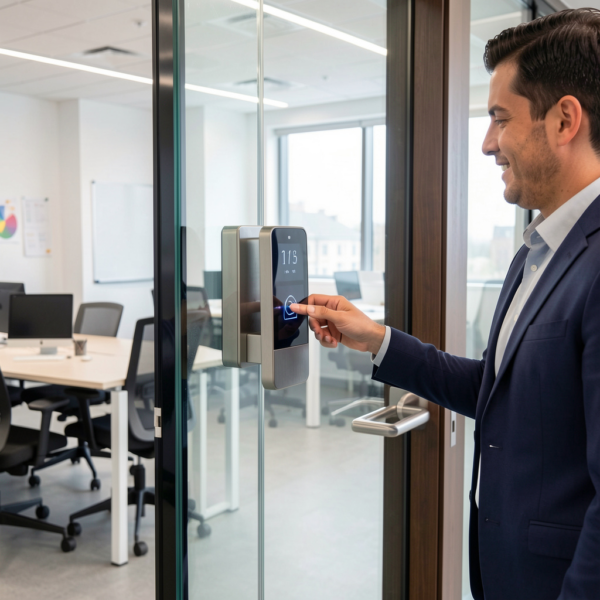
Technologies That Simplify Multi-Tenant Intercom Migrations
Modern intercom platforms offer capabilities that simplify migration projects while improving long-term building operations. Many contemporary systems allow administrators to manage users, directories, and access permissions remotely, reducing on-site intervention during deployment.
Useful technologies include:
- Cloud-managed tenant directories
- Mobile app call routing
- Remote administration tools
- QR visitor access systems
- IP-based intercom platforms
- Access control integration
These features enable more efficient implementation of changes while providing greater flexibility for tenants and building managers.
A modern multi tenant office intercom upgrade often delivers operational benefits well beyond visitor communication, including enhanced security, simplified administration, and improved user convenience.
Related: Choosing The Right Access Control System For Multi-Tenant Buildings
Mistakes That Cause Tenant Complaints and Project Delays
Several common mistakes frequently create unnecessary disruption during upgrade projects.
Insufficient tenant consultation often results in overlooked operational requirements. Poor directory data collection can create call-routing issues after activation. Failing to establish backup visitor procedures may leave reception teams struggling during installation periods.
Inadequate testing remains another common cause of complaints. Systems that appear functional during commissioning can still contain user-facing issues that affect tenants.
Scheduling work during peak business periods can also increase frustration and reduce productivity.
Finally, insufficient staff training often generates avoidable support requests after deployment.
Each of these risks can be minimised through careful planning, staged implementation, and proactive stakeholder engagement.
FAQs
How long does a multi tenant office intercom upgrade typically take?
Project duration varies depending on building size, tenant numbers, and infrastructure complexity. Most projects range from several days to several weeks.
Can tenants continue using the building during installation?
Yes. Most upgrades are designed to occur while the building remains occupied, with temporary procedures implemented where necessary.
What happens if visitors arrive while the system is being upgraded?
Temporary visitor management processes such as reception check-ins, alternate phone numbers, or concierge services can maintain access throughout the project.
Should intercom upgrades be combined with access control upgrades?
In many cases, combining projects can improve efficiency, reduce overall disruption, and enhance building security.
How can building managers reduce tenant complaints during the project?
Early communication, realistic expectations, phased deployment, comprehensive testing, and responsive support are the most effective strategies.
In Conclusion
A successful multi tenant office intercom upgrade project combines careful planning, stakeholder communication, phased deployment, comprehensive testing, and ongoing support. From auditing tenant requirements and scheduling work strategically to conducting live testing and providing post-installation training, every step contributes to a smoother transition.
When executed properly, a multi tenant office intercom upgrade not only modernises building communications but also improves long-term operational efficiency, security management, and tenant satisfaction.
Planning a multi-tenant intercom upgrade for your commercial building?
DHS supplies professional-grade intercom, access control, and visitor management solutions designed for occupied office environments. Our team can help you select the right technology, develop a staged migration strategy, and minimise disruption to tenants throughout the upgrade process.
Contact us today to discuss your building requirements and discover intercom solutions designed for modern multi-tenant office environments.