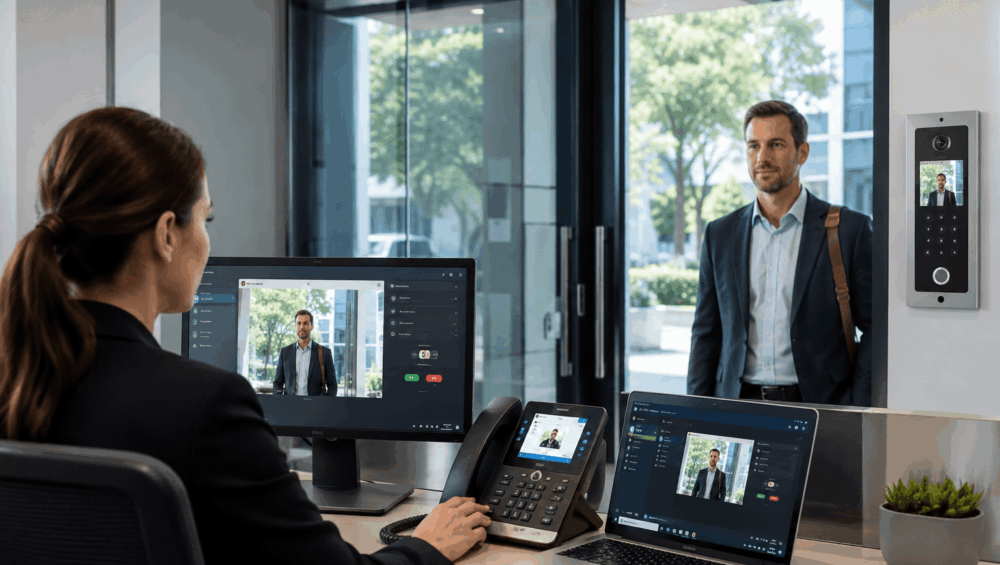
To simplify operations in modern businesses while improving their security and communication, visitor management is undergoing a significant transformation. Rather than standalone door intercoms and separate communication systems, organisations are adopting front-door calls to be managed through existing business phone networks.
This shift has made SIP intercom system integration an increasingly popular choice for commercial buildings, offices, and warehouses. By enabling employees to answer door calls from desk phones, softphones, and mobile devices, businesses can streamline visitor access.
As physical security and IT systems continue to converge, SIP intercom system integration is becoming a key component of modern smart building design. Let’s check it out!
What Is a SIP Intercom System and How Does It Work?
A SIP intercom system uses the Session Initiation Protocol (SIP), a communications standard that establishes, manages, and terminates voice and video calls over IP networks. The same protocol that powers most business VoIP phone systems can also be used to manage visitor communications at building entrances.
Unlike traditional analogue intercoms that require dedicated wiring and proprietary hardware, a SIP door intercom communicates over an Ethernet network. This enables seamless integration with existing phone systems and cloud-based services.
When a visitor presses the call button, the intercom behaves similarly to a standard telephone extension, initiating a SIP call to predefined users or groups.
Basic SIP Call Flow:
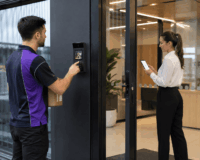
When a visitor presses the call button on a SIP intercom, the device immediately initiates a SIP call across the IP network. The request is then received by the organisation’s PBX or unified communications platform and routed based on preconfigured rules.
The call can be directed to a reception desk, security team, individual employee, or a group of extensions simultaneously. Once a user answers the call, two-way audio communication is established in real time.
If access is authorised, the user can remotely activate the intercom’s door relay, triggering an electric strike, magnetic lock, gate operator, or other access control device to grant entry. This entire process typically occurs within a few seconds and can be managed from desk phones, softphones, or mobile devices, making VoIP intercom integration a highly efficient solution for modern businesses.
Read more: IP-Based Intercom Systems: A Comprehensive Guide (2026 Updated)
Why Businesses Are Moving to SIP Intercom System Integration
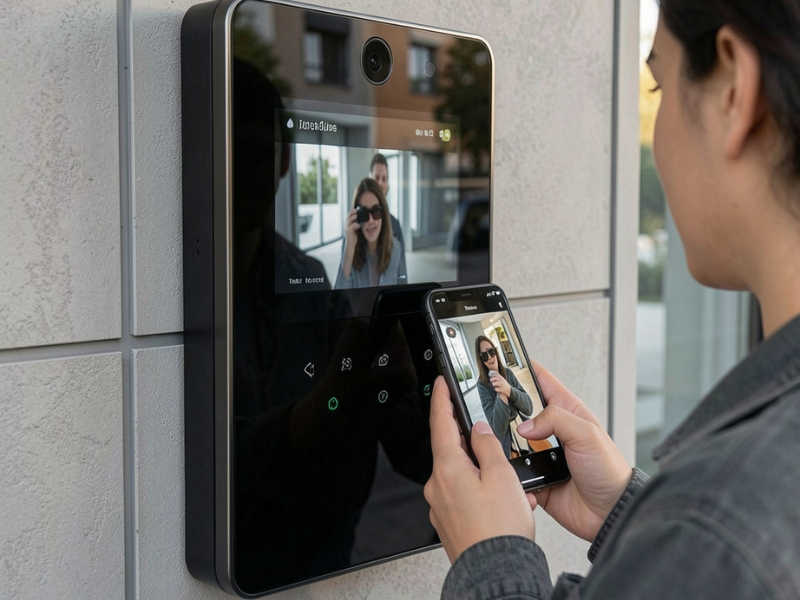
The increasing adoption of hybrid work arrangements and multi-site operations has significantly changed how businesses manage building access. Organisations no longer want visitor communication systems that only function from a reception desk.
SIP intercom system integration allows employees to communicate with visitors from virtually anywhere, creating both operational and security benefits. Key advantages include:
- Unified communications across multiple systems
- Reduced hardware requirements
- Remote answering capability
- Improved visitor management
- Easier scalability
- Lower maintenance costs
- Enhanced disaster recovery options
Businesses can route calls to reception teams, security staff, mobile devices, or even remote employees. This flexibility ensures visitors are never left unattended, even when offices operate with reduced staffing levels.
For estimators, this trend is reflected in project specifications. Many modern commercial tenders now require IP intercom for business solutions that integrate directly with corporate communication platforms rather than standalone intercom systems.
Common Integration Architectures for Corporate VoIP Environments
Different organisations have different communication infrastructures, so there is no one-size-fits-all approach to SIP intercom system integration. Below are the most common deployment methods that help estimators select the right solution and identify potential infrastructure requirements early in the project.
Direct SIP PBX Integration
Direct integration with an on-premise SIP PBX is one of the most common deployment methods for small and medium-sized businesses. In this configuration, the intercom functions as another extension on the company’s phone system. When a visitor presses the call button, the PBX routes the call to nominated users, such as reception staff, security personnel, or specific departments.
This approach offers reliable performance and straightforward administration. It allows businesses to leverage their existing telephony infrastructure without requiring significant additional hardware.
Cloud PBX Integration
As businesses increasingly adopt cloud communications, many are choosing to integrate SIP intercoms directly with cloud-hosted PBX platforms. This architecture is particularly attractive for organisations operating across multiple offices or remote workplaces because users can answer calls from virtually anywhere with an internet connection.
Cloud integration reduces on-site equipment requirements, simplifies administration, and makes it easier to add new users or locations as the business grows.
Unified Communications Platform Integration
Large enterprises often use unified communications platforms that combine voice, messaging, video conferencing, and collaboration tools into a single environment. Integrating SIP intercoms with these platforms enables employees to answer door calls directly through desktop applications, softphones, or mobile devices.
This creates a seamless user experience and supports modern hybrid working arrangements where employees may not always be physically present in the office.
Multi-Tenant and Hybrid Deployments
Commercial buildings with multiple tenants or organisations, and mixed IT environments, often require more advanced configurations. Multi-tenant deployments may involve separate call routing rules, individual access permissions, and dedicated management interfaces for different occupants within the same building.
Similarly, hybrid environments that combine on-premise PBX systems with cloud services require careful planning to ensure reliable communication between all components.
Regardless of the chosen architecture, the goal of SIP intercom system integration remains the same: to create a flexible, scalable communication platform that connects visitor management and physical security to the organisation’s broader communication infrastructure.
Read more: Managing Call Routing In Akuvox Intercom Systems
Critical Network Requirements Before Specifying a SIP Intercom System
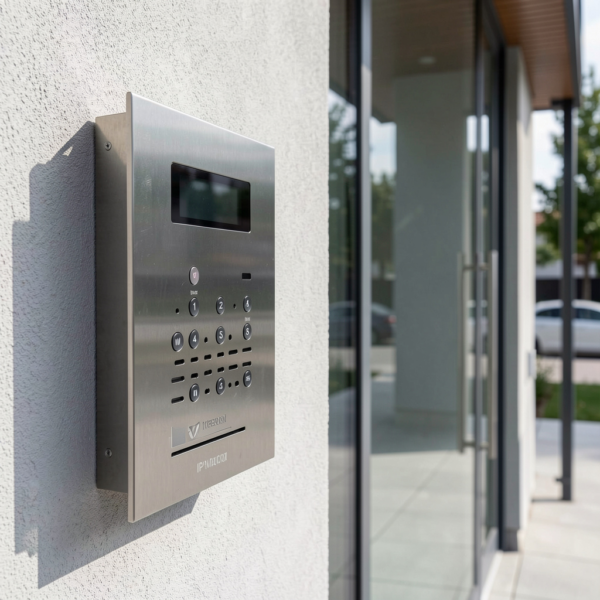
A successful SIP intercom system integration project relies just as much on network infrastructure as it does on the intercom hardware itself. Poor network planning can lead to call delays and security vulnerabilities. This is difficult and expensive to rectify after installation.
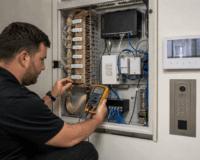
One of the first considerations is whether the site has adequate Power over Ethernet (PoE) infrastructure. PoE simplifies installation by delivering both power and data over a single network cable, reducing the need for additional electrical work and facilitating future expansion.
Network performance of VLAN segmentation and Quality of Service (QoS) is equally important. These settings help ensure voice and video traffic is prioritised over general network traffic. Without proper configuration, users may experience poor audio quality, latency, or dropped calls.
Businesses should also assess whether there is sufficient bandwidth and an appropriate firewall configuration to support secure communication between intercom devices, PBXs, cloud services, and remote users. As more organisations adopt hybrid working environments, secure external connectivity has become increasingly important.
Finally, consideration should be given to redundancy and business continuity planning. Critical facilities may require backup internet connections or alternative communication paths to minimise downtime during network failures.
SIP intercoms sit at the intersection of IT and physical security. Therefore, estimators should engage both stakeholders early in the project. Identifying network capabilities and limitations during the specification stage can help avoid unexpected costs, reduce project risks, and ensure the SIP intercom system integration performs reliably over the long term.
Integrating SIP Intercoms with Access Control Systems
Modern intercom systems operate as part of a broader security ecosystem. A properly designed SIP intercom system integration project can incorporate:
- Electronic door release
- Gate automation
- Card access systems
- Visitor management platforms
- Building management systems
Remote door release functionality allows authorised users to verify visitors and unlock doors directly from their phone or mobile application. Integration with access control systems also enables comprehensive event logging, including call records, access events, user actions, and time-based permissions.
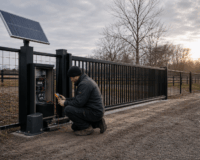
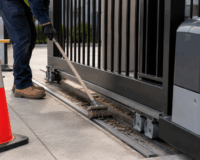
Many organisations are also combining SIP intercoms with automated gates and doors to provide a seamless visitor experience. Rather than managing multiple disconnected systems, businesses can create a single operational platform that improves security visibility and simplifies administration.
This convergence is one of the major reasons why SIP intercom system integration continues to gain popularity in commercial environments.

Key Specification Considerations for Estimators
Correctly specifying a SIP intercom solution requires more than simply selecting an intercom device. A detailed understanding of operational requirements can prevent costly changes later in the project. Before preparing estimates, consider the following questions:
- Number of entry points: How many intercom stations are required?
- Number of users: How many devices need to receive calls?
- Existing PBX: Is the current phone system SIP compatible?
- Network readiness: Is PoE switching infrastructure available?
- Security requirements: Is video functionality required?
- Remote access: Will users answer calls outside the building?
- Redundancy requirements: Is backup communication necessary?
- Future expansion: Will additional buildings or sites be added later?
Under-specifying network capacity, licensing, or communication requirements can lead to significant cost overruns. A thorough assessment ensures the selected IP intercom for business solution remains scalable and fit for purpose throughout its lifecycle.
Future Trends in SIP Intercom System Integration
The future of SIP intercom system integration is closely aligned with the broader evolution of smart buildings and unified communications. Several trends are shaping the market:
- Mobile-first workplace communications
- Cloud-hosted unified communications
- AI-powered visitor management
- Video analytics integration
- Centralised multi-site monitoring
- Greater convergence between IT and physical security
Employees expect to manage visitor access directly from smartphones and collaboration applications. At the same time, organisations are looking for centralised visibility across multiple locations.
Artificial intelligence is also beginning to influence visitor management through facial recognition, behavioural analytics, and automated workflows. As these technologies continue to mature, SIP intercoms will become even more deeply integrated into building automation ecosystems.
In Conclusion
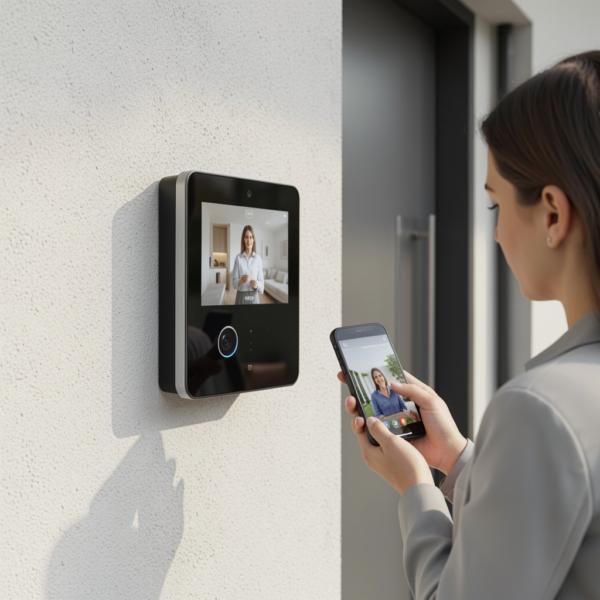
The convergence of physical security and corporate communications is reshaping how businesses manage visitor access. By allowing front-door calls to be answered via desk phones, softphones, and mobile devices, SIP intercom system integration delivers significant improvements in efficiency, scalability, and security.
For estimators, understanding network requirements, integration architectures, and access control considerations is increasingly important as modern specifications shift toward unified, IP-based solutions.
Whether designing a single office entry system or a complex multi-site deployment, the right SIP intercom system integration strategy can provide long-term operational benefits while future-proofing business communications and security infrastructure.
Upgrade Your Commercial Intercom Solution with DHS
At Digital Home Systems (DHS), we supply advanced SIP door intercoms, SIP access control systems, and corporate intercom systems designed for seamless integration with modern VoIP environments. Our team can assist with product selection and technical support to help deliver reliable, scalable solutions for your next commercial project.
Contact DHS today to discuss the right SIP intercom solution for your business.
Frequently Asked Questions
Can SIP intercoms work with existing VoIP phone systems?
Yes. Most SIP intercoms are designed to integrate with existing VoIP phone systems, provided the PBX or unified communications platform supports standard SIP protocols. Some systems may require configuration adjustments or licensing to enable full functionality.
Do SIP intercoms require dedicated cabling?
No. Most SIP intercoms operate over standard Ethernet networks and can use existing structured cabling infrastructure. Many models also support Power over Ethernet (PoE), allowing both power and data to be delivered through a single network cable.
Can employees answer intercom calls on mobile phones?
Yes. SIP intercom calls can be routed to softphone applications, mobile devices, or cloud-based collaboration platforms. This allows employees to communicate with visitors and grant access even when working remotely or away from reception.
Are SIP intercoms suitable for multi-site businesses?
Absolutely. SIP intercom systems are highly scalable and can centralise visitor communications across multiple offices, warehouses, or facilities. Cloud PBX platforms make it easy to manage users, permissions, and call routing from a single interface.
What happens during a network outage?
System behaviour depends on the overall architecture and redundancy measures in place. Businesses can minimise disruption by implementing backup internet connections, redundant network equipment, local failover capabilities, or alternative communication paths for critical entry points.