
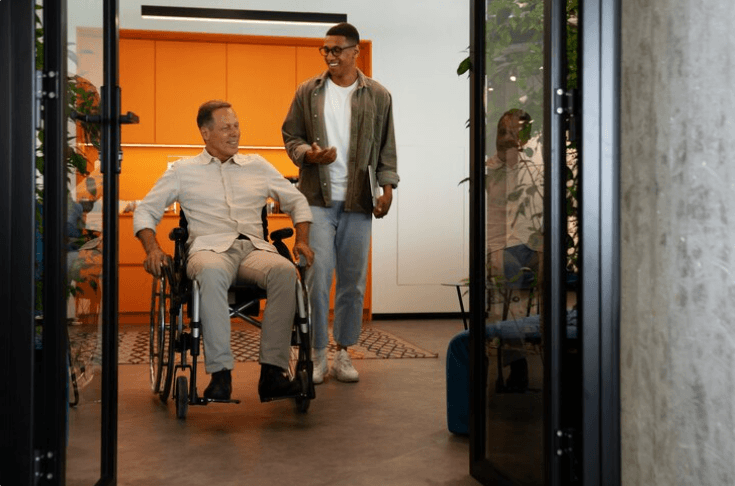
For many people living with disabilities, getting through a doorway is not always simple. Heavy doors, difficult locks, limited visibility, and poor visitor communication can all create daily stress. That is why more families, support providers, occupational therapists, and builders are exploring NDIS friendly entry upgrades that improve safety, independence, and convenience.
Depending on participant needs and funding goals, some upgrades may fall under assistive technology or home modification supports when they relate to disability access, safety, independence, or functional living outcomes. DHS will guide you to suitable product solutions and provide installer support.
Common Entry Challenges in NDIS Homes and Care Settings
Many homes, therapy clinics, and supported accommodation settings face similar entry and accessibility problems. These challenges can affect participant independence, privacy, staff workflows, and overall safety. Understanding these issues helps providers and families identify the most suitable NDIS friendly entry upgrades for each environment.
Mobility Limitations
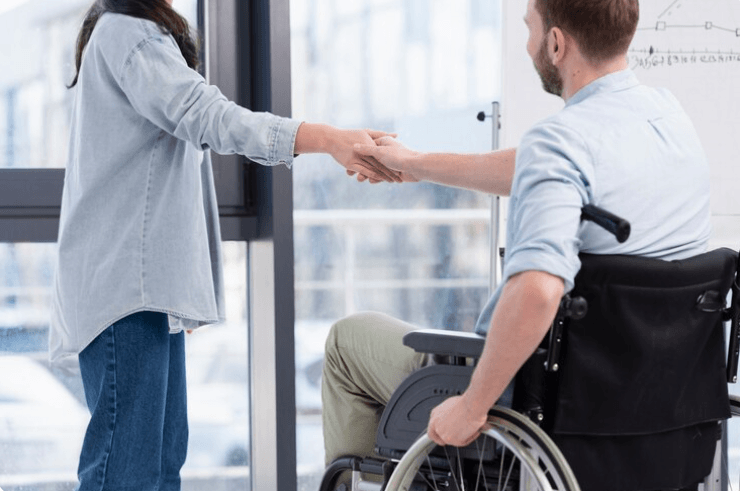
For participants with reduced mobility, everyday entry tasks can become physically exhausting or unsafe. Heavy doors, awkward handles, and narrow access points may create barriers for wheelchair users and people who use walkers and other mobility aids. Some participants may also experience fatigue or limited grip strength, making manual door operation difficult throughout the day.
Carer Access
Support workers and carers often require reliable access to the property during shift changes, emergencies, or scheduled visits. Traditional key-based systems can create delays, lost key issues, or security concerns. In supported living environments, smooth and secure access management becomes especially important when multiple staff members require entry.
Visitor Verification
Many participants feel uncomfortable opening doors without knowing who is outside. Standard doorbells provide no visual identification, which can increase anxiety and reduce feelings of safety. Therapy clinics and supported accommodation may also need better visitor screening to manage appointments, deliveries, and unfamiliar visitors more effectively.
Emergency Access
During emergencies, carers or emergency responders may need immediate access to the property. Poorly planned entry systems can delay response times or create safety risks. Automatic doors and access systems must also consider power backup, safety sensors, and manual override functionality to maintain accessibility during unexpected situations.
Shared Living Privacy
In shared accommodation and supported independent living settings, residents often require a balance between accessibility and personal privacy. Different access levels may be needed for staff, residents, family members, and visitors. Structured access control systems can help maintain safety while giving participants greater control over their personal spaces.
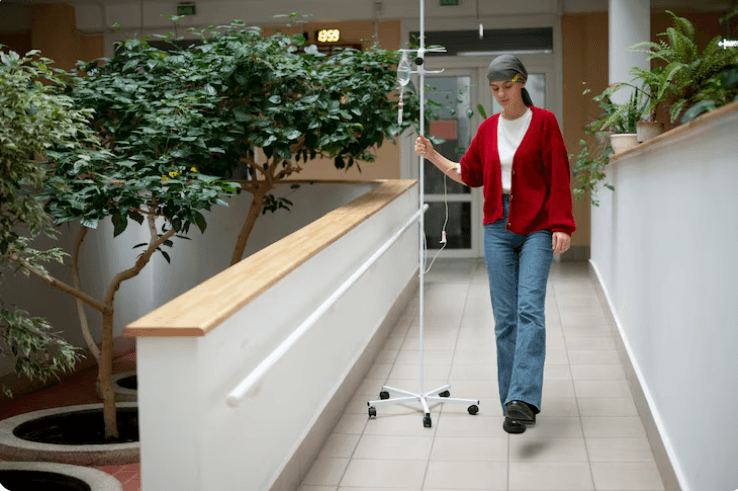
NDIS Friendly Entry Upgrades Options
There is no single solution for every property. The right combination of entry technology depends on participant needs, building layout, staffing requirements, and existing infrastructure.
The table below outlines common NDIS entry upgrades and where they are most effective.
| Upgrade | Best Suited For | Benefit | Planning Notes |
| Automatic sliding doors | Therapy rooms, clinics, wheelchair-accessible homes | Smooth hands-free access | Requires power availability and doorway clearance |
| Automatic swing doors | Homes, internal room access, supported living | Easier door operation with low physical effort | Door weight and wall structure must be assessed |
| Push-button access | Participants with limited mobility | Simple activation without manual pulling | Button placement height matters |
| Remote controls | Home users and carers | Convenient access from a distance | Battery management required |
| Video intercom systems | Supported living and family homes | Visual visitor verification | Internet connectivity improves remote features |
| Mobile app intercom | Providers, carers, family members | Remote communication and door release | Smartphone setup and permissions required |
| Smart locks and access control | Shared accommodation and staff access | Flexible access permissions and auditing | Consider backup entry methods |
| Remote door release | Therapy clinics and reception areas | Faster controlled visitor entry | Integrates with intercom systems |
| Sensors and safety devices | Automatic doors and accessible entries | Improved safety during operation | Sensor positioning must meet safety standards |
Automatic Doors for Homes, Therapy Rooms and Supported Living
Automatic doors are one of the most practical NDIS friendly entry upgrades for improving accessibility. They reduce physical effort, improve movement flow, and create safer entry experiences for participants, carers, and visitors.
Front Entry Access
Automatic front doors can help participants enter and leave their homes more independently. This is especially valuable for wheelchair users, people who use walkers, or participants who struggle with grip strength or with heavy doors.
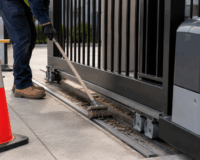
Automatic sliding and swing door systems can be configured with push buttons, remote controls, sensors, or smart access systems, depending on participant requirements. In some homes, automatic gates and door systems may also be integrated to create a smoother arrival process.
For homes with frequent support worker visits, automated entry can reduce delays and improve shift handovers.
Internal Door Automation
Internal automatic doors can improve movement between bedrooms, bathrooms, living spaces, and therapy areas. In supported living environments, automated internal doors may help participants maintain independence without constantly relying on staff assistance.
This can be particularly helpful where mobility aids are used or where doors are difficult to operate manually.
Therapy Room Access
Therapy clinics and consulting rooms benefit from smoother participant arrivals and easier accessibility management. Many providers are now installing therapy room automatic doors to improve wheelchair accessibility and reduce congestion in reception areas.
Automatic entry systems can also create a more welcoming and professional experience for participants and families attending appointments.
In busy clinic environments, sensors and safety detection systems help reduce the risk of collisions while maintaining efficient traffic flow.
Safety and Installation Considerations
Every property requires a proper site assessment before NDIS friendly entry upgrades. Factors such as door weight, wall structure, available power, entry width, and participant needs all influence system selection.
Reliable safety sensors are critical for automatic doors. These sensors detect movement or obstructions and help prevent accidental closing during entry or exit.
Manual override functionality is also important during emergencies or power interruptions. A qualified installer can assess the property and recommend suitable solutions that balance safety, accessibility, and long-term reliability.
For broader accessibility design guidance, the Australian Government’s disability access information provides useful planning considerations for inclusive building environments.
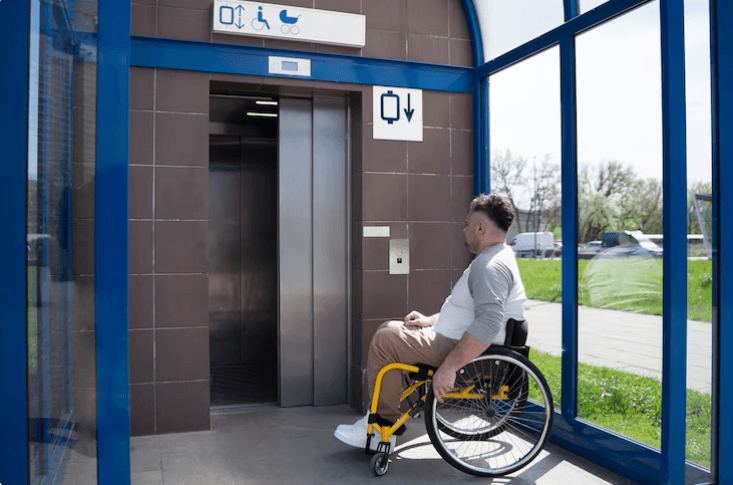
Intercom and Access Control for Safer Visitor Management
Modern intercom and access systems do much more than announce visitors. They improve communication, increase safety, and create structured visitor management workflows in homes, clinics, and supported accommodation.
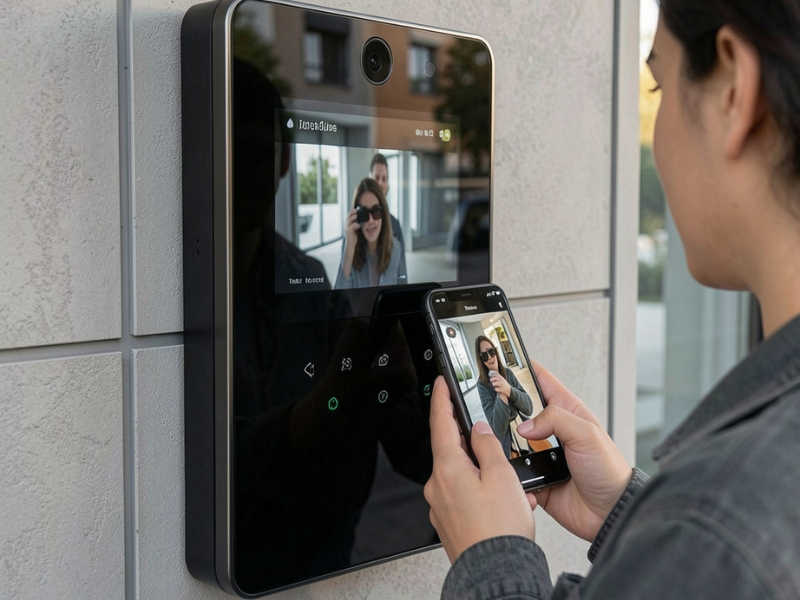
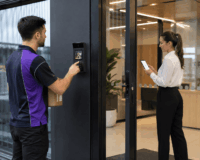
For many providers, combining intercom systems with automatic doors creates a more complete entry solution. Participants can communicate with visitors before granting access, while carers and staff can manage entry remotely when required.
Video intercom technology is especially useful in supported living access environments where multiple residents, support workers, and visitors may enter throughout the day.
Key benefits include:
- Video identification before opening the door
- Mobile app access for carers and family members
- Remote door release for authorised visitors
- Room-to-room communication support
- Flexible access permissions for staff and residents
- Audit-friendly access tracking in shared accommodation
- Reduced reliance on physical keys
DHS also supports integrated communication and intercom solutions that work alongside broader accessibility and automation systems.
For related insights, read our guide on NDIS SDA communication systems and explore how intercom technology supports safer disability accommodation.
You can also compare different visitor management approaches on mobile app entry vs indoor monitor systems.
Planning With OTs, Builders and Support Providers
Successful NDIS friendly entry upgrades require proper planning and collaboration between participants, occupational therapists, installers, builders, and support coordinators. A structured process helps ensure the final solution supports accessibility goals while remaining practical for long-term use.
Step 1: Assess Participant Needs
Start by identifying the participant’s mobility challenges, communication requirements, safety concerns, and daily routines. Consider whether the participant requires wheelchair access, hands-free entry, remote visitor management, or additional privacy controls. How to provide assistive technology to participants.
Step 2: Inspect the Site and Doorways
A physical assessment of the property helps determine suitable NDIS friendly entry upgrades. Door width, wall structure, power access, clearance space, and existing hardware all influence system compatibility.
Step 3: Confirm Power and Network Requirements
Some automatic doors, intercoms, and smart access systems require reliable power and internet connectivity. Early planning helps avoid installation delays later.
Step 4: Choose the Entry Workflow
Determine how participants, carers, visitors, and staff will interact with the system. This may include:
- Push-button activation
- Mobile app control
- Scheduled staff access
- Video verification before entry
- Remote door release workflows
Step 5: Prepare Quotes and Supporting Evidence
For mid-cost or high-cost assistive technology, NDIS planning may require written evidence explaining how the upgrade supports participant goals, safety, independence, or accessibility outcomes.
Occupational therapists and assessors often assist with recommendations and supporting documentation.
Step 6: Install and Test the System
Qualified installers should test door movement, safety sensors, intercom communication, and access permissions before handover.
Step 7: Train Participants and Carers
Training ensures participants, families, and support workers understand how to operate the system safely and confidently.
Why Work With DHS for NDIS Entry Upgrades
DHS supports installers, builders, support providers, and integrators across Australia, New Zealand, and the Pacific with reliable automation and entry technology solutions.
When planning NDIS friendly entry upgrades, choosing the right products and integration approach is critical. DHS helps industry professionals identify suitable automatic doors, intercom systems, access control solutions, and supporting technologies for disability-friendly environments.
Our team understands the importance of accessibility, reliability, and long-term support in homes, therapy clinics, SDA projects, and supported accommodation.
Working with DHS gives partners access to:
- Product recommendation support
- Technical guidance for installers and integrators
- Automation and access integration expertise
- Intercom and communication system knowledge
- Support for OTs, builders, and providers during project planning
- Access to trusted automation and entry brands
We also support broader smart access and communication projects through our growing network of automation professionals. If you are planning accessible entry solutions for a home, clinic, or supported accommodation project, DHS can help guide the right technology pathway.
Contact us today to request an NDIS friendly entry upgrades recommendation.
FAQs
What are NDIS friendly entry upgrades?
NDIS friendly entry upgrades are accessibility-focused improvements that help participants enter, exit, and manage property access more safely and independently. These may include automatic doors, intercoms, smart locks, access control systems, and remote door release technology.
Can automatic doors be used in therapy rooms?
Yes. Automatic doors are commonly installed in therapy clinics and consulting rooms to improve wheelchair accessibility, reduce physical strain, and create smoother participant arrivals.
Do intercoms help supported living homes?
Yes. Video intercom and access control systems improve visitor verification, communication, remote entry management, and staff accountability in supported accommodation settings.
What information is needed for a quote?
Most projects require details about the property layout, doorway sizes, participant accessibility needs, existing infrastructure, and desired entry workflows.
Can DHS help installers or providers choose products?
Absolutely. DHS works with installers, builders, support providers, and integrators to recommend suitable products and provide technical guidance for accessible entry projects.
1 Comment
[…] Read more: NDIS Friendly Entry Upgrades: Automatic Doors, Intercoms & Access Control […]