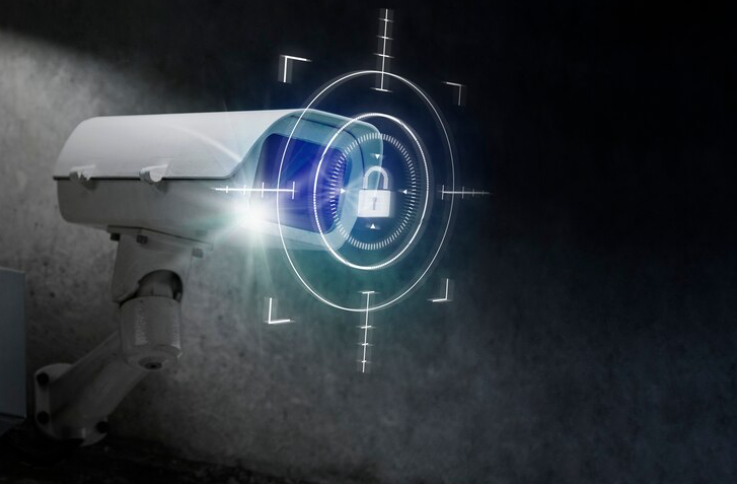
In commercial security, attention gravitates towards CCTV systems, access control, and remote monitoring platforms. These technologies are seen as the backbone of modern protection. However, one critical element is often overlooked: audible and visual deterrence. This gap highlights an issue between perceived security and actual response. While cameras may capture incidents and monitoring centres can verify threats, neither actively interrupts a crime in progress. This is where the outdoor siren value for commercial clients becomes highly relevant. For monitoring providers, this presents a clear opportunity – not only to improve real-world security but also to increase system value.
Understanding the Commercial Client Mindset (And Where Sirens Fit In)
Commercial clients typically approach security investments with a focus on control, visibility, and accountability. Their priorities tend to revolve around incident verification via CCTV, remote site monitoring, and access management through controlled entry systems. These elements are essential, but they don’t always address what happens as a threat unfolds.
A common blind spot is the lack of immediate, on-site deterrence. Detection systems can identify an intrusion, and monitoring teams can escalate alerts, but without a direct intervention at the site, intruders still have an opportunity to act. This is especially true in after-hours scenarios, where response times may be delayed.
This is exactly where the outdoor siren value for commercial clients becomes clear. Outdoor sirens bridge the gap between detection, response, and deterrence. They act as a frontline response tool – triggering an immediate reaction that disrupts intruder behaviour.
Consider common risk scenarios such as after-hours warehouse break-ins, unauthorised access to construction sites, or trespassing in industrial yards. In these situations, a loud siren and flashing strobe lights can force an intruder to abandon their actions before significant damage occurs.
By framing outdoor sirens as an active response mechanism rather than a passive alert, monitoring providers can align their solutions more closely with real-world risk mitigation.

Key Value Propositions Monitoring Providers Should Communicate
To effectively convey the outdoor siren value for commercial clients, monitoring providers need to translate technical capabilities into compelling, outcome-driven messaging. Below are key talking points that resonate strongly in sales conversations:
- Immediate Intruder Deterrence
A high-decibel siren combined with a bright strobe light creates an instant psychological and physical disruption. Intruders are forced to react immediately, often abandoning their attempt altogether. This reduces dwell time and significantly lowers the risk of damage or loss.
- Faster Incident Escalation
Outdoor sirens reinforce alarm escalation protocols by adding urgency to the situation. When an alarm is not just logged but actively sounding on-site, it signals that the system is responding in real time. It prompts quicker action from both monitoring teams and potential responders.
- Improved Client Perception of Security
A visible and audible deterrent enhances how a site is perceived by staff, tenants, and visitors. It signals that the system is professionally designed and actively managed, boosting confidence and trust in the security setup.
- Reduced Reliance on Guard Dispatch
While physical response services are important, they can be costly and time-consuming. Outdoor sirens can often prevent incidents from escalating to the point where guard intervention is required. This will lead to cost savings over time.
- Layered Security Enhancement
Sirens don’t replace existing systems – they strengthen them. When integrated with CCTV, sensors, and monitoring services, they form part of a layered defence strategy that improves overall effectiveness.
- Support for Compliance & Risk Reduction
Certain industries and sites require active deterrence measures as part of their risk management frameworks. Outdoor sirens can help meet these requirements while demonstrating a proactive approach to safety and compliance.
By consistently reinforcing these external siren benefits, providers can clearly articulate the outdoor siren value for commercial clients in a way that aligns with business priorities.
Turning Features Into Benefits: How to Position Outdoor Sirens in Sales Conversations
Monitoring providers often fall into the trap of listing product specifications, assuming that clients will connect the dots themselves. In reality, clients don’t buy features – they buy outcomes. To effectively communicate the outdoor siren value for commercial clients, it’s essential to translate technical features into tangible business benefits.
Here’s how to do that:
- High-decibel siren (e.g., 115 dB) → Forces immediate attention and discourages continued intrusion, reducing the likelihood of theft or damage.
- Flashing strobe light → Provides clear visual confirmation of an alarm event, especially in large or noisy environments where sound alone may not be enough.
- Wireless installation (Z-Wave technology) → Enables faster deployment with lower installation costs, particularly across multi-zone or temporary sites.
- Battery-powered with long life → Ensures continued operation during power outages – critical for maintaining security integrity in all conditions.
- Tamper alerts → Notifies the monitoring system if someone attempts to disable or remove the device, adding an extra layer of protection.
The key messaging tip is simple: always tie features back to risk reduction, cost savings, or operational efficiency. This approach makes the outdoor siren value for commercial clients far more compelling and relevant during sales discussions.
Use-Case Scenarios That Make the Value Obvious to Clients
Sometimes, the most effective way to communicate outdoor siren value for commercial clients is through real-world scenarios. By illustrating how outdoor sirens perform in specific environments, monitoring providers can make their benefits immediately clear.
- Warehouses & Industrial Sites
Situation: Large facilities with valuable inventory and limited after-hours activity.
Problem: Intruders can operate undetected for extended periods.
Outcome: When a siren is triggered, the loud alarm and flashing light force the intruder to flee, preventing theft and minimising loss.
- Retail & Shopping Precincts
Situation: High-visibility areas prone to vandalism and break-ins.
Problem: Passive systems may not deter opportunistic offenders.
Outcome: A siren draws immediate attention, discouraging vandalism and alerting nearby individuals.
- Construction Sites
Situation: Temporary setups with evolving layouts and limited infrastructure.
Problem: Traditional wired systems are costly and inflexible.
Outcome: Wireless outdoor sirens provide rapid deployment and effective deterrence without complex installation.
- Office Buildings
Situation: Multi-tenant environments with layered security needs.
Problem: Internal alarms may not escalate effectively.
Outcome: Outdoor sirens act as an additional escalation layer, ensuring incidents are both heard and seen.
- Remote or Low-Traffic Locations
Situation: Isolated sites with minimal human presence.
Problem: Delayed response times increase risk.
Outcome: The siren serves as a “virtual guard,” providing an immediate deterrent even without on-site personnel.
These examples help reinforce the outdoor siren value for commercial clients by connecting technology to real-world outcomes.

Case Study: Commercial Warehouse Alarm Upgrade With Outdoor Sirens
A warehouse operator managing valuable inventory across a multi-tenant industrial site was experiencing repeated after-hours trespassing incidents and attempted break-ins. While the property already had an internal alarm system and CCTV coverage, the client identified a major weakness: there was very little visible deterrent to potential intruders from outside the building.
The existing alarm setup relied heavily on internal sirens and remote monitoring notifications. By the time an intruder triggered the system, they were already inside the premises. Staff and neighbouring tenants also had limited awareness of an alarm event.
To improve deterrence and response visibility, the integrator upgraded the site with outdoor sirens connected to the existing monitored alarm infrastructure. The outdoor sirens were positioned to maximise visibility from entry points, loading areas, and public-facing sections of the property.
The upgrade included:
- Wireless outdoor siren integration
- Flashing visual alarm indicators
- Connection to intrusion detection zones
- Integration with remote monitoring workflows
- Automated activation during verified alarm events
Within months of deployment, the site reported a noticeable reduction in after-hours intrusion attempts and suspicious activity. Security staff also responded more quickly to alarms due to improved visibility and audible alerts along the site perimeter.
The client particularly valued the psychological deterrence created by highly visible external sirens. Rather than functioning purely as a notification device, the sirens became an active part of the property’s overall security posture.
For commercial clients, this demonstrates that outdoor sirens are not simply accessories to an alarm system — they are an important component in reducing risk, improving response awareness, and strengthening overall site protection.
Read more: Warehouse Security Alarm Systems: Best Perimeter Protection Setup For 2026
Comparing Indoor vs Outdoor Sirens in Commercial Security Systems
Many commercial properties already use internal alarm sirens, but relying solely on indoor alerts can limit the effectiveness of a broader security strategy. Outdoor sirens provide an additional layer of deterrence and visibility that is especially important for warehouses, retail sites, offices, construction projects, and industrial facilities.
Indoor sirens are primarily designed to alert occupants within the building to an intrusion or alarm event. While effective for internal notification, they may not provide enough external awareness to discourage intruders before damage or theft occurs.
Outdoor sirens, on the other hand, create an immediate visible and audible response outside the premises. This public-facing deterrent can pressure intruders to leave quickly while simultaneously drawing attention from nearby staff, security personnel, or neighbouring businesses.
| Feature | Indoor Siren | Outdoor Siren |
|---|---|---|
| Primary purpose | Internal alerting | External deterrence and alerting |
| Visibility to public | Low | High |
| Intruder deterrence | Moderate | Strong |
| Audible range | Limited | Extended outdoor coverage |
| Weather resistance | No | Yes |
| Suitable for perimeter protection | Limited | Excellent |
| Supports monitored response visibility | Moderate | High |
| Ideal for warehouses and commercial sites | Partial | Highly suitable |
For many commercial alarm systems, the strongest approach is to combine indoor and outdoor sirens in an integrated security strategy. Indoor sirens help notify building occupants, while outdoor sirens provide visible deterrence and increase awareness across the wider site perimeter.
This layered approach is particularly valuable in monitored commercial security systems where fast response times and early intrusion interruption are critical.
Integrating Outdoor Sirens Into a Broader Monitoring Strategy
Outdoor sirens are most effective when they are part of a well-designed, layered security strategy. Rather than treating them as standalone devices, monitoring providers should position them as integrated components within a broader ecosystem.
For example, motion sensors can trigger both an alert to the monitoring centre and the activation of an outdoor siren, creating a simultaneous detection-and-deterrence response. Door and window sensors can escalate intrusion events by activating sirens upon detection of unauthorised access. Panic buttons can also be configured to trigger sirens, providing an immediate and highly visible emergency signal.
Automation plays a key role here. Scene-based triggers allow for customised responses depending on the type of event, while zoned configurations enable different sirens to activate in specific areas. This level of control enhances both effectiveness and flexibility.
With Z-Wave ecosystems, integration becomes even more seamless. Devices can communicate wirelessly, enabling scalable and adaptable installations across a wide range of commercial environments.
By taking this approach, monitoring providers move beyond simply offering products – they become solution designers. This shift strengthens the perceived and actual outdoor siren value for commercial clients, positioning providers as trusted security partners.
Read more: Management Strategies For Outdoor Siren Power In Commercial Systems
Delivering Real Outdoor Siren Value for Commercial Clients With The Vision Z-Wave Outdoor Siren
When it comes to delivering practical, scalable solutions, the Vision Z-Wave Outdoor Siren stands out as a strong example of how to effectively deploy outdoor sirens in commercial environments.
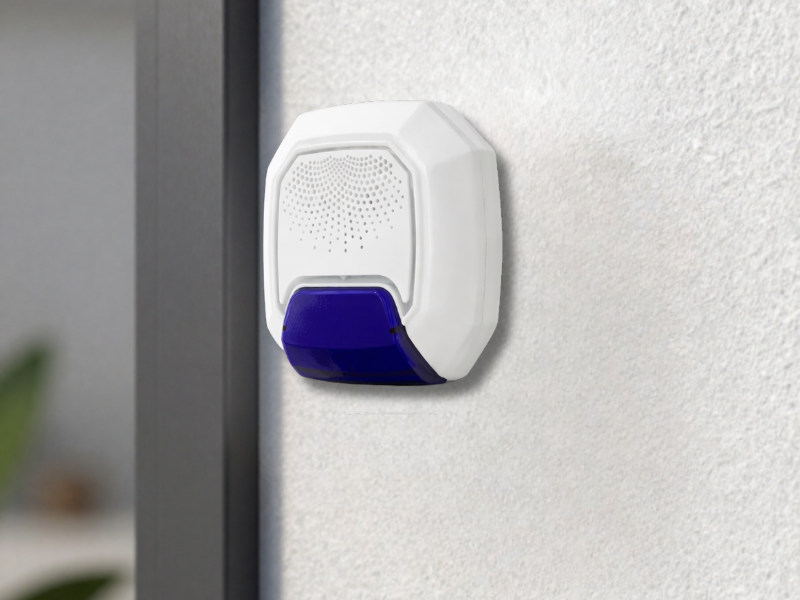
Designed with installers and monitoring providers in mind, this device combines reliability, flexibility, and ease of integration. It offers a powerful 115 dB siren paired with a bright strobe light, ensuring strong audible and visual deterrence in any scenario.
Key advantages include:
- Fully wireless Z-Wave Plus compatibility for seamless integration
- IP66-rated weather resistance, suitable for harsh Australian conditions
- Long battery life of up to two years, reducing maintenance requirements
- Built-in tamper detection and low battery alerts for added security
- Compatibility with a wide range of Z-Wave sensors and controllers
For channel partners, this makes it an ideal addition to existing systems. It can be easily bundled into monitoring packages, providing a straightforward upsell opportunity while enhancing overall system performance.
By leveraging solutions like this, providers can clearly demonstrate the outdoor siren value for commercial clients in both technical and commercial terms.
Best Practices for Commercial Outdoor Siren Deployment
Installing an outdoor siren is not simply about mounting a device to a wall. To maximise effectiveness and outdoor siren value for commercial clients, commercial alarm systems should be designed with siren placement, visibility, integration, and long-term reliability in mind.
One of the most important considerations is siren positioning. Outdoor sirens should be clearly visible from high-risk access points such as loading docks, front entrances, gates, car parks, and perimeter fencing. A visible siren acts as a proactive deterrent, signalling to potential intruders that the property is professionally protected.
Height and accessibility also matter. Sirens should be installed high enough to reduce the risk of tampering while remaining visible from public-facing areas. Integrators should also consider environmental exposure, ensuring the siren is suitable for harsh outdoor conditions, including rain, heat, dust, and UV exposure.
For larger commercial sites, multiple sirens may be required to provide complete perimeter coverage. Warehouses, multi-building facilities, and construction sites often benefit from strategically zoned siren deployment linked to different intrusion areas.
Integration is another critical factor. Outdoor sirens perform best when connected to a broader security ecosystem that may include:
- Intrusion detection sensors
- CCTV systems
- Access control platforms
- Remote monitoring services
- Smart automation workflows
Wireless outdoor sirens can also significantly simplify retrofit projects by reducing cabling requirements and minimising disruption to business operations.
Finally, backup power and communication redundancy should always be considered when evaluating outdoor siren value for commercial clients. Commercial alarm systems must remain operational during power outages or network interruptions, especially in higher-risk environments.
By treating outdoor sirens as part of a complete commercial security strategy rather than standalone devices, integrators can deliver stronger deterrence, faster incident awareness, and more reliable long-term protection for clients.
Read more: Distributed Security System – Top 5 Z-Wave Outdoor Sirens
To Conclude,
Outdoor sirens are active deterrents that play a critical role in modern commercial security systems. By bridging the gap between detection and response, they deliver immediate, on-site intervention to prevent incidents from escalating.
For monitoring providers, the opportunity lies in shifting from feature-based selling to outcome-driven conversations. By consistently highlighting the outdoor siren value for commercial clients, providers can increase deal value and deliver better real-world security outcomes.
Solutions like the Vision Z-Wave Outdoor Siren make it easier than ever to integrate this capability into existing systems. The next step is simple: include outdoor sirens in every commercial security discussion and position them as a standard component of a complete, professional solution.
Looking to upgrade a commercial alarm system with smarter outdoor deterrence? DHS supplies professional-grade security and alarm solutions for installers, integrators, and commercial projects across Australia and New Zealand.
Ready to strengthen your offering? Contact DHS today to explore our excellent alarm provider sales support and technical guidance, and to find the right integration approach for your next project!
Frequently Asked Questions
What does an outdoor siren do in a commercial alarm system?
An outdoor siren provides a visible and audible warning when a security alarm is triggered. In commercial alarm systems, outdoor sirens help deter intruders, alert nearby staff or security personnel, and increase awareness of alarm events across the property perimeter.
Are outdoor sirens effective for commercial properties?
Yes. Outdoor sirens are highly effective for warehouses, offices, retail stores, industrial facilities, and construction sites because they create immediate external deterrence. Many commercial clients use outdoor sirens to improve intrusion response times and discourage opportunistic criminal activity.
Can outdoor sirens integrate with monitored alarm systems?
Modern outdoor sirens can integrate with monitored alarm systems, smart sensors, CCTV platforms, and access control systems. This allows alarm events to trigger multiple automated responses simultaneously, improving overall commercial security performance.
Do outdoor sirens work with access control systems?
Yes. Outdoor sirens can integrate with access control systems to trigger automated responses during unauthorised access attempts, forced entry events, or after-hours intrusion detection. This creates a more connected and responsive commercial security ecosystem.
Are outdoor sirens suitable for warehouse security systems?
Outdoor sirens are commonly used in warehouse security systems because they help protect large perimeter areas and improve alarm visibility across industrial sites. When combined with sensors, CCTV, and monitoring services, they form an important part of warehouse intrusion-prevention strategies.