
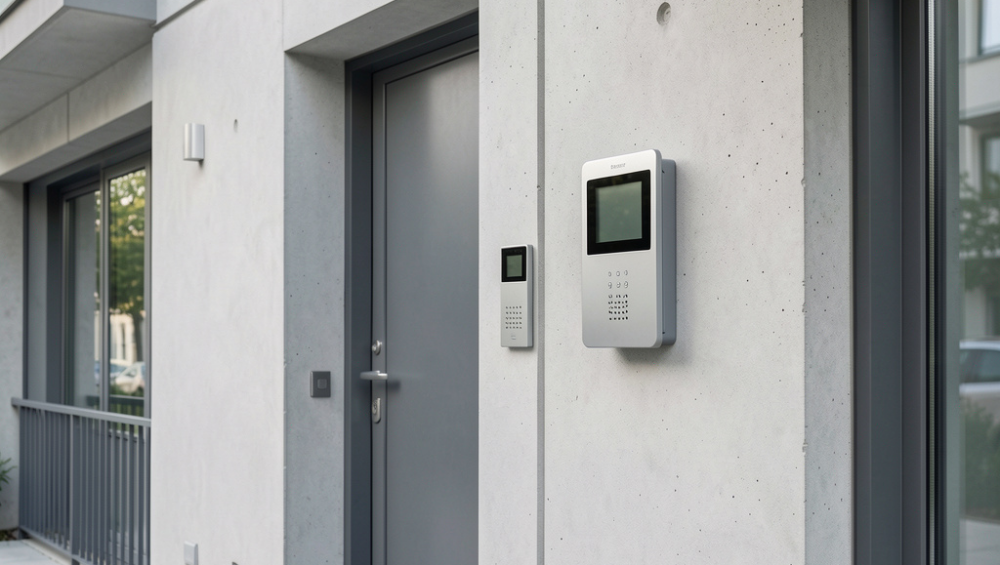
Warehouses face increasing security challenges in 2026 as businesses manage larger facilities, higher-value inventory, and more complex logistics operations. Theft, vandalism, unauthorised access, and after-hours intrusions remain major concerns across distribution centres, industrial warehouses, and commercial storage facilities. Traditional standalone alarms are no longer enough to protect modern warehouse environments effectively. Businesses now require integrated warehouse security alarm systems that combine perimeter protection, intrusion detection, CCTV, access control, and automation into a unified security strategy.
Modern warehouse security alarm systems are designed not only to detect intrusions but also to deter threats before criminals gain access to the building. By creating multiple layers of protection around the property, businesses can reduce response times, improve site visibility, and strengthen overall operational security.
What Is a Warehouse Security Alarm System?
A warehouse security alarm system is a commercial-grade intrusion and perimeter protection solution designed specifically for industrial and warehouse environments. Unlike residential alarm systems, warehouse security solutions must secure larger areas with higher risk, multiple access points, outdoor boundaries, and high-value assets, while remaining reliable under demanding operating conditions.
Modern warehouse security alarm systems typically combine perimeter sensors, internal motion detection, outdoor sirens, CCTV integration, access control, and smart monitoring platforms. Rather than relying on a single alarm trigger, these systems work together to provide layered protection across the entire facility.
The goal of a warehouse alarm system is not simply to activate a siren when someone enters the building. Effective commercial security systems are designed to detect suspicious activity early, verify incidents quickly, and allow faster response from security personnel or monitoring services. This layered approach is particularly important for warehouses that operate overnight, contain valuable inventory, or are located in remote industrial areas.
Why Warehouse Perimeter Security Matters
Warehouse facilities are common targets for theft and trespassing because they often contain valuable stock, expensive equipment, and large outdoor areas with limited overnight supervision. In many cases, criminals attempt to exploit vulnerable entry points such as loading docks, gates, roller doors, and poorly monitored fence lines.
Perimeter security plays a critical role in reducing these risks by allowing businesses to detect threats before intruders reach the building. Early detection gives security teams additional time to respond and can significantly reduce the likelihood of successful break-ins.
For logistics facilities, manufacturing warehouses, and distribution centres, perimeter security is also important for maintaining operational continuity. Security incidents can lead to inventory losses, damaged equipment, downtime, insurance complications, and disruptions to deliveries or supply chains.
Modern warehouse security alarm systems are designed to provide visible, physical deterrence while improving overall site awareness. Outdoor sensors, warning devices, cameras, and automated responses all contribute to a more proactive security strategy.
Read more: Industrial Alarm Siren Systems For Commercial Security: How To Specify The Right Solution
Key Components of a Commercial Warehouse Alarm System
A commercial warehouse alarm system usually combines several technologies into a centralised platform that manages intrusion detection, monitoring, and automation. Perimeter detection devices are often the first layer of protection. These sensors monitor outdoor movement around the property and help identify suspicious activity before an intruder reaches the building.
Outdoor PIR sensors are commonly used to monitor walkways, entrances, and fence lines. Beam sensors create invisible detection barriers along boundaries or driveways, while fence-mounted vibration detectors can identify climbing or cutting attempts on perimeter fencing. Larger sites may also use microwave or radar-based sensors to monitor open outdoor areas more effectively.
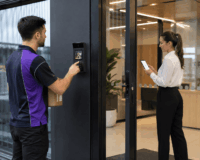
The second layer of protection focuses on securing the building envelope itself. Roller doors, loading docks, windows, and emergency exits are common entry points that require dedicated intrusion protection. Door contacts, glass break sensors, and internal motion detectors help monitor these vulnerable areas and trigger alerts if unauthorised access occurs.
Inside the warehouse, additional alarm zones can protect critical inventory areas, restricted access sections, dispatch zones, or equipment storage areas. These internal zones provide an additional layer of security if someone bypasses the outer perimeter.
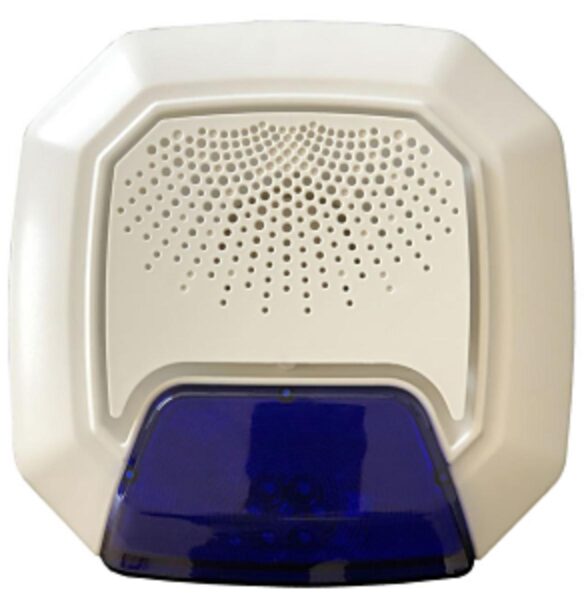
Outdoor sirens and visual warning devices remain an important part of warehouse security systems because they create an immediate deterrent when an alarm is triggered. High-powered sirens combined with flashing strobes can quickly attract attention and discourage intruders from entering the site further.
Most modern warehouse security alarm systems are also integrated with monitoring platforms, mobile applications, CCTV systems, and smart automation technologies. This integration allows businesses to manage alarms remotely, receive instant notifications, and coordinate automated responses during security events.
Outdoor Alarm Sirens and Warning Devices
Outdoor warning devices continue to play an important role in warehouse security alarm systems. While sensors detect intrusions, sirens and visual warning devices help deter criminals and notify nearby personnel of a security breach.
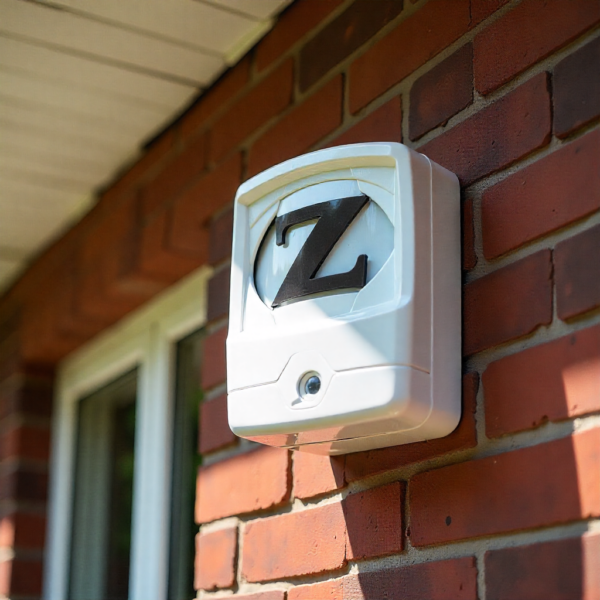
Modern outdoor sirens are designed for commercial and industrial use, with weather-resistant housings, high-volume output, and tamper protection features. Many systems now combine audible alarms with flashing strobes or voice warning systems to improve visibility and deterrence.
Proper placement of outdoor sirens is critical for effective performance. Sirens should be installed in visible locations to cover vulnerable access points, such as loading bays, gates, and external entrances. Mounting devices higher on building walls also helps improve sound projection and reduce the risk of tampering.
Some commercial systems now integrate voice announcements that warn intruders they are being monitored. This can help reduce unnecessary escalation while providing additional deterrence before security personnel arrive.
Read more: Perimeter Alarm Planning For Warehouses With Multiple Access Points
Designing Layered Warehouse Security Alarm Systems
Robust warehouse security alarm systems should never depend on a single detection device. Instead, professional systems are designed in layers to provide early detection, progressive escalation, and asset-level protection. This layered approach will help improve reliability, reduce false alarms, and ensure an appropriate response at each stage.
Outer Layer – Boundary Detection
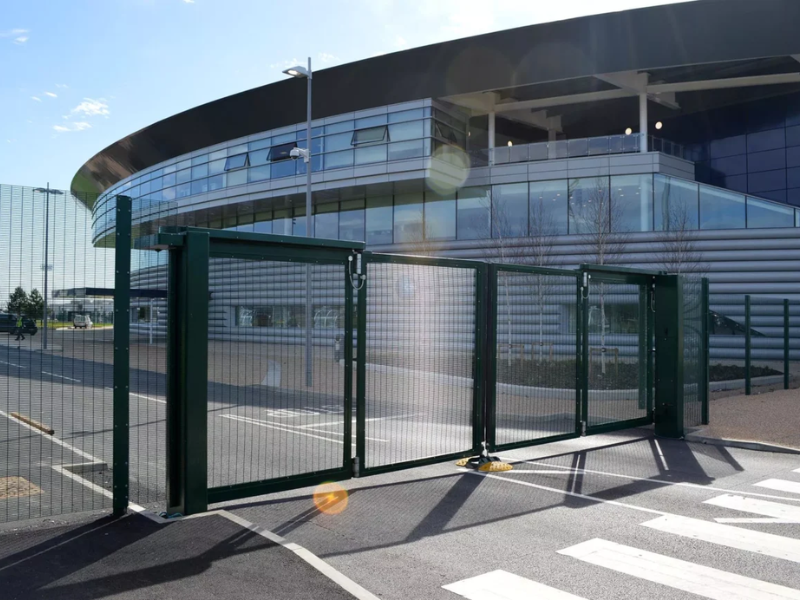
The outermost layer focuses on detecting threats before they reach the building itself. This may include:
- Beam sensors installed along perimeter fencing
- Outdoor PIR detectors covering yard zones
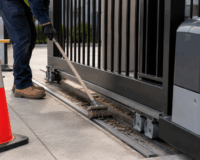
- Gate position sensors monitoring vehicle and pedestrian access
This layer is your first opportunity to deter. When boundary sensors trigger, the outdoor siren can activate immediately, delivering high-decibel sound and visual strobe alerts. Early activation often discourages opportunistic intruders from testing the site’s vulnerabilities.
You can also configure conditional logic at this stage. For example, during business hours, the system may trigger short warning bursts or strobe-only alerts. After hours, the same event could trigger full siren output and an instant notification to the monitoring centre. This flexibility makes the outer layer both proactive and operationally practical.
Mid Layer – Building Envelope Protection
If the boundary is breached, the second layer secures the warehouse structure itself. This typically includes:
- Roller door contact sensors
- Entry door contacts
- Glass break or window sensors (where applicable)
This layer confirms whether an attempted intrusion is escalating into physical access. When triggered alongside outer-layer alerts, the system can intensify its response. For example, extending siren duration, increasing strobe frequency, or triggering internal announcements.
Automation logic can also link this stage to CCTV systems, ensuring cameras focus on affected zones and recording begins immediately. By reinforcing perimeter logic at the building envelope, you significantly reduce the likelihood of undetected forced entry.
Inner Layer – Asset and Zone Protection
The final layer protects high-value inventory and restricted areas within the warehouse. Even if an intruder reaches internal space, protection does not stop at the door.
Components may include:
- Motion detectors inside storage aisles
- Monitoring of secure cages or lockable storage areas
- Smart lighting automation upon confirmed intrusion
At this stage, the warehouse perimeter alarm strategy transitions from deterrence to containment and evidence support. Z-Wave automation enables advanced responses such as locking down controlled access points, activating additional siren cycles, or sending tiered notifications to supervisors and security personnel.
By designing in layers, you create a system that responds intelligently rather than reactively. Each level supports the next, forming a cohesive and scalable security framework suited to modern warehouse operations.
Best Sensors for Warehouse Perimeter Detection
Choosing the right perimeter detection technology is essential to achieving reliable warehouse security. Different sites require different sensor types depending on their size, layout, environmental conditions, and risk profile.
Outdoor PIR sensors remain among the most widely used perimeter detection devices because they are cost-effective and well-suited to monitoring common access pathways. Dual-technology PIR sensors are particularly useful in outdoor environments because they help reduce false alarms caused by weather conditions or small animals.
Beam sensors are another popular solution for warehouse perimeter protection. These devices create invisible infrared barriers between transmitter and receiver units and are highly effective along fence lines, driveways, and long external boundaries. When the beam is interrupted, the system immediately triggers an alert.
Large industrial facilities may benefit from microwave- or radar-based detection systems, which can monitor wider outdoor areas at longer ranges. These technologies are commonly used for logistics centres, storage yards, and remote commercial sites.
Fence-mounted detection systems are also increasingly used in high-security environments. These sensors can identify climbing, cutting, or impact activity directly on perimeter fencing and provide an early warning before entry occurs.
Selecting the right combination of sensors is important because warehouse environments often involve varying lighting conditions, exposure to outdoor weather, and operational movement during business hours.
Monitored vs Unmonitored Warehouse Alarm Systems
When planning a warehouse security upgrade, businesses must decide whether to use a monitored or unmonitored alarm system. Monitored systems connect directly to a professional monitoring centre that responds to alarm events and coordinates emergency action when required.
For warehouses that store valuable inventory or operate in remote areas, monitored systems offer significant advantages. They offer continuous oversight, faster response times, and improved incident management, particularly during overnight periods when sites may be unattended.
Unmonitored warehouse security alarm systems rely primarily on local sirens and mobile notifications. These systems can still provide effective protection for smaller facilities, especially when integrated with remote mobile access and CCTV verification. However, response times may depend entirely on the business owner or staff receiving alerts.
Many businesses now choose hybrid warehouse security alarm systems that combine mobile notifications with optional monitoring services, creating a balance between cost efficiency and professional oversight.
Real Warehouse Security Case Studies
A logistics warehouse recently upgraded its perimeter security by installing beam sensors along the external fence line, combined with integrated CCTV and outdoor sirens. The system provided earlier detection of after-hours activity while reducing false alarms through camera verification. Automated lighting activation during perimeter breaches also improved visibility across loading areas and vehicle access points.
Another industrial facility with multiple buildings implemented a layered security system combining outdoor PIR sensors, smart gate automation, access-controlled entry points, and centralised alarm monitoring. By integrating multiple technologies into a unified platform, the site improved operational oversight while simplifying security management across the entire facility.
A high-value inventory warehouse implemented internal zoning to keep restricted storage areas separate from general warehouse areas. The business integrated access control, CCTV verification, and remote mobile alerts to create a more flexible and responsive security strategy tailored to different operational zones.
Integration with Monitoring and Automation Platforms
Modern commercial warehouse security alarm systems are increasingly interconnected, and this is where the real value of a Z-Wave siren becomes clear. A standalone alarm is no longer sufficient for many warehouse operators managing complex environments with multiple entry points, staff schedules, and asset risks. Integration is now a core expectation rather than a premium feature.
Z-Wave technology enables seamless communication between devices, allowing sirens to operate as part of a broader, intelligent ecosystem rather than in isolation. When integrated correctly, a Z-Wave siren becomes an active participant in both security response and operational automation.
Z-Wave sirens can connect with:
- Alarm control panels
- Commercial automation platforms
- Remote monitoring centres
- Smart access control systems
- CCTV systems
This level of integration allows security integrators to design systems that respond dynamically to real-world conditions, rather than relying on simple trigger-and-alarm logic.
Through automation rules and platform-level logic, integrators can configure highly customised behaviours, including:
- Time-based escalation rules (e.g. full siren activation after hours only)
- Different alert patterns for perimeter vs internal breaches
- Temporary siren suspension during scheduled deliveries or maintenance windows
- Automatic camera recording and event tagging upon alarm activation
- Integration with lighting systems to flash external lights during alerts
- Real-time alerts sent to mobile devices or monitoring dashboards
For example, during operational hours, a perimeter breach may trigger a visual strobe alert and send notifications to on-site staff, avoiding unnecessary disruption. After closing time, that same event could escalate instantly, activating the Z-Wave siren at full volume, locking access points, and alerting a remote monitoring centre for immediate response.
Beyond intrusion detection, integration also supports broader use cases, including safety alerts, emergency evacuations, and compliance monitoring. A Z-Wave siren can be linked with environmental sensors to trigger alerts for fire risks, flooding, or hazardous conditions, expanding its role beyond traditional security.
This intelligent integration significantly enhances system value and operational efficiency. Instead of reacting to isolated alarms, warehouse operators gain a coordinated, context-aware security framework. The result is faster response times, fewer false alarms, and greater confidence that the system will perform reliably when it matters most.
Real-World Applications in Warehouse Security
Perimeter warehouse security alarm systems are widely used across various warehouse operations.
- In logistics and distribution centres, they help protect large volumes of goods that are constantly moving in and out of the facility.
- Construction storage sites rely on perimeter security to safeguard equipment and materials that are often left unattended overnight.
- Cold storage warehouses and high-value inventory facilities require even stricter security measures, as the cost of theft or damage can be extremely high.
In these environments, perimeter alarms are often combined with surveillance and access control systems to create a comprehensive security solution. Perimeter security is not just an optional upgrade, but a critical component of modern warehouse protection.
Choosing the Right Warehouse Alarm Setup for Your Site
Every warehouse has different operational requirements, site layouts, and security priorities. The right warehouse security alarm systems depend on factors such as warehouse size, perimeter complexity, inventory value, staffing arrangements, and integration requirements.
Businesses should focus on creating a layered security design that provides reliable perimeter protection while remaining scalable for future expansion. Outdoor-rated sensors, integrated monitoring platforms, and smart automation capabilities are increasingly important for commercial facilities that require long-term flexibility.
Wireless technologies such as Z-Wave can also simplify installation and make future upgrades easier, particularly for expanding warehouse operations or retrofit projects.
For many businesses, integrating warehouse alarms with CCTV, access control, lighting automation, and gate management creates a more complete commercial security ecosystem that improves both safety and operational efficiency.
Professional system design is essential to ensure proper sensor placement, minimise blind spots, and create a solution tailored to the site’s operational requirements.
In Conclusion,
Warehouse security in 2026 requires more than standalone intrusion alarms. Modern commercial facilities benefit from integrated warehouse security alarm systems that combine perimeter detection, outdoor warning devices, CCTV integration, access control, and smart automation into a unified protection strategy.
A well-designed warehouse perimeter security system can help businesses reduce the risk of theft, improve response times, protect valuable inventory, and strengthen overall site visibility. By using layered protection and intelligent automation, warehouses can create more proactive and scalable security solutions that adapt to changing operational needs.
Whether securing a small warehouse or a large industrial facility, investing in professionally designed commercial warehouse security alarm systems helps create stronger long-term protection and greater operational confidence.
Let’s explore the capabilities of the Vision Z-Wave Outdoor Siren for your next commercial project and partner with Digital Home Systems to access certified Z-Wave solutions, expert support, and products designed for modern warehouse security across Australia and the wider region.
3 Comments
[…] solution like the Vision Z-Wave Outdoor Siren is well-suited to these environments. Its wireless design simplifies installation across large sites, while its powerful alarm and […]
[…] Perimeter protection: Physical barriers such as fencing, gates, and access control systems, often supported by sensors that detect unauthorised entry. […]
[…] Beyond responding to incidents, their presence alone acts as a strong psychological deterrent. When installed in visible locations, they signal that the property is actively protected. This makes an outdoor siren upgrade an ideal first step in strengthening perimeter security. […]