
In an era where connectivity drives most digital systems, Access Control Systems play a critical role in securing physical spaces while maintaining operational efficiency. From corporate offices and hospitals to residential buildings and industrial facilities, these systems ensure that only authorized individuals can enter specific areas.
However, as systems become more connected, they also become more dependent on network infrastructure. This creates a key vulnerability—what happens when the network fails?
Network outages are inevitable. Whether due to internet disruptions, hardware malfunctions, cyber incidents, or maintenance, connectivity loss can occur at any time. Without proper system design, this can lead to denied access, compromised security, and operational downtime.
Offline access control addresses this challenge by allowing systems to function independently of network connectivity. It ensures that access decisions continue to be made instantly and securely, preserving both security integrity and user experience.
What Are Access Control Systems?
Access Control Systems are electronic security solutions designed to manage entry into buildings or restricted areas. Unlike traditional locks, they provide dynamic and flexible control through digital authentication methods such as:
- RFID cards and proximity key fobs
- PIN codes entered via keypads
- Biometric identification (fingerprint, facial recognition)
- Mobile credentials via smartphone apps
These systems are composed of several interconnected components:
- Readers, which capture user credentials
- Controllers, which process access decisions
- Locking mechanisms, such as electric strikes or magnetic locks
- Management software, which allows administrators to configure and monitor the system
While many systems rely on centralized servers for real-time validation, robust designs ensure that they can continue operating even when disconnected.

Why Network Outages Are a Critical Concern
Network outages can occur for numerous reasons:
- Internet service provider failures
- Router or switch malfunctions
- Cybersecurity incidents or attacks
- Scheduled maintenance or updates
- Power disruptions affecting network hardware
When access control systems rely entirely on connectivity, outages can lead to:
- Employees being locked out of workplaces
- Security vulnerabilities in restricted zones
- Disruptions to daily operations
- Loss of real-time monitoring and control
In environments where security and access are mission-critical, such as hospitals or data centers, these risks are unacceptable. This is why offline functionality is essential.
Core Principle of Offline Access Control
The foundation of offline Access Control Systems is local autonomy.
Instead of depending on a central server for every decision, the system stores all critical information locally within controllers. This includes:
- User credentials
- Access permissions
- Time-based rules
- Security configurations
When a user attempts to access a door, the controller processes the request instantly using this stored data. This ensures:
- No delays caused by network latency
- Continuous operation during outages
- Consistent enforcement of security policies
Once the network is restored, the system synchronizes all data with the central server.

Deep System Architecture of Access Control Systems
To understand how offline systems function effectively, it is important to examine the internal architecture of Access Control Systems.
These systems are built using a layered model:
- Credential Layer: where user identity originates (cards, biometrics, mobile)
- Reader Layer: captures and transmits credential data
- Controller Layer: evaluates and processes access requests
- Management Layer: provides centralized configuration and monitoring
During normal operation, these layers communicate continuously. However, during a network outage, the architecture shifts to a decentralized mode, where controllers take over full responsibility for decision-making.
This distributed design ensures that the system does not rely on a single point of failure, significantly improving reliability.
Local Intelligence and Edge Computing
A key advancement in modern Access Control Systems is the integration of edge computing.
Edge computing enables controllers to process data locally rather than relying on centralized servers. This provides several critical advantages:
- Faster authentication and response times
- Reduced reliance on network connectivity
- Enhanced system resilience
In offline scenarios, edge computing becomes the primary mode of operation. Controllers act as intelligent nodes, capable of:
- Verifying credentials
- Enforcing access rules
- Logging events
This allows the system to maintain full functionality even without external communication.
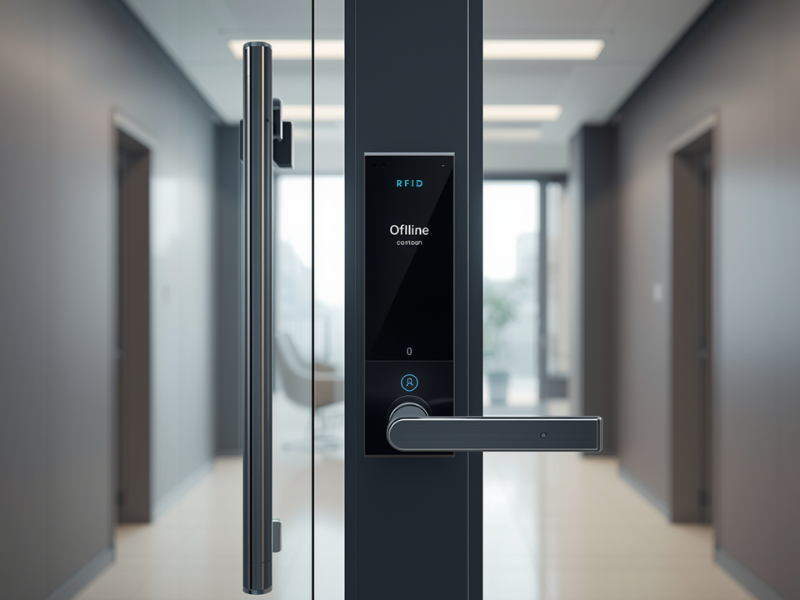
Local Controllers: The Brain of the System
Controllers are the central component of offline operation in Access Control Systems.
They are responsible for:
- Storing user credentials and permissions
- Processing authentication requests
- Controlling door locks and mechanisms
- Recording access events and system activity
Advanced controllers are equipped with sufficient processing power and memory to handle large datasets and complex rules. This enables them to operate independently for extended periods without network connectivity.
Each controller effectively acts as a self-contained security unit, ensuring uninterrupted access control.
Advanced Credential Storage and Data Management
Offline functionality depends heavily on efficient data storage and management.
Types of Data Stored Locally
- User credentials (RFID identifiers, PIN codes, biometric templates)
- Access permissions and role assignments
- Time schedules and restrictions
- Door configurations and operational rules
High-Capacity and Performance
Modern controllers can store thousands of users and large volumes of event data. Optimized data structures ensure rapid lookup and minimal processing time.
Handling Updates During Outages
When the system is offline, updates such as new users or revoked access may not be immediately applied. However, advanced systems can:
- Queue updates for later synchronization
- Apply cached policies
- Maintain security consistency
Data Synchronization
Once connectivity is restored, the system automatically:
- Uploads stored logs
- Updates credentials and permissions
- Synchronizes all controllers
This ensures that the entire system remains consistent and up to date.

Authentication Methods in Offline Mode
Offline Access Control Systems support multiple authentication methods, each designed to function independently.
RFID Cards and Key Fobs
Provide fast and reliable authentication, ideal for high-traffic areas.
PIN Codes
Simple and cost-effective, with codes stored locally in controllers.
Biometric Authentication
Offers enhanced security using fingerprint or facial recognition.
Mobile Credentials
Allows access via smartphones using Bluetooth or NFC technology.
Multi-Factor Authentication
Combines multiple methods for increased security, even without network connectivity.
Complex Rule Enforcement Without Connectivity
Modern systems enforce advanced security rules locally.
Time-Based Access
Restricts access to specific times or schedules.
Role-Based Permissions
Assigns different access levels to different users.
Anti-Passback
Prevents credential sharing or misuse.
Zone-Based Access
Controls movement between different areas within a facility.
These rules are stored within controllers and continue to function during outages.

Real-Time Access Decisions Without Internet
Even without connectivity, Access Control Systems operate in real time through local processing.
Access Flow
- User presents credential
- Reader captures data
- Controller verifies against local database
- Access is granted or denied
This process takes milliseconds and ensures a seamless user experience.
Event Logging and Audit Trails
Offline systems continue to record all activity.
Logged Events
- Entry and exit records
- Failed access attempts
- Door status changes
- Security alerts
Data Integrity
Logs are stored locally and uploaded once the network is restored, ensuring complete audit trails.

Security During Network Outages
Security is not compromised in offline mode.
Key Security Features
- Encrypted data storage
- Secure internal communication
- Tamper detection systems
- Predefined access policies
These ensure that the system remains secure even without network connectivity.
Power Backup and System Reliability
Reliable power is essential for offline operation.
Backup Solutions
- Battery backups
- Uninterruptible Power Supplies (UPS)
These ensure continuous operation during both network and power outages.

Hybrid Operation and Seamless Transition
Modern Access Control Systems operate in hybrid mode, combining online and offline capabilities.
Advantages
- Real-time control when connected
- Continuous operation when offline
- Automatic switching between modes
Users experience no disruption during transitions.
Challenges and Limitations
Despite their advantages, offline systems have some limitations:
- Delayed updates to permissions
- Limited storage capacity
- Synchronization delays
These challenges can be mitigated with proper system design and planning.

Best Practices for Implementation
To maximize performance:
- Use high-capacity controllers
- Regularly synchronize data
- Implement backup power solutions
- Conduct routine testing
- Plan for scalability
Applications Across Industries
Offline access control is essential in various sectors:
Commercial Buildings
Ensures uninterrupted employee access.
Healthcare Facilities
Maintains security in critical areas.
Residential Complexes
Provides reliable and convenient access.
Industrial Sites
Supports operations in unstable network environments.
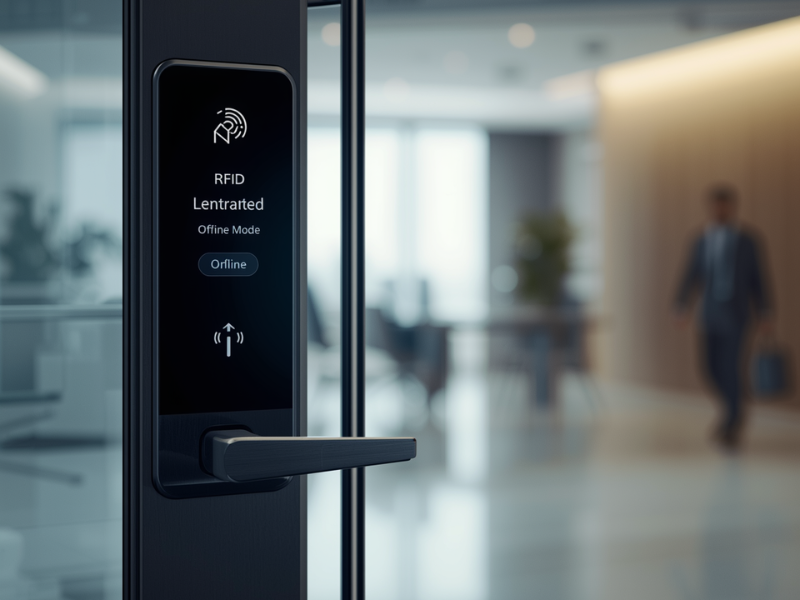
Future Trends in Access Control Systems
The future of Access Control Systems focuses on resilience, intelligence, and adaptability.
Emerging Technologies
- AI-driven decision-making
- Advanced edge computing
- Mobile-first authentication
- Self-healing systems
These innovations will further enhance offline capabilities and system reliability.
Conclusion
Offline capability is a core requirement for modern Access Control Systems. It ensures that doors, permissions, and security rules continue to operate reliably even when network connectivity is lost.
By using local controllers, edge processing, and encrypted on-device data, systems can make fast, accurate access decisions without relying on the cloud. This keeps operations running, protects restricted areas, and preserves complete audit trails during outages.
In practice, offline-ready systems reduce downtime, prevent lockouts, and maintain consistent security standards across all entry points. As technologies evolve, these capabilities will only become more intelligent and resilient.
Choosing an access control solution with strong offline functionality is a practical investment in reliability, continuity, and long-term security.
To better plan your budget, check this guide on access control systems costs