Make Air Conditioner Smart Without Replacing Your Split System
Many homeowners and businesses want smarter air conditioning control, but they do not always want to replace a working split system. If your air conditioner still performs well but only works with a handheld remote, there may be a better option. You can make air conditioner smart by using a smart controller that sends the same infrared commands as your original remote.
This approach is ideal for people who want app control, automation, scheduling, or smart home integration without buying a completely new air conditioner. Instead of replacing the indoor and outdoor units, a smart AC controller can act as a bridge between your existing split system and your smart home setup.
For Z-Wave users, the Remotec ZXT-800 is one option designed to convert Z-Wave commands into infrared signals for compatible air conditioners and AV devices. It is especially useful for homes, apartments, offices, assisted living spaces, and automation projects where an existing IR-controlled split system needs smarter control.
Why Make Air Conditioner Smart Instead of Replacing It?
Replacing a split system air conditioner can be expensive, especially if the unit is still working properly. In many cases, the problem is not the air conditioner itself. The problem is the way it is controlled.
Traditional air conditioning remotes are simple, but they have limitations. You need to be in the room, point the remote at the unit, and manually change the settings each time. If the remote is lost, damaged, or kept in another room, controlling the system becomes inconvenient.
When you make air conditioner smart, you can keep your existing unit while adding modern control features. Depending on your controller, gateway, and air conditioner compatibility, you may be able to turn the unit on and off, adjust temperature, control modes, or include the air conditioner in automation scenes.
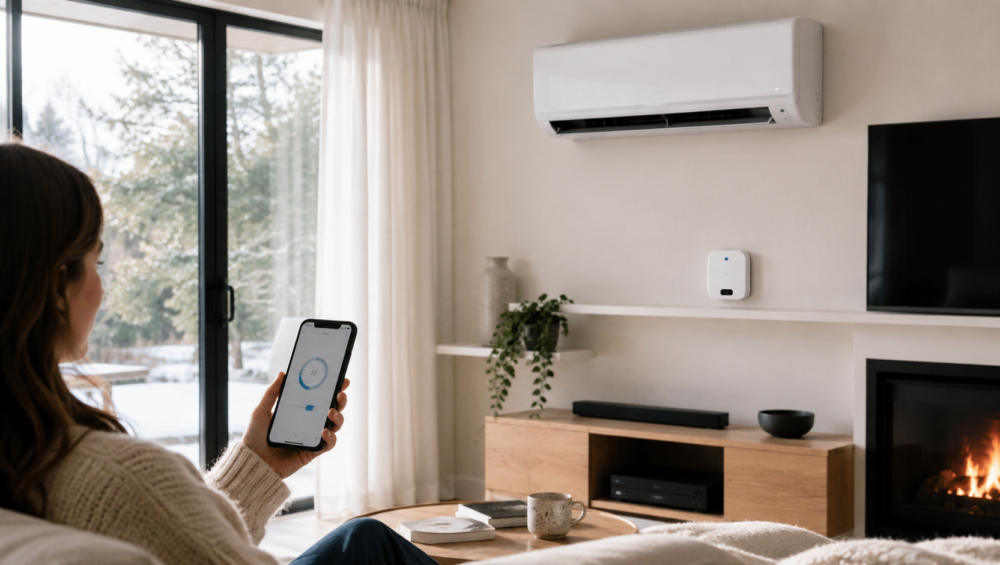
This can be useful during both summer and winter. In summer, smart control can help cool a room before you arrive home. In winter, it can help manage reverse-cycle heating more conveniently.
For many homes and small offices, this is one of the easiest ways to make air conditioner smart while keeping the existing split system in place.
How Smart AC Controllers Work
Most split system air conditioners use infrared signals from a remote control. When you press a button on the remote, it sends an IR command to the indoor unit. A smart AC controller works in a similar way, but instead of pressing a physical remote, the command comes from a smart home system, app, or automation gateway.
The controller receives the instruction and sends the correct infrared signal to the air conditioner. This allows the existing AC unit to respond as though the original remote had been used.
This is one of the most practical ways to make air conditioner smart without replacing the unit. The air conditioner does not need built-in Wi-Fi or native smart home support. It simply needs to be compatible with infrared control and the selected controller’s IR code database.
Smart Control for Reverse-Cycle Heating in Winter
During colder months, many Australian homes and offices rely on reverse-cycle split systems for heating. This is where smart air conditioning control becomes especially useful.
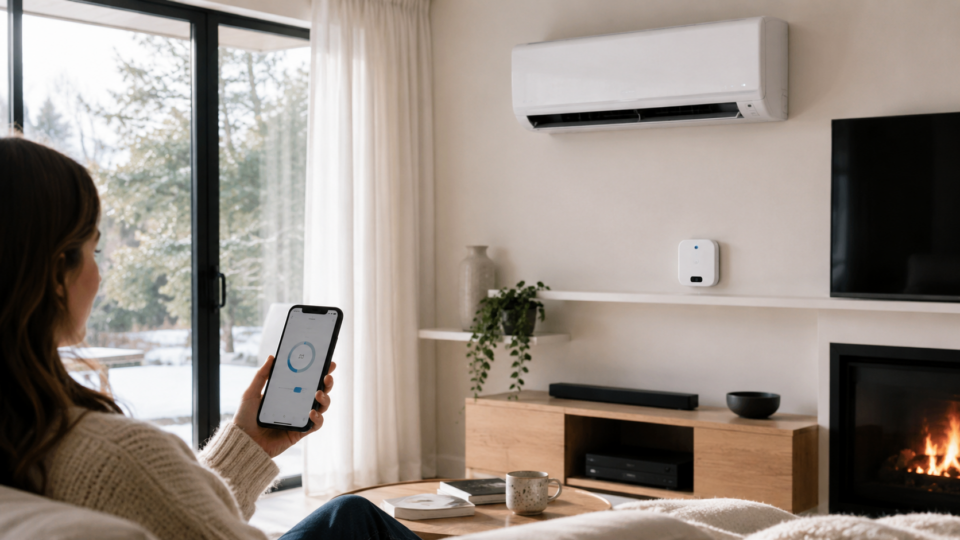
Instead of walking into a cold room and waiting for it to warm up, users can prepare the space earlier through automation. For example, a compatible smart system may turn on the split system before work starts, before someone arrives home, or during set times of the day.
For offices, smart control can help improve comfort in meeting rooms, reception areas, and small workspaces. For homes, it can make winter mornings and evenings more comfortable. For assisted living environments, it can make climate control easier for users who may find traditional remotes inconvenient.
If you want to make air conditioner smart for winter comfort, an IR-based controller can be a practical upgrade for compatible split systems.
Using Z-Wave to Control an Existing Air Conditioner
Z-Wave is commonly used in smart home and automation systems because it allows different smart devices to communicate through a compatible gateway. Lights, sensors, locks, switches, thermostats, and other devices can often be managed from one platform.
However, many split system air conditioners do not have Z-Wave built in. This is where a Z-Wave-to-IR bridge can help.
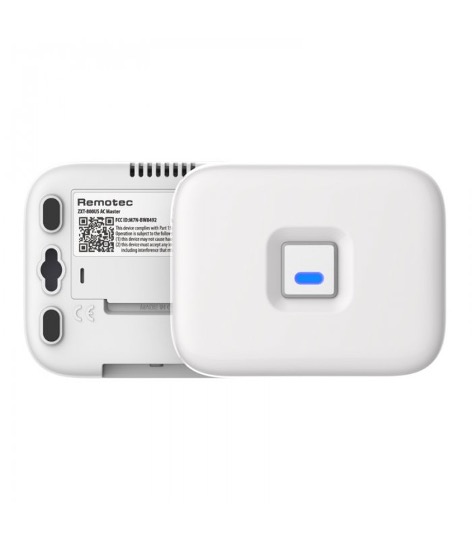
The Remotec ZXT-800 is a Z-Wave Plus compliant Z-Wave-to-IR converter designed to receive Z-Wave commands and translate them into infrared commands. You can also view the Remotec official product information for more technical product details. This means compatible air conditioners and AV devices can be controlled through a Z-Wave automation system.
For users who already have a Z-Wave gateway, this can be a smart way to connect an existing air conditioner to the rest of the system. Instead of treating the air conditioner as a separate device with its own remote, it can become part of a more centralised smart home setup.
Why the Remotec ZXT-800 Is Useful
The Remotec ZXT-800 is designed for AC and AV control. It can work with compatible split air conditioners and entertainment devices that use infrared commands. This makes it more flexible than a basic air conditioning remote replacement.
As a smart AC control solution, it offers several useful features. It converts Z-Wave commands into IR signals, works with Z-Wave compliant gateways, includes a built-in temperature and humidity sensor, and can operate using either 3 x AAA batteries or Micro USB power.
The built-in sensor is particularly useful for air conditioning automation. Room temperature and humidity information can help users understand the indoor environment and may support more practical automation scenes, depending on the gateway and setup.
For Australian Z-Wave projects, frequency compatibility is important. The ZXT-800 supports the Australian Z-Wave frequency of 921.42MHz and is designed for use with compatible Australian certified Z-Wave controllers.
Smart AC Control Without Wi-Fi Built Into the Unit
Not every air conditioner has built-in Wi-Fi, and not every manufacturer Wi-Fi adaptor is easy or cost-effective to install after the unit has already been fitted. This is why many people look for another way to make air conditioner smart.
An IR-based smart controller can be a good option when the air conditioner already responds to an infrared remote. Instead of modifying the air conditioner internally, the controller sends commands externally, just like the original remote.
This can be helpful for older split systems, rental properties, apartments, small offices, and rooms where replacing the air conditioner is not practical. It can also be useful when the customer already uses a smart home gateway and wants more devices connected to the same ecosystem.
Where This Type of Controller Works Best
A smart air conditioner controller works best when it is installed in a location where the infrared signal can reach the air conditioner clearly. Just like a normal remote control, IR communication generally works best with a clear path between the controller and the indoor unit.
This makes the Remotec ZXT-800 suitable for living rooms, bedrooms, offices, meeting rooms, media rooms, apartments, and assisted living spaces. It can also be helpful in multi-room automation projects where different rooms use separate split systems.
The ZXT-800 can also control compatible AV devices, which makes it useful in spaces where air conditioning and entertainment equipment are both controlled by infrared. For example, a media room or meeting room may benefit from smarter AC and AV control through one automation platform.
Things to Check Before Buying
Before choosing a controller to make air conditioner smart, it is important to check compatibility. Not every air conditioner model will support every function through every controller.
You should confirm that your air conditioner uses infrared remote control, that the correct IR code is available, and that your Z-Wave gateway is compatible with the controller. You should also consider where the device will be placed and whether battery or Micro USB power is better for the installation.
For the Remotec ZXT-800, users should also check that their Z-Wave controller supports the product and that the system is using the correct Australian Z-Wave frequency. Compatible controllers may include selected Vera, Fibaro, and Remotec Z-Wave controllers, depending on firmware and setup requirements.
Clearance Stock Available: Remotec ZXT-800
If you already use Z-Wave automation and want to make air conditioner smart without replacing your split system, the Remotec ZXT-800 may be a suitable option.
This product is ideal for users who want to add compatible infrared-controlled air conditioners and AV devices into a Z-Wave smart home or building automation system. It is compact, flexible, and designed for AC and AV control through Z-Wave-to-IR conversion.
Clearance stock is currently available, with limited units remaining. Once the current stock is sold, availability may be limited. This makes it a good opportunity for homeowners, installers, assisted living providers, and automation customers who already use Z-Wave and want to upgrade existing IR-controlled devices.

Conclusion
You do not always need to replace your air conditioner to enjoy smarter control. If your split system still works well and uses an infrared remote, a smart controller may be able to add automation, app-based control, and smart home integration.
For Z-Wave users, the Remotec ZXT-800 provides a practical way to make air conditioner smart by converting Z-Wave commands into infrared signals. With AC and AV support, built-in temperature and humidity sensing, flexible power options, and Australian Z-Wave frequency support, it is a useful product for compatible smart home and automation setups.
If you want to make air conditioner smart without replacing a working split system, the Remotec ZXT-800 is a practical clearance option for compatible Z-Wave setups.