Managing visitor access is no longer just about answering the door. Modern buildings require secure, flexible, and intelligent visitor verification systems that integrate seamlessly with broader access control infrastructure.
From villas and duplexes to small offices and mixed-use properties, property owners now expect more than basic intercom communication. They need systems that can verify visitors remotely, manage delivery access, integrate with mobile devices, and maintain security without creating friction for residents or staff.
In this guide, we explore how visitor verification systems work, how they fit into modern access control strategies, and what installers and integrators should consider when designing secure and scalable solutions.
What Is a Visitor Verification System?
A visitor verification system manages and controls access to a property by verifying visitors’ identities and intent. Unlike traditional systems that merely alert occupants, modern solutions are designed to actively support decision-making through multiple layers of interaction and control.
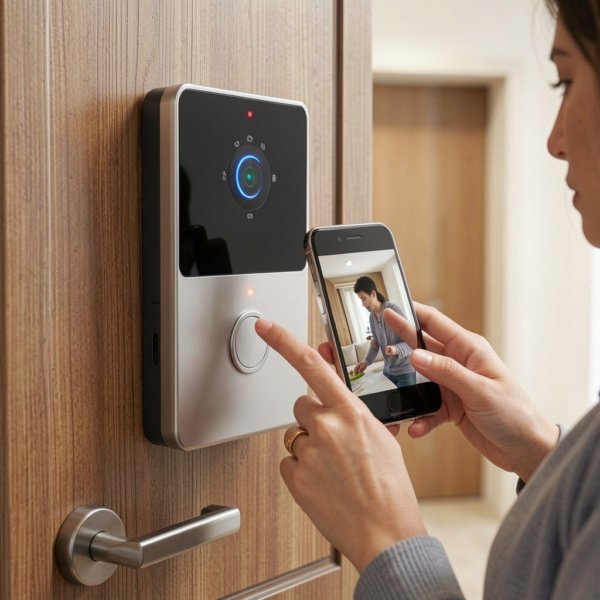
At its core, a visitor verification system integrates several key components. Video intercoms serve as the primary interface, allowing occupants to visually identify visitors. Mobile access capabilities enable users to answer calls and manage entry remotely via smartphones or tablets. Access control devices – such as electric door smart locks, gate motors, or smart relays – finally grant or deny entry.
A major advancement in this space is video intercom visitor verification, which provides real-time visual confirmation. This is a significant step beyond simple notifications. Instead of just hearing a doorbell or receiving an alert, users can actually see who is requesting access and speak with them via video doorbells.
Verification itself is a layered process. It begins with identification – recognising the visitor through video. This is followed by communication, where occupants can ask questions or confirm intent. Next comes approval or denial, in which access is granted or denied. Finally, every interaction is recorded for future reference.

Visitor Verification vs Traditional Intercom Systems
Traditional intercom systems were originally designed for one simple purpose: enabling communication between a visitor at the entrance and the occupant inside the building. While this approach worked well for older residential properties, it no longer meets the security, convenience, and operational expectations of modern buildings.
In many older systems, communication is limited to audio only, meaning occupants cannot visually confirm who is requesting access. These systems also tend to rely on fixed indoor handsets, making remote management difficult or impossible. For property owners, this creates security gaps, especially when managing deliveries, contractors, temporary visitors, or multi-tenant access requirements.
Modern visitor verification systems take a far more advanced approach by combining video intercom technology with intelligent access control workflows. Instead of simply answering a call, occupants can visually verify visitors via HD cameras, receive notifications on their mobile devices, remotely unlock doors or gates, and review access logs as needed.
This shift is particularly important in villas, duplexes, and small offices where flexibility and convenience are becoming essential expectations. For example, a homeowner can remotely verify a delivery from a courier while away from the property, and office staff can manage visitor access from their smartphones without relying on a dedicated reception desk.
Another major difference is integration capability. Traditional intercom systems usually operate independently, whereas modern visitor verification systems can integrate with smart locks, CCTV, alarm systems, and wider building automation platforms. This creates a more unified security ecosystem and significantly improves both user experience and long-term scalability.
For installers and integrators, upgrading clients from traditional intercoms to workflow-driven visitor verification systems provides a clear opportunity to deliver higher-value access control solutions that align with modern property expectations.
Key Challenges in Villas, Duplexes, and Small Offices
Designing an effective visitor verification system for these property types comes with unique challenges that must be carefully addressed.
Limited staffing or no reception desk. Unlike large commercial buildings, villas, duplexes, and small offices typically do not have dedicated personnel to manage entry points. This means the responsibility for verifying visitors falls entirely on residents or staff.
No dedicated personnel to screen visitors. Without a receptionist or security guard, there’s no one to assess visitors at the door. This increases the risk of unauthorised access.
Increased reliance on automated or remote systems. Because manual oversight is limited, these properties depend heavily on technology to handle visitor interactions. Systems must be intuitive, responsive, and dependable to avoid missed calls or delayed responses.
Multiple entry points. Many properties have multiple access points, including front gates, main doors, side entrances, and parking areas. Ensuring consistent verification across all these points can be complex without a unified system.
Difficulty maintaining consistent verification across all points. Different entry points may use different devices or configurations, leading to inconsistent user experiences and potential security gaps.
Privacy concerns. Residents and staff may feel uncomfortable approaching unknown visitors in person. A system that allows discreet, remote verification helps maintain personal safety and privacy.
Legacy infrastructure constraints. Older buildings often have limited or outdated wiring, making upgrades challenging. Traditional systems may require extensive rewiring, which can be costly and disruptive.
Rewiring is costly and disruptive. Installing new cabling can involve structural work, downtime, and additional expenses in occupied properties.
Balancing convenience with security. Frequent visitors, such as delivery drivers or clients, need quick and easy access. However, overly strict verification processes can create friction and reduce usability. The goal is to achieve a balance where security does not compromise convenience.
Learn more: Smart Video Entry Systems for Reception & Visitor Management
Building a Workflow-Driven Visitor Verification System
A reliable visitor verification system is about how all devices work together in a seamless workflow. Taking a workflow-based approach ensures every step of the visitor journey is clearly defined and consistently executed.
- Entry point detection. The process begins when a visitor presses an intercom button or triggers a motion sensor. This initial interaction activates the system and alerts the occupant.
- Live video verification. A real-time video feed allows occupants to visually confirm who is at the entry point. This step is critical for both residential and small office environments, as it forms the basis for decision-making.
- Two-way communication. Built-in audio or video communication enables direct interaction between the occupant and the visitor. This allows users to ask questions, confirm identities, or provide instructions.
- Remote decision-making. Whether through a mobile app or an indoor monitor, users can decide to grant or deny access from anywhere. This is especially valuable for busy homeowners or office staff who are not always near the entrance.
- Access execution. Once a decision is made, the system triggers the appropriate action – unlocking a door, opening a gate, or activating another automation.
- Event logging. Every interaction is recorded, providing a history of visitor activity. This can be useful for audits, security reviews, or simply keeping track of deliveries and appointments.
A well-designed villa intercom workflow ensures these steps are tightly integrated, creating a smooth and secure experience from start to finish.

Typical Visitor Verification Workflows by Property Type
Different property types require tailored workflows to meet their specific needs. Understanding these variations is key to designing an effective visitor verification system.
Villas
Villas typically feature a single-family environment with a gated perimeter. The workflow often begins at the front gate, where a visitor interacts with an intercom. The occupant receives a call on their mobile device, views the live video feed, and communicates with the visitor if needed. Once verified, they can remotely open the gate.
This approach prioritises both convenience and perimeter security. Homeowners can manage access without leaving their living space, while still maintaining full control over who enters the property.
Duplexes
Duplexes present a slightly more complex scenario, as they involve shared infrastructure but separate occupants. A visitor usually selects the intended resident from the intercom directory. The call is then routed to the appropriate user, who completes the verification process. In many cases, entrance automation is integrated into this workflow, allowing residents to remotely control gates.
Each occupant can independently verify visitors and grant access, ensuring privacy and control. This setup requires flexible system configuration, including user-specific permissions and customised call routing.
Small Offices
In small office environments, visitor verification must balance professionalism with security. Workflows often include both scheduled visitors – such as clients with appointments – and unscheduled arrivals like deliveries.
Staff can receive intercom calls on their devices, verify visitors through video, and grant access accordingly. Integration with business hours and internal access control systems ensures that entry is only permitted when appropriate.
This type of small office entry verification enhances the overall visitor experience while maintaining a secure and organised workplace.

Read more: Planning Resident and Visitor Flows at Gated Communities
Retrofit vs New Install: Choosing the Right Infrastructure
When implementing a visitor verification system, one of the biggest decisions is whether to retrofit an existing building or install a system in a new development. For many villas, duplexes, and small offices, retrofit solutions offer a more practical and cost-effective approach.
Traditional installations often require extensive rewiring, which can be both expensive and disruptive. Walls may need to be opened, and daily operations can be interrupted. In contrast, modern retrofit solutions are designed to work with existing infrastructure, significantly reducing installation time and complexity.
One of the most effective options is the use of 2-wire systems. These solutions leverage existing cabling to deliver advanced IP-based functionality, including video communication, mobile access, and system integration. The benefits are clear: minimal disruption, faster deployment, and lower installation costs.
For property owners looking to upgrade their security without major renovations, retrofit solutions provide a smart pathway to modernisation while maintaining flexibility for future expansion.
Solution Spotlight: Akuvox 2-Wire IP Intercom Kit for Visitor Verification
For properties seeking a reliable and scalable visitor verification system, the Akuvox 2-Wire IP Intercom Kit offers a compelling solution. Designed specifically for retrofit applications, it enables advanced intercom functionality without extensive rewiring.
By utilising existing 2-wire cabling, this system delivers full IP capabilities, including high-quality video, mobile access, and seamless integration with other smart systems. Installation is quick and minimally disruptive, making it ideal for occupied villas, duplexes, and small offices.
The kit supports every stage of the verification workflow. Users can visually identify visitors through live video feeds, communicate via two-way audio, and remotely grant access using a mobile app or indoor monitor. It also integrates easily with door locks and gate automation systems, ensuring smooth access execution.
This makes it particularly well-suited for older properties looking to upgrade their security infrastructure without major construction work. Whether it’s a residential villa or a small office environment, the Akuvox solution provides a modern, efficient, and user-friendly approach to visitor verification.
Pricing Factors for Visitor Verification Systems
One of the most common questions property owners ask when planning an upgrade is: “How much does a visitor verification system cost?” The reality is that pricing can vary significantly depending on the building type, infrastructure, access control requirements, and the level of integration.
For smaller residential projects such as villas, costs are generally lower because installations often involve only a single entrance point, one outdoor station, and one or two indoor monitors. However, even in residential environments, factors such as mobile app functionality, smart lock integration, and video quality can influence the total project cost.
In duplexes and multi-tenant properties, pricing becomes more complex because the system must support multiple users, separate access permissions, and shared entry points. Additional indoor monitors, tenant management features, and remote administration capabilities can increase both hardware and configuration requirements.
Infrastructure also plays a major role in project pricing. Full IP-based systems in new construction projects typically require structured cabling and network planning, which increases installation time and labour costs. In comparison, retrofit-friendly 2-wire IP intercom systems can dramatically reduce costs by reusing existing cabling infrastructure while still delivering modern visitor verification functionality.
Rather than focusing purely on upfront hardware costs, installers should help clients evaluate long-term value. A well-designed visitor verification system improves security, streamlines visitor management, reduces operational inefficiencies, and creates a more professional user experience for both residential and commercial environments.
Comparing Wired, Wireless & 2-Wire Visitor Verification Systems
| Feature | Full Wired IP Systems | Wireless Systems | 2-Wire IP Retrofit Systems |
|---|---|---|---|
| Best Suited For | New builds, commercial projects, large properties | Small residential retrofits, temporary setups | Existing apartments, villas, duplex retrofits |
| Cabling Requirements | Requires new structured network cabling | Minimal cabling required | Reuses existing 2-wire intercom cabling |
| Installation Complexity | High | Low to moderate | Moderate |
| Installation Speed | Slower due to cabling work | Fast deployment | Faster than full rewiring |
| Scalability | Excellent | Limited in larger environments | Good for medium-scale projects |
| Video Quality | Excellent | Depends on Wi-Fi/network quality | High-definition IP video support |
| Mobile Access Features | Fully supported | Supported | Fully supported |
| Integration Capability | Advanced integration with access control, CCTV, automation | Basic to moderate integration | Strong integration with smart access control systems |
| Reliability | Very high | Can be affected by Wi-Fi interference | High when existing cabling is in good condition |
| Retrofit Suitability | Poor | Good | Excellent |
| Labour Costs | Highest | Lowest | Lower than full rewiring |
| Long-Term Flexibility | Excellent | Moderate | High |
| Common Challenges | Expensive infrastructure and installation time | Signal reliability and scalability limitations | Dependent on existing cable condition |
| Typical Use Cases | Office buildings, new luxury homes, large developments | Small homes, quick upgrades, rental properties | Apartment upgrades, duplexes, ageing intercom replacements |
Which Option Is Best?
There is no one-size-fits-all solution when selecting a visitor verification system. The right infrastructure depends on the building layout, budget, long-term scalability requirements, and whether the project is a new build or retrofit installation.
For new commercial projects or high-end residential developments, fully wired IP systems generally provide the highest level of flexibility and future scalability. For smaller properties where rapid deployment is important, wireless systems can offer a practical short-term solution.
However, for many existing residential and mixed-use buildings, 2-wire IP retrofit systems provide the best balance between cost, performance, and installation efficiency. They allow property owners to modernise visitor verification and access control functionality without the disruption and expense of full rewiring.
Best Practices for Designing a Reliable Visitor Verification System
Designing a robust visitor verification system requires careful planning and attention to detail. Following these best practices can help ensure long-term performance and user satisfaction.
- Map all entry points clearly. Identify every access point on the property and ensure each one is covered by the system. Overlooking even a single entry can create vulnerabilities.
- Standardise verification workflows. Consistency is key. All users should follow the same process for verifying visitors, regardless of which entry point is used.
- Prioritise video quality and reliability. Clear visuals are essential for accurate identification. Invest in high-quality cameras and ensure stable network performance.
- Enable remote access. Allow users to verify visitors from anywhere using mobile devices. This flexibility is especially important for busy households and small offices.
- Plan for scalability. Choose a system that can grow with your needs. Whether adding new entry points or integrating additional features, scalability ensures long-term value.
- Integrate with broader systems. Connecting your visitor verification system with alarms, access control, and automation platforms enhances overall functionality and security.
- Educate users. Even the best system is only effective if users know how to operate it. Provide training or guidance to ensure everyone understands how to verify visitors and manage access.
To Conclude,
A well-designed visitor verification system creates a smarter, safer, and more intuitive way to manage entry across villas, duplexes, and small offices. By combining video verification, communication, and remote control into a unified workflow, these systems enhance security and everyday convenience. Users gain confidence knowing they can identify and manage visitors from anywhere.
Solutions like the Akuvox 2-Wire IP Intercom Kit demonstrate how modern technology can transform even older properties into connected, secure environments. As expectations around safety and convenience continue to evolve, intelligent visitor verification is quickly becoming a standard feature.
Upgrade Your Visitor Verification System with DHS
Whether you are upgrading an older intercom system or designing a modern access control solution from scratch, DHS provides scalable visitor verification technologies for residential and commercial projects.
We help installers, integrators, and developers deploy:
- Smart video intercom systems
- Mobile-based visitor access
- Access control integration
- Retrofit-friendly 2-wire solutions
- Multi-tenant entry systems
- Smart automation integrations
Explore our complete Access Control and Smart Intercom systems or contact us for product recommendations and project support.
Looking to upgrade your property with a smarter access solution? Contact DHS today to find a certified installer for your next project!
FAQs
What is a visitor verification system?
A visitor verification system is a smart access control solution that allows property owners or staff to identify, communicate with, and grant access to visitors using audio, video, mobile apps, or integrated security platforms.
How does visitor verification improve security?
It reduces unauthorised access by allowing occupants to visually verify visitors before granting entry, while also creating event logs and enabling remote management.
Can visitor verification systems work with existing cabling?
Yes. Many modern 2-wire IP intercom systems are designed specifically for retrofit projects and can reuse existing cabling infrastructure.
Are visitor verification systems suitable for small offices?
Absolutely. Small offices benefit from improved visitor screening, remote access control, reception efficiency, and better audit visibility.
What is the difference between an intercom and a visitor verification system?
Traditional intercoms primarily provide communication, whereas visitor verification systems combine video, mobile access, access control integration, and security workflows into a single platform.