Can You Retrofit a FAKRO Z-Wave Chain Winder to an Existing Window?
Replacing an entire window is not always necessary when you want remote operation or automated ventilation. In many situations, a suitable existing window can be upgraded with a retrofit electric window opener, allowing the sash to open and close through an electrically powered chain actuator.
The FAKRO Z-Wave Chain Winder is primarily designed to automate suitable FAKRO roof windows. However, its potential applications are not necessarily limited to FAKRO-branded windows. Subject to the opening style, mounting arrangement and installation environment, it may also be possible to retrofit the unit to selected windows from other manufacturers.
This can make the FAKRO winder a practical option for roof windows, high-level ventilation windows and existing openings that are difficult to operate manually. However, a successful retrofit electric window opener depends on more than whether the motor physically fits. The window type, hinge position, operating resistance, chain alignment, power supply and exposure to moisture must all be assessed before installation.
For a broader introduction to available options, see our guide to choosing an electric window opener in Australia.
What Is a Retrofit Electric Window Opener?
A retrofit electric window opener is a motorised actuator installed on an existing window rather than supplied as part of a completely new window assembly.
The actuator is normally mounted between the fixed frame and the moving sash. When activated, the chain extends to push the window open and retracts to pull it closed. Depending on the selected controls, the opener may be operated through a wall controller, remote control, compatible smart-home platform or automated ventilation routine.
This type of conversion may be useful when a window is too high to reach, frequently opened for ventilation or currently operated using a manual chain winder. It can also assist occupants who have difficulty using conventional handles or hand-operated winding mechanisms.
A retrofit solution can reduce the disruption associated with replacing a window that remains structurally sound. However, retrofit electric window opener is still important to match the actuator to the window rather than assuming that one motor will fit every opening.
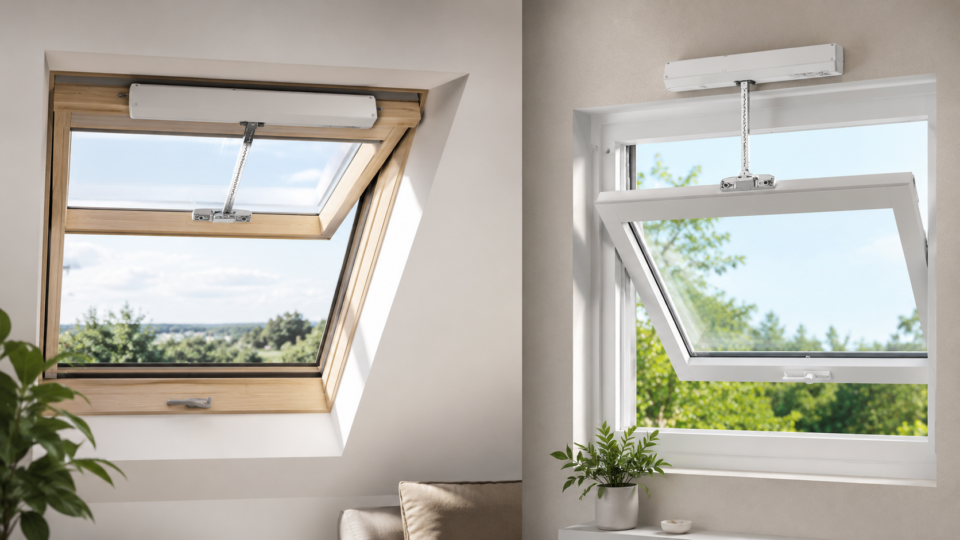
Can a FAKRO Winder Be Used on a Non-FAKRO Window?
Potentially, yes. The FAKRO Z-Wave Chain Winder may be considered as a retrofit electric window opener for selected non-FAKRO windows when the mechanical and electrical requirements are suitable.
The window brand is only one part of the assessment. Compatibility depends more heavily on how the sash moves, where the motor can be mounted and whether the chain can remain correctly aligned throughout the opening cycle.
A non-FAKRO window may be a possible candidate when it provides a strong mounting surface, sufficient room for the actuator body and a suitable attachment point on the sash. The window should also open smoothly without requiring excessive force.
FAKRO states that its ZWS12 chain motor can be applied to centre-pivot, top-hung and pivot roof windows, as well as some windows with non-standard dimensions. Its maximum chain reach is listed as 24 centimetres. Review the official FAKRO chain motor specifications before planning a non-standard application.
The motor should not, however, be treated as a universal replacement for every manual winder. Each proposed installation needs to be assessed individually.
Which Window Types May Be Suitable?
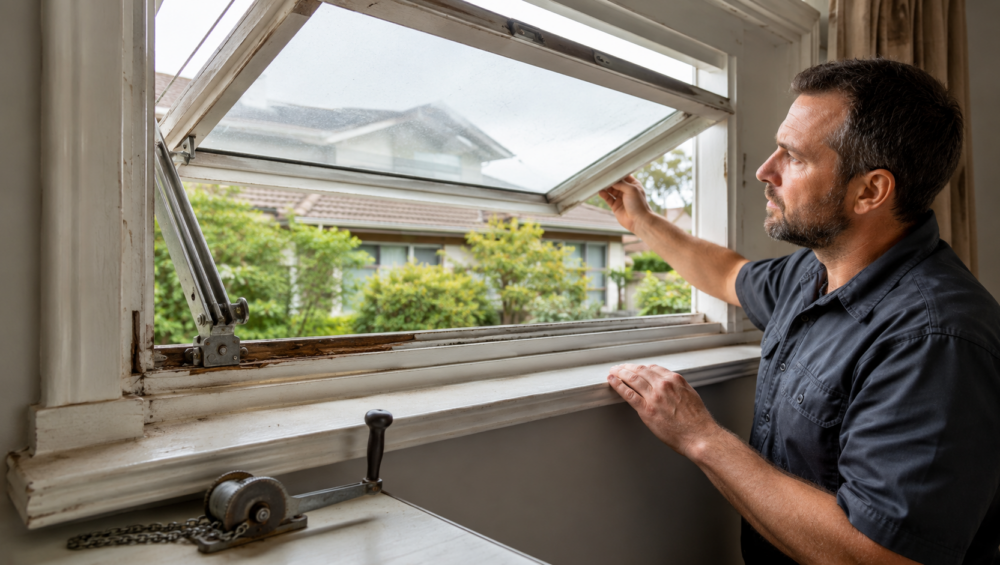
A retrofit electric window opener may be suitable for selected roof, top-hung, bottom-hung and awning-style windows.
Top-hung windows are often promising candidates because the hinges are positioned at the top while the lower section of the sash moves outward. The actuator can push the sash away from the frame as the chain extends and draw it closed as the chain retracts.
Bottom-hung windows may also be motorised, but their actuator position and load direction must be considered carefully. The chain must remain properly aligned and should not twist, scrape against the frame or experience excessive sideways loading.
Roof windows and high-level windows are common candidates for automation because they can be difficult or unsafe to reach manually. These applications may benefit from remote operation and scheduled ventilation.
Wide or heavy windows may require more than one actuator. Using a single central motor on an unsuitable sash can cause the window to twist, close unevenly or place excessive load on the chain and mounting brackets.
Before selecting the product, review our FAKRO Z-Wave Chain Winder buyer’s guide for additional information about window type, chain reach, power and Z-Wave compatibility.
Can You Replace a Manual Chain Winder?
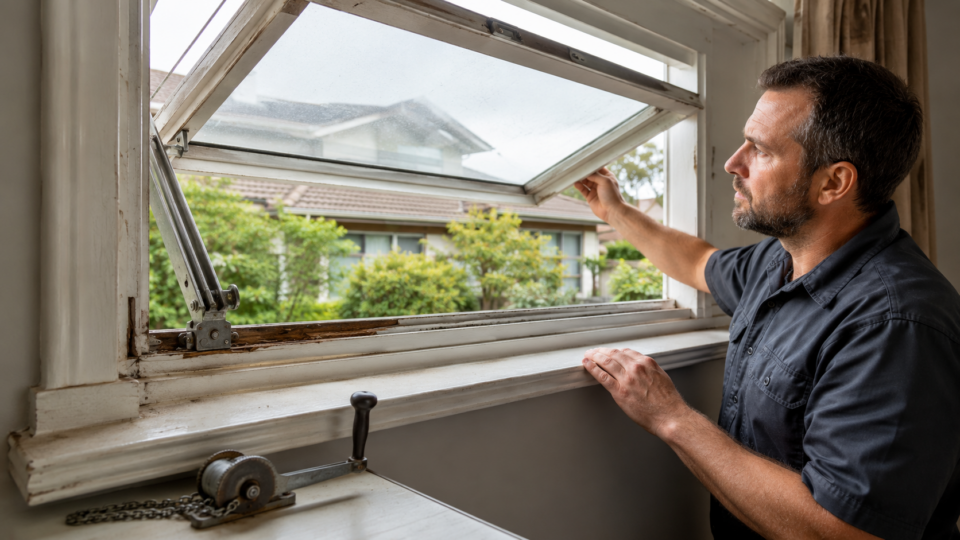
A window that already uses a manual chain mechanism may be a strong candidate for motorisation, but an electric actuator will not necessarily fit the original mounting holes.
The existing manual winder can provide useful information about the required operating force and direction of movement. However, the electric unit may have a different body length, fixing pattern, bracket position and chain extension.
Before selecting a chain winder replacement motor, check whether the window opens smoothly, whether the existing mechanism is centrally aligned and whether the frame can support the new mounting screws.
You should also confirm that the actuator can pull the window firmly into its fully closed position. Blinds, flyscreens, handles and existing latches must not obstruct the actuator or chain.
A retrofit electric window opener should be selected according to the window’s actual movement and dimensions, not simply because it resembles the existing manual opener.
A chain winder replacement motor should be selected according to the window’s actual movement, dimensions and available mounting points. Customers who have already confirmed their window is suitable can review the specifications of the 12V FAKRO Z-Wave window winder before ordering.
What If the Window Opens Inward?
An inward-opening window can be more difficult to automate because the actuator may need to sit on the opposite side of the moving sash.
Depending on the window design, this could place the motor closer to the external side of the opening. The unit should not be installed where it will receive direct rain or uncontrolled moisture exposure.
An inward-opening installation may require a custom bracket or a different mounting position. The actuator must not interfere with the weather seals, flyscreen, handle or full travel of the window.
Before using a retrofit electric window opener on an inward-opening window, provide photographs of both sides of the opening. Measurements of the frame depth, sash position and available mounting area will also help determine whether the installation is practical.
Check the Window Condition Before Retrofitting
A retrofit electric window openershould not be used to overcome a damaged, distorted or heavily binding window.
Before you motorise an existing window, move it manually through its full opening and closing cycle. It should operate without sudden resistance, scraping or excessive force.
Inspect the hinges, mounting areas and window frame for corrosion, loose fasteners, damaged timber, distorted aluminium and worn hardware. Existing water damage or poor alignment should also be addressed before fitting the actuator.
A slightly out-of-square window may still be suitable if it operates smoothly and consistently. However, a motor should not be expected to correct an underlying mechanical problem.
As a practical guideline, if the window cannot be operated reliably with an appropriate hand winder, it should be repaired before installing a retrofit electric window opener.
Measure the Window and Mounting Area
Accurate measurements are essential when selecting a retrofit electric window opener for existing windows.
Record the width and height of the sash, frame depth and amount of flat mounting surface available. You should also measure the desired opening gap and identify where the chain bracket will attach to the moving sash.
The actuator’s chain extension does not necessarily equal the final window opening. The actual opening gap depends on the hinge location, sash geometry, bracket position and mounting angle.
FAKRO lists a maximum chain reach of 24 centimetres for the ZWS12, but the resulting opening will vary according to the installation geometry.
The motor body should also remain accessible for wiring, testing and future servicing. Avoid placing it where curtains, flyscreens or other fittings could obstruct the mechanism.
Power and Z-Wave Control Requirements
The FAKRO Z-Wave Chain Winder requires a suitable low-voltage power arrangement and a compatible control system.
It is not simply a battery-powered device that can be attached to the frame without additional planning. The cable route, power-supply location and selected controller should be confirmed before installation.
The Australian ZWS12n model uses two-way Z-Wave communication at the Australian frequency of 921.4 MHz. Its instructions state that it is designed to work with compatible FAKRO controls and devices from other manufacturers that use Z-Wave.
Before installation, review the product’s FAKRO Z-Wave Chain Winder manual for power, pairing and commissioning information.
Depending on the selected controller and system configuration, the window may support remote opening and closing, percentage-based positions, scheduled operation and integration with compatible sensors.
For example, a user may configure the window to open partially during a ventilation period and close as part of an evening routine. However, compatibility should be checked with the exact Z-Wave gateway and software being used.
You can view other available window automation products when planning the complete control solution.
Is the Motor Completely Silent?
A geared chain actuator should not be expected to operate silently.
The electric motor, internal gearing and movement of the chain will create some sound while the window opens or closes. Lower speed settings may reduce the perceived noise, although the sash will take longer to reach its selected position.
One customer reported using the FAKRO winder frequently for approximately 18 months without a failure or noticeable deterioration in the gears. The customer also found that the lowest operating speed was considerably quieter than the faster settings.
This makes the opener suitable for many high-level and ventilation applications. However, expected operating noise should still be considered when the window is located near a bedroom, meeting room or another noise-sensitive space.
What Happens After a Power Failure?
Position-based control relies on the opener knowing the fully open and fully closed points of the window.
Following a power interruption, the retrofit electric window opener may need to re-establish its position. Based on practical customer experience, operating the window through one complete opening and closing cycle may restore the calibration.
Before running this cycle, confirm that the window is not obstructed and that the chain remains correctly aligned. Do not repeatedly activate the motor if the sash is jammed or unable to reach its closed position.
FAKRO states that the ZWS12 includes built-in overload protection that also assists with detecting correct window closure. Proper installation and commissioning are still required.
When Is a Retrofit Electric Window Opener Unsuitable?
A retrofit electric window opener may not be recommended where the window is exposed to direct rain, lacks sufficient mounting space or requires more travel than the actuator can provide.
It may also be unsuitable where the frame is structurally damaged, the sash is too heavy for one actuator or the hinges cause unpredictable movement.
Extra care is needed where:
- Two synchronised actuators are required
- The window forms part of an emergency exit
- Smoke-control operation is required
- The window performs a regulated life-safety function
- The available Z-Wave controller is incompatible
- The proposed mounting position is exposed to water
- The window cannot close evenly
Commercial smoke ventilation, emergency egress and life-safety windows may require purpose-designed and certified systems rather than a general smart-home actuator. Relevant projects should be assessed against applicable building and fire-safety requirements, including guidance published by the Australian Building Codes Board.
Frequently Asked Questions
Can an electric window opener be fitted to any existing window?
Not every window is suitable. The sash must operate smoothly and provide enough mounting space for the actuator and bracket. Window type, weight, opening direction and exposure to moisture should also be checked.
Can a FAKRO chain winder be installed on a non-FAKRO window?
It may be possible to use the FAKRO unit as a retrofit electric window opener on selected non-FAKRO windows. Compatibility must be confirmed from the window geometry, mounting surface, chain alignment and required opening force.
Can an electric actuator replace a manual chain winder?
In some cases, yes. However, the electric actuator may have different mounting holes, chain travel and bracket requirements. The existing window should be measured and inspected before replacing the manual winder.
Does the FAKRO Z-Wave Chain Winder work after a power failure?
The motor may need to re-establish its position after a power interruption. Running the window through a complete opening and closing cycle may restore the position calibration.
Is a retrofit electric window opener waterproof?
The FAKRO chain winder should not be treated as a waterproof outdoor actuator. It should be installed in a position protected from direct rain and uncontrolled moisture exposure.
Is the FAKRO Winder Right for Your Existing Window?
The FAKRO Z-Wave Chain Winder may provide a practical way to motorise an existing window without replacing the complete frame and sash.
It is particularly relevant for roof windows, high-level openings and selected top-hung or bottom-hung windows that are difficult to reach. Its Z-Wave connectivity also makes it suitable for compatible remote-control and smart-ventilation applications.
However, successful installation depends on the window type, opening direction, operating resistance, mounting surface, chain alignment, power supply and protection from moisture.
Before purchasing a FAKRO Z-Wave Chain Winder, send Digital Home Systems clear photographs of the window in its open and closed positions. Include images of the hinges, existing winder, frame and proposed mounting area, together with approximate measurements.
This information will help determine whether the product is a suitable retrofit electric window opener for your application.