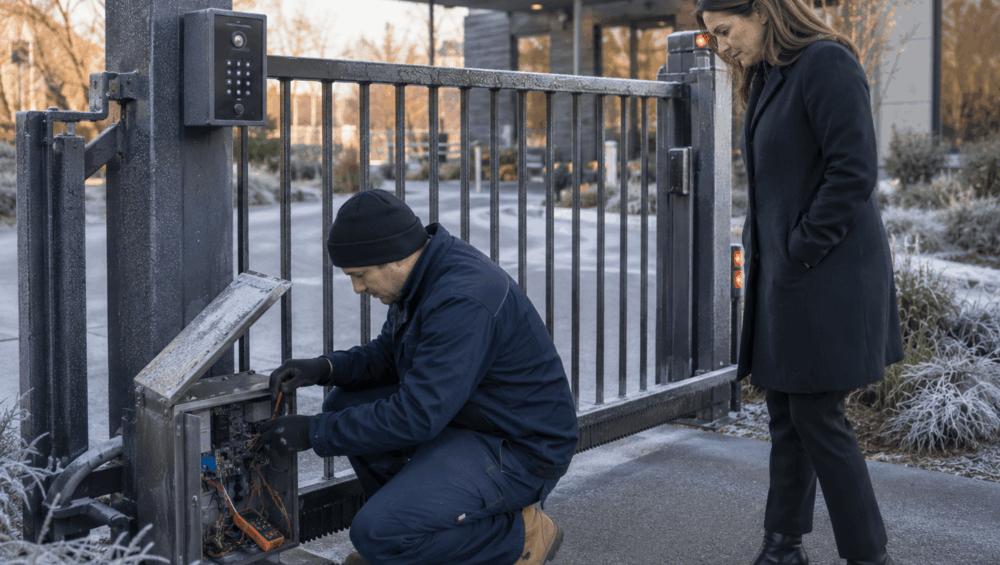
Automatic gates worked normally through the warmer months, but when winter arrived, they suddenly began moving slowly or refusing to close properly on cold mornings. The good news is that this does not always mean the gate motor is failing. In many cases, it is due to winter conditions that increase the system’s resistance, leading to thicker hydraulic oil, stiffer hinges, worn seals, and a heavier load on the operator.
That is why automatic gate cold weather troubleshooting is so useful for commercial facilities in identifying whether the problem is a minor seasonal maintenance issue or a sign that the gate needs a professional repair visit.
What Cold Weather Does to Automatic Gate Hydraulics
Hydraulic gate operators rely on fluid movement to open and close the gate leaf smoothly. When the weather turns colder, the hydraulic oil can thicken and flow more slowly. The operator then has to work harder, especially during the first open-and-close cycles of the morning. Then the gate improves slightly once the temperature rises or the operator has cycled a few times.
Cold weather can cause slower gate opening and closing and delayed response after activation. On busy commercial sites, it can also reduce the gate’s tolerance for repeated operation because the operator works harder with each cycle.
Some hydraulic gate systems may require a specific oil type suitable for seasonal conditions. The correct hydraulic oil must be compatible with the operator’s brand and model. Using the wrong fluid can affect performance and damage components. A qualified technician can help office managers check the oil condition and manufacturer requirements before making adjustments.
Early Warning Signs Office Managers Should Notice
Winter gate problems rarely begin with a complete breakdown. In many cases, the gate gives small warning signs first. Paying attention to these symptoms can help office managers organise maintenance before the gate blocks access or leaves the property unsecured.
- The gate moves more slowly in the morning. This can be caused by cold hydraulic fluid, stiff hinges, increased drag or a combination of small mechanical issues.
- The gate stops halfway. The control system may be interpreting extra resistance as an obstruction, causing the gate to stop or reverse.
- The motor sounds louder than usual. A louder operator can mean the system is working harder than normal to move the gate.
- The gate closes but will not latch cleanly. Cold contraction, gate movement, hinge wear or alignment problems may affect the final closing position.
- Access control works, but the gate does not move properly. The intercom, keypad or remote may be sending the correct signal, while the actual issue is mechanical or hydraulic.
- The problem improves later in the day. This can point to temperature-related strain rather than a permanent electrical fault.
For better automatic gate cold weather troubleshooting, office managers should record when the problem occurs, how often it occurs and whether the fault improves during the day. This information helps a technician diagnose the issue faster.
Automatic Gate Cold Weather Troubleshooting for Hydraulic Systems
A winter gate issue may be caused by the hydraulic operator, but it can also be caused by hinges, tracks, sensors, access devices, the power supply, or gate alignment. A practical automatic gate cold weather troubleshooting process looks at the whole system rather than blaming the motor.
Check Whether the Issue Is Temperature-Linked
If the gate only struggles on cold mornings or after overnight temperature drops, hydraulic resistance may be the issue. The oil may be moving more slowly, or existing mechanical drag may become more noticeable when the operator is under extra load.
However, if the gate struggles all day in every condition, the problem may not be seasonal. It could be caused by worn hardware, poor alignment, electrical faults, incorrect settings, power supply problems or a failing operator.
Look for Sluggish Movement, Not Just Failure
Many office managers wait until the gate stops completely before booking a service call. The better approach is to act when the gate starts moving more slowly or sounding different.
Sluggish movement is often an early sign that something is not quite right. It may still open and close today, but continued strain can wear seals, hinges, brackets, pumps and control components over time. Early automatic gate cold weather troubleshooting can reduce the risk of an inconvenient breakdown during peak access times.
Read more: Ghost Openings: Why Your Facility Security Gate Opens Automatically
Avoid Manually Forcing the Gate
If the gate is stuck, do not force it open or closed. Hydraulic systems include arms, seals, brackets, actuators and internal components that can be damaged by rough manual handling.
If manual operation is required, follow the manufacturer’s manual release process. If your facility team is unsure how to do this safely, contact a gate service technician.
Check for Ice, Moisture, Dirt and Debris
Even in many parts of Australia where winter is relatively mild, commercial gates can still collect moisture, grit and debris. These can build up around hinges, tracks, safety beams, rollers, guide posts and closing points.
A small amount of debris may not seem serious, but cold conditions can make every bit of resistance more noticeable. Sliding gates are especially sensitive to dirty tracks, while swing gates can struggle if hinges or pivot points are stiff.
Review Hydraulic Oil Condition and Service History
Old, contaminated, or incorrect hydraulic oil can worsen cold-weather performance. A technician may need to check the oil level, fluid condition, seals, leaks, pressure settings and operator suitability.
This is also a good time to review whether the operator is suitable for the site’s usage. A busy office gate may need a different maintenance schedule from a lightly used residential gate.
Do Not Adjust Force Settings Blindly
It can be tempting to increase force or pressure settings to “push through” winter resistance. This is not recommended without proper testing.
If the gate is stopping, reversing or detecting resistance, the cause should be inspected first. Increasing force without understanding the problem can create safety risks and damage equipment.

Mechanical Checks That Reduce Winter Gate Strain
Not every cold-weather problem starts inside the hydraulic operator. Winter often exposes existing mechanical issues because the operator has less margin for extra resistance. A gate that is already slightly misaligned may become much harder to move in cold conditions.
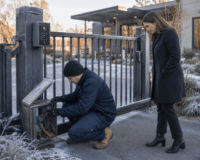
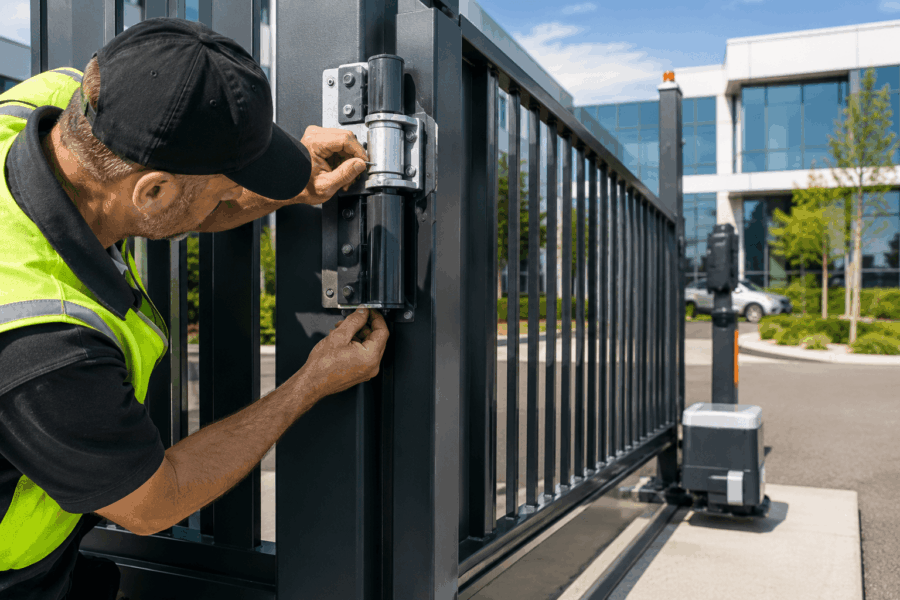
Before assuming the motor is the issue, a technician should inspect the gate hardware and moving parts. Key areas include:
- Hinges, pivots, rollers and bearings
- Gate leaf alignment
- Sliding gate track cleanliness
- End stops and guide posts
- Latch alignment
- Ground movement or surface changes
- Rust, corrosion or loose brackets
- Gate drag caused by sagging or worn hardware
Lubrication also matters. The wrong lubricant can thicken in cold conditions, increasing resistance to movement. Any lubrication used on commercial gate hardware should be suitable for outdoor conditions and the expected winter temperature range.
DHS helps facility teams separate operator faults from gate hardware faults. This matters because replacing a motor will not solve the problem if the real cause is drag, poor alignment, worn rollers or loose brackets.
Read more: Signs Your Commercial Gate Hinges Are Failing
Sensors, Safety Devices and Access Control During Winter
A cold-weather gate fault is not always hydraulic. Safety beams, photocells, loop detectors, keypads, intercoms, and control boxes can also be affected by moisture or movement after exposure to weather.
For example, photocells and safety sensors must stay clear of obstruction. If a sensor is blocked or misaligned, the gate may refuse to close. From an office manager’s perspective, this can look like a gate motor fault even when the operator itself is working correctly.
Common signs include the intercom releasing correctly but the gate not moving, the remote working intermittently, the keypad accepting the code but the gate reversing, or the gate opening normally but refusing to close. In some cases, a safety beam may be slightly knocked out of alignment by vehicles, wind, cleaning activity or general site movement.
Good automatic gate cold weather troubleshooting should always include the entire system, as the hydraulic operator, safety devices, access control equipment and mechanical hardware all work together. If one part is affected by winter conditions, the entire gate can become unreliable.
When to Call a Technician Instead of Adjusting the Gate Yourself
Office managers can safely observe symptoms, clear obvious debris, and record when faults occur. However, hydraulic pressure, force settings, electrical components, control logic and safety devices should be handled by trained technicians.
Call a technician if the gate stops midway or reverses repeatedly, the operator is leaking oil, the gate makes grinding or knocking sounds, or the gate requires force to move manually. You should also book a service if the gate forms part of a secure perimeter or if safety sensors and obstruction settings may be involved.
Professional automatic gate cold weather troubleshooting is especially important for commercial properties because downtime can affect business operations, delivery schedules, tenant access and visitor experience.
Building a Winter Maintenance Plan for Office Gates
The best time to prepare a gate for winter is before the coldest part of the season, not after repeated failures. A planned inspection is usually less disruptive than an emergency repair.
A practical winter maintenance plan should include a full check of the hydraulic operator, oil level, seals, leaks, opening and closing speed, safety beam alignment, photocells, access devices, hinges, rollers, tracks, brackets, and manual release operation.
It should also include backup power testing where installed, confirmation that the gate closes and locks securely, and a record of any changes in speed, sound or behaviour. These small notes can help identify developing problems before they become major repairs.
High-traffic commercial gates may need more frequent inspections than residential gates. A gate at an office, warehouse, medical facility, industrial site or multi-tenant property may operate dozens or even hundreds of times per day.
Read more: How Automatic Gate Systems Are Installed For Commercial Properties

Final Thoughts
Winter gate issues can be frustrating, but they do not always mean the operator has failed. In many cases, the cause is added resistance from cold hydraulic oil, stiff hardware, or poor alignment.
By using automatic gate cold weather troubleshooting, office managers can recognise early warning signs and know when to call in a technician. The goal is not just to get the gate moving again, but to protect site security and long-term equipment performance.
Contact DHS today to book automatic gate repair and maintenance support, or explore DHS gate automation, access control, intercom and safety products for a more reliable commercial entrance.
FAQs about Automatic Gate Cold Weather Troubleshooting
Why does my automatic gate move slowly in cold weather?
Cold weather can thicken hydraulic oil, increase mechanical resistance, and make the operator work harder. Hinges, rollers, tracks, seals, and safety sensors can also contribute to slow movement.
Should I adjust the hydraulic pressure myself?
No. Hydraulic pressure and force settings should be checked by a qualified gate technician. Increasing force without finding the cause can create safety risks and may damage the operator or gate hardware.
Can hydraulic gate oil freeze?
Hydraulic oil usually does not freeze like water, but it can become too thick to flow properly in low temperatures. The correct oil depends on the gate operator brand, model, and site conditions.
Why does the gate work better later in the day?
If the gate improves after temperatures rise, the issue may be linked to cold oil, stiff hardware, or morning moisture. This is a strong clue for seasonal automatic gate cold weather troubleshooting.
Can sensors cause winter gate faults?
Yes. Dirty, wet, blocked, or misaligned safety sensors can stop the gate from closing or cause unexpected reversing.
When should an office manager book maintenance?
Book maintenance before winter if the gate is high-use, exposed to weather, already moving slowly, or protecting a commercial site where downtime would disrupt access or security.