For many operators, security starts and ends with a simple alarm system, but that’s rarely enough. It requires an effective alarm escalation for small business that goes beyond a single siren. It introduces an intelligent response path that transforms raw alerts into meaningful action.
In this guide, we’ll walk through the process of designing a practical and scalable alarm escalation strategy. You’ll learn about system components, escalation stages, and how to implement a smarter, more responsive approach.
Understanding Alarm Escalation for Small Business: From Alert to Action
At its core, alarm escalation for small business is a tiered response system. It’s designed to increase the intensity of actions taken when a potential threat is detected. It ensures that incidents are handled efficiently without overreacting to minor triggers.
A typical escalation path follows a logical flow:
Detection → Alert → Verification → Response → Escalation
- Detection: Sensors identify unusual activity, such as motion or forced entry.
- Alert: The system generates an initial notification.
- Verification: The event is checked, often via cameras or cross-sensor confirmation.
- Response: A measured action is taken (e.g., notifying staff).
- Escalation: If the threat persists or is confirmed, stronger actions are triggered.
This structured approach helps reduce false alarms – a common issue in traditional systems. Instead of triggering a loud siren every time a sensor is tripped, escalation allows the system to “think” before reacting.
Modern systems rely on automation platforms such as Z-Wave or hybrid integrations, enabling devices to communicate and respond dynamically.

Case Study Example: Alarm Escalation Workflow for a Small Retail Business
A small retail business operating outside standard business hours faces a different set of security challenges than residential properties. In one example, a boutique retail store experienced repeated late-night attempts at forced entry through a rear service door. While the original alarm system could detect intrusion, the escalation process relied entirely on a single SMS alert to the owner, resulting in delayed responses and minimal deterrence.
To improve security outcomes, the business upgraded to a multi-stage alarm escalation workflow built around wireless smart security devices.
The upgraded process worked as follows:
- Door and motion sensors immediately triggered silent detection events after hours.
- The system automatically sent alerts to both the owner and a designated staff member.
- If the alert was not acknowledged within a set timeframe, an outdoor siren and visual strobe were activated to deter intruders and attract attention.
- Security cameras bookmarked the event and sent live video notifications to mobile devices.
- The final escalation stage triggered a monitoring centre notification to coordinate further response.
The business also integrated smart lighting automation to illuminate entry points during alarms, increasing visibility around vulnerable access points.
Following implementation, attempted intrusions decreased significantly because the visible and audible deterrence made the property less attractive as a target. More importantly, staff gained confidence knowing incidents would trigger structured responses instead of relying on a single notification.
This type of layered escalation strategy demonstrates how small businesses can move beyond basic alarms toward proactive commercial security workflows.
Read more: Using Outdoor Sirens for Emergency Evacuation Signalling
The Building Blocks of a Reliable Alarm Escalation for Small Business
A well-designed system relies on several key components working together. Each plays a role in supporting a strong alarm escalation for small business strategy.
- Detection Devices
These are the front line of your system. Motion sensors, door/window sensors, and shock sensors detect unusual activity. Proper placement is critical – blind spots or poorly positioned sensors can weaken your entire setup.
- Control Hub / Automation System
The control hub acts as the brain. It processes incoming signals and determines the appropriate response. Systems that support protocols like Z-Wave or hybrid integrations allow for advanced logic, such as time-based rules or multi-sensor triggers.
- Notification Channels
Alerts can be sent via mobile apps, SMS, email, or push notifications. Multi-user notifications ensure that multiple people can respond, reducing the risk of missed alerts. Redundancy here is essential for reliability.
- Audible & Visual Deterrents
Sirens, strobes, and external alarms serve as both deterrents and escalation tools. These devices shift the system from silent monitoring to active intervention, making them a critical part of commercial alarm planning.
- Response Layer
This includes human or automated actions, such as staff intervention, security patrols, or integration with monitoring services. The response layer ensures that alerts lead to real-world outcomes.
Read more: Deployment Guide: Installing Outdoor Sirens on Large Commercial Sites
How to Structure a Multi-Stage Escalation Strategy
Instead of jumping straight to maximum alert, you need to build a progression that matches the level of threat.
Stage 1: Silent Detection & Logging
- Sensors detect activity and log the event
When a motion sensor, door contact, or other detection device is triggered, the system quietly records the event in the background. This creates a useful audit trail that can be reviewed later for patterns or recurring issues.
- Internal alerts are triggered without notifying intruders
At this stage, notifications are kept discreet. The system may send a silent alert to the control hub or app without triggering any visible or audible alarms.
- Useful for verification and minimising unnecessary alarm escalation for small businesses
Silent detection is especially valuable for filtering out non-threatening events, such as staff movement, cleaning crews, or environmental factors.
Stage 2: Owner or Staff Notification
- Notifications are sent to business owners or key staff
Once an event passes initial checks, alerts are pushed to designated users via mobile apps, SMS, or email. This ensures that someone responsible is immediately aware of the situation.
- Users can verify the situation via cameras or remote access
Staff can quickly check live camera feeds or system data to determine whether the alert is genuine. This remote visibility reduces the need for unnecessary on-site visits and speeds up decision-making.
- Enables quick decision-making without causing disruption
Because escalation hasn’t yet become visible, staff can assess the situation calmly and decide whether to escalate further, ignore the alert, or take manual action.
Stage 3: On-Site Deterrence
- Sirens and flashing lights are activated
If a threat is confirmed, the system escalates by activating audible and visual deterrents. This makes it clear that the premises are protected and being monitored.
- Visible and audible warnings discourage intruders
A loud siren combined with a bright strobe light creates immediate pressure on intruders, often causing them to abandon their attempt. This stage is critical for preventing incidents from escalating further.
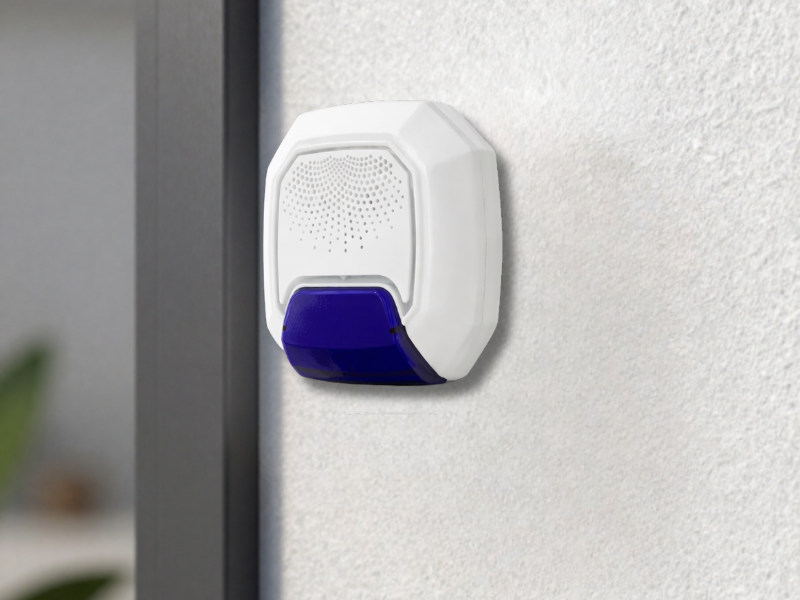
- This is where devices like the Vision Z-Wave Outdoor Siren play a crucial role
115 dB alarm provides a strong audible deterrence. The high-decibel output ensures the alarm can be heard across large areas, drawing attention and increasing urgency.
Bright strobe increases visibility. The flashing light enhances the warning effect, especially at night or in low-visibility conditions.
Wireless integration allows seamless connection with Z-Wave systems. Easy integration means the siren can be triggered automatically as part of your escalation logic without complex wiring or setup.
Stage 4: Escalated Response
- Security services or authorities are contacted
If the situation persists or is confirmed to be a real threat, the system can notify a monitoring service or directly alert authorities. This ensures a professional response is initiated without delay.
- Additional automation may trigger (e.g., locking doors, activating lighting)
Advanced systems can automatically activate other security measures, such as locking access points, turning on floodlights, or restricting entry to sensitive areas.
- Ensures that confirmed threats are handled quickly and effectively
This final stage completes the escalation path, turning a detected event into a fully managed response that protects people, assets, and property.

Real-World Alarm Escalation Scenarios Every Business Should Plan For
Understanding how alarm escalation for small business works in practice helps you design a system that responds appropriately to different situations.
- After-Hours Intrusion: Motion is detected after closing time → owner is alerted → no response → siren activates → security is notified
- Forced Entry Attempt: Shock sensor detects impact → system skips early stages → immediate escalation to siren and alerts
- Internal Threat or Panic Situation: Panic button is pressed → instant high-level escalation → siren and notifications triggered without delay
- Environmental Alerts (e.g., flooding): Flood sensor detects water → alert sent to owner → no siren activation to avoid unnecessary disruption
- False Alarm Filtering: Multiple sensors must confirm activity before escalation
These examples show how alarm escalation for small business adapts to different risks, ensuring the right response at the right time.
Smart Planning Tips for Effective Alarm Escalation
A strong escalation strategy is about thoughtful planning. These best practices help ensure your system performs reliably and delivers real value.
- Prioritise Layered Security: Combine detection, verification, and deterrence for a comprehensive approach. Relying on a single layer of security creates gaps. By combining multiple layers, you ensure that others are in place to maintain protection.
- Minimise False Alarms: Use cross-sensor verification and timing rules to avoid unnecessary triggers. False alarms can lead to complacency or even fines.
- Customise for Your Business Type: Retail stores, offices, and warehouses all have different security needs. A retail shop may prioritise front-entry monitoring, while a warehouse may focus on perimeter and after-hours activity.
- Ensure Visibility of Deterrents: Outdoor sirens and strobes should be clearly visible to maximise their deterrent effect. Deterrence works best when it’s obvious.
- Plan for Power and Connectivity Failures: Battery-powered devices ensure continued operation during outages. Power cuts or network issues shouldn’t leave your business vulnerable.
- Regular Testing and Staff Training: Ensure your system works as intended and that staff understand escalation procedures. Even the best system can fail if it’s not maintained or understood.
By following these guidelines, you can build a more resilient and effective alarm escalation for small business system.

Integrating Alarm Escalation With Smart Security & Automation Systems
Modern alarm escalation for small businesses is far more effective when integrated into a broader smart security ecosystem. Rather than operating as isolated devices, today’s wireless alarm platforms can coordinate multiple systems to create faster, more intelligent responses during security incidents.
For small businesses, integration provides several operational advantages:
Automated Lighting Responses
Smart lighting can automatically activate during alarm events to improve visibility around entrances, loading zones, car parks, and internal pathways. Bright lighting not only helps cameras capture clearer footage but also serves as a psychological deterrent to intruders.
Access Control Lockdowns
Integrated access control systems can automatically secure specific doors or gates when alarm escalation for small business reaches a critical stage. This helps contain unauthorised movement and protects restricted areas within the premises.
Video Verification & Remote Monitoring
Linking alarm triggers with smart surveillance systems allows business owners or monitoring teams to verify incidents in real time. Instead of responding blindly to notifications, operators can quickly determine whether an alarm is genuine, accidental, or requires escalation.
Automated Sirens & Visual Deterrence
Outdoor alarm sirens, warning strobes, and voice announcements can activate automatically when intrusion events are verified. This creates immediate pressure on intruders while alerting nearby staff, customers, or neighbouring businesses.
Mobile App Management
Many wireless alarm systems now allow owners to monitor escalation events remotely through mobile apps. Notifications, live camera feeds, arm/disarm controls, and escalation acknowledgements can all be managed from a single interface.
For small businesses seeking scalable protection, integrated security automation offers far greater flexibility than standalone alarm systems and supports future upgrades as operational needs evolve.
Read more: Integrating Outdoor Sirens with Access Control & Intrusion Detection
Why Wireless Alarm Systems Are Perfect for Small Businesses
Wireless technology has transformed the way small businesses approach security. When it comes to implementing alarm escalation for small business, systems based on protocols like Z-Wave offer significant advantages.
First, installation is far simpler. There’s no need for extensive cabling, which reduces both time and upfront costs. This makes wireless systems ideal for small businesses that want professional-grade security without major infrastructure changes.
Scalability is another key benefit. As your business grows, you can easily add new sensors, sirens, or automation features without overhauling the entire system. This flexibility ensures your security setup evolves alongside your operations.
Interoperability is also a major advantage. Wireless systems allow different devices to communicate seamlessly. This is essential for creating a cohesive escalation strategy in which all components work together.
Finally, modern wireless devices are highly reliable and low-maintenance. With long battery life and robust communication protocols, they provide consistent performance without frequent intervention.
FAQs
What is alarm escalation in a small business security system?
Alarm escalation refers to the staged response process triggered after a security event occurs. Instead of relying on a single alert, escalation systems progressively increase notifications, deterrence actions, and response measures to improve incident handling.
Why is alarm escalation important for small businesses?
Small businesses often have limited after-hours staffing and security resources. A structured alarm escalation for small business workflow helps reduce response delays, improve deterrence, and ensure incidents are handled more effectively.
What devices are commonly used in alarm escalation systems?
Typical devices include motion sensors, door/window sensors, outdoor sirens, visual warning devices, smart cameras, access control systems, and mobile notification platforms.
Can wireless alarm systems support advanced escalation workflows?
Yes. Modern wireless alarm systems support multi-stage escalation through automation rules, app notifications, smart integrations, and remote monitoring capabilities.
How do outdoor sirens improve alarm escalation?
Outdoor sirens create immediate audible and visual deterrence once escalation reaches a predefined stage. This can interrupt intruder behaviour, attract attention, and reduce the likelihood of continued intrusion attempts.
What industries benefit most from alarm escalation systems?
Retail stores, warehouses, offices, medical clinics, workshops, hospitality venues, and small commercial facilities all benefit from structured alarm escalation strategies.
Can alarm escalation integrate with access control systems?
Yes. Many commercial security systems allow alarm escalation to trigger automated door lockdowns, gate closures, or restricted area controls during security events.
What’s the difference between monitored alarms and alarm escalation?
Monitoring services receive alarm events and coordinate responses, while alarm escalation defines the sequence of actions and automated responses that occur after a trigger event.
Final Thoughts,
Designing a structured alarm escalation for small business is one of the most effective ways to improve security outcomes. Instead of relying on a single alarm trigger, you create a layered system that responds intelligently to different situations.
Devices like the Vision Z-Wave Outdoor Siren play a critical role in this strategy. With powerful audible alerts and high visibility, they transform passive monitoring into active deterrence, helping stop threats before they escalate.
Finally, if you’re ready to upgrade your system, consider partnering with DHS for expert advice and certified products for modern small-business security! A modern alarm system should do more than send a notification – it should coordinate a structured response that protects your staff, premises, and assets. DHS helps installers and businesses design integrated security alarm solutions with smart escalation workflows, outdoor deterrence, access control, and wireless automation technologies.
Read more: Alarm Escalation Strategies for Security Monitoring Providers