

Construction sites are among the most vulnerable environments to theft, vandalism, and unauthorised access. Expensive tools, machinery, copper wiring, fuel, and building materials are often left unattended overnight, making temporary worksites a frequent target for criminal activity. As construction projects grow larger and timelines extend over months or years, builders and contractors are increasingly investing in temporary security alarm systems to protect both assets and personnel.
One of the most effective components in a temporary construction security setup is the outdoor siren. Modern construction site sirens do far more than simply make noise. Integrated with smart alarm systems, motion sensors, and wireless automation platforms, outdoor sirens provide real-time deterrence and rapid response capabilities that can significantly reduce security risks on active worksites.
In this guide, we explore how construction site security alarm systems work, why outdoor sirens are essential for temporary site protection, and how wireless smart security technologies can help builders create safer and more secure construction environments.
Why Construction Sites Need Temporary Security Alarm Systems
Construction sites face unique security challenges compared to permanent commercial or residential properties. Unlike finished buildings, construction environments are constantly changing. Temporary fencing, incomplete walls, exposed entry points, and evolving layouts make it difficult to maintain consistent physical security.
In many cases, sites are left unattended after work hours, on weekends, or during public holidays. This creates opportunities for theft, trespassing, and vandalism. Equipment theft alone costs the construction industry millions of dollars annually, while delays caused by vandalism or material theft can significantly impact project timelines and budgets.
Temporary construction offices, storage containers, scaffolding areas, and equipment yards are particularly vulnerable. Criminals often target fuel storage, copper cabling, tools, generators, and portable machinery because these items are easy to remove and resell.
Beyond financial losses, security incidents can also create safety hazards. Unauthorised access to a construction site can expose trespassers to dangerous conditions, increasing liability risks for builders and contractors.
Traditional fixed security infrastructure is not always practical for temporary sites. Running extensive cabling across an evolving construction environment can be expensive, time-consuming, and difficult to maintain. This is why wireless construction site security alarm systems are becoming increasingly popular. They provide flexible deployment options, faster installation, and scalable protection without requiring permanent infrastructure.

How Outdoor Sirens Improve Construction Site Security
Outdoor sirens serve as both a powerful deterrent and an immediate response mechanism within temporary construction site security alarm systems. In environments where security personnel may not always be present, a loud, visible alarm device can deter intruders before they even attempt entry.
A high-decibel siren, often reaching levels of 115 dB, creates an unmistakable alert that draws attention across large, open areas. This sudden and intense noise disrupts unauthorised activity, increasing the likelihood that intruders will abandon their efforts. At the same time, integrated strobe lighting enhances visibility, particularly at night or in low-light conditions, ensuring the alert is both heard and seen.
Modern outdoor sirens don’t operate in isolation. They are typically connected to a network of sensors, including motion detectors, door and window sensors, and shock sensors. When any of these devices detects unusual activity, the construction site siren is triggered instantly, creating a coordinated response.
In addition to on-site alerts, these industrial alarm siren systems can send real-time notifications to monitoring platforms and site managers. This allows for rapid decision-making and response, whether that involves contacting security personnel or reviewing surveillance footage. As part of a broader temporary construction site security alarm system, outdoor sirens act as the final and most visible layer of defence.
Key Features to Look for in a Construction Site Security Alarm System
Choosing the right construction site siren is critical for ensuring reliable performance in demanding environments. Not all sirens are built for temporary or outdoor use, so it’s important to focus on features that support flexibility, durability, and ease of deployment.
- Wireless connectivity (Z-Wave or similar): Enables quick installation without complex wiring, making it ideal for temporary setups and evolving site layouts.
- Battery-powered operation: Essential for sites without consistent power access, allowing the system to function independently of mains electricity.
- Long battery life (1–2 years): Reduces the need for frequent maintenance, which is especially valuable on large or remote sites.
- High sound output (100+ dB): Ensures alerts can be heard across wide, open spaces, even in noisy industrial environments.
- Weather resistance (IP65/IP66 rating): Protects the device from dust, rain, and extreme temperatures, ensuring reliable operation year-round.
- Tamper detection alerts: Notifies the system if the siren is removed or interfered with, adding an extra layer of security.
- Visual strobe alerts: Enhance visibility and ensure construction site security alarm systems are noticeable even in high-noise environments or at night.
- Compatibility with multiple sensors and controllers: Allows seamless integration into broader security systems, including motion, flood, and access control devices.
These features collectively ensure that a construction site siren can perform reliably in challenging conditions while remaining easy to deploy and manage. By prioritising these capabilities, integrators can build systems that are both effective and adaptable, regardless of site complexity.

Integrating Outdoor Sirens with Temporary Security Systems
Integrating a construction site siren into a temporary security system is key to achieving comprehensive protection. Rather than functioning as a standalone device, the siren should be part of a connected ecosystem that includes various smart sensors and control systems.
Wireless protocols such as Z-Wave make this integration straightforward and scalable. They allow devices to communicate seamlessly without extensive cabling, which is particularly beneficial in temporary or rapidly changing environments. Motion detectors can identify movement in restricted areas, while door and window sensors monitor entry points. Flood sensors can even detect environmental risks, adding another layer of protection.
All these inputs feed into a central controller, which acts as the brain of the system. When a threat is detected, the controller triggers the outdoor siren, ensuring an immediate and coordinated response. At the same time, alerts can be sent to remote monitoring platforms, enabling site managers to respond quickly, even when off-site.
This layered approach ensures that the construction site siren acts as the final line of defence, amplifying alerts and deterring intrusions. Whether securing a small construction project or a large industrial site, this level of integration provides the flexibility and scalability needed for modern security challenges.
Recommended Solution: VISION Z-Wave Outdoor Siren for Construction Sites
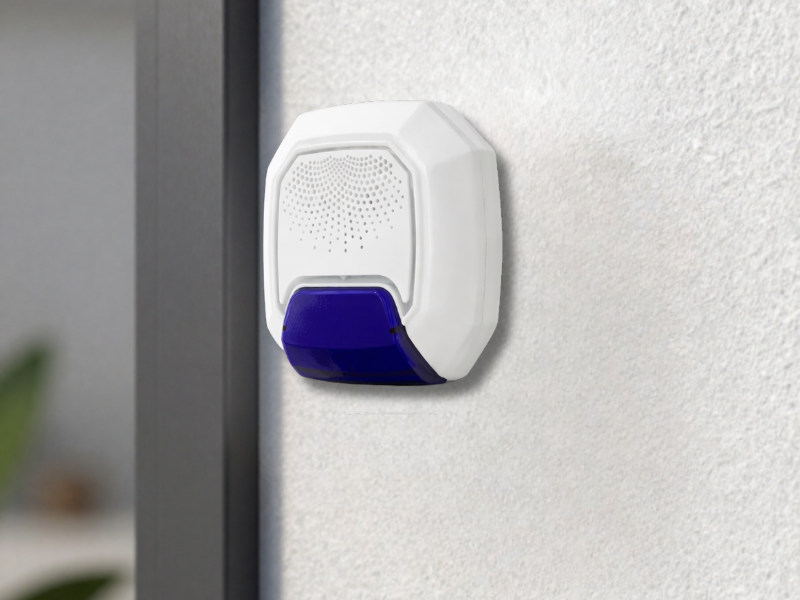
For integrators seeking a dependable, flexible solution, the VISION Z-Wave Outdoor Siren stands out as a purpose-built option for temporary environments. Designed with both performance and practicality in mind, it aligns perfectly with the needs of construction and industrial sites.
- 115 dB siren for strong deterrence – Delivers a powerful audio alert that covers large outdoor areas.
- Bright strobe for visual alerts – Enhances visibility, ensuring alarms are noticed even in low-light conditions.
- Fully wireless, battery-powered design – Eliminates the need for wiring, making installation fast and adaptable.
- IP66-rated for harsh environments – Built to withstand dust, heavy rain, and extreme temperatures common on construction sites.
- Easy DIY installation for rapid deployment – Allows integrators to set up and reposition the device quickly as site conditions change.
In addition to these features, the alarm siren is compatible with a wide range of Z-Wave sensors, including motion, flood, shock, and door/window devices. It also integrates seamlessly with major Z-Wave controllers commonly used in commercial deployments, enabling centralised control and monitoring.
This makes it an ideal construction site siren for temporary construction site security alarm systems, where flexibility, reliability, and ease of use are critical. Whether deployed on a small site or as part of a larger system, it delivers the performance needed to effectively secure valuable assets.
Read more: Testing & Commissioning Z-Wave Outdoor Sirens
Real-World Construction Site Security Scenarios
Different construction projects face different security risks, which is why flexible alarm system design is so important.
Residential development sites often deal with theft of tools, appliances, copper piping, and partially installed fixtures. Temporary wireless alarm systems help secure display homes, storage areas, and newly framed structures before permanent security systems are installed.
Commercial construction projects typically involve larger perimeters and more expensive equipment. Outdoor sirens combined with perimeter sensors and CCTV systems help create layered protection across access points, loading areas, and machinery compounds.
Infrastructure projects such as roadworks, utilities, and remote industrial developments face additional challenges due to isolated locations. In these environments, wireless alarm systems provide practical security solutions where traditional infrastructure may not exist.
Temporary storage compounds also benefit significantly from outdoor sirens. Shipping containers used to store tools and materials are frequent targets of theft. Integrating door sensors with outdoor sirens creates rapid-response protection that can deter break-ins before assets are removed.
In many cases, builders choose scalable wireless systems because they can relocate equipment between projects, reducing long-term security investment costs while maintaining flexible protection capabilities.
Read more: Warehouse Security Alarm Systems: Best Perimeter Protection Setup for 2026
Best Practices for Deploying Sirens on Construction Sites
Deploying a construction site siren effectively requires more than just installing the device; it involves thoughtful planning, strategic placement, and ongoing system management. Given the constantly changing nature of construction environments, taking a proactive approach ensures your siren delivers maximum impact when it matters most.
- Install sirens at elevated, visible positions: Mounting sirens high on temporary structures, poles, or building frames improves both sound projection and visual deterrence. A clearly visible device can discourage intruders before any alarm is triggered.
- Optimise placement for full-site coverage: Consider the site’s size, layout, and potential noise levels. Position the siren so its sound can reach key zones, including storage areas, entry points, and equipment zones.
- Integrate with multiple detection devices: A siren is most effective when connected to a network of sensors such as motion detectors, door/window sensors, and shock sensors. This layered approach increases detection accuracy and ensures faster response times.
- Conduct regular testing and adjustments: As construction progresses, layouts and risk areas change. Regular testing ensures the system continues to perform effectively and allows for repositioning when needed.
- Monitor battery levels consistently: Since most temporary setups rely on battery-powered devices, maintaining adequate battery levels is critical to avoid system downtime.
- Enable tamper detection features: Activating tamper alerts ensures that any attempt to remove or disable the siren is immediately flagged, adding another layer of protection.
By following these best practices, integrators can significantly improve the reliability and effectiveness of a construction site security alarm system, ensuring consistent security coverage throughout every phase of the project.
Choosing the Right Construction Site Security Solution
Every construction project has different security requirements depending on site size, location, project duration, and asset value. Choosing the right construction site security alarm systems involves balancing flexibility, reliability, scalability, and ease of deployment.
Wireless outdoor sirens offer significant advantages for temporary worksites by enabling rapid installation and flexible security planning. When combined with smart automation platforms, sensors, cameras, and remote monitoring capabilities, they provide builders with practical solutions to reduce theft, vandalism, and unauthorised access.
For installers and contractors seeking scalable, temporary security systems, integrated smart construction site security alarm systems offer long-term operational benefits that extend beyond basic deterrence. They improve visibility, reduce downtime caused by security incidents, and help maintain safer project environments.
As construction security challenges continue evolving, smart wireless alarm systems are becoming an increasingly important part of modern site protection strategies. With the right combination of outdoor sirens, automation technologies, and layered monitoring solutions, builders can create flexible security systems that adapt alongside the projects they protect.
In Conclusion,
In today’s fast-paced construction and industrial environments, security solutions must be as dynamic as the sites they protect. A well-designed construction site security alarm system plays a vital role in delivering immediate alerts and supporting a broader temporary alarm strategy.
Wireless, battery-powered technologies have transformed how these systems are deployed. They remove the limitations of traditional infrastructure and enable flexible installations. Solutions like the VISION Z-Wave Outdoor Siren demonstrate how modern devices can meet the demands of harsh environments in scalable security ecosystems.
For security integrators and providers, the focus should be on building adaptable systems. By leveraging reliable outdoor sirens and smart integration strategies, it’s possible to create robust, future-ready security setups.
Looking to upgrade your temporary security solutions? DHS offers a full range of smart security products to help you deploy scalable, high-performance construction site security alarm systems with confidence.



1 Comment
[…] engineered to operate in large, noisy, and often harsh environments, including applications such as construction site sirens, where temporary setups and high-risk conditions require reliable warning […]