Designing an effective security system for large facilities requires more than installing sensors and alarms. One of the most critical components is ensuring reliable siren sound coverage across the entire property. In industrial environments with machinery noise, large structures, and outdoor spaces, alarm signals must be loud, clear, and strategically placed to ensure they are heard.
For security integrators and alarm providers, it is essential to understand how sound behaves in complex environments. Proper industrial alarm design involves evaluating ambient noise levels, facility layouts, and potential sound barriers. When done correctly, sirens become a powerful deterrent and an immediate alert mechanism. They can trigger rapid responses to security threats, safety hazards, or operational incidents.
Understanding Industrial Sound Environments
Industrial facilities are far more complex than residential or office environments. Continuous machinery operation, large structural surfaces, and open outdoor areas create sound conditions that can affect siren sound coverage.
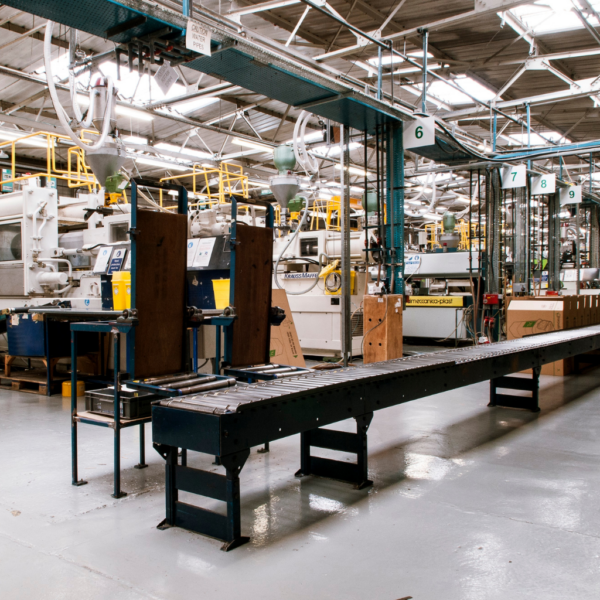
Most industrial environments generate constant background noise. Equipment such as compressors, conveyor systems, forklifts, generators, and manufacturing machinery all contribute to the ambient sound level. This ongoing noise can mask alarm signals if sirens are not powerful enough.
In addition, industrial buildings commonly feature materials such as reinforced concrete, metal walls, and large warehouse shelving systems. These materials can absorb or reflect sound waves. As a result, certain areas may experience sound reflection, while others may develop acoustic shadow zones with reduced alarm audio.
Outdoor environments add another layer of complexity. Open yards, loading docks, and vehicle parking areas allow sound to disperse quickly. This means sirens may not carry as far as expected. Wind direction, temperature variations, and weather conditions can also affect how sound propagates across a site.
Another major factor is machinery masking. Even a loud industrial alarm may struggle to stand out against heavy equipment operating at high decibel levels. This is why security integrators must carefully assess real-world acoustic conditions before determining siren placement.

Key Factors That Influence Siren Sound Coverage
Planning effective siren sound coverage requires a careful balance of acoustic science, security design, and practical site knowledge. Several factors influence how effectively an alarm signal propagates through an industrial facility.
One of the most important considerations is siren output power. Alarm devices must be loud enough to stand out against the normal background noise present in industrial environments.
1. Siren Decibel Rating (dB)
Industrial alarms are designed to deliver high sound levels that cut through ambient noise.
Typical industrial sirens range between 100 dB and 120 dB, depending on the device and installation requirements. A higher decibel rating ensures the alarm remains audible across larger areas or in locations with heavy machinery noise.
2. Mounting Height and Placement
The elevation and positioning of sirens strongly affect sound projection.
- Installing sirens higher improves sound dispersion across open areas.
- Mounting on rooftops, external walls, or poles helps broadcast sound further.
- Sirens should not be placed behind large structural barriers such as concrete walls or equipment bays.
3. Facility Layout
Large industrial properties rarely consist of a single structure. They may include multiple buildings, warehouses, and outdoor operational zones.
Effective industrial alarm design should account for:
- Multi-building layouts requiring multiple sirens
- Internal warehouse spaces that need dedicated coverage
- Outdoor yards where sound may dissipate quickly
4. Environmental Barriers
Sound waves can be obstructed by physical objects throughout a facility.
Common barriers include:
- Machinery clusters
- Storage racks
- Concrete walls
- Shipping containers
Each of these can reduce the effectiveness of siren sound coverage in nearby areas.
5. Noise Floor Levels
The ambient noise level, or noise floor, must be considered during planning. For an alarm to be clearly heard, it generally needs to exceed the background noise by 10–15 dB.
In loud manufacturing areas, this means selecting high-output sirens or deploying multiple devices.
6. Outdoor vs Indoor Coverage
Industrial sites often require alarms to be heard both inside buildings and across exterior operational spaces such as loading docks, parking areas, and access points. Outdoor sirens must therefore be capable of projecting sound over longer distances while remaining weather-resistant.
Best Practices for Planning Outdoor Siren Placement
Designing reliable siren sound coverage across a large industrial property requires a structured planning approach. Security integrators must evaluate both the facility’s physical layout and the operational environment before selecting siren locations.
A well-designed system ensures alarms are heard in critical areas without leaving dangerous coverage gaps. Strategic placement can dramatically improve the effectiveness of an industrial alarm system while reducing the risk of missed alerts.
Several best practices can help guide the planning process.
- Map the entire facility layout
Begin by reviewing site drawings or performing a full property walkthrough. Identify buildings, open yards, entrances, loading docks, storage areas, and restricted zones that require alarm coverage.
- Perform a noise assessment
Measure or estimate ambient noise levels throughout the facility. Noise conditions may vary during different operating hours, particularly in manufacturing plants.
- Create overlapping sound zones
Relying on a single siren to cover large areas often creates gaps. Overlapping sound coverage ensures alarms remain audible even if one device is partially obstructed.
- Avoid acoustic dead spots
Identify areas where sound may be blocked by large machinery, shelving systems, or building structures. These locations may require additional sirens.
- Install sirens at strategic elevations
Rooftop installations, exterior walls, or pole-mounted units allow alarms to project sound across wider areas while reducing obstruction.
- Use multiple sirens for large industrial sites
Large facilities rarely achieve full siren-sound coverage with a single device. Distributed sirens ensure alerts reach workers across multiple operational zones.
- Include visual alert indicators
Bright strobes or flashing lights improve visibility in noisy environments where audio alerts may be difficult to hear.
- Integrate with distributed sensors
Motion detectors, shock sensors, door contacts, and flood sensors can trigger alarms from multiple locations across the property.
Integrating Sirens into a Distributed Industrial Alarm System
Modern industrial security systems are no longer limited to a single control panel and a few wired alarm devices. Instead, many facilities now rely on a distributed security architecture, in which multiple sensors and devices communicate across a network to detect and respond to incidents.
In this type of industrial alarm system, sirens play a vital role in alerting people across the facility. When a sensor detects an event, such as unauthorised entry, equipment impact, or water leakage, it can instantly trigger an alarm signal that activates sirens in designated zones.
Wireless alarm networks make this approach easier to deploy across large industrial sites. Devices such as motion sensors, door and window contacts, shock detectors, and flood sensors can be placed throughout the property without extensive wiring.
Distributed alarm systems offer several advantages:
- Faster incident detection and response
- Localised alerts that activate sirens near the threat
- Scalable system expansion as facilities grow
- Easier retrofitting for existing buildings
Wireless technologies such as Z-Wave further simplify installations. Integrators can connect sirens and sensors via a secure wireless network, enabling them to expand coverage across warehouses, offices, and outdoor areas without requiring complex infrastructure changes.
Example Solution: Using the Vision Z-Wave Outdoor Siren for Industrial Coverage
When planning siren sound coverage for industrial environments, selecting the right hardware is just as important as the placement strategy. Devices designed for outdoor security must deliver strong audio alerts while remaining durable in demanding environments.
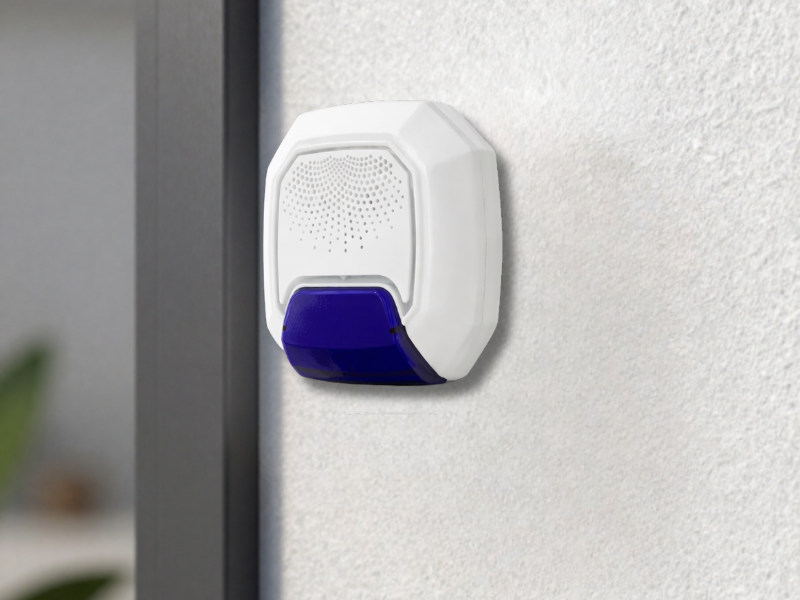
The Vision Z-Wave Outdoor Siren is a wireless device designed to support smart industrial alarm deployments. Its combination of high sound output, visual signalling, and wireless connectivity makes it well-suited for facilities that require flexible installation options.
Several features make this device particularly useful for industrial coverage planning:
- 115 dB siren output: Provides strong audible alerts that cut through common industrial noise.
- Bright blue strobe light: The integrated strobe adds a visual alert layer, ensuring alarms remain noticeable even when machinery noise masks audio signals.
- Z-Wave Plus wireless connectivity: The siren integrates easily with smart security systems and compatible Z-Wave gateway controllers.
- IP66 weatherproofing: Designed for outdoor installation, the device can withstand harsh environmental conditions, including rain, dust, and temperature fluctuations.
- Battery-powered operation: Powered by four D batteries with an estimated two-year lifespan, the siren is ideal for locations where running power cables may be difficult.
The device can also integrate with a range of security sensors commonly used in industrial environments. Motion detectors, shock sensors, flood sensors, and door or window sensors can all trigger the siren when an event is detected.
Additional features, such as tamper alerts and low-battery notifications, enable security teams to monitor device status through the central controller. These capabilities help ensure the alarm system remains reliable over time.
For security integrators planning siren sound coverage, this type of flexible wireless siren can simplify deployment across large industrial properties.
Common Mistakes in Industrial Siren Coverage Planning
Even well-designed security systems can fail if siren coverage is not planned properly. In industrial alarm system design, several common mistakes can reduce the effectiveness of alarms.
- Relying on a single siren for large properties – Large industrial sites typically require multiple devices to achieve reliable siren sound coverage.
- Ignoring background machinery noise – If ambient noise levels are not measured, the alarm may be too quiet to stand out.
- Installing sirens too low – Low-mounted sirens can be easily obstructed by equipment, vehicles, or storage racks.
- Poor coverage for outdoor operational areas – Parking zones, loading docks, and access gates often require dedicated sirens.
- Failing to test alarm audibility after installation – Without on-site testing, installers may overlook coverage gaps or acoustic shadow zones.
- Ignoring visual alarm indicators – In noisy facilities, relying on sound alone may delay response times if workers cannot hear the alarm clearly.
Summing Up,
Effective siren sound coverage is a critical component of industrial security system design. Without properly planned alarm signals, even the most advanced sensor network may fail to alert staff during emergencies or security breaches.
Security integrators must consider several key factors when designing an industrial alarm system, including facility layout, background noise levels, building structures, outdoor operating areas, proper siren placement, elevated mounting, and distributed coverage zones.
Devices such as the Vision Z-Wave Outdoor Siren demonstrate how modern sirens combine powerful sound output with visual alerts and wireless connectivity. With a 115 dB alarm, a bright strobe indicator, and Z-Wave integration, the device provides a flexible solution for industrial facilities requiring reliable alarm coverage.
Ultimately, careful planning ensures alarms are heard, seen, and acted upon immediately. For industrial environments, well-designed siren sound coverage can make the difference between rapid response and delayed action.