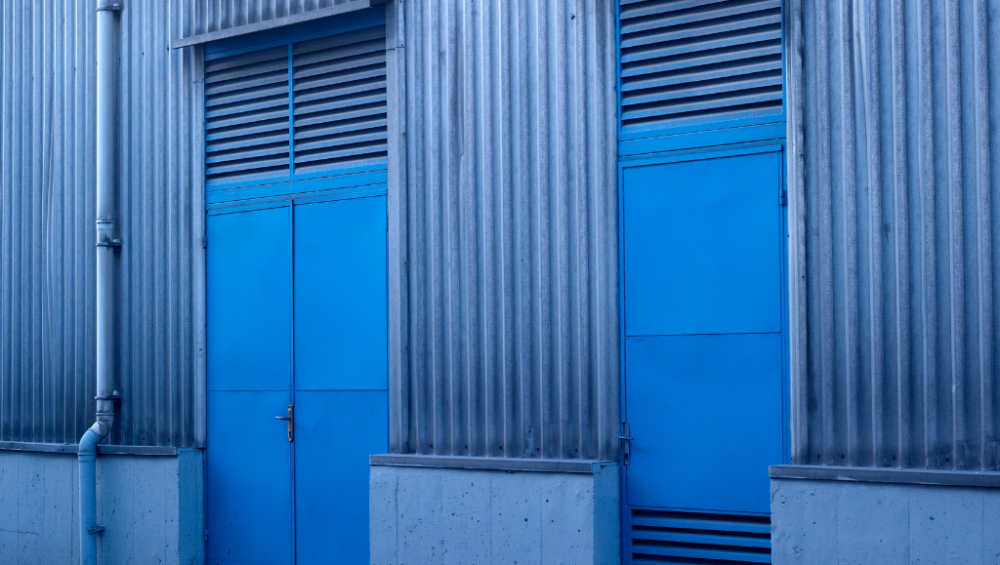
Industrial environments present unique challenges for security professionals. Large warehouses, logistics hubs, factories, and distribution centres require more than just internal detection. These places demand a powerful, highly visible external alert system that spans expansive yards and cuts through high ambient noise.
An industrial alarm siren plays a critical role in perimeter deterrence and broader commercial security compliance. It signals to intruders that the site is monitored and protected.
Modern wireless solutions such as the VISION Z-Wave Outdoor Siren & Strobe demonstrate how today’s sirens are engineered for demanding commercial conditions. Let’s check out how to specify outdoor sirens for industrial facilities!
Environmental & Structural Considerations in Industrial Installations
Before selecting any outdoor alert device, integrators must assess the site’s environmental conditions. Industrial locations across Australia, from coastal distribution centres to inland manufacturing plants, expose equipment to harsh elements year-round.
When specifying an external industrial alarm siren, consider:
- Exposure to rain, dust, and extreme temperatures
Industrial estates often experience heavy wind-driven rain and airborne particulates. Dust from loading docks or manufacturing processes can infiltrate poorly sealed enclosures. An IP66-rated housing is essential for long-term reliability in these environments. - High wind areas and vibration
Facilities near heavy transport corridors or operating large machinery generate constant vibration. Sirens mounted on lightweight panels may loosen over time without appropriate fixings. Structural mounting integrity must be part of your design process. - UV exposure and long-term durability
Prolonged exposure to sunlight in Australian conditions can degrade plastics and seals. UV-stabilised housings are critical for maintaining enclosure integrity and preserving visual strobe clarity. - Mounting height and tamper protection
Outdoor sirens are often mounted at height for maximum sound projection and visibility. However, they must also include tamper detection to alert the system if removal or interference is attempted.
Weather resistance directly impacts reliability. A failed siren during a critical event undermines the entire commercial security design. That’s why IP66-rated enclosures are considered best practice in Australian industrial installations; they ensure dust-tight sealing and protection against powerful water jets.
For integrators, environmental resilience is a baseline requirement.
Sound Output & Coverage Planning for Large Sites
Industrial sites are rarely quiet. Forklifts move constantly, roller doors operate throughout the day, trucks reverse, and machinery hums in the background. In these environments, perceived sound levels are significantly reduced.
When planning an industrial alarm siren, output and coverage are crucial.
Why 115 dB Output Is Often a Minimum
In open-air yards or high-noise facilities, lower-output sirens may be drowned out. A 115 dB siren ensures the alarm cuts through environmental noise and remains clearly audible across operational zones.
However, besides raw decibel output, placement and reflection patterns also matter.
Calculating Coverage Radius
Open yard coverage depends on:
- Mounting height
- Obstructions (shipping containers, vehicles, walls)
- Ambient noise levels
- Wind direction
Strategic elevation improves projection distance and minimises sound shadow zones behind buildings.
Strategic Siren Placement for Multi-Building Sites
Large facilities often include multiple warehouses, office blocks, and storage areas. Rather than relying on a single high-output device, layered placement provides better redundancy and zone-specific response.
Integrators should consider:
- Separate sirens for perimeter and internal yard areas
- Zoning alignment with detection devices
- Trigger differentiation for targeted response
Layered Audio & Visual Alerts
Sound pressure level and strobe visibility work together for maximum deterrence. A high-intensity strobe reinforces the audible signal, particularly in high-noise scenarios or at night.
A visible flashing light:
- Attracts attention from security personnel
- Assists responding teams in identifying the triggered zone
- Enhances deterrence by making the alarm event unmistakable
An effective commercial security design leverages both audible and visual alerts for rapid site awareness.
Industrial Alarm Siren Integration into Broader Commercial Security Design
An outdoor siren should never operate as a standalone device. In industrial environments, it must function as a coordinated output within a broader commercial security design framework. The real value of an industrial alarm siren is realised when it responds intelligently to multiple detection layers rather than simply sounding for any generic trigger.
Industrial sites typically incorporate a combination of perimeter and internal detection sensor technologies, including:
- Door and window sensors protecting access points
- Shock and vibration sensors on roller shutters and gates
- Beam sensors or perimeter detection systems along fencing lines
- Flood, temperature, or environmental sensors for risk monitoring
- Access control systems managing restricted operational zones
When integrated properly, the siren can be programmed to respond differently depending on the trigger source. For example, a perimeter breach after hours may activate full siren and strobe output, while an internal warehouse door alert during business hours may trigger a shorter audible warning or visual-only alert. This layered response improves operational practicality while maintaining strong deterrence.
Compatibility with Z-Wave-enabled controllers ensures flexible programming and remote configuration. Wireless deployment also simplifies retrofits, particularly in concrete tilt-panel warehouses or steel-framed facilities where running new cabling is costly and disruptive.
By embedding the outdoor siren within the full alarm architecture, integrators deliver a cohesive security ecosystem rather than a collection of individual devices.
Power, Maintenance & Long-Term Reliability
Industrial clients care deeply about maintenance costs and operational downtime. Every site visit carries a cost, particularly in high-security environments requiring escorted access.
When evaluating industrial alarm siren solutions, integrators should assess:
Battery-Powered vs Hardwired Installations
Battery-powered wireless sirens offer:
- Faster installation
- No trenching or conduit runs
- Reduced disruption to operations
On the other hand, hardwired options may provide constant power but often increase labour complexity in retrofit projects.
Expected Battery Life in High-Activity Sites
In busy industrial zones, sirens may be triggered more frequently, whether for testing, false alarms, or genuine events. A device rated for up to two years of battery life under standard conditions reduces service intervals.
Low Battery Reporting
Integrated battery monitoring ensures:
- Automatic low-battery notifications to the control panel
- Preventative maintenance scheduling
- Reduced risk of silent failure
Tamper Alerts
Tamper detection is particularly important in exposed industrial perimeters. If a siren housing is opened or removed, the system should immediately report the event.
Reducing wiring complexity not only shortens installation time but also minimises disruption to operational facilities, a key consideration in factories and distribution centres operating around the clock.
Long-term reliability isn’t just about hardware; it’s about minimising lifetime cost and maintaining system integrity over years of exposure.
Compliance, Risk Mitigation & Insurance Considerations
For many industrial clients, security is not just about stopping intruders; it’s about meeting insurance conditions, audit requirements, and documented risk management standards. When specifying an industrial alarm siren, integrators should consider how the device supports both operational security and compliance obligations.
A properly integrated outdoor siren contributes to risk mitigation in clear and measurable ways.
- Provides an audible external alert during intrusion events
Insurers often expect a visible and audible deterrent as part of a layered protection strategy. A loud outdoor siren demonstrates active monitoring and immediate escalation. - Strengthens documented response procedures
When the siren activates in line with defined alarm zones, it supports structured security protocols. This is particularly important during compliance reviews or insurance audits. - Enhances visible deterrence with strobe signalling
A flashing strobe reinforces the audible alert, making the event highly visible to staff, neighbours, and passing traffic. Increased visibility reduces the likelihood of prolonged intrusion attempts. - Supports multi-zone alarm strategies
Industrial sites are often divided into perimeter, warehouse, office, and plant zones. Integrating the siren with specific zones enables accurate event reporting and clearer audit trails. - Demonstrates proactive risk management
Layered protection, including perimeter detection, internal sensors, and an external siren, shows insurers that the client has implemented a comprehensive commercial security design.
Beyond compliance, the deterrence effect of a well-specified siren can reduce:
- Theft incidents
- Vandalism damage
- Operational downtime
- Insurance claims frequency
For insurers, visible and audible alarm systems lower overall risk exposure. For clients, this can support more favourable policy terms or reduced premiums over time.
In this context, an industrial alarm siren is not simply a noise device; it becomes part of the organisation’s broader financial and operational protection strategy. Integrators who understand this bigger picture can position their security designs as both technically robust and commercially valuable.
Specifying the Right Outdoor Siren for Industrial Projects
Bringing all decision factors together ensures the selected siren aligns with both technical and operational requirements.
When evaluating options, confirm:
- Output power (minimum 115 dB for industrial use)
- Weather rating (IP66 for Australian conditions)
- Wireless reliability (921.42 MHz AU frequency compliance)
- Controller compatibility
- Tamper and battery monitoring capabilities
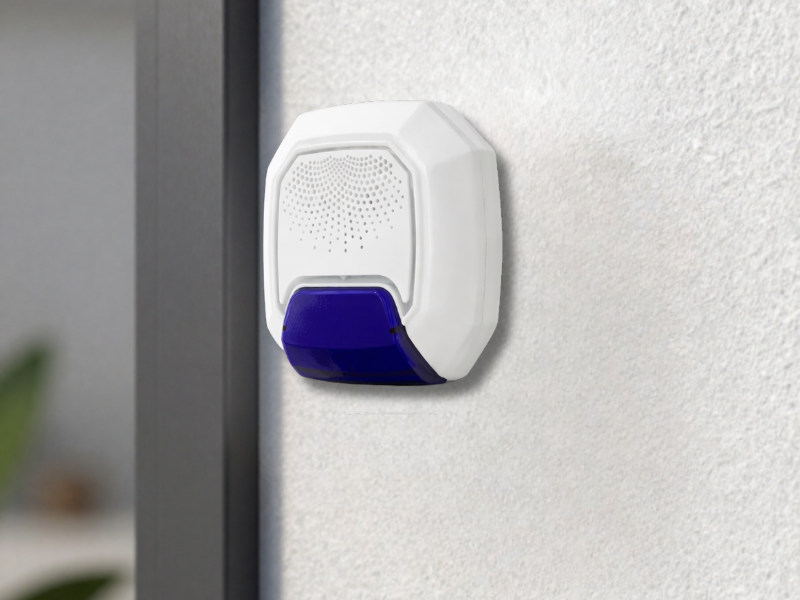
The VISION Z-Wave Outdoor Siren & Strobe provides a practical example of an industrial alarm siren solution engineered to meet these criteria.
Key features include:
- 115 dB sound output
- Bright blue strobe for high visibility
- IP66-rated enclosure
- Up to 2-year battery life
- Compatibility with major Australian-certified Z-Wave controllers
For integrators designing robust commercial security design systems, selecting a proven, certified device simplifies deployment and reduces long-term risk.
Summing Up
Specifying an industrial alarm siren is not simply about choosing the loudest device available. It’s about strategic placement, system integration, and long-term reliability within a comprehensive commercial security design framework.
When outdoor sirens are properly integrated into detection zones, access control, and wireless alarm infrastructure, they become powerful deterrence and response tools, not just noise makers.
For integrators seeking a dependable, IP66-rated wireless solution, the VISION Z-Wave Outdoor Siren & Strobe offers high output, strong visual signalling, and compatibility with leading Australian Z-Wave systems.
As an established distributor of smart security and automation solutions across Australia, New Zealand, and the Pacific region, Digital Home Systems provides not only access to certified products but also technical support, training, and integration guidance. Partnering with an experienced distributor ensures you’re specifying solutions that meet local standards and perform reliably in real-world conditions.
If you’re planning your next industrial project, consult Digital Home Systems for trade pricing and system design support!