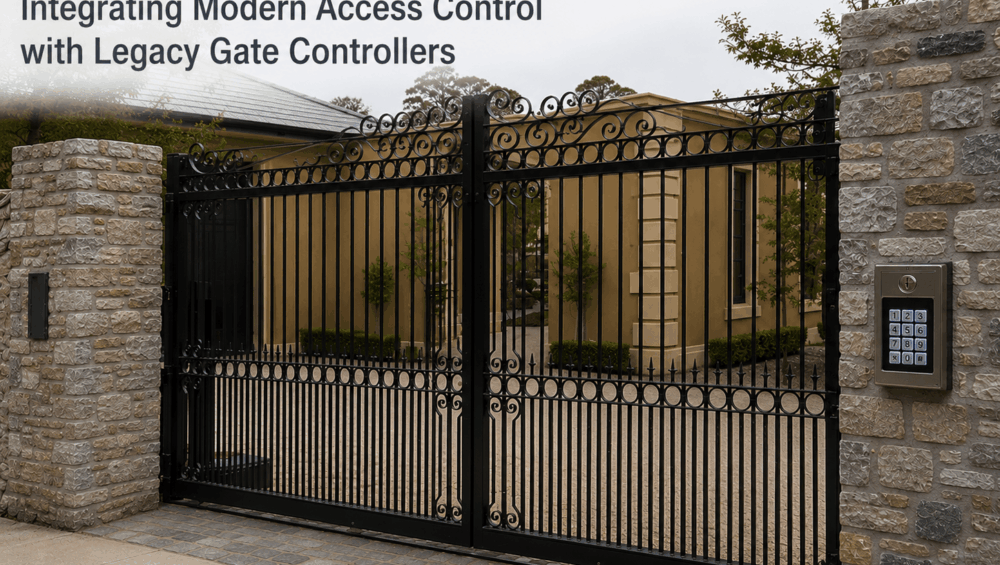
Many automatic gate systems installed ten, twenty or even thirty years ago continue to operate reliably. Their motors, gearboxes and mechanical assemblies are often designed for decades of service. The real limitation of these systems is usually the access control equipment rather than the gate operator itself.
Today’s property owners expect PIN codes, RFID credentials and integration with broader security systems, while older installations often rely on basic key switches or handheld remotes. Fortunately, these modern features can often be added without replacing the entire automation system.
A Wiegand keypad for gate automation allows installers to modernise access while retaining the existing controller and operator, provided compatibility and wiring are carefully planned. Understanding the Wiegand protocol, relay logic and controller inputs is essential for delivering a reliable retrofit that extends the life of existing infrastructure.
Takeaways:
- Retrofitting existing gate operators with modern access control extends system life, improves security and reduces project costs compared with complete gate automation replacement.
- Understanding how Wiegand communication, access controllers, and relay outputs interact is essential for successfully integrating modern keypads with legacy gate automation systems.
- Correct wiring, stable power supplies and properly configured relay outputs ensure reliable communication between the keypad and the existing gate controller.
- Identifying controller limitations, existing safety devices and trigger compatibility before installation helps avoid commissioning issues and ensures a smoother retrofit process.
- Careful planning, thorough testing and accurate documentation improve installation quality, simplify future servicing and maximise the reliability of gate automation retrofit projects.
Why Legacy Gate Automation Systems Are Still Worth Upgrading
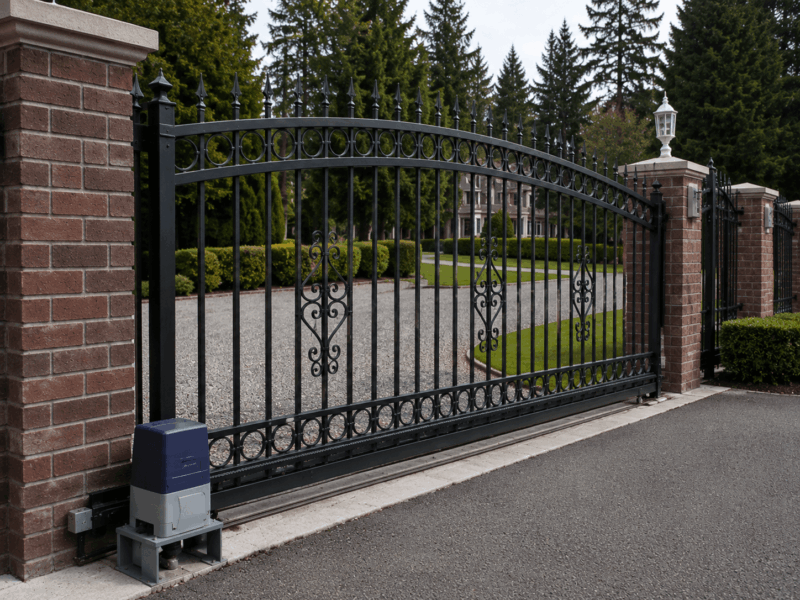
Many gate automation systems remain mechanically reliable long after their electronic accessories become outdated. Commercial sliding gates, swing gates and vehicle entrances are built to withstand years of continuous operation, and with routine maintenance, the operator itself may continue performing well for decades.
The challenge usually lies with the original access method. Older systems often rely on fixed-code remotes, key switches or simple push buttons that offer limited flexibility and poor user management. Lost remotes are inconvenient to replace, while shared access codes can quickly become a security concern.
Installing a Wiegand keypad for gate automation provides a practical alternative to replacing the entire operator. Customers gain secure PIN or RFID access, while installers preserve the existing motors, safety devices and control logic. The result is a more cost-effective upgrade that avoids unnecessary demolition, electrical work and downtime.
These retrofits are increasingly common in apartment buildings, warehouses, schools, medical centres, industrial facilities and strata-managed properties where the gate itself remains in good condition but access control no longer meets operational requirements.
Compared with a complete replacement, retrofitting typically reduces project costs, shortens installation time and minimises disruption. It also allows customers to introduce modern credential management without discarding reliable mechanical equipment that still has many years of service remaining.
Read more: When to Upgrade an Existing Access Control System
Understanding How a Wiegand Keypad for Gate Automation Communicates with Legacy Controllers
Understanding how information moves between the keypad and the existing controller is the key to a successful retrofit. Many integration problems occur because installers confuse Wiegand communication with relay switching, even though they perform completely different functions.
What Is the Wiegand Protocol?
The Wiegand protocol is one of the most widely adopted communication standards in electronic access control. Rather than directly opening the gate, it transfers credential information between the keypad and an access controller using two dedicated communication lines known as Data0 and Data1.
When a user enters a PIN or presents an RFID credential, the keypad converts that information into digital pulses transmitted across these data lines. The access controller validates the credential and decides whether access should be granted.
It is important to remember that Wiegand communication is separate from the keypad’s power supply. While the keypad requires 12VDC or 24VDC to operate, the Data0 and Data1 conductors simply carry communication signals. The actual command to open the gate is generated later through a relay output.
Because Wiegand has remained an industry standard for decades, it continues to provide excellent compatibility between equipment from different manufacturers.
Components Required for a Successful Retrofit
Although every installation differs slightly, most retrofits involve the same core components working together.
The Wiegand keypad for gate automation provides the user interface where authorised users enter a PIN or present an RFID credential. Depending on the model, the keypad may either contain its own controller or simply transmit Wiegand data to an external access controller.
The access controller validates credentials and activates a relay output when access is approved. That relay then communicates with the existing gate controller using a simple dry-contact signal.
Meanwhile, the legacy gate controller continues performing the tasks it was originally designed for, including motor operation, obstacle detection, safety monitoring and gate sequencing. Additional devices such as exit buttons, photocells and vehicle loop detectors usually remain connected exactly as before.
Providing a stable power supply is equally important. Whether using an auxiliary output from the controller or a dedicated supply, installers should ensure sufficient capacity is available for all connected devices.
Typical Signal Flow
During normal operation, the process is straightforward. A user enters a PIN or presents an authorised credential to the keypad. The keypad converts this into Wiegand data and sends it to the access controller through the Data0 and Data1 communication lines.
The access controller compares the credential with its stored database. If access is approved, it activates a relay for a programmed duration, usually one or two seconds.
This relay provides a dry-contact pulse to the legacy gate controller, which interprets the signal exactly as it would a push button or key switch. The controller then begins its normal opening sequence while continuing to manage all safety devices and operating logic.
Separating credential management from gate control is what allows a Wiegand keypad for gate automation to integrate successfully with many existing automation systems without replacing the original controller.

Wiring a Wiegand Keypad into an Existing Gate Automation Board
Once the communication path has been established, the next step is integrating the keypad with the existing gate controller. Careful wiring and proper relay configuration ensure reliable operation while reducing future service calls.
Identify Available Inputs on the Existing Controller
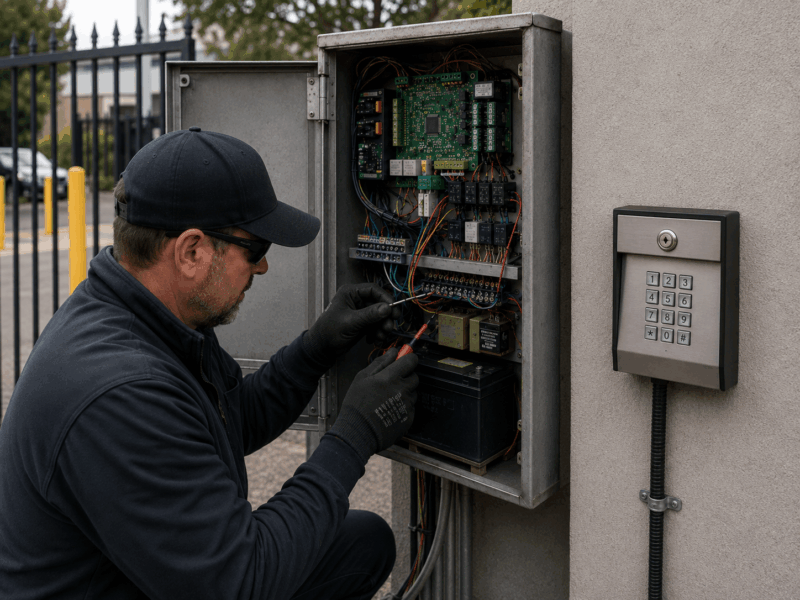
Before making any connections, identify the controller’s trigger inputs. These are commonly labelled START, STEP, OPEN or PUSH BUTTON, depending on the manufacturer.
Most legacy controllers expect a dry-contact trigger rather than a powered signal. When the correct terminals are briefly shorted together, the controller begins its programmed operating cycle.
Where documentation is unavailable, manually testing the trigger input before installation can help confirm the correct terminals and avoid unnecessary troubleshooting.
Power Supply Considerations
Most Wiegand keypads operate from either 12VDC or 24VDC. Before connecting power, verify the keypad’s voltage requirements and confirm that the existing auxiliary supply can support the additional load.
Where several accessories already share the controller’s power output, installing a dedicated regulated supply may improve long-term reliability.
Installers should also consider voltage drop on longer cable runs. Low supply voltage often causes intermittent faults such as keypad resets or unreliable credential recognition.
Connecting Relay Outputs Correctly
The relay output provides the actual opening command to the gate controller.
Most relay terminals include COM (Common), NO (Normally Open) and NC (Normally Closed) connections. For most gate automation applications, the Common and Normally Open terminals are connected to the controller’s trigger input.
Relay timing is equally important. A pulse that is too short may not activate the controller, while continuous activation can produce repeated triggering or prevent correct operation. Always configure the relay duration according to the manufacturer’s recommendations.
Common Wiring Mistakes
Many commissioning issues can be traced back to a handful of common installation errors.
- Connecting Wiegand data directly to the gate controller. Data0 and Data1 carry communication signals, not trigger outputs. Most legacy controllers require a relay contact rather than native Wiegand communication.
- Incorrect grounding between devices. Poor grounding can introduce intermittent communication faults and unreliable relay operation.
- Mixing AC and DC supplies. Many keypads require regulated DC power. Connecting the wrong supply may damage equipment or create unstable operation.
- Using unsuitable cable. Poor-quality or undersized cable can reduce signal integrity and contribute to communication problems over longer distances.
- Ignoring voltage drop. Excessive cable length can reduce supply voltage below the keypad’s operating requirements, causing resets and inconsistent performance.
- Forgetting surge protection. Outdoor equipment is vulnerable to electrical surges and nearby lightning strikes. Appropriate surge protection significantly improves long-term reliability.
Compatibility Challenges When Migrating Legacy Hardware
No two retrofit projects are exactly alike. Older installations may have undocumented modifications, discontinued controllers or additional equipment added over many years. Identifying these challenges early helps prevent delays during commissioning.
Common compatibility issues include:
- Proprietary control boards. Some manufacturers use unique trigger logic or limited documentation that requires additional investigation.
- Missing installation manuals. Older systems often require installers to trace wiring manually before connecting new equipment.
- Relay compatibility issues. Controllers may require different trigger durations or electrical configurations.
- Existing safety devices. Photocells, safety edges and emergency stop circuits must continue operating exactly as designed.
- Shared intercom interfaces. Existing intercoms, loop detectors and building management systems may already share trigger inputs.
- Multiple trigger sources. Combining remotes, keypads and exit buttons requires careful coordination to prevent conflicting commands.
- Controller firmware limitations. Older controllers sometimes have limited programming options that affect integration.
Best Practices for Reliable Wiegand Gate Automation Retrofits
A successful retrofit depends as much on good installation practices as on selecting compatible hardware. Taking extra time during planning and commissioning helps reduce future service calls and provides a more reliable system for the customer.
- Label every wire before disconnecting it. Clear identification simplifies installation and future servicing, particularly on older control boards with faded terminal markings.
- Photograph the original wiring. Images provide an invaluable reference if unexpected issues arise or if original documentation is unavailable.
- Bench-test the keypad before arriving on site. Confirming programming, credential enrolment and relay operation beforehand reduces installation time.
- Keep access control separate from safety circuits. Safety devices should always retain their original protective functions and should never be bypassed during a retrofit.
- Install weatherproof enclosures where necessary. Outdoor electronics require appropriate IP-rated protection against moisture, dust and environmental exposure.
- Maintain adequate separation between low-voltage and mains cabling. This minimises electrical interference and improves long-term communication reliability.
- Test every operating mode before handover. Verify PIN entry, RFID operation, exit buttons, remotes, safety sensors and manual release functions.
- Document programming and credentials. Recording relay settings, user credentials and controller programming makes future maintenance significantly easier.
When these best practices are followed, installers can deliver a reliable retrofit that introduces modern access control for gates and doors while preserving the service life of existing gate automation infrastructure. This approach often provides the ideal balance between functionality, cost and long-term maintainability.
In Conclusion
A Wiegand keypad for gate automation provides an effective way to modernise legacy gate systems without replacing mechanically reliable equipment. By understanding Wiegand communication, relay outputs, controller compatibility and correct wiring practices, installers can deliver secure, reliable and cost-effective access control upgrades while preserving the existing automation infrastructure.
Whether you’re upgrading an apartment complex, warehouse, industrial facility or commercial property, Digital Home Systems offers complete gate & door solutions, professional security solutions, quality access control hardware and expert technical support to help installers complete reliable gate automation retrofit projects with confidence.
Frequently Asked Questions
Can I connect a Wiegand keypad directly to a gate controller?
Only if the keypad includes its own relay output. Wiegand readers that transmit Data0 and Data1 require an external access controller to process credentials and activate the relay.
Do all gate control boards support Wiegand keypads?
Most legacy controllers do not understand Wiegand communication directly. Instead, they respond to the relay output generated by the keypad or access controller.
What cable should be used for Wiegand wiring?
Shielded low-voltage cable is generally recommended, particularly on long cable runs or in electrically noisy environments. Always follow the equipment manufacturer’s recommendations.
Can I use RFID and PIN together?
Yes. Many modern Wiegand keypads support PIN codes, RFID credentials or both, allowing installers to configure authentication to suit the site’s security requirements.
Is replacing the entire gate controller always necessary?
No. Many existing controllers remain perfectly suitable for retrofit projects. As long as compatible trigger inputs are available and the system continues to operate safely, integrating a Wiegand keypad for gate automation is often a practical and economical solution.