Electronic locking hardware is only a small line item within a commercial tender, but an incorrect allowance can create significant installation delays and variations. Electric strikes and magnetic locks are two of the most common options for electronically controlled doors, yet their installation requirements differ significantly.
Comparing electric strike vs maglock cost must therefore consider more than the purchase price of the locking device. The completed package may also require door preparation, frame modifications, mounting brackets, power supplies, and many more.
Selecting the cheaper lock from a supplier schedule can become expensive when it does not suit the door construction. Estimators should compare the complete installed system for each opening rather than relying on a standard hardware allowance. Let’s figure out more!
Electric Strike vs Magnetic Lock: The Basic Operating Difference
Let’s understand how each locking mechanism operates. Although both devices can be controlled through card readers, keypads, intercoms and access-control systems, they secure and release the door in different ways.
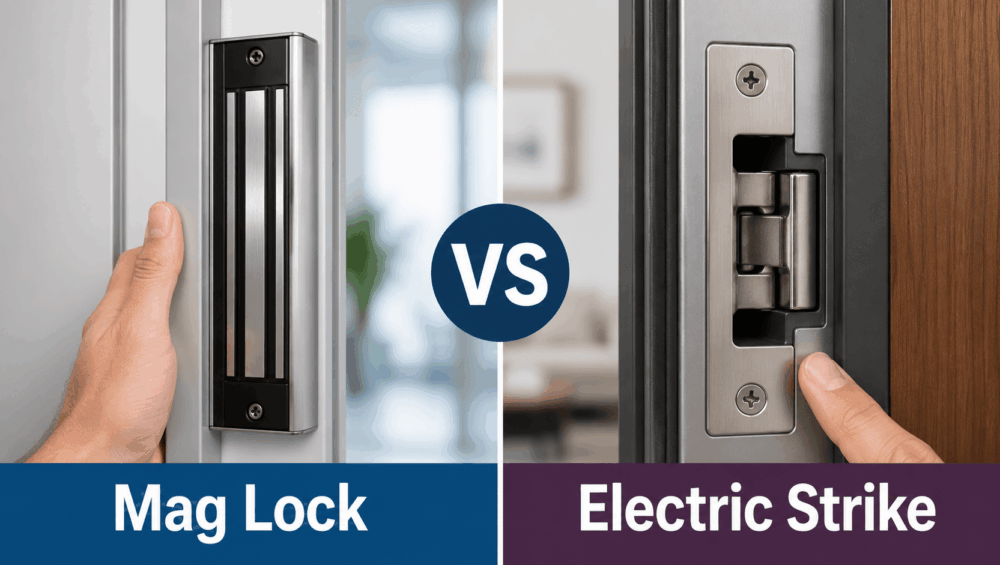
An electric strike is installed within the door frame and works with a mechanical latch or lockset already fitted to the door. When access is granted, the strike’s keeper releases, allowing the latch to pass through while the door opens.
With an electric strike, the mechanical lockset remains an important part of the security solutions. Depending on the selected model and door hardware, an electric strike may be configured as fail-safe or fail-secure.
A magnetic lock, commonly called a maglock, generally consists of an electromagnet mounted to the frame and an armature plate attached to the door. When power is applied, the magnet holds the armature plate, keeping the door locked. When power is removed, the magnetic holding force disappears and the door releases.
Below is the detailed comparison table with specific aspects.
| Specification factor | Electric strike | Magnetic lock |
| Typical mounting position | Installed inside the door frame | Face-mounted to the door and frame |
| Mechanical latch required | Usually yes | No conventional latch is required for holding |
| Common operating mode | Fail-secure or fail-safe models are available | Typically fail-safe |
| Visual appearance | More concealed | More visible |
| Door preparation | Precise frame preparation | Surface brackets and alignment |
| Typical applications | Offices, storerooms and tenancy doors | Glass doors, controlled entrances and high-traffic access points |
What Makes Up the True Electric Strike vs Maglock Cost?
The true electric strike vs maglock cost should be divided into four areas: locking hardware, installation labour, system integration and compliance-related equipment. Looking only at the supplier price can leave major parts of the scope unaccounted for.
For an electric strike, the estimate may need to include:
- The electric strike and a compatible mechanical lockset
- Morticing, cutting or preparing the frame
- Reinforcement where the frame is too light or unsupported
- A flexible door loop when powered hardware is also installed in the door
- Adjustment of an existing latch or a misaligned door
- Labour for testing both mechanical and electronic operation
- Locksmith or door-contractor work where required
Electric strikes can be cost-effective when the door already contains suitable mechanical hardware and the frame has enough depth for the selected strike. However, labour can increase quickly when the frame is incompatible with the existing latch position.
A magnetic locking package may include:
- The maglock and armature plate
- L-, Z- or U-brackets for the door configuration
- A regulated power supply
- Battery backup
- A request-to-exit button or motion sensor
- An emergency door-release unit
- A fire-alarm interface relay where required
- Cabling and cable containment
- Door closer or automatic operator coordination
- Integrated testing and commissioning
A maglock may initially appear easier to install because it is surface-mounted. However, the supporting release and power-control equipment can make the complete magnetic locking system more expensive than the lock itself.
For this reason, estimators should develop a complete door-by-door scope rather than applying a single standard locking allowance across an entire project.

How Estimators Compare Installed Costs Door by Door
Reliable estimates begin with the conditions at each individual opening. Doors within the same project can have different access requirements and integration points.
A structured assessment helps the estimator compare the full electric strike vs maglock cost while identifying missing information before the tender is submitted.
Start With the Existing Door and Frame Construction
The first step is to identify the door and frame material, including aluminium-framed doors, hollow metal frames, timber frames, frameless glass doors, framed glass entrances and fire-rated assemblies.
Electric strikes require enough frame depth to accommodate the strike body and cabling. The latch must also enter the keeper accurately. Narrow aluminium profiles, hidden reinforcement, previously modified frames or existing damage can increase preparation time.
Maglocks can be easier to accommodate on some aluminium and glass entrances, particularly where frame morticing is impractical. However, mounting space, bracket type, cable access and the position of the armature plate must still be confirmed.
Confirm the Required Locking Function
A fail-secure electric strike can remain locked during a power failure while still allowing mechanical egress from inside when paired with appropriate door hardware. This arrangement may suit storerooms, staff-only areas and doors protecting valuable equipment.
Most maglocks operate on a fail-safe principle. They remain locked while powered and release when power is removed. This can support safe egress, but it may not meet all security objectives during a power interruption.
“Fail-safe” and “fail-secure” should not be treated as interchangeable tender descriptions. The required function affects the lock model, power supply, emergency release arrangement, and interface with other building systems.
Allow for the Mechanical Condition of the Door
Electronic locking hardware cannot correct a defective door.
A dragging door, a worn hinge, a failed closer, a twisted frame, or a misaligned latch can prevent reliable locking regardless of the access-control equipment selected. Where tender documents do not confirm the condition of existing doors, estimators should include an inspection allowance or clearly exclude mechanical rectification.
Electric strikes generally require accurate latch alignment. A small change in the door position may prevent the latch from engaging or disengaging properly.
Maglocks require consistent contact between the electromagnet and armature plate. If the door does not close fully, the available holding force may be significantly reduced.
Mechanical adjustment should therefore be treated as a separate cost component rather than assumed to form part of standard electronic lock installation.
Identify Every Integration Point
The locking device rarely operates independently. Before finalising the electric strike vs maglock cost, estimators should identify every system that must communicate with the door.
Potential integration points include:
- Card readers, keypads and intercom systems
- Automatic swing or sliding door operators
- Fire-alarm interface relays
- Building management and security systems
- Emergency break-glass units
- Request-to-exit sensors
- Door-position monitoring contacts
- Battery-backed power supplies
- Time schedules and remote access platforms
Each integration point may require additional cabling, relays, programming, coordination and testing.
An automatic swing door, for example, may require a controlled sequence in which the lock releases before the operator opens it. The system may also need to confirm that the door has closed before re-energising the lock.
This is more complex than basic lock wiring and should not be covered by a standard installation rate unless the full operating sequence has been confirmed.
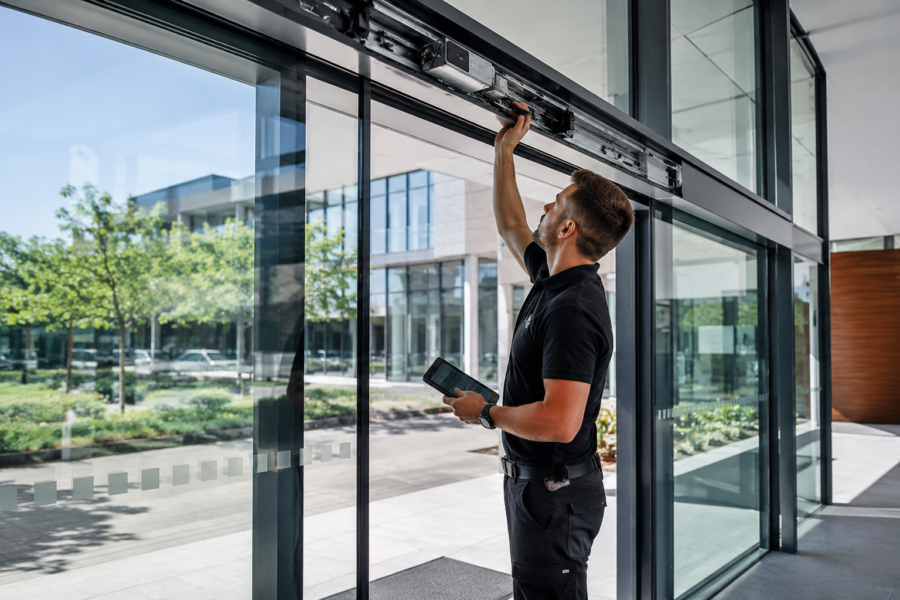
When an Electric Strike Is Usually the More Cost-Effective Choice
An electric strike is often cost-effective when the door already has a compatible mortice lock, and the frame can be prepared without major reconstruction.
It is particularly suitable where the project requires a discreet electronic locking solution while retaining conventional mechanical door hardware.
Common applications of an electric strike include:
- Internal office doors
- Storerooms and staff-only rooms
- Tenancy entrances with suitable locksets
- Doors where concealed hardware is preferred
- Openings that should remain secure during a power failure
- Doors requiring mechanical key override
Because most of the electronic mechanism is located inside the frame, an electric strike can provide a cleaner architectural appearance than a surface-mounted maglock. This may be important in finished offices, medical facilities, apartment developments and customer-facing commercial spaces.
However, estimators should not assume every hinged door can accept the same strike. The electric strike vs maglock cost may shift considerably when the latch is unsuitable, the frame has insufficient installation depth, the existing lockset must be replaced, or the opening requires specialised weather-resistant hardware.
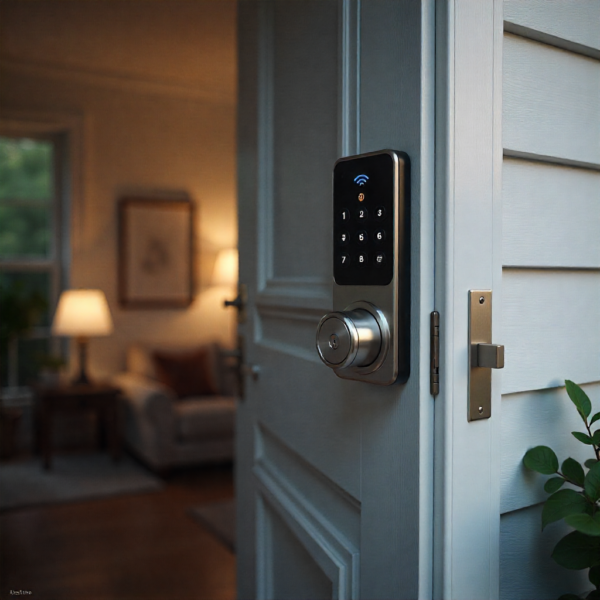
When a Magnetic Lock May Deliver Better Project Value
A magnetic lock can deliver good value where installing a conventional strike is difficult or where a straightforward fail-safe locking arrangement is required.
Maglocks have relatively few moving components and can provide dependable holding force when the magnet and armature plate are correctly mounted and aligned.
Typical applications of a magnetic lock include:
- Frameless glass doors
- Aluminium commercial entrances
- Double doors requiring coordinated locking
- Doors connected to automatic operators
- High-traffic controlled entrances
- Existing openings where frame morticing is impractical
For some glass and aluminium doors, a maglock can avoid the need for complex frame cutting or the replacement of existing mechanical hardware. This may reduce installation uncertainty, particularly during retrofit projects.
However, magnetic lock hardware cost should never be confused with the total magnetic locking system cost, which requires mounting brackets, a dedicated power supply, battery backup, emergency-release controls, request-to-exit devices, and fire-alarm integration.
The visible, surface-mounted appearance may also require approval from the architect, client or door supplier.
Holding force should be selected based on the door, environment, and security risk. Estimators can learn more about choosing an appropriate rating in our guide to magnetic lock holding force.
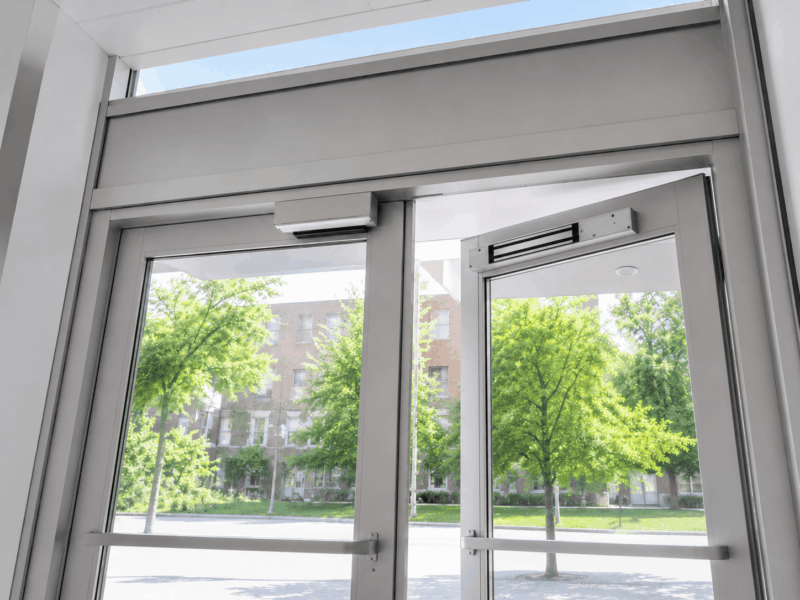
Common Estimating Errors That Cause Variations
Many variations in electronic locking stem from a lack of scope rather than unexpected hardware costs. The following points should be treated as a tender-risk checklist when reviewing the electric strike vs maglock cost for a commercial project.
Common estimating mistakes include:
- Pricing only the lock and omitting brackets, power supplies or release devices
- Assuming every electric strike fits every aluminium or metal frame
- Failing to identify the existing latch and lockset
- Omitting request-to-exit and emergency-release equipment from maglock pricing
- Not allowing for fire-alarm interface wiring and integrated testing
- Ignoring damaged hinges, failed closers or door-alignment defects
- Treating automatic door integration as standard lock wiring
- Failing to confirm whether an opening is fire-rated
- Omitting battery backup from the access-control power supply
- Applying the same labour allowance to every door
- Failing to separate the responsibilities of the electrician, locksmith, door contractor and access-control installer
- Leaving programming and commissioning outside the estimate
Where information is unavailable, the quotation should include clear assumptions.
These may cover the condition of existing doors, the availability of suitable power, accessible cable pathways, compatibility of mechanical hardware, and work to be completed by other trades.

FAQs
Is an electric strike cheaper than a magnetic lock?
Sometimes. Electric strike hardware may form a less expensive complete package when the door already has a suitable lockset, and the frame is easy to prepare. However, frame modifications, latch-alignment work and replacement mechanical hardware can increase labour.
Does a maglock require more supporting equipment?
Generally, yes. A magnetic locking system may require a power supply, battery backup, emergency release device, request-to-exit control, and fire alarm interface. These components must be included when assessing the full installed price.
Which lock is better for an automatic door?
Either option may be suitable. Selection depends on the operator, door construction, locking sequence, egress requirements and control logic. The lock must release and re-engage in the correct sequence with the automatic door system.
Which option works during a power failure?
That depends on whether the selected hardware is fail-safe or fail-secure. Most magnetic locks release without power, while electric strikes are available in fail-safe and fail-secure configurations.
Can an electric strike be installed in an aluminium frame?
Yes, provided the frame profile, reinforcement, latch position and available depth are suitable. Narrow profiles may require specialist strikes or additional preparation.
Final Thoughts
A reliable electric strike vs maglock cost comparison must account for the complete installed system. Hardware prices are only one part of the estimate, while door preparation, mechanical condition, power equipment, cabling and commissioning can have a greater impact on the final project cost.
Electric strikes often provide strong value where compatible mechanical hardware and suitable frames already exist. Magnetic locks may be more practical for glass doors, aluminium entrances, automatic doors and openings where frame morticing is difficult.
Digital Home Systems works with estimators, builders, electricians, installers and access-control specialists to develop practical locking and gate & door solutions for commercial projects.
Contact us today to discuss electric strikes, magnetic locks, access-control products, automatic door integration and complete gate and door solutions for your next project.