For historic buildings, modernising their entrances presents unique opportunities and equally unique challenges. Unlike new construction, retrofitting automatic door openers requires builders to work within the constraints of existing structures to preserve architectural significance. Every modification must balance accessibility with the protection of heritage features.
Many heritage buildings feature oversized timber doors, heavy steel frames, or stone openings that do not accommodate automation. Structural limitations, ageing materials, and heritage conservation requirements all influence the installation approach. By understanding these factors early, retrofitting automatic door openers can deliver modern convenience while respecting the building’s historic integrity.
Why Heritage Buildings Present Unique Automation Challenges
Heritage buildings rarely adhere to modern construction standards, making automation projects more complex than in contemporary developments. Many original entrance doors were designed for durability rather than automation, with heavier door leaves placing greater demands on operators and supporting hardware.
Existing door frames frequently exhibit movement, settlement or wear accumulated over decades of use. Small misalignments may be acceptable for manual operation, but they can create significant issues once an automatic operator is installed. This will lead to excessive motor loads, premature wear and inconsistent performance.
Builders must also navigate heritage protection requirements that restrict alterations to the original fabric. Visible conduit, extensive drilling or replacement of decorative components may not be permitted. Instead, it often requires creative installation methods that minimise intervention.
Another common challenge is hidden deterioration. Timber decay, corroded steel fixings and weakened masonry are often concealed beneath finishes until work begins. These conditions can compromise mounting strength if not identified beforehand.
Wherever possible, installers should adopt reversible installation methods that allow automation equipment to be removed in the future without permanently altering heritage materials. This approach supports long-term conservation while providing flexibility for future restoration works.

Pre-Installation Structural Assessment Checklist
Before specifying any operator, builders should undertake a comprehensive assessment of the existing entrance. Understanding the structural condition of the doorway allows builders to select the correct operator while reducing installation risks and unexpected site variations.
| Component | What to Inspect | Why It Matters |
| Door weight | Actual operating weight | Determines correct operator sizing |
| Hinges | Wear, movement | Prevents premature operator failure |
| Frame | Deflection and fixing | Confirms adequate load transfer |
| Masonry | Cracks and anchors | Ensures safe mounting points |
| Lintels | Structural capacity | Supports header-mounted operators |
| Door alignment | Binding or sagging | Enables smooth automated movement |
| Existing hardware | Locks, closers | Allows integration planning |
Many retrofit issues stem from assumptions rather than measurements. Estimating door weight or overlooking worn hinges can result in selecting an operator that struggles from the day it is commissioned. Likewise, mounting an operator onto deteriorated timber or unstable masonry can lead to long-term reliability problems.
Completing these inspections before choosing an automation system enables builders to identify any structural repairs that should be undertaken first. It also helps suppliers recommend the most suitable operator configuration, mounting method and compatible locking hardware. That helps reduce costly redesigns later in the project.
Choosing the Right Operator Without Compromising Heritage Features
Selecting an automatic operator for a heritage building extends well beyond matching the door weight. Builders must consider how the operator integrates with the building’s appearance, existing structure and daily operation while minimising visual impact.
Surface-Mounted vs Concealed Operators
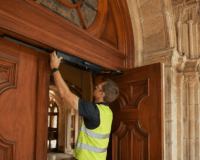
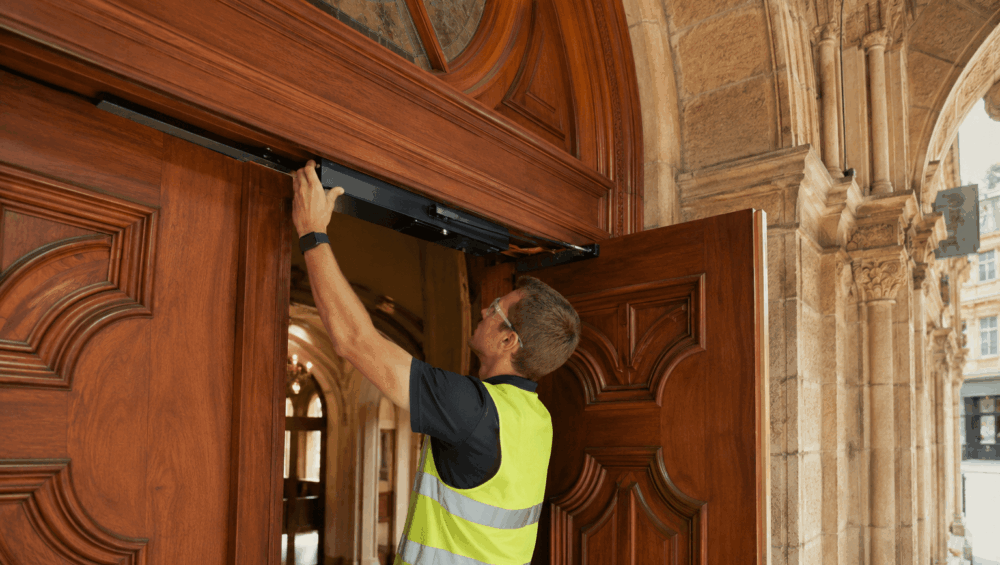
Surface-mounted operators are generally easier to install and service, making them suitable where visibility is acceptable or where heritage approvals permit discreet additions. They also reduce the amount of structural modification required.
Concealed operators provide a cleaner appearance by hiding much of the automation hardware within the door frame or floor. Although they often require more complex installation and careful coordination, they are frequently preferred when preserving the original architectural appearance is a priority.
The most appropriate solution depends on the heritage significance of the entrance, available mounting space and structural constraints.
Managing Heavy Heritage Doors
Many heritage entrances feature solid hardwood or steel doors that weigh significantly more than modern commercial doors. These heavier leaves require operators specifically designed for higher operating forces and continuous reliability.
Builders should look for systems that offer soft-start and soft-stop functionality to reduce stress on hinges and mounting points. Controlled acceleration also protects decorative joinery and improves user comfort.
Opening speeds should be adjusted to suit the door’s size and weight while maintaining accessibility requirements. High-duty operators are often preferable where entrances experience frequent daily use, ensuring long-term reliability without excessive wear.
Minimising Visual Impact
One of the biggest concerns during retrofitting automatic door openers is preserving the building’s appearance. Even a technically successful installation can detract from a heritage façade if modern components dominate the entrance.
Visual impact can often be minimised by:
- Concealing power and communication cabling wherever possible.
- Using colour-matched operator covers and mounting brackets.
- Routing conduit through existing cavities or hidden service paths.
- Preserving decorative mouldings, stonework and original timber detailing.
Careful planning allows automation hardware to blend into the building rather than becoming a distracting feature.
Working Around Existing Locks and Latching Systems
Many heritage doors already incorporate traditional locking systems that remain fully functional and historically appropriate. Rather than replacing them unnecessarily, builders should assess how to integrate them with the automation system.
Compatible options may include existing mortice locks, electric strikes, magnetic locks or upgraded electronic access control where appropriate. Successful integration ensures reliable door operation while maintaining security and preserving original door hardware wherever possible.
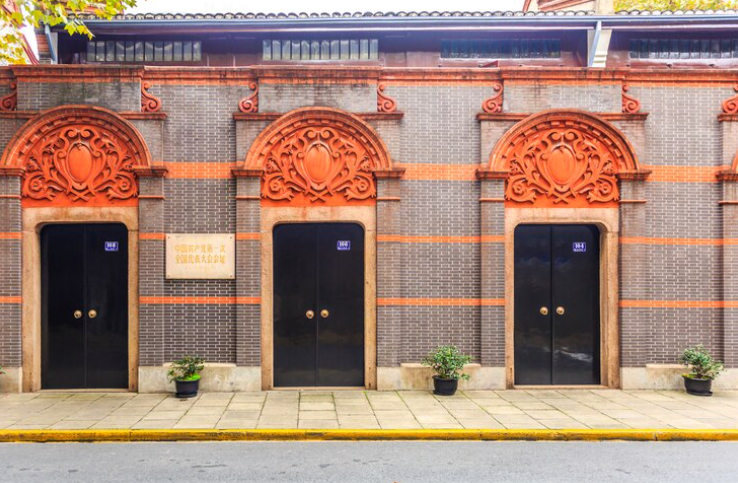
Compliance Requirements Builders Must Consider
In many heritage projects, builders must also ensure automated entrances satisfy current performance expectations and project requirements.
Accessibility should remain a primary consideration throughout the design process. Automated doors are commonly installed to improve building access for people with limited mobility, and require careful attention to opening widths, activation methods, and operating performance.
Automatic doors must also comply with applicable Australian safety standards governing powered door systems. These requirements cover aspects such as user protection, obstacle detection, operating forces and commissioning procedures. Builders should coordinate closely with experienced automation specialists to ensure the selected system is installed and tested correctly.
Emergency egress requirements should never be compromised. Where the entrance forms part of an evacuation route, the automation and locking arrangement must continue to support safe building exit during emergencies.
Additional considerations apply when automating fire-rated doors. Operators, hold-open devices and associated hardware must remain compatible with the fire door assembly and any relevant certification requirements.
Heritage approvals may also be necessary before installation begins. Builders should confirm approval pathways early, prepare supporting documentation and coordinate with architects, consultants and heritage authorities to minimise project delays.
Maintaining clear records of structural assessments, operator selection, installation details and commissioning results also supports future maintenance and compliance documentation.
Read more: Design Guide for Heritage
Common Retrofit Mistakes That Create Expensive Rework
Even experienced builders can encounter avoidable problems during heritage automation projects. The following mistakes frequently result in additional costs and unnecessary delays.
- Choosing an undersized operator. An operator with insufficient capacity may struggle to move heavy heritage doors, reducing reliability and shortening equipment life.
- Ignoring hinge wear. Worn hinges increase operating resistance and place unnecessary strain on the automation system.
- Fixing into weak substrates. Old timber, deteriorated masonry or corroded steel may not provide adequate support without structural reinforcement.
- Failing to verify power availability. Electrical supply limitations or concealed services can significantly affect installation planning.
- Not coordinating with heritage consultants. Late design changes following a heritage review often lead to unnecessary rework.
- Overlooking door balance. Misaligned or binding doors should always be repaired before automation is installed.
- Installing visible conduit across heritage finishes. Poor cable management can detract from the building’s appearance and may breach heritage requirements.
- Forgetting future maintenance access. Operators should remain accessible for servicing without damaging surrounding finishes or architectural features.
Best Practices for Successful Heritage Door Automation Projects
Successful retrofitting automatic door openers depends on early planning, collaboration and respect for the building’s historic fabric.
Coordinate Early with Architects and Heritage Consultants
Builders should involve architects, heritage consultants and automation specialists during the design phase rather than after construction begins. Early collaboration allows structural constraints, conservation requirements and automation options to be considered together.
Use Reversible Installation Methods
Where practical, installation methods should allow future removal without permanent damage to original materials. Reversible fixings, non-invasive mounting techniques and carefully selected attachment points help preserve the building for future conservation while still delivering reliable automation today.
Plan Future Servicing During Design
Maintenance access is often overlooked during retrofit projects. Operators, control equipment and electrical connections should remain accessible for routine servicing without requiring removal of heritage finishes or decorative features.
Thoughtful planning enables builders to improve accessibility while preserving the architectural character that makes heritage buildings unique. By combining careful structural assessment with sympathetic installation techniques, modern automatic door systems can coexist successfully with historic architecture.
Frequently Asked Questions
Can automatic door openers be installed on heritage buildings?
Yes. Most heritage buildings can accommodate automatic door openers provided structural assessments are completed, heritage requirements are respected, and suitable installation methods are used.
Will installing an automatic operator damage the original doors?
Not necessarily. Careful planning, reversible mounting methods and minimal intervention techniques help protect original materials while introducing automation.
Can heavy timber heritage doors be automated?
Yes. Heavy timber doors often require higher-capacity operators specifically designed to manage increased weight and operating forces safely.
Are concealed operators better for heritage projects?
Concealed operators are often preferred because they minimise visual impact. However, surface-mounted systems may still be appropriate depending on structural constraints, maintenance access and heritage approvals.
Do heritage approvals affect automatic door installations?
In many cases, they do. Approval requirements vary between projects, so builders should consult the relevant heritage authority before commencing work.
Final Thoughts
Successful retrofitting automatic door openers involves far more than selecting a suitably sized operator. Builders must carefully evaluate structural integrity to preserve architectural character and satisfy accessibility objectives. Thorough assessments, sympathetic installation methods and appropriate operator selection help minimise risk while protecting valuable historic fabric.
With careful planning and experienced execution, heritage buildings can benefit from modern automated access without compromising the features that define their historical significance.
Upgrade Heritage Entrances with DHS
Are you restoring a landmark building or modernising an occupied heritage facility? DHS supplies premium automatic gate & door operators, access control solutions and technical expertise to support successful retrofit projects. Our team can help you select the right automation system for heavy heritage doors while balancing performance, compliance and architectural preservation. Contact us today to discuss your next heritage automation project.