While installing gate automation systems, electrical preparation is one of the most important factors influencing installation success. Many builders focus on gate foundations, posts, and civil works while overlooking the automatic gate power requirements. Yet, incorrect power provisioning can lead to costly trenching, cable replacements, or delayed commissioning. As both 24V and 240V gate operators are popular across residential, commercial, and industrial developments, understanding their different electrical requirements has become increasingly important.
By planning power infrastructure early, builders can ensure sites are ready for automation installers toward reliable long-term gate operation.
Understanding Automatic Gate Power Requirements Before Construction Begins
The most effective approach to gate automation starts well before the gate motor is selected. During the early planning, builders should assess the site’s anticipated usage patterns, gate size, operating frequency, and future expansion requirements.
Understanding automatic gate power requirements early helps avoid undersized conduits, inaccessible cable routes, or insufficient electrical infrastructure for the chosen automation system. While many gate operators can be adapted to different environments, site preparation during construction often directly affects installation costs and system reliability.
The power requirements of an automatic gate system are influenced by several factors. A lightweight residential swing gate used a few times daily will have very different electrical demands compared to a heavy commercial sliding gate operating hundreds of times per day. Duty cycle, motor size, accessory requirements, and backup power expectations all play a role in determining the most suitable solution.
Typical Power Characteristics include:
| Factor | 24V Operators | 240V Operators |
| Power Source | Low-voltage motor with transformer | Direct mains power |
| Backup Battery Compatibility | Excellent | Limited or external solutions |
| Cable Considerations | Higher current, voltage drop concerns | Mains compliance requirements |
| Typical Usage | Residential and medium-duty applications | Heavy commercial applications |
Selecting conduit routes and cable pathways during civil works is often far more cost-effective than making modifications after concrete works are complete. Early planning allows installers to focus on commissioning rather than corrective infrastructure work.
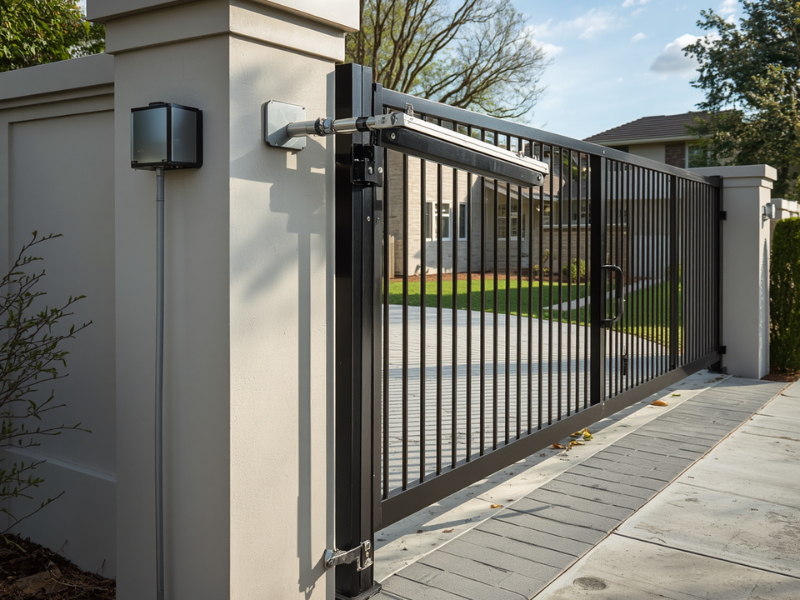
24V Gate Operators – Where They Fit Best in Modern Projects
Many modern residential and light-commercial gate automation systems utilise 24V technology. These systems offer flexibility and compatibility with battery backup solutions, making them popular across contemporary developments.
How 24V Systems Receive Power
Although referred to as 24V operators, these systems typically begin with a mains power supply. Electricity is delivered to a transformer or power supply unit that converts mains voltage into low-voltage power suitable for the gate motor and control electronics.
A typical installation consists of:
- Mains power connection
- Transformer or integrated power supply
- 24V motor
- Control board
- Battery backup system (optional but common)
This architecture provides flexibility while supporting advanced control and safety features.
Advantages for Builders and Developers
One of the key reasons 24V systems are specified is their compatibility with battery backup systems. During power outages, many 24V operators can continue functioning without interruption, which is attractive for residential communities and facilities requiring uninterrupted access.
Low-voltage operation also offers additional safety benefits around control equipment and accessories. While professional installation remains essential, the reduced operating voltage provides flexibility when integrating external devices.
Another advantage is installation versatility. The power conversion equipment can often be positioned to simplify cable routing and maintenance access.
For many residential projects, automatic gate power requirements associated with 24V systems align well with modern smart home integration, intercom systems, and connected access control platforms.
Pre-Wiring Requirements for 24V Installations
Successful 24V installations depend on proper cable planning. Because lower voltage systems typically draw higher current, voltage drop becomes a significant consideration over long distances.
Builders should account for:
- Appropriate conduit sizing
- Cable routes between power source and operator
- Future accessory cabling requirements
- Battery backup installation space
- Communication cable pathways
Distance limitations vary depending on cable size and system design, making early consultation with automation specialists highly beneficial. When planning automatic gate power requirements, allowance should also be made for safety beams, intercom systems, keypads, access readers, and future upgrades.
Common Mistakes During Construction
Undersized conduits are among the most common problems. While a conduit may initially appear adequate for power cabling, additional accessories often require more capacity than anticipated.
Long cable runs without proper voltage-drop calculations can also result in unreliable operation, particularly under heavy load conditions.
Another frequent issue is the absence of spare conduits. Future upgrades such as video intercoms, ANPR systems, or additional access control devices often become expensive retrofit projects simply because no spare pathways were installed during construction.
Read more: How To Choose A Gate Motor For High-Cycle Residential Entrances
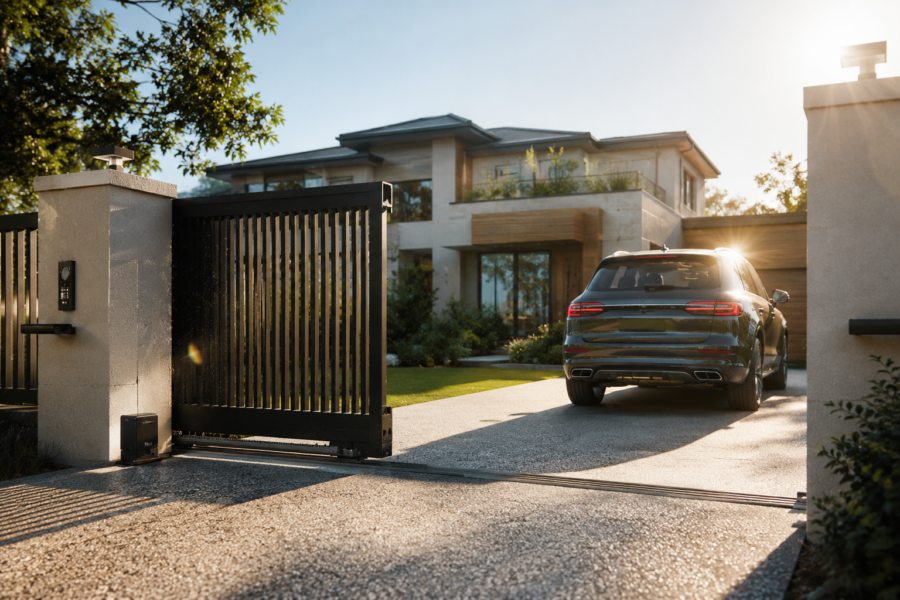
240V Gate Operators – When Mains Power Makes More Sense
While 24V systems dominate many residential applications, 240V gate operators play an important role in commercial and industrial environments that require higher power output and continuous operation.
Typical Applications for 240V Operators
240V gate motors are commonly selected for:
- Industrial facilities
- Distribution centres
- Logistics operations
- High-cycle commercial entrances
- Large sliding gates
- Heavy swing gates
- Infrastructure and utility sites
- Boom gates
These environments often require robust performance under intensive operating conditions of mains-powered motors. The automatic gate power requirements for these sites are generally driven by higher duty cycles and greater mechanical loads.
Electrical Infrastructure Requirements
Unlike low-voltage systems, 240V operators require direct connection to mains power infrastructure and must comply with all applicable electrical regulations. Typical requirements may include dedicated circuits, circuit protection devices, isolation switches, and correctly sized cable installations.
Electrical contractors must ensure compliance with Australian standards and local regulations governing fixed electrical installations. Appropriate protection against overloads, short circuits, and environmental exposure is also essential.
Where gate systems form part of a broader security infrastructure, additional coordination with access control and communications systems may be required.
Construction Planning Considerations
Builders can simplify future installation by incorporating electrical planning into early site design. The switchboard location should be carefully considered to minimise excessive cable lengths. Also, underground service routes should be mapped to avoid future conflicts with utilities, drainage systems, or landscaping works.
Maintenance access is another often-overlooked factor. Technicians require safe access to operator equipment throughout the system’s lifecycle, making equipment positioning an important design consideration.
Well-planned automatic gate power requirements not only improve installation efficiency but also reduce future maintenance costs.
Risk Areas Builders Should Identify Early
Several site conditions regularly create challenges for mains-powered automation systems.
Water ingress remains one of the most common causes of electrical faults. Builders should identify low-lying areas, drainage issues, and potential flood risks before determining equipment locations.
Future landscaping projects can create conflicts when roots, irrigation systems, or retaining walls interfere with underground services.
In addition, gate power circuits often come with unrelated equipment. Dedicated circuits generally provide greater reliability and minimise nuisance faults caused by other electrical loads.
Read more: How Automatic Gate Systems Are Installed For Commercial Properties
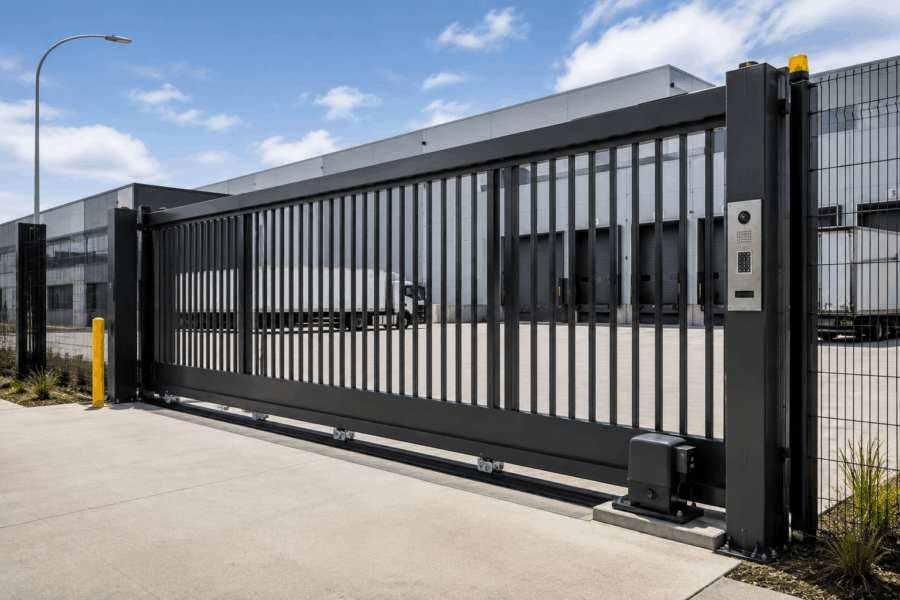
Cable Routing and Conduit Planning for Future Gate Automation
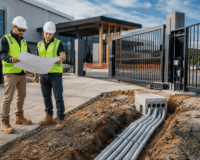
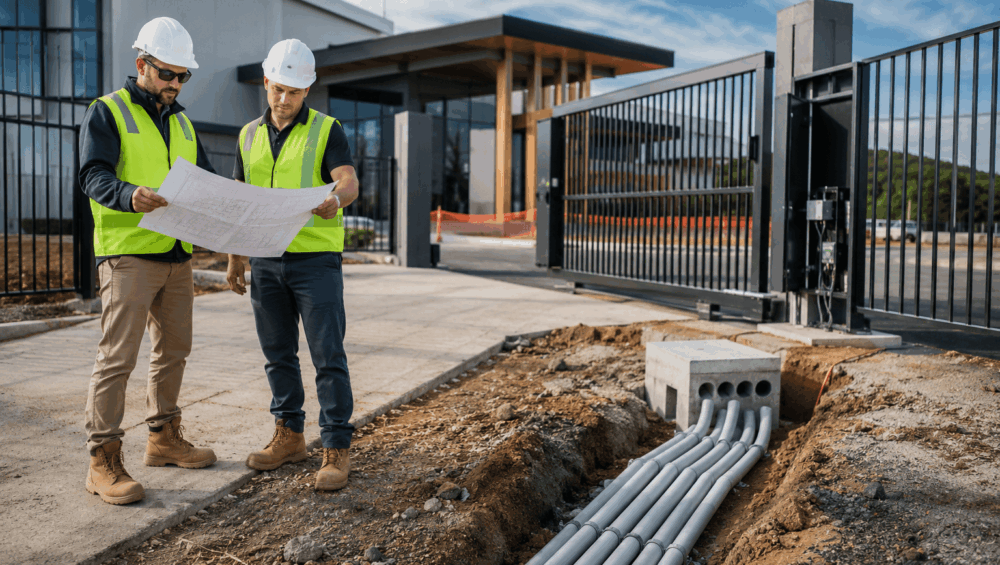
In many projects, conduit planning has a greater influence on installation costs than the gate operator itself. Proper conduit infrastructure provides flexibility, reduces labour requirements, and simplifies future upgrades.
When trenching is already underway during construction, installing additional conduits incurs minimal additional cost compared to the expense of excavation after project completion.
Builders should consider including pathways for:
- Power supply cabling
- Data and communications cabling
- Intercom systems
- Safety beam connections
- Loop detector cabling
- Network infrastructure
- Spare conduits for future upgrades
The value of spare conduits is often underestimated. As automation technology evolves, property owners frequently add access control devices, CCTV systems, visitor management platforms, and remote monitoring capabilities.
Planning these pathways during construction ensures future installations can be completed without disturbing finished surfaces or landscaping. Proper conduit routing also helps accommodate changing automatic gate power requirements as site operations evolve over time.
Power Requirements for Gate Accessories Builders Often Forget
When discussing gate automation, attention is often focused solely on the motor. However, many systems require significant supporting infrastructure beyond the operator itself.
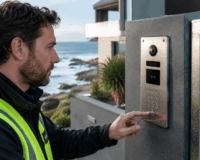
Modern gate installations commonly include intercom systems, access control readers, safety devices, warning lights, and communications equipment. Each component contributes to the site’s overall power demand.
For example, video intercom systems may require network connectivity and additional power supplies. ANPR cameras often require continuous operation and data transmission capability. Safety beams, loop detectors, and keypads all introduce further electrical considerations.
Network switches, wireless communication devices, and remote monitoring platforms can also increase overall site power requirements.
Rather than calculating motor demand in isolation, builders should assess total system load during the planning phase. This holistic approach helps ensure sufficient infrastructure capacity while reducing the likelihood of future modifications.
Accurately evaluating automatic gate power requirements across all connected devices supports reliable operation and provides flexibility for future system expansion.
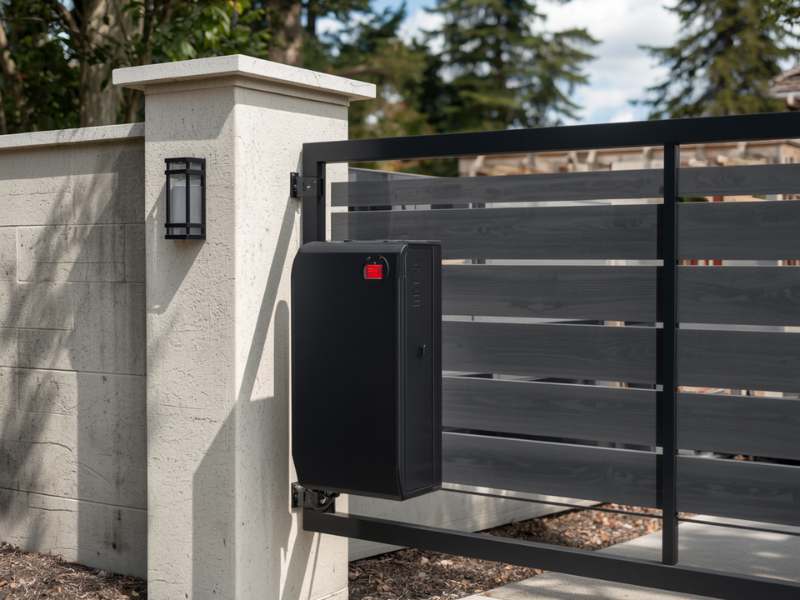
Future-Proofing Construction Projects for Automation Upgrades
Demand for integrated automation continues to grow across both residential and commercial developments. Gate systems are expected to connect with access control platforms, smart building technologies, remote management systems, and cloud-based monitoring services.
As these technologies evolve, infrastructure flexibility becomes increasingly valuable. Installing spare conduits, oversized pits, and additional cable pathways during construction often delivers one of the highest returns on investment available in site preparation.
Future-proofing also supports expansion opportunities, including additional vehicle gates, pedestrian access points, visitor management systems, and integrated security platforms.
Builders who consider long-term automatic gate power requirements rather than immediate installation needs alone create more adaptable and valuable properties. Small investments during construction can significantly reduce future upgrade costs while improving overall project outcomes.
In Conclusion
Understanding automatic gate power requirements early in the construction process can prevent costly installation delays and operational issues. Whether a project uses a 24V or 240V gate operator, successful automation depends on proper electrical planning, conduit routing, cable capacity, and allowance for future accessories.
By assessing gate size, duty cycle, site layout, and long-term expansion needs during the design phase, builders can create automation-ready sites that simplify installation and reduce lifecycle costs. Early planning also provides flexibility for future technologies such as advanced access control, remote monitoring, ANPR systems, and smart building integration.
For professional gate automation products, electrical planning advice, and installer support, contact us for a complete range of gate operators, access control systems, intercoms, and automation solutions designed for Australian residential and commercial projects.
FAQs
Do automatic gates require 240V power?
Not always. Many modern gate automation systems operate using 24V motors powered through a transformer connected to mains electricity. However, larger commercial and industrial installations often utilise 240V operators for higher-duty applications.
What are the advantages of a 24V gate operator?
24V systems typically offer excellent compatibility with battery backup systems, lower operating voltage, flexible installation options, and easier integration with modern automation technologies. They are commonly used in residential and medium-duty commercial environments.
How far can power be run to a gate motor?
The maximum distance depends on voltage, cable size, current draw, and allowable voltage drop. Longer runs generally require larger conductors or alternative power distribution strategies. Professional design calculations should be performed for each installation.
Can battery backup be added later?
In many cases, yes. Numerous 24V gate operators are designed to support battery backup, either as a standard feature or as an optional upgrade kit. Compatibility should always be verified with the manufacturer.
Should gate power and data cables share a conduit?
Generally, power and data cabling should be separated to minimise electrical interference and comply with applicable installation standards. Installing dedicated conduits for power and communications infrastructure is usually considered best practice.