
In commercial construction projects under constant pressure to meet budget targets, entrance automation systems are often among the first areas examined during cost-reduction exercises. However, selecting lower-cost components without understanding the long-term implications can lead to costly maintenance and compliance problems later.
This is where value engineering automatic doors becomes an important strategy. Rather than simply removing features or choosing the cheapest equipment, value engineering focuses on eliminating unnecessary costs. The goal is not to spend less at any cost – it is to spend smarter.
For estimators and commercial builders, understanding how to apply value engineering automatic doors principles can help achieve budget objectives while maintaining long-term operational value. This guide explores practical ways to optimise costs without sacrificing the performance expectations of building owners and occupants.
What Value Engineering Means for Commercial Entrance Automation
In commercial gate & door automation, value engineering is often misunderstood as reducing specifications to lower project costs. In reality, effective value engineering focuses on aligning system capabilities with actual operational requirements.
Traditional cost-cutting approaches frequently remove features without considering long-term performance. This can result in increased maintenance requirements, shorter equipment lifespan, and even compliance issues. By contrast, value engineering automatic doors aims to preserve required outcomes while eliminating unnecessary expenditure.
A common example is selecting a high-capacity automatic door operator for a building with low pedestrian traffic. While the system may perform well, the additional capability provides little practical benefit. In such cases, a properly sized operator can achieve the same performance objectives at a lower cost.
Another important distinction involves lifecycle cost versus capital cost. The lowest purchase price does not always represent the best value over the life of the building. Equipment that requires frequent repairs, difficult servicing, or costly replacement parts often becomes more expensive over time.
Estimators play a critical role in identifying these opportunities early in the project. By reviewing actual usage requirements, they can uncover savings without compromising operational outcomes.
Poor value engineering decisions often involve reducing safety features, selecting unsuitable operators, or ignoring maintenance implications. These choices may lower initial costs but frequently increase expenses throughout the building’s lifecycle.
Identifying the Real Performance Requirements Before Pricing
Before applying any value engineering automatic doors strategy, it is essential to understand what the entrance system actually needs to achieve.
Traffic Volume and Duty Cycle Requirements
One of the most common causes of overspecification is failing to assess pedestrian traffic volumes. Different building types generate vastly different entrance demands.
A hospital emergency department may operate continuously throughout the day, while a small office building may see peak activity only during arrival and departure periods. Understanding operating frequency allows estimators to match equipment capability to actual usage. Avoiding oversized operators can reduce equipment costs while still delivering reliable performance.
Related: Automatic Door Operators for Busy Entrances: What Specifiers Should Check
Accessibility and Compliance Obligations
Accessibility requirements are not optional and cannot be removed during value engineering exercises. National Construction Code (NCC) requirements, disability access standards, and safety regulations establish minimum performance benchmarks for automatic entrances. These obligations influence door widths, activation methods, safety sensors, and operating characteristics.
Successful value engineering automatic doors reviews focus on optimising solutions within compliance requirements rather than attempting to eliminate mandatory features.
Environmental Conditions
External entrances exposed to wind, rain, dust, and temperature fluctuations often require more robust automation systems than internal doorways. A system designed for indoor use may experience reliability issues when installed in harsher environments. Evaluating environmental conditions early helps avoid both overspecification and underspecification.
Security and Access Control Needs
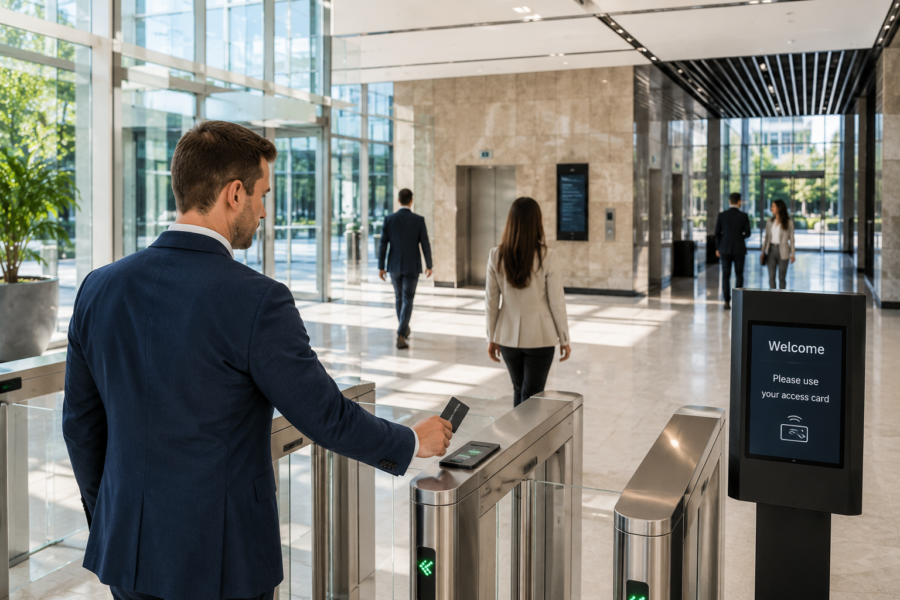
Many commercial projects include security requirements that can influence automation costs. The key is identifying genuine operational needs. Not every entrance requires complex integrated access control, visitor management, mobile credentialing, and connectivity to building management systems.
By distinguishing essential requirements from desirable extras, estimators can avoid unnecessary integration costs while maintaining appropriate security performance.
The Highest-Impact Areas for Cost Optimisation
Some areas provide greater opportunities for value engineering automatic doors than others. Focusing on these high-impact categories often delivers the greatest return.
Selecting the Appropriate Operator Capacity
Many projects specify operator capacities well beyond actual operational requirements. While additional capacity may appear to offer a safety margin, excessive oversizing often increases equipment costs without providing measurable benefits.
Door weight, traffic volume, opening frequency, and environmental conditions should drive operator selection. Matching motor performance to actual usage requirements helps achieve both budget and performance objectives. A properly selected mid-capacity operator may deliver operational outcomes identical to those of a premium heavy-duty model in lower-demand environments.
Related: How To Compare Commercial Sliding Door Operators Without Overpaying
Rationalising Sensor Requirements
Safety sensors are essential, but not every project requires the most advanced sensor package available. High-risk environments such as hospitals, airports, and transport hubs may justify sophisticated detection technologies. However, many office buildings and commercial facilities can operate effectively with standard sensor configurations.
The objective is not to remove safety systems but to ensure sensor specifications reflect actual operational needs. Careful assessment of traffic patterns, risk exposure, and user demographics helps determine the appropriate level of sensor sophistication.
Simplifying Access Control Integration
In some applications, fully integrated building-wide access control systems are essential. In others, standalone solutions may provide sufficient functionality at a substantially lower cost.
Reducing controller complexity, minimising custom programming, and simplifying cabling infrastructure can generate meaningful savings. The best value engineering automatic doors outcomes often result from balancing operational convenience with installation and maintenance simplicity.
Choosing Practical Door Activation Methods
Door activation methods offer another opportunity for cost optimisation. Push plates remain one of the most economical and reliable activation methods. Touchless sensors provide enhanced convenience and hygiene while remaining cost-effective.
Card readers and mobile credential solutions offer additional functionality but may introduce higher installation and integration expenses.
Rather than selecting the most advanced technology by default, estimators should evaluate which activation method best aligns with operational requirements and user expectations.
Standardising Product Families Across Projects
Using consistent automation platforms across multiple projects can create substantial efficiencies throughout procurement, installation, commissioning, maintenance, and future upgrades.
Benefits include reduced training requirements for installers, simplified spare parts management, improved purchasing leverage, and faster troubleshooting. Many organisations achieve significant long-term savings by standardising preferred product families rather than introducing multiple incompatible systems.
Hidden Costs That Estimators Should Evaluate Before Making Changes
When considering lower-cost alternatives, it is important to assess the broader financial implications beyond equipment pricing.
- Future maintenance costs – Cheaper components may require more frequent servicing and repairs.
- Replacement part availability – Limited supplier support can increase downtime and replacement expenses.
- Downtime risks – Entrance failures can disrupt operations, inconvenience occupants, and affect customer experiences.
- Installation labour increases – Lower-priced equipment sometimes requires additional installation time and adjustments.
- Warranty limitations – Reduced warranty coverage may transfer future risks to building owners.
- Commissioning complexity – Systems that require extensive configuration can increase project labour costs.
- User complaints and operational disruptions – Reliability issues often create indirect costs that are difficult to quantify but highly significant.
For example, selecting a lower-cost operator that lacks local spare parts support may save money during procurement but lead to extended downtime if a failure occurs. Similarly, a cheaper sensor package that produces false activations can lead to ongoing service call expenses and user frustration.
The true success of value engineering automatic doors depends on evaluating total project costs rather than purchase price alone.
Where Value Engineering Should Never Be Applied
Although value engineering can produce significant savings, certain areas should never be compromised.
Safety sensors are among the most critical components in any automatic entrance system. Reducing detection coverage or selecting non-compliant alternatives can increase liability exposure and compromise user safety.
Emergency egress functionality must also remain fully compliant. Automatic entrances frequently form part of emergency evacuation pathways, making reliable operation essential.
Accessibility requirements represent another area where cost reductions should never be pursued. Compliance obligations exist to ensure safe and equitable access for all building occupants and visitors.
Fire-rated door systems require strict adherence to regulatory requirements and manufacturer specifications. Any modifications that affect certified performance can create serious compliance risks.
High-cycle commercial entrances such as hospitals, transport facilities, and major retail centres also demand careful consideration. Attempting to reduce costs by installing equipment designed for lower operating volumes often results in premature failure and higher lifecycle expenses.
Effective value engineering automatic doors focuses on removing waste, not removing essential performance capabilities.
Related: Automatic Door Safety Requirements In Australia: What Homeowners & Businesses Must Know
A Practical Value Engineering Framework for Estimators
Estimators can follow a structured process to identify savings opportunities while protecting project outcomes.
- Step 1: Define Required Outcomes
Establish the essential performance objectives for the entrance system, including traffic demands, accessibility requirements, safety expectations, and operational goals.
- Step 2: Identify Overspecified Components
Review specifications to determine whether any components exceed the project’s actual requirements. Focus on operator capacities, activation methods, and integration features.
- Step 3: Compare Lifecycle Costs
Evaluate long-term maintenance, servicing, replacement parts, and operational costs rather than considering purchase price alone.
- Step 4: Assess Installation Complexity
Identify opportunities to reduce labour costs through simplified installation methods, standardised products, or reduced integration requirements.
- Step 5: Validate Compliance Requirements
Confirm that all proposed changes maintain compliance with applicable standards, accessibility regulations, and safety requirements.
- Step 6: Present Multiple Budget Options
Develop Bronze, Silver, and Premium solutions that all meet core performance objectives. A Bronze option may provide essential functionality with minimal integration. A Silver option may include enhanced convenience features, while a Premium solution may offer advanced access control and automation capabilities.
Working With Suppliers to Improve Value Rather Than Simply Reduce Price
Supplier engagement can significantly improve value engineering automatic doors outcomes. Early supplier involvement often identifies alternative products and procurement strategies that may not be apparent during initial project planning. Experienced distributors can recommend equivalent solutions that reduce costs while maintaining performance requirements.
Standardisation opportunities are another major benefit. Suppliers with access to multiple product categories can help align equipment selections across projects, simplifying maintenance and procurement processes.
Bundled purchasing arrangements may also generate cost efficiencies while reducing administrative complexity.
At DHS, commercial project teams benefit from access to multiple entrance automation technologies, technical consultation services, specification review assistance, and project support. Working collaboratively with experienced suppliers helps reduce project risk while ensuring cost optimisation initiatives remain aligned with operational requirements.
FAQs
Can value engineering significantly reduce the costs of an automatic door project?
Yes. When applied correctly, value engineering automatic doors can generate meaningful savings by eliminating unnecessary specifications, simplifying integrations, and selecting equipment that matches actual project requirements.
What is the biggest mistake in automatic door value engineering?
The most common mistake is focusing exclusively on purchase price while ignoring lifecycle costs, maintenance requirements, and long-term reliability.
Are cheaper automatic door operators always a good option?
No. Lower-cost operators may increase maintenance expenses, reduce reliability, and create higher long-term ownership costs if they are not suitable for the application.
How do lifecycle costs affect automatic door selection?
Lifecycle costs include maintenance, repairs, downtime, spare parts, and replacement expenses. These factors often exceed the initial equipment costs over the system’s lifespan.
Can value engineering affect compliance requirements?
Compliance requirements cannot be removed through value engineering. Any proposed changes must continue to meet accessibility, safety, fire, and building code obligations.
In Summary
Successful value engineering automatic doors strategies are fundamentally different from simple cost-cutting exercises. Instead, effective value engineering aligns system specifications with actual operational needs while preserving safety, compliance, accessibility, reliability, and user experience.
For estimators and commercial builders, the focus should always be on lifecycle value rather than initial equipment pricing alone. Decisions that appear economical during procurement can often generate substantial costs later. By carefully evaluating performance requirements and long-term operational impacts, project teams can achieve meaningful savings without compromising quality.
Looking for commercial entrance automation solutions that deliver both value and reliability? DHS provides industry-leading automatic door systems and technical consultation to help you optimise costs without sacrificing performance. Contact us today to discuss the best automation strategy for your next commercial project.