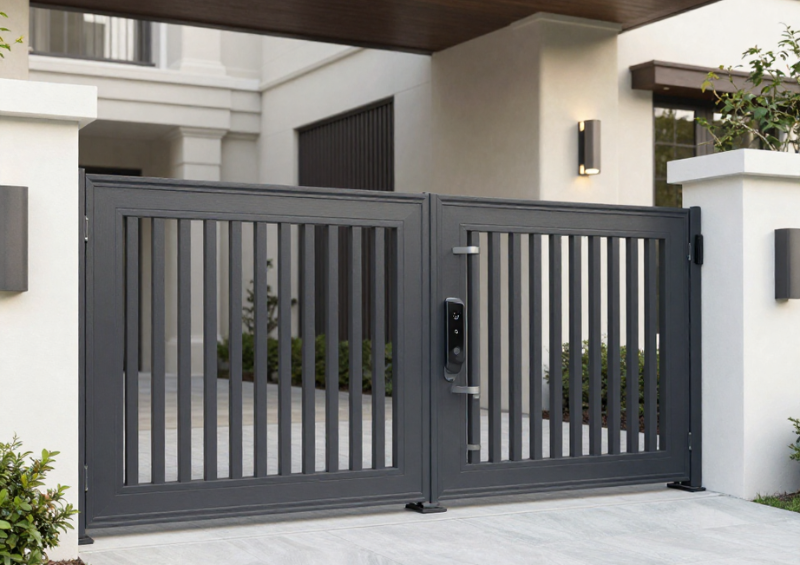
In modern residential and commercial environments, automation is no longer just about convenience—it is also about comfort and user experience. One of the most common concerns among property owners is noise. A loud, jerky gate can be disruptive, especially in quiet neighborhoods, residential areas, or premium commercial spaces.
This is where Swing Gate Automation must go beyond basic functionality. Optimising a system for quiet operation requires a combination of proper design, high-quality components, and intelligent control.
A well-optimized swing gate should open and close smoothly, almost silently, while maintaining reliability and safety. This article explores the key factors that influence noise levels and how to achieve quieter, more refined performance.
Understanding How Swing Gate Automation Works
Swing gate systems operate by rotating a gate leaf around a hinge point. A motor—either linear or articulated—generates the force required to open and close the gate.
Unlike sliding gates, swing gates involve rotational movement, which introduces additional mechanical stress at hinge points. This makes noise control more challenging, as multiple components interact during operation.
Noise can originate from:
- Motor operation
- Mechanical friction
- Structural vibration
- Environmental interference
Understanding these sources is the first step toward effective optimization.
Why Quiet Operation Matters
Quiet operation is not just a luxury—it is often a requirement in many environments.
Residential Comfort
Homeowners value peace and quiet, especially during early mornings or late nights. A noisy gate can quickly become a nuisance.
Premium Property Standards
Luxury properties and high-end developments demand smooth and silent automation as part of their overall design quality.
Workplace Productivity
In office environments, excessive noise can be distracting and reduce productivity.
Long-Term System Health
Interestingly, quieter systems often indicate better engineering. Reduced noise usually means less friction, lower stress, and improved longevity.
Common Sources of Noise in Swing Gate Automation
To optimize noise levels, it is important to identify where the sound is coming from.
Motor Noise
The motor itself can produce sound during operation, especially if it is under strain or of lower quality.
Gear and Mechanical Friction
Internal gears and moving parts can create noise if they are not properly lubricated or aligned.
Hinges and Mounting Points
Poorly maintained hinges can creak or grind, contributing significantly to overall noise.
Structural Vibration
Vibration can amplify sound, especially if the gate or mounting structure is not stable.
Environmental Factors
Wind, debris, and temperature changes can all influence how components move and interact.
Choosing the Right Motor for Quiet Operation
The motor is one of the most critical components in achieving quiet Swing Gate Automation.
Modern motors are engineered with noise reduction as a priority. Advanced designs incorporate improved insulation, precision-balanced internal components, and reduced mechanical friction. These enhancements help eliminate unnecessary vibration and humming sounds that are common in lower-quality systems.
DC motors are widely preferred for quiet residential applications because they offer smoother acceleration and precise speed control. This allows the gate to move gradually rather than abruptly, significantly reducing operational noise.
Motor placement is equally important. Poor mounting can transfer vibration into surrounding structures, amplifying sound. Using vibration-dampening mounts and ensuring proper installation alignment can greatly reduce this effect.
Long-term durability also plays a role. Motors with high-quality internal components maintain quieter performance over time, whereas lower-grade systems often become noisier as they wear.
Additionally, advanced motor controllers now allow micro-adjustments to speed curves, ensuring that the motor does not operate at unnecessarily high force levels. This fine-tuning capability is essential for maintaining quiet operation across different usage scenarios.
Importance of High-Quality Hinges and Mechanical Parts
Even the best motor cannot compensate for poor mechanical components.
High-quality hinges ensure smooth rotational movement with minimal resistance. When hinges are properly aligned and maintained, they allow the gate to move freely without unnecessary strain on the motor.
Precision-engineered components fit together seamlessly, reducing gaps and irregular movement that can generate noise. In contrast, poorly manufactured parts often create friction points that lead to grinding or squeaking sounds.
Material selection is also critical. Corrosion-resistant materials maintain performance over time, preventing rust-related noise issues that are common in outdoor environments.
Beyond hinges, the interaction between brackets, arms, and mounting plates also affects noise levels. Even slight misalignments or loose tolerances can create repetitive clicking or vibration sounds during operation.
Role of Installation in Noise Reduction
Installation quality has a direct impact on how quiet a swing gate system will be.
Misalignment between components can cause uneven movement, forcing the motor to compensate and increasing noise. Proper alignment ensures that the gate moves smoothly along its intended path.
Secure mounting prevents components from vibrating during operation. Even small amounts of looseness can amplify sound significantly.
Calibration is another key factor. Adjusting speed, force, and stopping points correctly ensures that the system operates smoothly without sudden impacts or jerks.
Professional installers often fine-tune systems after installation, observing real-world operation and making adjustments to eliminate subtle noise sources that may not be apparent initially.
Lubrication and Maintenance Practices
Regular maintenance is one of the most effective ways to reduce noise in Swing Gate Automation.
Lubrication minimizes friction between moving parts such as hinges, joints, and gears. Without proper lubrication, metal components can grind against each other, producing noticeable noise.
Cleaning is equally important. Dust and debris can accumulate over time, increasing resistance and disrupting smooth operation. Regular cleaning helps maintain consistent performance.
Routine inspections allow early detection of issues such as worn components or misalignment. Addressing these problems early prevents them from escalating into louder and more costly failures.
Environmental exposure means that maintenance is not a one-time task but an ongoing requirement. Seasonal changes can affect performance, making periodic adjustments necessary.
A well-maintained system not only operates more quietly but also lasts longer and performs more efficiently.
Soft Start and Soft Stop Technology
Controlled motion is essential for quiet operation.
Soft start technology allows the gate to begin moving gradually, reducing the sudden force that often causes noise. Similarly, soft stop ensures the gate slows down before reaching its final position, preventing impact sounds.
These systems rely on controlled motor acceleration curves, which distribute force evenly over time rather than applying it instantly. This reduces both audible noise and internal mechanical stress.
In premium systems, multiple speed stages may be programmed, allowing the gate to move quickly when needed but slow down strategically at key points.
Minimising Vibration and Resonance
Vibration is a major contributor to noise in swing gate systems.
A stable mounting structure reduces the transfer of vibration. Using dampening materials such as rubber mounts can absorb excess movement and prevent sound amplification.
Balanced movement is also important. When force is distributed evenly, the system operates more smoothly, reducing oscillation and noise.
Resonance can occur when vibrations match the natural frequency of surrounding structures, amplifying sound. Proper design and material selection help prevent this effect.
Smart Control Systems for Noise Optimization
Modern Swing Gate Automation systems include intelligent control features that enhance quiet operation.
Adaptive speed control allows the system to adjust movement dynamically, ensuring smooth and quiet performance under varying conditions.
Load detection enables the system to respond to resistance changes without overexerting the motor, reducing unnecessary noise.
Programmable settings allow users to prioritize quiet operation, especially during sensitive times such as nighttime.
Advanced systems can also log performance data, helping technicians identify patterns that may contribute to noise and optimize settings accordingly.
Environmental Considerations for Quiet Operation
External conditions can influence how noisy a system becomes.
Wind can create additional resistance, while temperature changes can affect lubrication and material behavior. Uneven surfaces or obstacles may also disrupt smooth movement.
Designing with environmental factors in mind ensures more consistent and quieter performance.
Protective covers, proper drainage, and weather-resistant components all contribute to maintaining low noise levels over time.
Energy Efficiency and Quiet Performance
Quiet systems are often more energy-efficient.
Smooth operation reduces the amount of force required, lowering energy consumption and minimizing wear on components. This leads to longer system life and reduced operating costs.
Efficient systems also generate less heat, which further contributes to quieter motor operation.
Common Mistakes That Increase Noise
Avoiding common mistakes is key to maintaining a quiet system.
Poor Component Quality
Low-quality parts often produce more noise and wear out quickly.
Lack of Maintenance
Neglecting maintenance leads to increased friction and mechanical issues.
Incorrect Motor Selection
Using an unsuitable motor can result in excessive noise and inefficiency.
Improper Installation
Even high-quality systems can become noisy if installed incorrectly.
Being aware of these pitfalls helps ensure optimal performance.
Future Trends in Quiet Swing Gate Automation
The future of Swing Gate Automation is focused on refinement and innovation.
Advanced Motor Technology
New motor designs aim to deliver higher efficiency with minimal noise.
AI-Based Optimization
Systems will learn user behavior and adjust operation for optimal performance.
Smart Home Integration
Seamless integration with smart ecosystems will enhance control and convenience.
Sustainable Materials
Eco-friendly materials will contribute to quieter and more efficient systems.
These trends will continue to improve both performance and user experience.
Conclusion
Optimising Swing Gate Automation for quiet operation requires a holistic approach that considers every aspect of the system—from motor selection and mechanical design to installation and maintenance.
By focusing on smooth motion, reducing friction, and leveraging smart technology, it is possible to achieve a system that operates almost silently while maintaining high performance and safety.
A quiet gate is more than just a convenience—it is a reflection of quality engineering and thoughtful design. As technology continues to evolve, achieving near-silent automation will become the standard rather than the exception.
Upgrade your property with premium swing gate automation—enjoy quiet, secure, and smooth operation. Explore the full range at Gate & Door Automation Systems | Digital Home Systems.