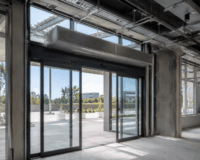
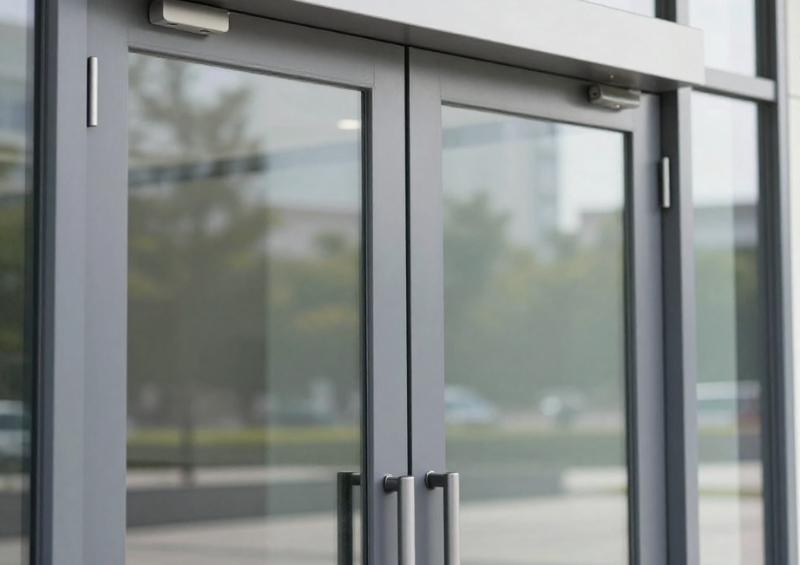
Automatic doors have become an essential feature in modern architecture, supporting both convenience and accessibility. Among the various types available, the Automatic Swing Door Opener stands out due to its compatibility with traditional hinged doors and its adaptability across multiple environments.
From hospitals and hotels to office buildings and smart homes, these systems provide seamless entry and exit without requiring physical effort. However, what truly enables their efficiency is not just the hardware, but the sophisticated control logic that governs every movement.
This article explores in depth how control logic works in automatic swing door systems, focusing especially on the intelligent processes that ensure safety, efficiency, and user comfort.
What is an Automatic Swing Door Opener?
An Automatic Swing Door Opener is a motorized mechanism designed to open and close a hinged door automatically based on signals from sensors or control systems. Unlike sliding doors, swing doors rotate along a hinge axis, making them ideal for retrofitting existing door structures.
These systems are widely used in environments where accessibility is critical, such as healthcare facilities, government buildings, and commercial centers. They are also increasingly popular in residential smart home setups, where convenience and automation are prioritized.
The system combines mechanical components with electronic control systems, allowing it to respond dynamically to real-time conditions.
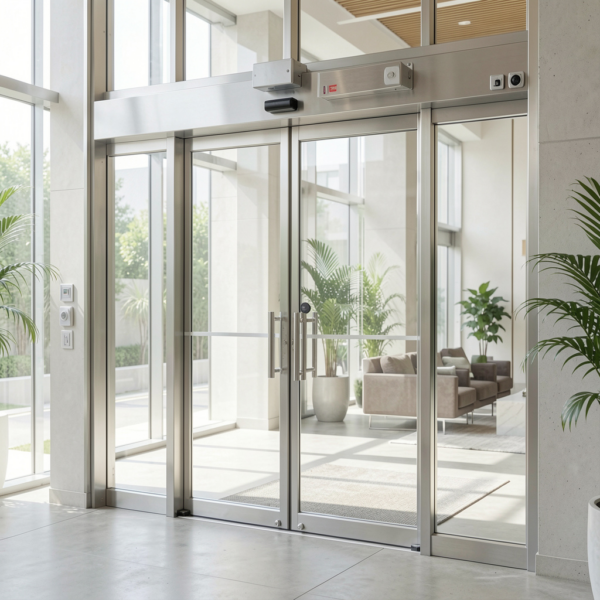
Core Components of Automatic Swing Door Systems
To understand control logic, it is important to first understand the components that interact within the system.
Sensors act as the input layer, detecting motion, presence, or user commands. These may include infrared sensors, radar-based motion detectors, push buttons, or touchless switches. Their role is to initiate the door operation.
The control unit serves as the brain of the system. It processes signals received from sensors and determines how the door should respond based on programmed logic.
The motor or actuator is responsible for executing movement. It converts electrical commands into mechanical motion, controlling the opening and closing of the door.
The power supply ensures stable operation, often including battery backup systems to maintain functionality during power outages.
Safety devices such as obstacle sensors and safety edges are integrated to prevent accidents and ensure compliance with safety regulations.
Understanding Control Logic in Automatic Doors
Control logic is the decision-making framework that dictates how an automatic swing door behaves in different scenarios. It is essentially a combination of programmed rules, real-time data processing, and feedback mechanisms.
At a basic level, the logic follows a continuous loop:
- Detect input
- Analyze conditions
- Execute action
- Monitor feedback
- Adjust behavior
However, in real-world applications, this process becomes significantly more complex. The system must account for multiple variables simultaneously, such as user movement, door position, safety conditions, and environmental factors.
The sophistication of this logic is what allows the door to operate smoothly and safely without human intervention.
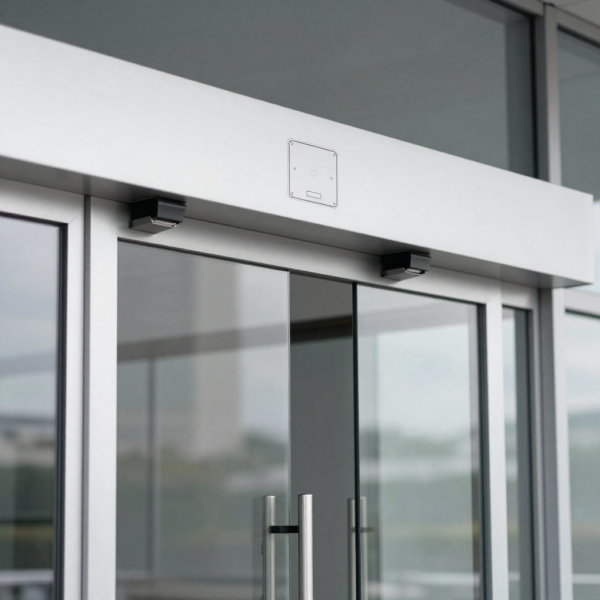
Signal Processing and Input Detection
The control process begins with detecting a valid signal. This stage is more complex than it appears, as the system must differentiate between meaningful triggers and irrelevant noise.
Sensors continuously scan the environment, capturing data such as motion, distance, and presence. For example, a microwave radar sensor can detect movement even through certain materials, while infrared sensors respond to changes in heat signatures.
Once a signal is detected, it is passed to the controller for validation. This involves filtering out false triggers, such as small animals, moving shadows, or environmental disturbances like wind-blown objects.
Advanced systems may use sensitivity thresholds and pattern recognition to determine whether the detected signal corresponds to a human approaching the door. This reduces unnecessary door operations and improves energy efficiency.
Decision-Making Algorithms
After confirming a valid input, the controller applies decision-making algorithms to determine the appropriate response.
At the most basic level, the system uses conditional logic. For example, if motion is detected and no safety hazards are present, the door opens. If an obstacle is detected during closing, the door stops or reverses.
However, modern systems incorporate more advanced logic structures. Timing algorithms control how long the door remains open, ensuring enough time for users to pass through without causing delays.
Priority logic is also implemented to handle multiple inputs. For instance, an emergency signal such as a fire alarm will override all other commands, forcing the door into a safe state.
In high-traffic environments, adaptive algorithms may adjust door behavior based on usage patterns. For example, the door may remain open longer during peak hours and close more quickly during low traffic periods.
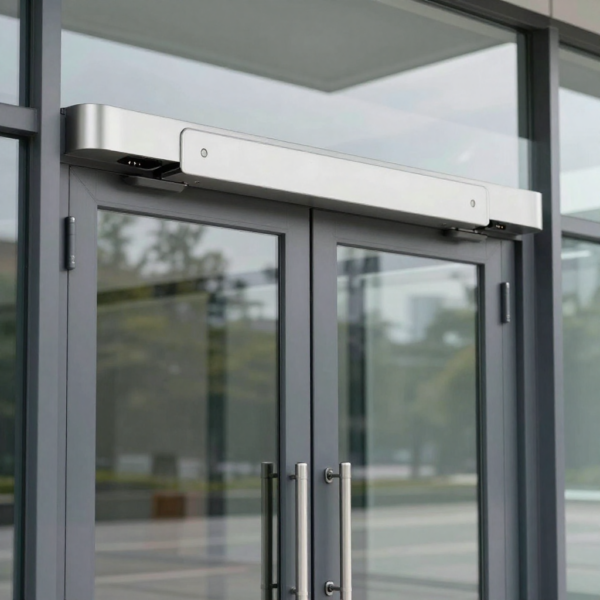
Motor Control and Movement Execution
Once a decision is made, the system sends commands to the motor to execute the required movement.
Motor control is a critical aspect of the system, as it directly affects user experience. Smooth and controlled motion is achieved through variable speed control, allowing the door to accelerate gradually and decelerate before reaching its final position.
Torque control ensures that the motor applies the correct amount of force based on the door’s weight and external conditions. For example, stronger torque may be required in windy environments or for heavier doors.
Direction control determines whether the door opens inward or outward and allows for immediate reversal if an obstruction is detected.
Modern systems often use microcontrollers or digital signal processors to precisely regulate motor performance, ensuring consistent and reliable operation.
Safety Logic and Obstacle Detection
Safety is one of the most important aspects of automatic swing door systems, and it is heavily dependent on control logic.
The system continuously monitors for obstacles using sensors placed around the door area. These sensors detect objects or individuals in the path of the door and send real-time feedback to the controller.
If an obstacle is detected while the door is closing, the control logic immediately stops the door or reverses its direction to prevent injury or damage.
Anti-crush mechanisms are integrated into the system to detect resistance. Even if sensors fail to detect an obstacle, the motor can sense abnormal force and trigger a safety response.
Redundant safety systems are often implemented to ensure reliability. Multiple sensors and fail-safe mechanisms work together to eliminate the risk of accidents.
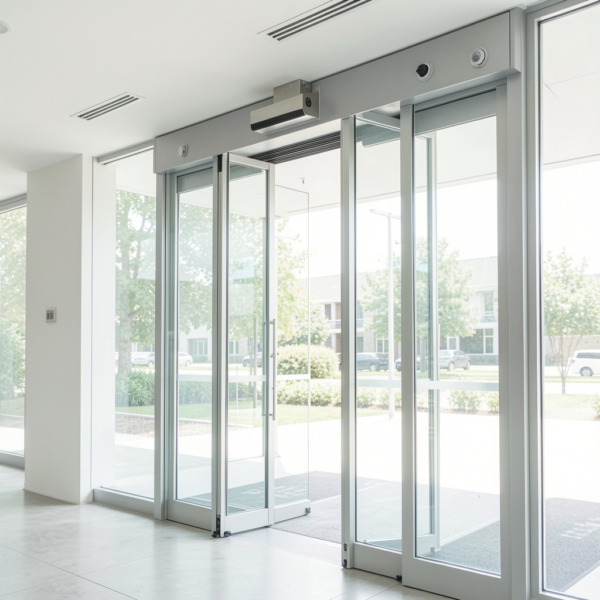
Closing Logic and Energy Efficiency
After the door has opened, the system must determine when and how to close it.
The hold-open time is controlled by a timer, which can be adjusted based on user needs. In high-traffic areas, longer hold times may be required, while in low-traffic environments, shorter durations help conserve energy.
Advanced systems use adaptive logic to optimize closing behavior. For example, if multiple people are detected approaching the door, the system may delay closing to accommodate continuous flow.
Energy efficiency is a key consideration, especially in climate-controlled buildings. By minimizing the time the door remains open, the system reduces heat loss or air conditioning leakage.
Some systems integrate with building management systems to further optimize energy usage based on overall building conditions.
Integration with Access Control Systems
Automatic swing door systems are often integrated with access control technologies to enhance security.
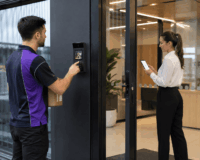
In such setups, the door only opens when a valid authentication signal is received. This may include RFID cards, biometric scanners, or keypad entries.
The control logic ensures that only authorized users can access certain areas, while still maintaining smooth operation for general use.
Integration with centralized systems allows building managers to monitor door activity, adjust settings remotely, and analyze usage patterns.
This level of integration transforms the door from a simple mechanical device into a key component of a building’s security infrastructure.
Smart Features and IoT Integration
With the rise of smart buildings, automatic swing door systems have evolved to include advanced digital features.
IoT connectivity allows doors to communicate with other devices and systems through cloud platforms. This enables remote monitoring, control, and diagnostics.
Predictive maintenance is another significant advancement. By analyzing data from sensors and motor performance, the system can identify potential issues before they lead to failure.
Artificial intelligence is also being integrated into control logic, allowing systems to learn from user behavior and optimize performance accordingly. For example, the system may adjust opening speed or hold time based on historical usage data.
Fail-Safe and Emergency Logic
In emergency situations, automatic doors must behave in a way that prioritizes safety above all else.
During power failures, many systems are designed to default to an open position or allow manual operation. Backup batteries may provide temporary functionality to ensure continued access.
When integrated with fire alarm systems, the control logic ensures that doors unlock or open automatically to facilitate evacuation.
Manual override options are also available, allowing users to operate the door without automation if necessary.
These fail-safe mechanisms are essential for compliance with safety regulations and for ensuring user trust.
Programming and Configuration
One of the strengths of modern automatic swing door systems is their flexibility.
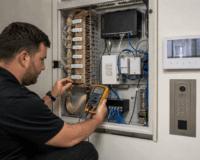
Technicians can configure various parameters, such as opening angle, speed, hold time, and sensitivity. This allows the system to be tailored to specific environments and user needs.
Firmware updates enable manufacturers to introduce new features and improve performance over time. In many cases, these updates can be applied remotely.
Different operating modes can also be selected, including automatic, manual, locked, and one-way operation. This versatility makes the system suitable for a wide range of applications.
Common Challenges in Control Logic
Despite their advanced capabilities, automatic swing door systems can face certain challenges.
False triggers may occur due to environmental factors or improper sensor calibration. This can lead to unnecessary door operation and increased wear.
Mechanical wear over time can affect performance, particularly if maintenance is not performed regularly.
Environmental conditions such as wind pressure, temperature changes, and humidity can also impact system behavior.
Addressing these challenges requires proper system design, regular maintenance, and ongoing optimization of control logic.
Future Trends in Automatic Swing Door Systems
The future of the Automatic Swing Door Opener is shaped by technological innovation and changing user expectations.
Touchless operation has become increasingly important, driven by the demand for improved hygiene and reduced physical contact.
Artificial intelligence and machine learning are expected to play a larger role in optimizing door behavior and improving efficiency.
Sustainability is also a key focus, with systems designed to reduce energy consumption and support green building initiatives.
As these technologies continue to evolve, automatic swing door systems will become even more intelligent, efficient, and integrated into modern infrastructure.
Conclusion
The control logic behind automatic swing door systems is a sophisticated blend of engineering and technology. It enables the system to respond intelligently to user inputs, environmental conditions, and safety requirements.
A well-designed Automatic Swing Door Opener enhances not only convenience but also safety, accessibility, and energy efficiency. As innovation continues, these systems will play an increasingly important role in shaping the future of smart buildings.
Understanding how control logic works provides valuable insight into the complexity and capability of these systems, making it easier to design, implement, and maintain them effectively.