

In high-risk environments, every second counts in an emergency. It could be a fire, gas leak, or security breach; clear and immediate communication is critical to ensure people can evacuate safely. This is where an emergency evacuation siren plays a vital role.
As part of a broader industrial alert system, outdoor sirens provide both audible and visual warnings that cut through noise and confusion in large-scale environments. For security integrators and alarm providers, deploying the right siren solution is essential to improving response times and protecting lives across commercial and industrial sites.
What Is an Emergency Evacuation Siren?
An emergency evacuation siren is a critical component of modern industrial and commercial safety systems. It is designed to alert occupants to evacuate immediately during hazardous situations.
Unlike general alarm systems, evacuation sirens are specifically engineered to deliver high-intensity audible warnings. This equipment is often paired with visual indicators, such as flashing strobes, to ensure alerts are noticed even in noisy or visually obstructed environments.
Within broader industrial alert systems, these sirens act as the final layer of communication, translating detected risks into clear signals. They are typically triggered automatically by integrated systems, including intrusion detection systems, fire alarms, and hazard monitoring technologies. For instance, a fire panel may activate the siren when smoke is detected, while flood sensors can trigger alerts in response to environmental threats. In some cases, manual triggers, such as panic buttons, are also used to initiate an evacuation.
The combination of loud siren tones and bright visual strobes significantly improves response times. Audible alerts capture immediate attention, while visual cues reinforce the urgency, especially in environments where workers may wear hearing protection or operate heavy machinery. Together, these features ensure that evacuation instructions are unmistakable.
Key Requirements for Effective Evacuation Signalling
Before deploying an emergency evacuation siren, integrators must carefully evaluate several technical and environmental factors to ensure reliable and effective performance.
- Sound Output & Coverage
A high-decibel output, typically above 100 dB, is essential for cutting through ambient noise in industrial settings. Warehouses, factories, and construction sites often operate amid constant background noise, rendering low-volume alarms ineffective.
Beyond volume, coverage is equally important. Sirens must be strategically placed to ensure sound reaches all areas, including corners, enclosed zones, and outdoor perimeters. In larger sites, multiple sirens may be required to achieve consistent coverage without dead zones.
- Visual Warning Systems
Audible alerts alone are not always sufficient, particularly in environments where workers wear ear protection or where noise levels are extreme. This is where strobes become crucial.
High-intensity flashing lights provide a clear visual signal that complements the emergency evacuation siren. They are especially effective in low-light conditions or visually complex environments. Many safety standards also recommend or require visual alerts for compliance, reinforcing their importance in evacuation planning.
- Reliability & Redundancy
During emergencies, systems must perform without fail. This means incorporating redundancy into the siren setup. Battery-powered or battery-backed sirens ensure continued operation during power outages, one of the most common failure points during emergencies.
Fail-safe design is equally critical. Systems should be able to trigger alarms even if part of the network fails, ensuring no single point of failure compromises safety.
- Environmental Durability
Outdoor sirens must withstand harsh environmental conditions, including rain, dust, extreme temperatures, and UV exposure. IP-rated enclosures (such as IP65 or IP66) indicate resistance to water and dust ingress.
In industrial environments, additional considerations such as vibration, chemical exposure, and physical impact also play a role. Choosing durable hardware ensures long-term reliability and reduces maintenance costs.
- Integration Capability
Modern evacuation systems rarely operate in isolation. Sirens must integrate seamlessly with alarm panels, sensors, and automation platforms. Compatibility with wireless protocols and smart controllers allows for flexible deployment and easier expansion.
Integration also enables more advanced features, such as remote monitoring, automated triggers, and system-wide coordination during emergencies.

Common Use Cases Across Industrial and Commercial Sites
The application of an emergency evacuation siren varies significantly depending on the environment, operational risks, and site complexity.
In construction sites, for example, conditions are constantly changing. Temporary structures, shifting layouts, and evolving hazards require flexible alert systems that can be quickly installed and repositioned. Sirens in these environments often support mobile setups and wireless integration to adapt as the site develops.
Warehouses and logistics hubs present a different challenge. These facilities are typically large, open spaces with high levels of ambient noise from machinery, forklifts, and loading operations. Here, powerful sirens combined with visual strobes are essential to ensure alerts reach workers across vast areas. The ability to zone alerts can also be useful, allowing specific sections to be evacuated without unnecessarily disrupting the entire operation.
Manufacturing plants often deal with complex hazards, including heavy machinery, chemical processes, and high temperatures. In these settings, evacuation systems must integrate closely with safety monitoring equipment. Sirens may be triggered by gas detection systems, equipment failure alerts, or fire suppression systems.
In commercial buildings, such as offices or retail centres, the focus shifts to coordinated evacuation across multiple tenants and floors. Sirens must work in conjunction with fire panels and building management systems to deliver clear, consistent messaging. Unlike industrial sites, these environments may prioritise controlled evacuation procedures to prevent panic and ensure orderly exits.
Ultimately, the design of an industrial alert system must reflect the unique requirements of each site. Factors such as size, noise levels, risk profile, and occupancy all influence how emergency evacuation sirens are deployed and configured.

Integrating Outdoor Sirens into Smart Security Systems
As technology evolves, the role of the emergency evacuation siren is expanding from a simple alerting device to a fully integrated component of smart security ecosystems.
- Sensor-Triggered Automation
Modern systems rely on a network of sensors to detect potential threats. Motion sensors can identify unauthorised access, while smoke, flood, or shock sensors detect environmental hazards.
Once triggered, these sensors automatically activate the siren, ensuring immediate response without human intervention. This automation reduces delays and ensures consistent activation during critical events.
- Z-Wave and Wireless Integration
Wireless technologies such as Z-Wave have transformed how sirens are deployed. By eliminating the need for extensive wiring, integrators can install sirens in optimal locations without structural constraints.
Wireless integration also allows for easier retrofitting in existing buildings and temporary setups, making it ideal for both permanent and evolving sites.
- Centralised Control
Integration with gateways and control panels enables centralised management of the entire alert system. From a single interface, operators can monitor device status, trigger alarms, or adjust configurations.
Remote access adds another layer of flexibility, allowing authorised personnel to activate or manage sirens from off-site locations, which is particularly valuable for large or multi-site operations.
- Scenario-Based Alerts
Advanced systems can differentiate between types of emergencies by using distinct siren tones or patterns. For example, a fire alarm may produce a continuous tone, while a security breach triggers an intermittent pattern.
Zoned alerts further enhance this capability by activating sirens only in affected areas. This targeted approach minimises disruption while ensuring the right people receive the right instructions.
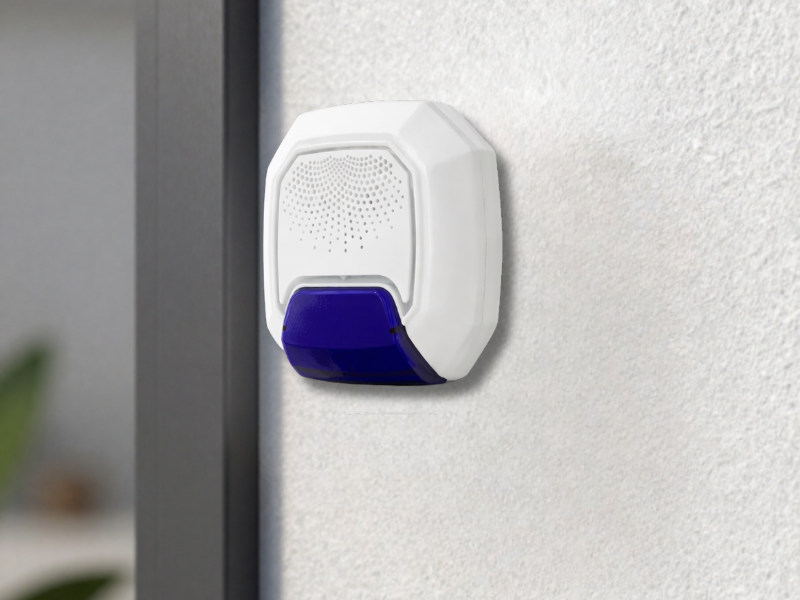
Product Spotlight: Vision Z-Wave Outdoor Siren for Evacuation Use
For integrators seeking a reliable, flexible emergency evacuation siren, the Vision Z-Wave Outdoor Siren offers a practical solution tailored for modern security systems. Designed for seamless integration, this siren combines powerful performance with smart connectivity for both commercial and light industrial applications.
With a 115 dB sound output, it delivers a strong audible alert that cuts through typical site noise. This is complemented by a bright strobe light, providing clear visual cues to support evacuation in noisy or low-visibility environments.
As a Z-Wave Plus device, it integrates easily with a wide range of controllers. Therefore, it enables automated responses triggered by sensors such as motion detectors, flood sensors, and door/window devices.
Its battery-powered design ensures continued operation during power outages, a critical requirement for emergency scenarios. With an IP66 weather resistance rating, the siren is built to withstand harsh outdoor conditions, making it suitable for exposed installations.
The device also supports integration with panic buttons and multiple sensors for flexible deployment across various use cases. This makes it an excellent choice for small- to medium-sized commercial sites, as well as temporary installations where quick setup and reliability are essential.
Best Practices for Deploying Emergency Evacuation Sirens
Effective deployment of an emergency evacuation siren goes beyond selecting the right hardware; it requires careful planning, testing, and ongoing management.
- Optimal Placement
Sirens should be installed at a height that maximises sound dispersion and visual visibility. Elevated positions help reduce obstructions and ensure alerts travel further across the site.
Avoid placing emergency evacuation sirens behind large structures, machinery, or walls that could block sound waves or obscure strobe visibility. Outdoor units should also be positioned to minimise direct exposure to potential damage while maintaining coverage.
- Coverage Planning
A thorough site assessment is essential to identify potential blind spots. Factors such as building layout, noise levels, and worker distribution must be considered.
In larger or more complex environments, multiple sirens may be required to achieve full coverage. Integrators should also consider overlapping coverage areas to provide redundancy.
- System Testing & Commissioning
Regular testing ensures that emergency evacuation sirens function correctly when needed. Scheduled alarm tests help identify issues such as battery depletion, connectivity problems, or hardware faults.
Commissioning should include verifying sound levels, strobe visibility, and integration with triggering systems. Compliance with local safety standards should also be confirmed during this phase.
- User Training
Even the most advanced system is ineffective if users do not understand it. Staff should be trained to recognise different alarm signals and respond appropriately. Conducting regular evacuation drills helps reinforce this knowledge and ensures occupants are familiar with exit routes and procedures.
- Maintenance Strategy
Ongoing maintenance is critical to system reliability. Battery-powered sirens require periodic checks and replacements to prevent unexpected failures. Monitoring features such as tamper alerts can provide early warnings of potential issues, allowing for proactive maintenance and reducing downtime.
In Conclusion,
A well-designed emergency evacuation siren system is a cornerstone of effective safety planning in both industrial and commercial environments. By delivering clear, immediate alerts, these systems help reduce response times, minimise confusion, and guide occupants to safety during critical events.
As technology continues to evolve, the shift towards integrated industrial alert systems is making evacuation signalling more reliable and flexible.
Solutions like the Vision Z-Wave Outdoor Siren demonstrate how modern sirens can combine powerful performance with seamless integration and ease of deployment. For security integrators and alarm providers, adopting these advanced technologies is not just about compliance; it’s about creating safer, more responsive environments.



2 Comments
[…] sirens serve a dual purpose in industrial settings: they act as a visible deterrent and an immediate escalation tool when an incident occurs. Their presence alone can discourage opportunistic intruders, while their […]
[…] Read more: Using Outdoor Sirens for Emergency Evacuation Signalling […]