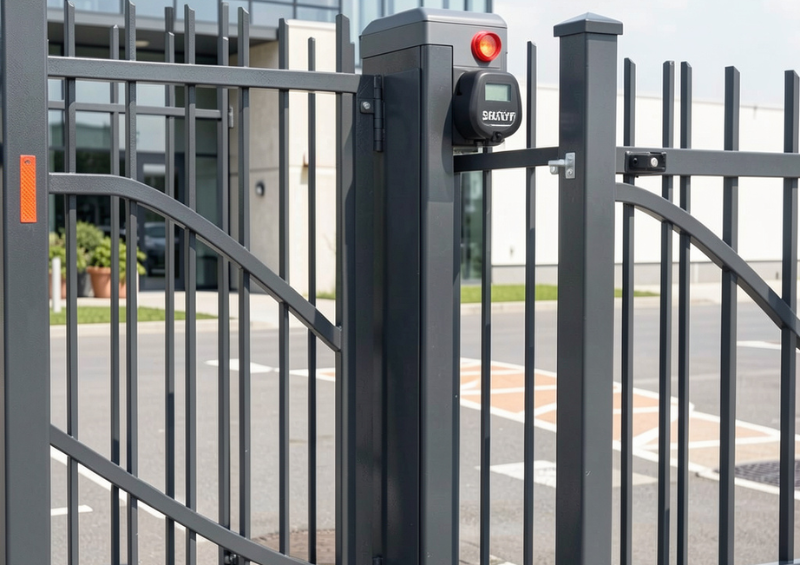
High-speed automated gates are widely used in commercial facilities, industrial sites, warehouses, residential complexes, and logistics hubs. These gates improve efficiency by allowing vehicles and personnel to enter and exit quickly while maintaining security. However, with increased speed comes increased safety risks. Without proper safeguards, fast-moving gates can cause serious injuries, property damage, or operational disruptions.
This is where Gate Safety Sensors become essential. Safety sensors detect obstacles, people, or vehicles in the path of an automated gate and prevent the gate from closing when something is present. They play a critical role in ensuring that automated gate systems operate safely, efficiently, and in compliance with safety standards.
In this guide, we will explore how Safety Sensors for Gates work, the different types available, their benefits, installation considerations, and best practices for using them with high-speed automated gates.
Table of Contents
ToggleUnderstanding High-Speed Automated Gates
High-speed automated gates are designed to open and close rapidly to minimize waiting times and maintain traffic flow. They are commonly used in environments where efficiency and security are equally important.
Typical applications include:
-
Industrial warehouses and factories
-
Logistics and distribution centers
-
Commercial parking facilities
-
Residential gated communities
-
Airports and transportation hubs
-
Government and secure facilities
Because these gates operate quickly and frequently throughout the day, the risk of accidents increases if proper safety mechanisms are not installed. High-speed gates can close within seconds, which means pedestrians, vehicles, or equipment could easily be caught in the gate path.
This is why Safety Sensors for Gates are a mandatory component in modern automated gate systems.
What Are Safety Sensors for Gates?
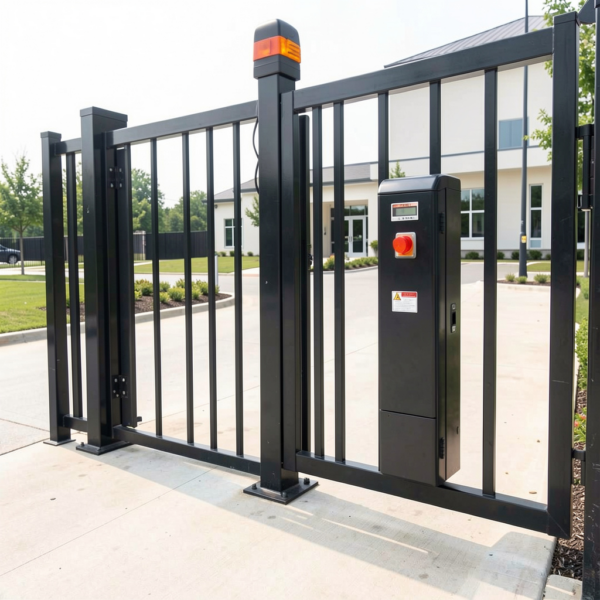
Safety Sensors for Gates are devices designed to detect obstacles or movement near an automated gate and stop or reverse the gate’s operation to prevent accidents.
These sensors constantly monitor the gate’s operating area. If they detect an object, person, or vehicle in the gate’s path, they immediately send a signal to the gate controller to stop or reopen the gate.
Safety sensors are commonly installed at entry and exit points, along gate tracks, or around the gate structure itself.
They work as a protective layer that ensures the gate system reacts instantly to unexpected obstacles.
Why Safety Sensors Are Critical for High-Speed Gates
High-speed automated gates move much faster than traditional gates. This rapid movement significantly increases the importance of having reliable safety mechanisms.
Preventing Injuries
The primary purpose of Safety Sensors for Gates is to prevent injuries to pedestrians, employees, and visitors. Without sensors, a fast-moving gate could close on someone unexpectedly.
Protecting Vehicles and Equipment
Safety sensors also protect vehicles from damage by stopping the gate before contact occurs.
Ensuring Legal Compliance
Many building codes and safety regulations require automated gates to include protective safety systems.
Reducing Liability Risks
Businesses and property owners can reduce liability risks by installing properly functioning safety sensors.
Improving Operational Efficiency
By preventing accidents and gate malfunctions, safety sensors help ensure smooth daily operations.
Types of Safety Sensors for Gates
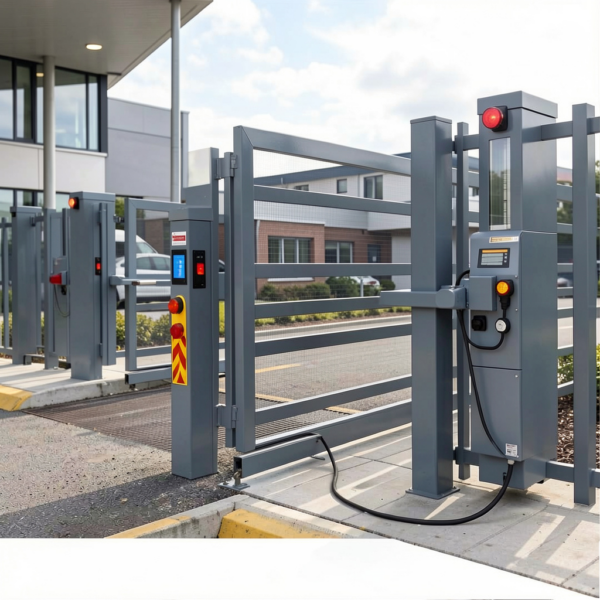
There are several types of Safety Sensors for Gates, each designed to detect obstacles in different ways.
Photoelectric Sensors
Photoelectric sensors are one of the most common safety devices used with automated gates.
They work by transmitting an infrared beam between a transmitter and receiver. If the beam is interrupted by an object or person, the gate immediately stops or reverses.
These sensors are typically installed across the gate opening.
Safety Edge Sensors
Safety edge sensors are pressure-sensitive devices mounted along the edge of the gate.
If the gate comes into contact with an object while closing, the sensor detects the pressure and triggers the gate to stop or reverse.
These sensors are particularly useful as a secondary safety mechanism.
Laser Scanners
Laser safety scanners use laser technology to create a detection field around the gate.
If any movement is detected within this field, the gate controller is alerted.
Laser scanners are commonly used in high-traffic environments where advanced detection is required.
Radar Motion Sensors
Radar sensors detect motion near the gate area and can trigger automatic opening or prevent closure when movement is detected.
These sensors are ideal for busy industrial entrances.
Inductive Loop Sensors
Inductive loop sensors detect vehicles by sensing metal objects within a magnetic field embedded in the ground.
These are commonly used in parking facilities or vehicle-only entrances.
How Safety Sensors Work with High-Speed Gates
High-speed automated gates rely on integrated control systems that coordinate sensors, motors, and controllers.
When Safety Sensors for Gates detect an obstacle, they send a signal to the gate controller. The controller then immediately performs one of the following actions:
-
Stops the gate movement
-
Reverses the gate direction
-
Prevents the gate from closing
-
Triggers an alarm or warning signal
This process happens almost instantly, ensuring that the gate reacts before any contact occurs.
Modern gate systems may also integrate multiple sensors to create layered safety protection.
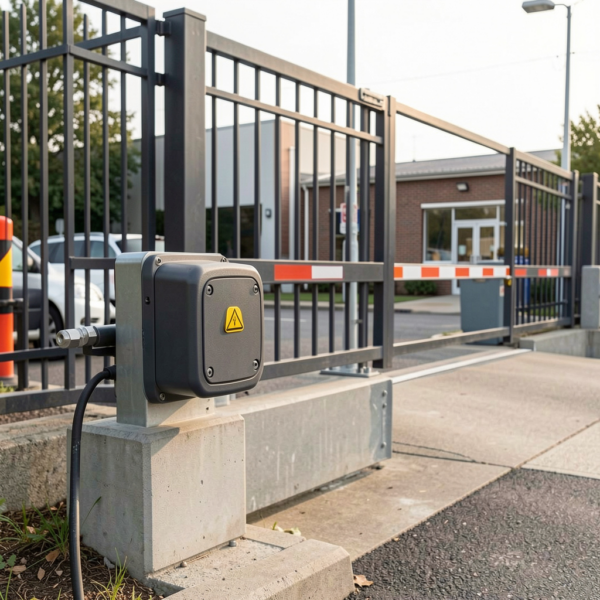
Key Features of Modern Safety Sensors for Gates
Modern Safety Sensors for Gates include advanced features that improve reliability and accuracy.
Wide Detection Range
High-quality sensors can detect obstacles across wider areas, providing better protection.
Weather Resistance
Outdoor gate sensors must function in rain, dust, and extreme temperatures.
Fast Response Time
Sensors must detect obstacles instantly to prevent accidents.
Adjustable Sensitivity
Sensitivity settings allow the system to detect objects of various sizes.
Integration with Smart Gate Systems
Many sensors can connect with smart automation platforms and security systems.
Benefits of Installing Safety Sensors for Gates
Installing Safety Sensors for Gates offers numerous advantages for property owners and facility managers.
Enhanced Safety
Safety sensors reduce the risk of accidents involving pedestrians and vehicles.
Compliance with Safety Standards
Properly installed sensors help ensure compliance with local and international safety regulations.
Increased Equipment Lifespan
Preventing collisions reduces wear and damage to gate motors and components.
Improved Traffic Flow
High-speed gates with safety sensors maintain smooth traffic movement while preventing incidents.
Reduced Maintenance Costs
Avoiding damage to gates and vehicles can significantly lower maintenance expenses.
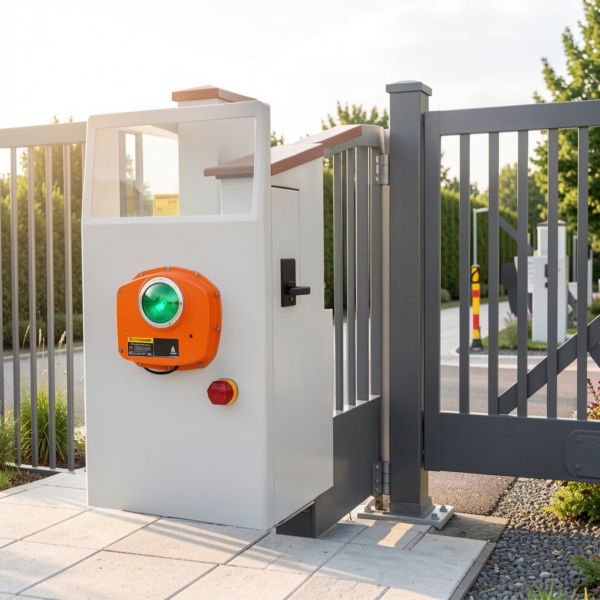
Common Applications of Gate Safety Sensors
Safety Sensors for Gates are used in a wide variety of environments.
Industrial Facilities
Factories and warehouses rely on automated gates for vehicle access and logistics operations.
Commercial Buildings
Office buildings often use automated gates for parking access and security.
Residential Communities
Gated communities use safety sensors to protect residents and visitors.
Airports and Transport Hubs
High-speed gates help manage vehicle traffic in busy transport environments.
Government and Security Facilities
Sensitive facilities require automated gates with reliable safety systems.
Best Placement for Safety Sensors on Gates
Proper sensor placement is essential for maximum effectiveness.
Key installation locations include:
-
Across the gate entrance
-
Along the gate edges
-
Near vehicle approach areas
-
Along sliding gate tracks
-
Around pedestrian walkways
Combining multiple sensor types ensures full coverage and improved safety.
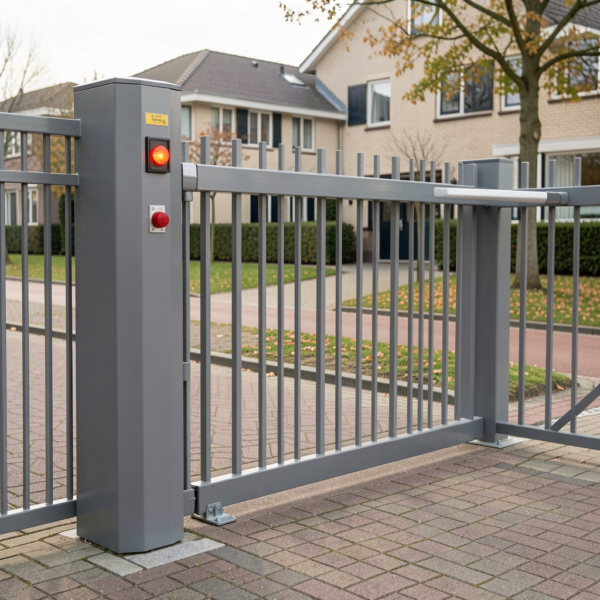
Maintenance and Testing of Safety Sensors for Gates
Even the best Safety Sensors for Gates require regular maintenance to ensure reliable performance.
Recommended maintenance practices include:
Routine Inspections
Check sensors regularly for damage, dirt, or misalignment.
Functional Testing
Test sensors periodically to ensure they detect obstacles correctly.
Cleaning
Dust, dirt, or debris can interfere with sensor performance.
Software Updates
Smart sensor systems may require firmware or software updates.
Regular maintenance helps prevent failures that could compromise safety.
Common Safety Challenges with High-Speed Gates
While safety sensors significantly improve protection, some challenges may arise.
Environmental Interference
Rain, fog, or dust may affect sensor performance.
Incorrect Installation
Improperly installed sensors may fail to detect obstacles accurately.
Sensor Blind Spots
Poor placement can create areas where objects are not detected.
Lack of Maintenance
Neglecting regular inspections can lead to sensor malfunctions.
Addressing these issues early ensures reliable safety performance.
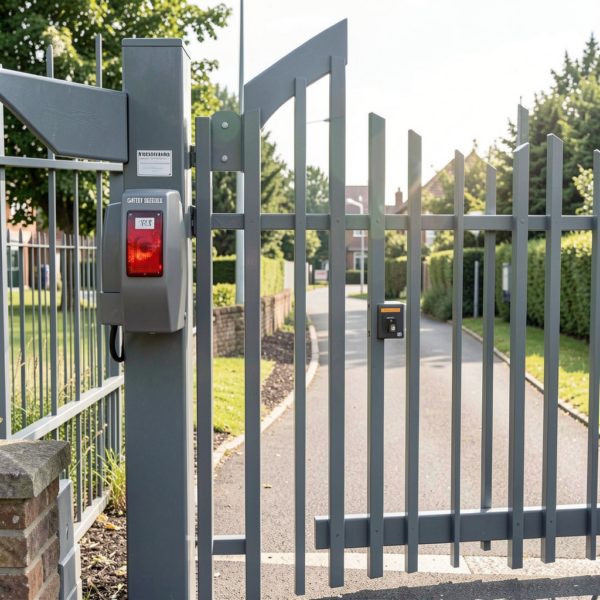
Choosing the Right Safety Sensors for Gates
Selecting the right Safety Sensors for Gates depends on several factors.
Gate Type
Sliding gates, swing gates, and vertical lift gates may require different sensor types.
Traffic Volume
High-traffic environments require faster and more advanced sensors.
Environmental Conditions
Outdoor gates need weather-resistant sensors.
Safety Requirements
Facilities with higher safety risks may require multiple sensor layers.
Integration Needs
Some gate systems require sensors compatible with existing automation systems.
Consulting with a professional installer can help ensure the best solution.
Future Trends in Gate Safety Technology
Automation technology continues to evolve, bringing new innovations to Safety Sensors for Gates.
AI-Powered Detection
Artificial intelligence can improve obstacle detection and reduce false alarms.
Smart Monitoring Systems
Cloud-connected sensors allow remote monitoring and diagnostics.
Integrated Security Platforms
Gate safety sensors are increasingly integrated with access control and surveillance systems.
Touchless and Contactless Operation
Advanced motion sensors reduce the need for physical interaction with gate systems.
These innovations will continue to improve safety and operational efficiency.
Conclusion
High-speed automated gates are essential for modern facilities that require efficient and secure access control. However, their speed and frequent use make safety a critical concern.
Safety Sensors for Gates provide the protection needed to prevent accidents, protect vehicles, and ensure smooth operation. By detecting obstacles and stopping gate movement instantly, these sensors create a safer environment for pedestrians, employees, and visitors.
From photoelectric sensors to laser scanners and safety edges, modern sensor technologies offer reliable solutions for a wide range of applications. When properly installed and maintained, these systems significantly reduce safety risks while improving operational efficiency.
As automation technology continues to advance, Safety Sensors for Gates will remain a key component of safe, intelligent gate systems—ensuring that high-speed automated gates operate both efficiently and safely in every environment.
For more details on regulations and installation requirements, read our guide on gate safety sensors standards