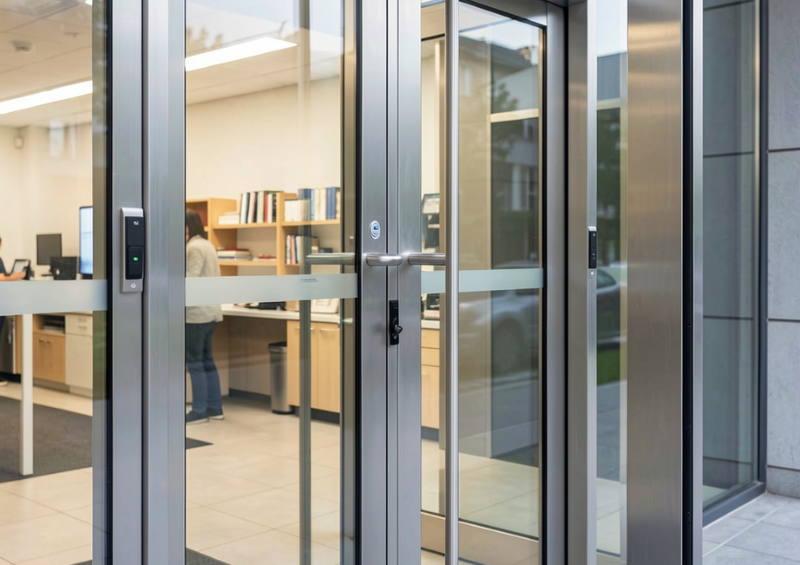
Automatic door technology has become an essential part of modern buildings, improving accessibility, safety, and convenience across residential, commercial, and healthcare environments. From office entrances and hospitals to retail stores and apartment complexes, automatic door systems help manage traffic flow while ensuring compliance with accessibility standards.
Among the most widely used solutions is the Automatic Swing Door Opener, valued for its flexibility, ease of installation, and ability to automate standard hinged doors. However, selecting the right unit involves more than choosing a model that opens and closes smoothly. Two of the most critical technical factors buyers must understand are duty cycles and load ratings.
These specifications determine how often a door can operate, how much weight it can handle, and how reliably it will perform over time. Choosing an Automatic Swing Door Opener without considering these factors can lead to premature wear, increased maintenance costs, and operational failure.
This buyer’s guide explains duty cycles and load ratings in detail, explores how they affect real-world performance, and helps you choose the right Automatic Swing Door Opener for your building.
Understanding Automatic Swing Door Openers
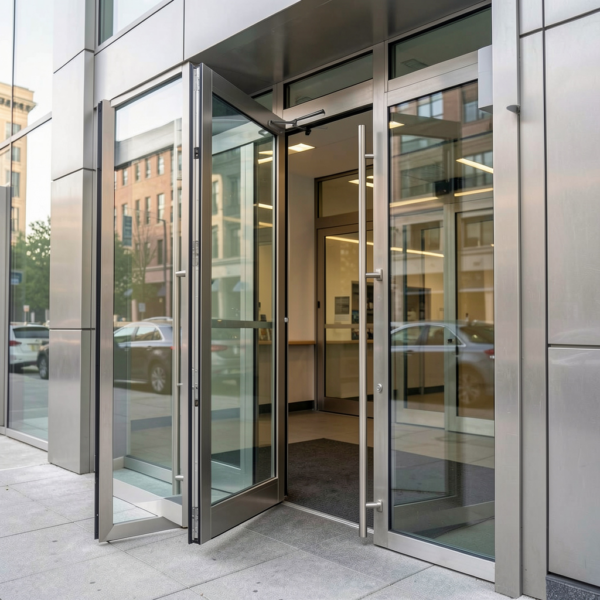
An Automatic Swing Door Opener is a motorised system that automates the opening and closing of hinged doors. It typically consists of a motor, control unit, arm mechanism, and activation method such as a push button, motion sensor, or access control system.
These systems are widely used because they can retrofit existing doors without major structural changes. They also support accessibility requirements, allowing hands-free entry for people with disabilities, hospital patients, or individuals carrying items.
Modern automatic swing door openers are designed for durability and reliability, but their performance depends heavily on correct sizing and specification.
Why Duty Cycles and Load Ratings Matter
Automatic doors operate under continuous mechanical stress. Every opening and closing movement creates wear on motors, gears, and arms. Over time, excessive use or excessive load can reduce lifespan or cause failure.
Duty cycle and load rating specifications define the operational limits of an Automatic Swing Door Opener. They help buyers understand:
- How frequently the door can operate
- How heavy the door can be
- How long the system will last under expected use
- Whether the opener is suitable for a specific environment
Understanding these specifications ensures long-term performance and safety.
What Is Duty Cycle in an Automatic Swing Door Opener
Duty cycle refers to how often a device can operate within a specific time period without overheating or suffering excessive wear. It is typically expressed as a percentage.
For example, a 50 percent duty cycle means the opener can operate for half the time and must rest for the remaining time.
In automatic door systems, duty cycle relates to:
- Motor operation time
- Cooling requirements
- Expected number of daily activations
- Continuous usage capability
A higher duty cycle indicates greater durability and suitability for high-traffic environments.
How Duty Cycle Affects Real-World Performance
Duty cycle directly impacts reliability. A door installed in a low-traffic residential setting may only open a few times per hour, requiring a lower duty cycle. A hospital entrance, however, may operate continuously throughout the day.
If an Automatic Swing Door Opener with insufficient duty capacity is installed in a high-traffic area, the motor may overheat or wear prematurely. This can lead to downtime, repair costs, and safety concerns.
Matching duty cycle to usage environment is essential.
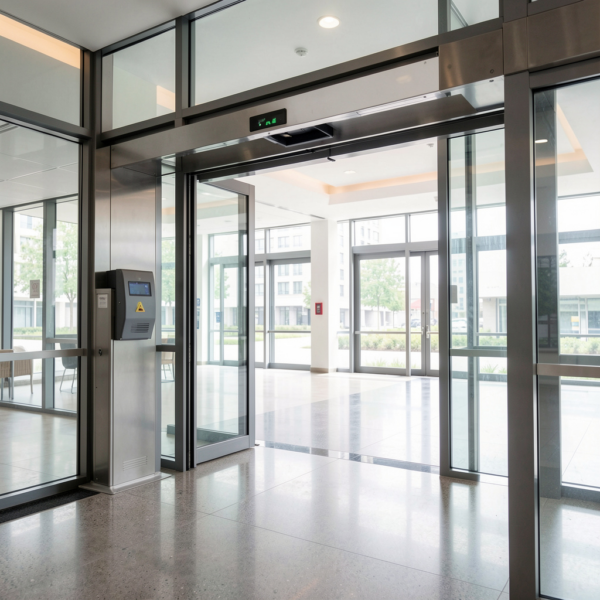
Common Duty Cycle Categories
Low Duty Cycle Systems
Low duty cycle automatic swing door openers are designed for limited daily use. They are suitable for residential homes, private offices, or restricted-access areas.
These systems prioritise cost efficiency and quiet operation rather than continuous performance.
Medium Duty Cycle Systems
Medium duty cycle systems are suitable for moderate traffic environments such as small retail stores, clinics, or office entrances.
They provide a balance between performance and energy efficiency.
High Duty Cycle Systems
High duty cycle automatic swing door openers are designed for continuous or near-continuous operation. They are used in hospitals, airports, and commercial buildings with heavy foot traffic.
These units feature stronger motors, better cooling, and more durable components.
Understanding Load Ratings
While duty cycle determines how often a door can operate, load rating determines how much weight the system can handle.
Load rating refers to the maximum door weight or resistance an Automatic Swing Door Opener can safely move. It is typically measured in kilograms or pounds.
Load rating affects:
- Motor strain
- Opening speed
- Energy consumption
- Mechanical wear
- Operational stability
Choosing the correct load rating ensures smooth operation and prevents damage.
Factors That Influence Door Load
Door weight is only one part of the equation. Several additional factors affect load requirements.
Door size and surface area influence wind resistance and momentum. Door material also matters, as steel or reinforced doors weigh more than wooden or glass doors.
Friction from hinges, air pressure differences, and sealing resistance can increase operational load. These variables must be considered when selecting an Automatic Swing Door Opener.
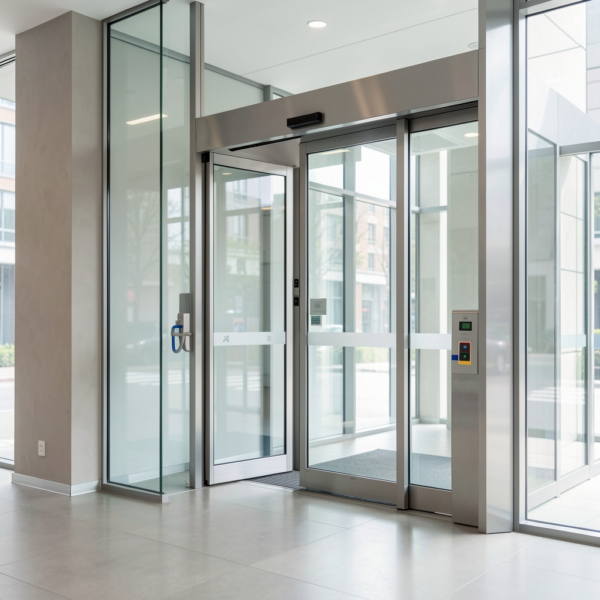
Light-Duty vs Heavy-Duty Load Capacity
Light-duty openers are suitable for interior doors or lightweight residential applications. They operate quietly and consume less energy but are not designed for heavy commercial use.
Heavy-duty automatic swing door openers handle large or reinforced doors, high resistance, and frequent operation. They are typically used in industrial or high-security environments.
Selecting the appropriate load category prevents premature system failure.
Relationship Between Duty Cycle and Load Rating
Duty cycle and load rating are closely connected. A door that is heavy requires more motor effort, which increases heat generation and reduces effective duty capacity.
Similarly, frequent operation increases wear, which can reduce the system’s ability to handle heavy loads over time.
The best Automatic Swing Door Opener balances both specifications based on real usage conditions.
Environmental Factors That Affect Performance
Environmental conditions can significantly impact door operation.
Outdoor installations must handle wind pressure, temperature fluctuations, and moisture exposure. High wind resistance increases load requirements, while extreme temperatures affect motor efficiency.
Indoor environments such as hospitals require quiet operation and precise control.
Choosing a system designed for the installation environment improves reliability.

Traffic Flow and Usage Frequency Analysis
Before selecting an Automatic Swing Door Opener, buyers should evaluate expected traffic flow.
Questions to consider include:
- How many people use the door daily
- Peak usage periods
- Access control integration requirements
- Emergency access needs
This analysis helps determine required duty cycle and system capacity.
Safety Considerations
Automatic doors must operate safely under all conditions. Overloaded or overused systems may fail to detect obstacles or close improperly.
Properly rated systems ensure consistent motion control and reliable safety sensor performance.
Compliance with safety standards depends on selecting an appropriately rated opener.
Energy Efficiency and Motor Performance
Higher duty cycle systems often include more efficient motors and advanced control systems. These features reduce energy consumption while maintaining performance.
Energy efficiency is particularly important in buildings with multiple automatic doors operating throughout the day.
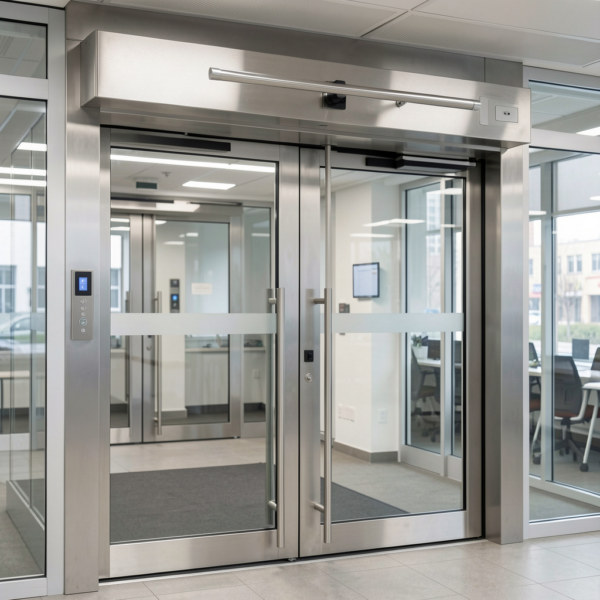
Maintenance and Lifecycle Costs
Choosing an under-rated Automatic Swing Door Opener may reduce initial cost but increase long-term expenses.
Higher duty cycle and higher load-rated systems typically offer longer service intervals and reduced maintenance requirements.
Lifecycle cost should always be considered alongside purchase price.
Residential Applications
In residential settings, traffic levels are typically low. A moderate-duty Automatic Swing Door Opener with appropriate load capacity is usually sufficient.
These systems improve accessibility for elderly residents or individuals with mobility challenges.
Commercial Applications
Retail stores, office buildings, and public facilities require higher duty cycle systems to handle constant use.
Commercial environments also require durable components and reliable performance.
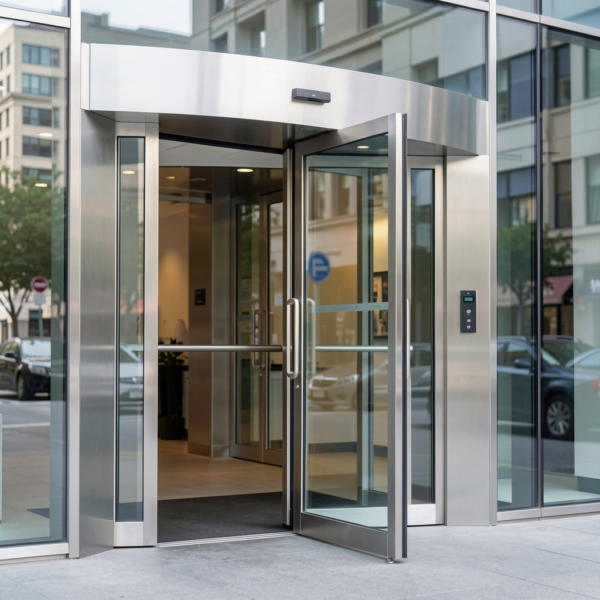
Healthcare Environments
Hospitals demand extremely high reliability. Doors must operate frequently and quietly while maintaining strict safety standards.
High-duty cycle automatic swing door openers with precise control are essential.
Installation Considerations
Proper installation ensures the opener performs according to specifications.
Mounting position, arm configuration, and door alignment affect load distribution. Professional installation is recommended for optimal results.
Common Buyer Mistakes
One common mistake is choosing a system based solely on price rather than performance specifications.
Another is underestimating traffic volume or door weight. Incorrect sizing often leads to early system failure.
Buyers should also consider future expansion or increased usage.
Future-Proofing Your Investment
Building usage patterns change over time. Installing a higher-rated Automatic Swing Door Opener allows for increased traffic or heavier door modifications in the future.
Future-proofing reduces upgrade costs.
Buyer’s Checklist for Choosing the Right Automatic Swing Door Opener
When evaluating options, consider:
- Expected daily usage
- Door weight and size
- Installation environment
- Required safety features
- Maintenance requirements
- Long-term operational cost
Matching these factors to duty cycle and load rating ensures reliable performance.
Cost vs Long-Term Value
A higher-quality Automatic Swing Door Opener may have a higher upfront cost but deliver lower maintenance and longer lifespan.
Long-term reliability and operational efficiency provide better value over time.
Final Thoughts
Selecting the right Automatic Swing Door Opener requires more than choosing a device that fits your door. Understanding duty cycles and load ratings ensures that the system can handle real-world usage while maintaining safety and efficiency.
By carefully evaluating traffic levels, door characteristics, and environmental conditions, buyers can choose a system that delivers reliable performance and long-term value. A properly specified automatic swing door opener not only improves accessibility and convenience but also protects your investment through durable, consistent operation.