For office managers, keys feel like the simplest way to secure internal doors. They are familiar, affordable and easy to hand out. But as an office grows, key control can quickly become harder to manage. Once records, tools, and restricted staff-only spaces are involved, the question becomes bigger than whether a door can be locked. It becomes about who can access that door, when, and how easily that access can be changed.
That is why the electric door strike vs master key decision matters. Master key systems are mechanical and easy to understand, while electronic door strikes can give office managers more control over sensitive areas. Let’s see which one is best to secure office assets!
The Real Security Problem: Who Can Access Office Assets?
Before choosing between mechanical keys and electronic access, it helps to look at the real security challenge inside an office. The issue is whether the business can control, change and verify access when circumstances change.
Office assets are often spread across different areas. There may be laptops in storage, confidential files in cabinets, IT equipment in a server room, finance documents in a back office, tools in a maintenance area or stock in a storeroom. Not every staff member needs access to every space.
This is where key-based systems can become difficult. Staff may forget to return keys after leaving the business. Managers may share keys for convenience. Cleaners and contractors may need temporary access but end up holding the keys longer than necessary. If a key is lost, the office may not know whether it was found, copied or misused.
For low-risk spaces, a well-managed key system may be enough. But for higher-risk rooms, the ability to revoke access, assign permissions and review entry activity becomes more valuable. In an electric door strike vs master key comparison, this is usually where electronic access starts to offer stronger long-term control.
How Master Key Systems Work in Office Environments
A master key system is a planned mechanical keying structure where different keys open different doors based on authority level. Instead of every door having a completely separate key, locks are organised so that certain keys open selected areas.
In an office, this might mean that general staff keys only open their department or office area. Managers may have keys that open several rooms. A facility manager or office manager may hold a higher-level master key that can open most or all doors. Locks can also be grouped by department, floor, tenancy or security level.
A typical office master key structure may include:
- General staff keys for standard work areas
- Manager keys for team rooms and storage areas
- Facility keys for service areas and access doors
- Restricted keys to reduce uncontrolled duplication
- Higher-level master keys for authorised senior staff
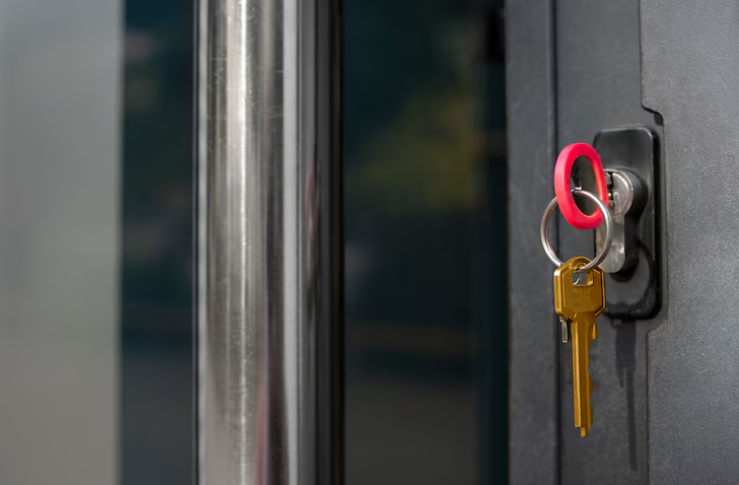
Master key systems do not depend on power, software, internet, access cards, mobile apps or electronic controllers. Staff understand how to use them, and they can be practical for smaller offices with only a few doors.
The limitation is that access permissions are physical rather than digital. If a key is lost, shared or not returned, the business may not know who still has access. Changing access usually means issuing new keys. That makes the electric door strike vs master key decision especially important for offices.
Read more: Master Key Systems Setup and Maintenance Guide
How Electric Door Strikes Work With Access Control
An electric door strike is a locking device installed in or around the door frame strike area. It allows the door to remain latched, then release electronically when access is approved. In an office access control setup, an electric strike may be triggered by several methods, including:
- RFID card or fob reader
- PIN keypad
- Mobile credential
- Reception release button
- Video intercom release
- Access control schedule
- Remote management platform
It is important to understand that an electric strike is not the same as a battery-powered smart lock. In commercial office environments, it is usually part of a wired access control system. That means it needs suitable door hardware, power, and egress planning.
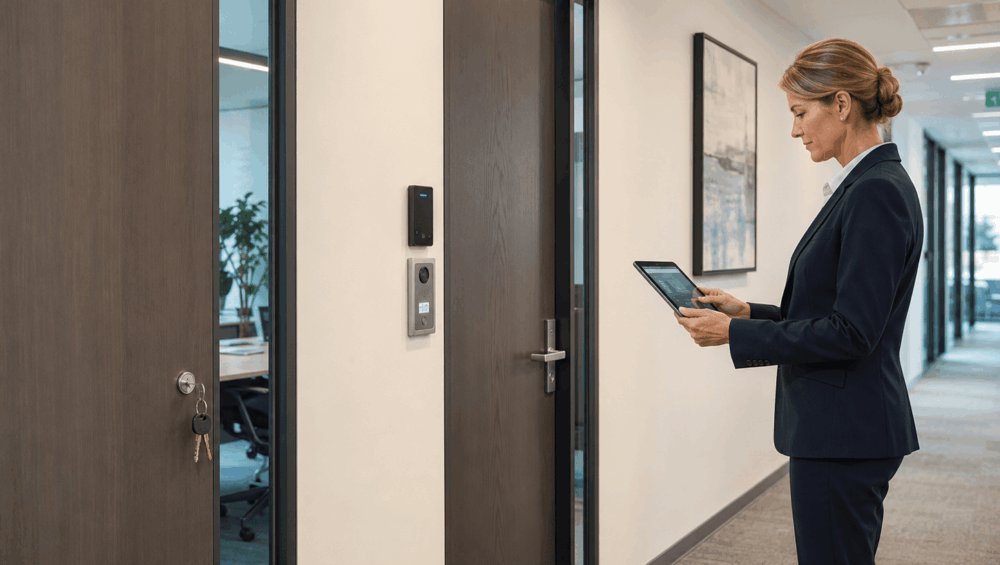
Electric strikes are commonly used on reception doors, staff-only doors, shared office entrances, and restricted internal areas. They can be paired with access readers, intercom systems and broader office security platforms.
Office managers should also understand the difference between fail-secure and fail-safe operation. In simple terms, fail-secure options generally stay locked when power is lost, while fail-safe options unlock when power is removed. This is why professional specification is important when comparing electric door strike vs master key options for commercial offices.
Read more: Cloud-Based Vs Local Access Control: Pros, Cons & Security Differences
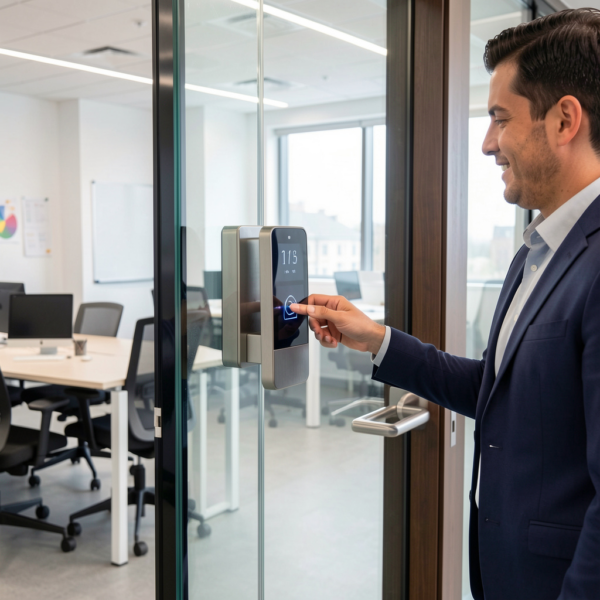
Electric Door Strike vs Master Key: The Main Security Comparison
The right choice depends on the door, the risk level, the assets being protected and how often access needs to change. The electric door strike vs master key decision should be made door by door, not as a one-size-fits-all choice.
Access Control and Permission Changes
With a master key system, access is controlled by who physically holds the right key. If someone needs access, they receive a key. If they no longer need access, the key must be returned. This can work well when staff numbers are stable and access requirements rarely change.
Electric strikes provide more flexibility. When connected to an access control system, permissions can be changed digitally. A staff member can be added, removed or reassigned without changing the lock hardware. This is useful when employees change roles, contractors finish work, temporary staff leave, or cleaners only need access at certain times.
Read more: Managing User Permissions In Large Access Control Deployments
Lost Keys vs Revoked Credentials
Lost keys are one of the biggest weaknesses of a mechanical system. A lost general key may be manageable, but a lost master key can create a much bigger security problem. The office may not know whether the key was misplaced, stolen, or copied.
With an electric strike access control system, a lost credential can usually be disabled. If a staff member loses a card or fob, the office manager can revoke that credential and issue a new one. If someone leaves the business, their access can be revoked without immediately collecting all physical items.
This is one of the strongest advantages in the electric door strike vs master key comparison, especially for businesses with staff turnover, contractors or shared workspaces.
Audit Trails and Accountability
Master keys do not usually show who opened a door or when. If something goes missing from a storeroom or restricted office, the business may only know who had a key.
Electric access control can support audit trails, depending on the system design. This means the office may be able to review which credential was used, when access occurred, and which door was opened. That can help with after-hours incidents, missing assets, internal investigations and routine access reviews.
Read more: Audit Trails & Access History In Smart Lock Systems
Day-to-Day Convenience
Master keys are simple. Staff insert a key, turn it and open the door. There are no readers, cards, controllers, or electronic components to consider. For small offices, this simplicity can be a genuine advantage.
Electric strikes can offer a different type of convenience. Reception can release a door without walking over to it. Staff can use cards or PINs for staff-only areas. Cleaners can be given scheduled access. And visitors can be managed through an intercom.
For busy offices, the electric door strike vs master key decision often comes down to whether convenience means “simple to use” or “simple to manage”. While mechanical keys are easy at the door, electronic access is often easier to administer over time.
Security During Power or System Issues
Master keys continue working without power, internet or software. This makes them reliable for mechanical access and useful as part of an emergency access plan.
Electric strikes need more planning. The correct fail-safe or fail-secure setup must be selected for each door. In addition, battery backup may be required, and emergency egress must be considered. Fire-rated doors must not be modified incorrectly. A mechanical override may also be needed so authorised personnel can still access the area if there is a power or system issue.
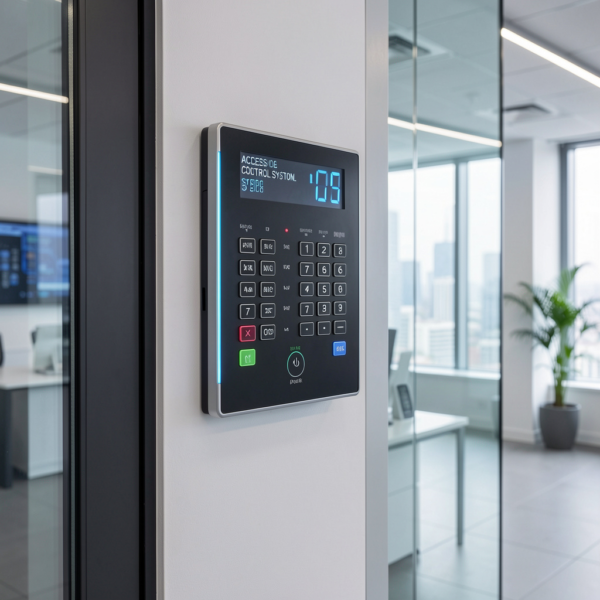
Where Master Key Systems Still Make Sense
Master key systems are not outdated in every situation. In many offices, they still provide a practical, low-complexity way to manage access.
They can be suitable for smaller offices, simple tenancies, internal cupboards, low-risk storage rooms, plant rooms or businesses with a stable team. They are also useful where power and cabling upgrades are not practical.
A master key system may make sense when:
- The site only has a few doors
- Staff numbers are stable
- There is no need for access logs
- The business wants a simple mechanical solution
- Cabling upgrades are not practical
- Emergency mechanical access is required
The key is good management. A master key system should include a clear key register, restricted keying where appropriate and a process for collecting keys when staff or contractors leave.
From a DHS perspective, the issue is not whether master key systems are “bad”. The real question is whether the office can manage the risks of key copying, lost keys, staff turnover and uncontrolled access. In some cases, the answer is yes. In others, the electric door strike vs master key comparison will point towards electronic access for better control.
Where Electric Door Strikes Provide Stronger Asset Protection
Electric door strikes are often stronger where office managers need more control, visibility and flexibility. They are especially useful for doors protecting high-value assets or areas where access changes regularly.
Best-fit applications include server rooms, finance offices, HR offices, medical records rooms, stock rooms, IT equipment storage, reception-to-staff-only doors, shared office areas, multi-tenant commercial offices and after-hours contractor access points.
The main benefit is that access can be changed without physically changing keys. Office managers can remove access when staff leave, restrict room access by role, and reduce reliance on shared keys.
Electric strikes also integrate well with intercoms, access readers and broader access control systems. For example, a reception entry door may use an intercom release during business hours, while a staff-only internal door may use RFID credentials.
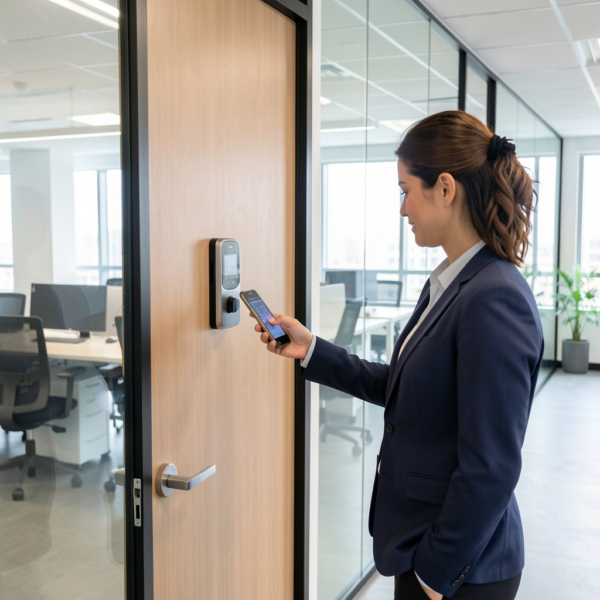
The Hybrid Approach: Using Keys and Electronic Access Together
The best office security solution is often not purely mechanical or purely electronic. Many offices benefit from a hybrid model that combines keys and electronic access.
This approach allows the business to keep costs under control while improving protection where it matters most. A master key system may still be used for general mechanical backup, while electric strikes are installed on sensitive or high-traffic doors.
A practical hybrid structure may include:
- Master key access for general mechanical backup
- Electric strikes on sensitive or busy doors
- Restricted keying for emergency access
- RFID or PIN access for staff-only areas
- Intercom release for reception or visitor entry
- Scheduled access for cleaners and contractors
This approach avoids overengineering every door. A low-risk cupboard may only need a mechanical lock. A server room, finance office or staff-only entry may justify electronic access control.
For office managers comparing electric door strike vs master key options, the hybrid model is often the most realistic path. It recognises that different doors carry different risks and should be secured accordingly.
Common Mistakes Office Managers Should Avoid
Even good security hardware can fail to protect an office if it is poorly planned or badly managed. Before choosing a system, office managers should review each door, who needs access, when they need it and what assets are behind it.
Common mistakes include:
- Choosing master keys without a clear key register: Without proper records, it becomes difficult to know who has access.
- Giving too many people high-level keys: The more master keys in circulation, the harder they are to control.
- Forgetting to rekey after staff turnover: Former staff, cleaners or contractors may still have access if keys are not returned.
- Installing electric strikes without checking door alignment: Poorly aligned doors can cause locking issues and premature hardware wear.
- Ignoring fire-rated door and emergency egress requirements: Access upgrades must not compromise safety or compliance.
- Using shared PINs instead of individual credentials: Shared access codes reduce accountability and are easy to pass around.
- Not planning backup power or mechanical override: Electronic systems need a clear plan for power loss or system faults.
- Treating all office doors as the same risk level: A staff kitchen, server room and finance office should not automatically receive the same security design.
In Conclusion
The electric door strike vs master key decision is not about choosing the most complicated option. It is about choosing the right level of control for each office door.
Master key systems can still work well for smaller offices, low-risk rooms and simple access structures. However, they depend heavily on good key control, accurate records and disciplined management. Meanwhile, electric door strikes provide stronger flexibility, allowing credentials to be revoked, access schedules to be created, and entry activity to be reviewed.
DHS can help office managers, builders and installers design practical security and intercom solutions for commercial spaces. Contact us today to build a smarter, safer and easier-to-manage office access solution.
FAQs about Electric Door Strike vs Master Key
Electric door strike vs master key – Is an electric door strike more secure?
It can be more secure for sensitive office areas because access can be assigned, changed, revoked, and potentially logged. However, the final security level depends on the door, strike type, access control system, installation quality, and emergency planning.
Should every office door have an electric strike?
Not always. Low-risk internal doors may not need electronic access. A better approach is to identify doors protecting valuable assets, confidential information, restricted staff areas, or after-hours access points.
What happens if the power fails?
That depends on whether the strike is fail-safe or fail-secure, and whether the system has backup power. This should be planned carefully around security, safety, and compliance requirements.
Are master key systems still useful?
Yes. They remain useful for simple offices, backup access, low-risk rooms, and sites where mechanical reliability is important. The concern is uncontrolled key sharing or lost keys.
Can an electric strike work with an intercom?
Yes. Electric strikes are commonly used with intercom systems so reception, tenants, or authorised staff can release a door after verifying a visitor.