Designing reliable gate automation for sloped driveway conditions is where standard solutions stop working and real planning begins. Slopes introduce forces that change how a gate moves, how a motor performs, and how long the entire system lasts. What appears to be a simple installation on paper can quickly become a costly problem if the terrain is not properly considered.
This guide takes a practical, problem-solution approach to help you choose the right sloped driveway gate automation system. Whether you’re dealing with steep inclines, uneven ground, tight access, or drainage issues, you’ll learn how to evaluate your site and select a system that performs consistently. We’ll also reference proven solutions from Beninca and Nice to show how different technologies address these challenges.
Table of Contents
ToggleWhy Sloped Driveways Require a Different Approach
Most gate systems are engineered with flat ground in mind. On a slope, everything changes—mechanics, load distribution, and movement geometry.
On sloped sites, you typically face:
- Uneven resistance during opening and closing
- Increased load on motors and hinges
- Clearance conflicts between the gate and ground
- Accelerated wear on moving components
The result is simple: if you install a standard system without adapting it to the slope, it will fail faster than expected.
That’s why gate automation for sloped driveway projects must begin with site analysis—not product selection.
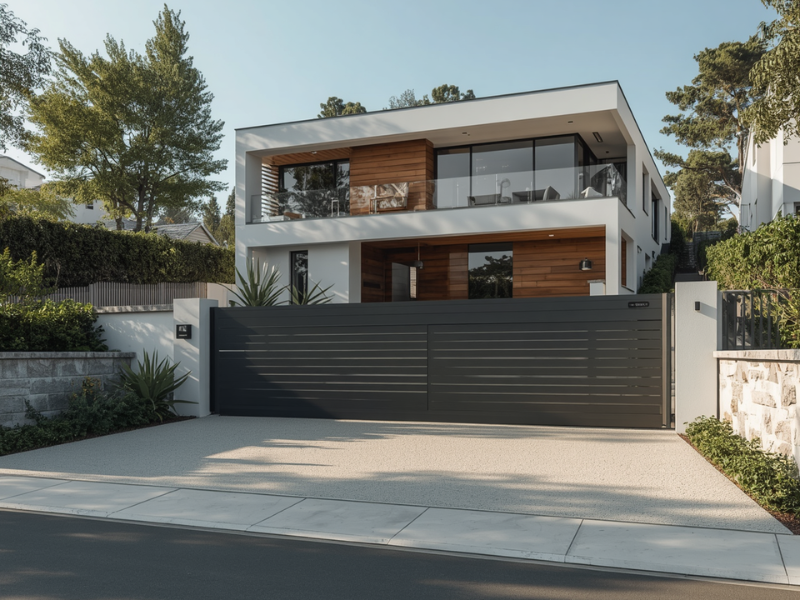
Understanding the Type and Direction of Your Slope
Before choosing a system, you need to understand what kind of slope you’re dealing with. Not all slopes create the same challenges.
An upward slope (rising toward the property) forces the motor to work harder when opening. A downward slope does the opposite—it accelerates the gate during closing, which can strain braking systems and reduce control.
Cross slopes (side-to-side uneven ground) create alignment issues that affect both swing and sliding gates.
Each scenario requires a different solution. Without identifying your slope type, even a high-end system may perform poorly.
Why Sliding Gates Are the Preferred Solution
For most sloped driveway gate automation scenarios, sliding gates are the most reliable choice.
Unlike swing gates, sliding gates move horizontally along a straight path. This eliminates the biggest issue with slopes: ground clearance.
Key advantages include:
- Consistent operation regardless of incline
- No arc movement that conflicts with the ground
- Reduced mechanical stress compared to swing systems
- Better suitability for steep or uneven terrain
In challenging environments, sliding systems are not just an option—they are often the optimal solution.
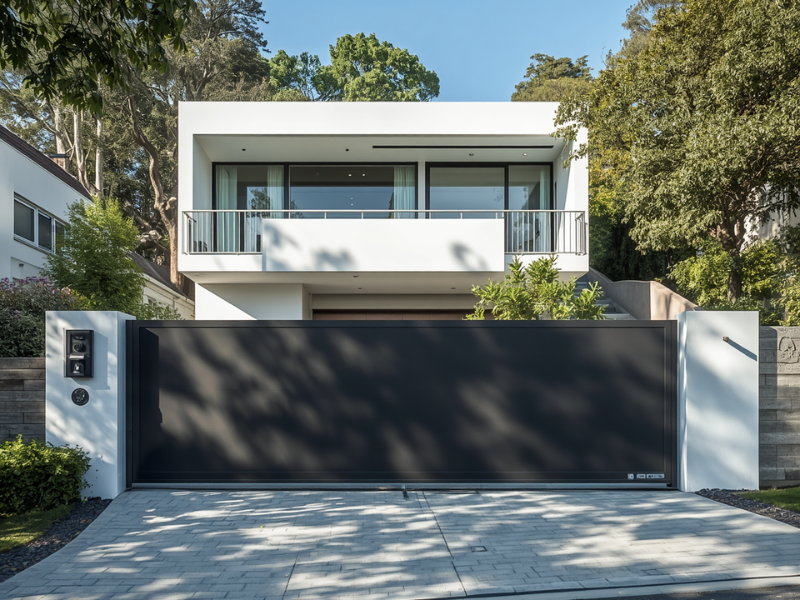
Track vs Cantilever Sliding Gates on Slopes
Once you choose a sliding system, the next decision is whether to use a track-based or cantilever design.
Track sliding gates run along a ground rail. They require precise leveling and are sensitive to debris, water, and ground movement.
Cantilever gates, on the other hand, are suspended above the ground and supported by rollers. They are often better suited for difficult sites because:
- They avoid ground contact issues
- They perform better in uneven or shifting terrain
- They reduce maintenance caused by debris and water
However, cantilever systems require more space and stronger structural support, which must be factored into your planning.
When a Swing Gate on a Slope Can Work
Despite their limitations, swing gate on slope installations are still possible under the right conditions.
They are most suitable when:
- The slope is mild
- Adequate ground clearance is available
- The gate is designed specifically for the slope
Custom raked gates—where the bottom edge follows the slope—can maintain consistent clearance and prevent scraping. However, they require precise fabrication and installation.
Even then, swing systems on slopes demand stronger motors and more careful tuning.
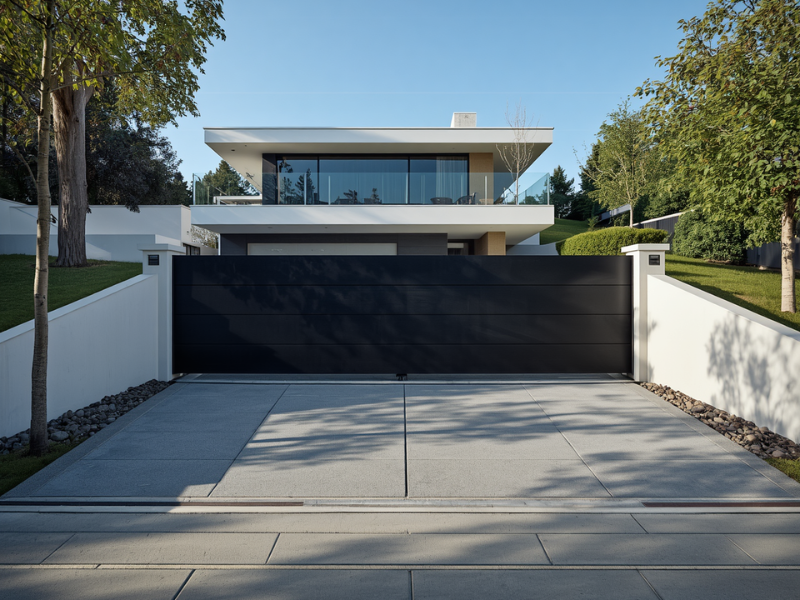
The Real Impact of Gravity on Gate Performance
Gravity is one of the most underestimated factors in gate automation for sloped driveway systems.
On an incline:
- The motor must overcome additional resistance when moving uphill
- The gate gains momentum when moving downhill
- Stopping distance increases
- Mechanical stress is amplified
This means a gate that performs perfectly on flat ground may struggle or fail on a slope.
The solution is simple but often ignored: always overspec the motor for sloped conditions.
Motor Selection for Challenging Sites
Choosing the right motor is critical for long-term reliability.
For sloped installations, look for:
- Higher torque capacity than standard requirements
- Soft start and stop functionality
- Adjustable speed and force settings
- Built-in safety and obstacle detection
Beninca systems are often selected for their durability and ability to handle heavy loads, while Nice offers advanced control features that improve smoothness and efficiency.
The key is not just power—it’s controlled power.
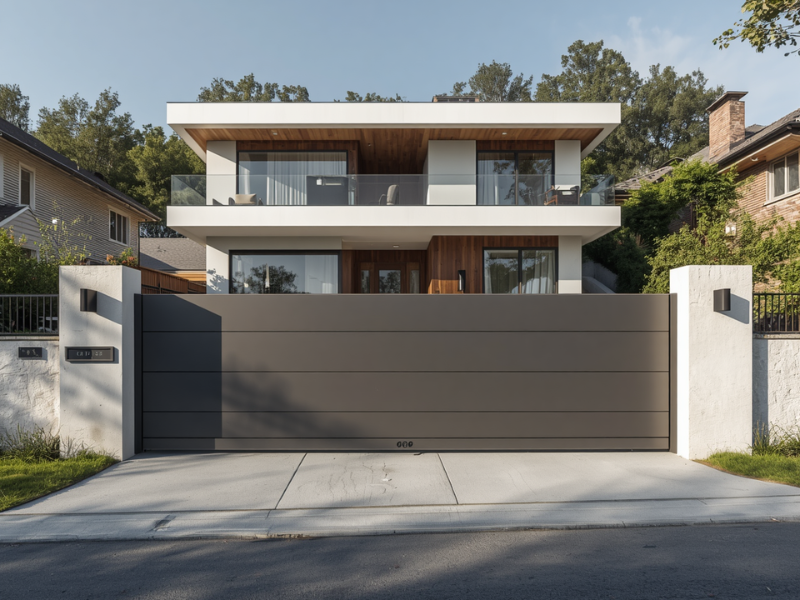
Sliding Gate Site Planning: The Critical Step
Even the best sliding system will fail without proper sliding gate site planning.
Key considerations include:
- A perfectly level track (for track systems)
- Adequate side clearance equal to the gate width
- Strong foundations to prevent shifting
- Proper alignment to avoid uneven wear
Small errors during installation can lead to long-term problems, including motor strain and premature component failure.
Clearance and Geometry Challenges
Clearance is one of the biggest obstacles in sloped driveway gate automation.
Swing gates require a clear arc to operate. On a slope, that arc often intersects with the ground, causing collisions unless adjustments are made.
Sliding gates eliminate this issue—but only if the path is properly aligned and unobstructed.
Understanding the geometry of your site is essential before selecting a system.
Drainage and Ground Stability
Sloped driveways often come with drainage challenges.
Water can:
- Accumulate in tracks
- Cause corrosion
- Wash away supporting soil
- Affect alignment over time
Proper drainage design is essential, especially for track-based sliding gates.
Ignoring this factor can turn a well-installed system into a maintenance problem.
Safety Considerations for Sloped Installations
Safety becomes even more critical on slopes.
Risks include:
- Gates accelerating downhill
- Increased closing force
- Uneven stopping behavior
To mitigate these risks, your system should include:
- Safety sensors and photocells
- Automatic stop and reverse functions
- Controlled braking systems
- Adjustable force settings
A safe system is not just compliant—it protects both users and equipment.
Space Constraints and Alternative Solutions
Not every site has enough space for a full sliding gate.
In tight areas, alternatives include:
- Bi-fold gates that reduce opening arc
- Telescopic sliding systems that require less side space
These solutions can work in moderate slope conditions but require careful design and higher precision.
Balancing Aesthetics and Functionality
Many homeowners prefer the look of swing gates. However, on sloped sites, aesthetics should not override functionality.
Sliding gates may require more space, but they:
- Perform more reliably
- Require less maintenance
- Handle challenging terrain better
The best approach is to choose a system that works first—and then refine the design to match your aesthetic goals.
Common Mistakes in Sloped Gate Projects
Several mistakes appear repeatedly in these installations.
Choosing a swing gate for a steep slope is one of the most common. Undersizing the motor to save cost is another.
Other issues include:
- Ignoring drainage
- Poor alignment during installation
- Underestimating space requirements
Avoiding these mistakes can save significant time and money.
Practical Buyer Checklist for Sloped Driveways
Before committing to a system, confirm:
- Type and angle of slope
- Available space for gate movement
- Gate size, weight, and material
- Required motor capacity
- Ground stability and drainage
- Safety feature requirements
This checklist ensures you select the right gate automation for sloped driveway without costly adjustments later.
Choosing Between Beninca and Nice Systems
Both Beninca and Nice offer reliable solutions for challenging sites.
Beninca is often chosen for:
- Heavy-duty applications
- High-load performance
- Long-term durability
Nice is preferred for:
- Smart automation features
- Smooth and quiet operation
- Advanced control systems
The right choice depends on your priorities and site conditions.
Long-Term Performance and Maintenance
A well-designed system doesn’t just work—it continues working.
For sloped installations, regular maintenance is essential:
- Check alignment and track condition
- Inspect motor performance
- Clear debris from moving parts
- Test safety systems
Investing in a quality system reduces maintenance frequency and extends lifespan.
Final Thoughts: Designing for the Site, Not Against It
Sloped driveways are not a limitation—they’re a design challenge that requires the right solution.
By focusing on proper sloped driveway gate automation, choosing the right system type, and selecting a motor that can handle real-world conditions, you can create a system that performs reliably for years.
In most cases, sliding gates provide the best balance of performance and durability. But regardless of the system you choose, success comes down to one principle:
Design for the slope—not against it.