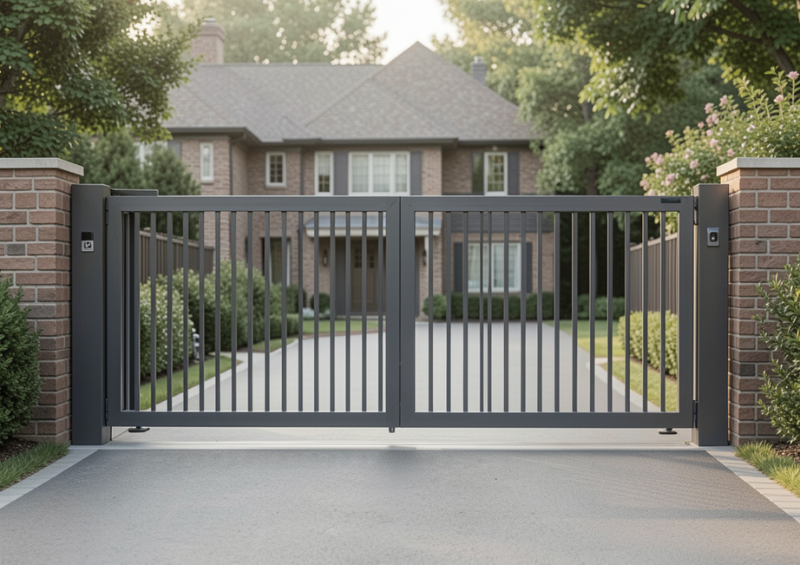
When it comes to Swing Gate Automation, performance is not just about opening and closing—it’s about precision, safety, and long-term reliability. One of the most critical yet often overlooked aspects of an automated swing gate system is how the gate knows when to stop.
This is where mechanical stops and electronic limits come into play. Both methods define the opening and closing positions of a gate, but they operate in fundamentally different ways. Choosing the right approach can significantly impact the durability, efficiency, and safety of your gate system.
In this comprehensive guide, we’ll explore the differences between mechanical stops and electronic limits, their advantages and disadvantages, and how to choose the best option for your Swing Gate Automation setup.
Understanding Swing Gate Automation Systems
Before diving into stop mechanisms, it’s important to understand how Swing Gate Automation systems work.
A typical system includes:
- Gate leaves (single or double)
- Motor or actuator (linear arm or underground motor)
- Control board
- Safety sensors
- Limit control system (mechanical or electronic)
The motor drives the gate open or closed, while the limit system ensures the gate stops at the correct position without over-traveling.
What Are Mechanical Stops?
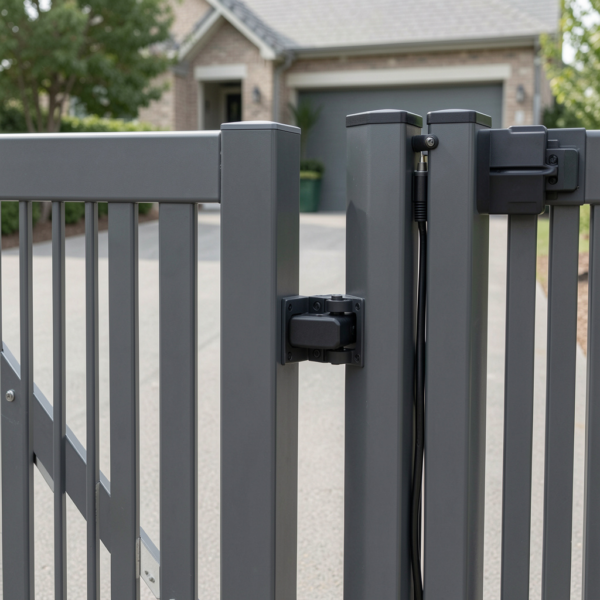
Mechanical stops are physical barriers installed at the end of a gate’s travel path. They physically prevent the gate from moving beyond a set point.
How They Work
When the gate reaches the fully open or closed position, it hits a fixed stop, which prevents further movement. The motor senses resistance and stops operation.
Common Types
- Ground-mounted stops
- Built-in actuator stops
- Fixed brackets on posts or walls
Mechanical stops are widely used in traditional Swing Gate Automation systems due to their simplicity and reliability.
Advantages of Mechanical Stops
Mechanical stops have been a foundational element in Swing Gate Automation systems for decades. Their simplicity is often their biggest strength, making them a reliable choice in many installations—especially in environments where durability is critical.
One of the most significant advantages of mechanical stops is their straightforward operation. Because they rely on physical contact rather than electronic signals, there is very little that can go wrong from a technical standpoint. This makes them particularly suitable for installations in remote locations or areas where advanced electrical systems may be difficult to maintain.
Another key benefit is their resistance to environmental conditions. Mechanical stops are not affected by electrical interference, power fluctuations, or sensor malfunctions. In outdoor environments exposed to rain, dust, or extreme temperatures, this reliability becomes especially valuable. For properties located in coastal or rural areas, where environmental wear is more common, mechanical stops often outperform electronic systems in terms of long-term dependability.
Cost is also a major advantage. Mechanical stops are generally more affordable to install and maintain, making them an attractive option for budget-conscious projects. Since they do not require complex wiring or programming, installation is faster and less labor-intensive.
Additionally, mechanical stops act as a fail-safe mechanism. Even if the control system or motor encounters an issue, the physical barrier ensures that the gate cannot move beyond its intended limits. This adds an extra layer of protection for both the gate structure and surrounding property.
However, it’s important to understand that these benefits come with trade-offs, particularly when it comes to precision and smoothness of operation.
Disadvantages of Mechanical Stops
While mechanical stops are reliable, they are not without limitations. One of the most notable drawbacks is the physical impact that occurs each time the gate reaches its limit. Over time, this repeated contact can lead to wear and tear on both the gate and the stop itself.
This impact can also generate noise and vibration, which may be undesirable in residential or quiet environments. In high-end properties or locations where aesthetics and comfort are priorities, this can be a significant disadvantage.
Another issue is the lack of precision. Mechanical stops rely on physical positioning, which may not always provide exact stopping points. This can result in slight misalignment over time, especially if the gate structure shifts due to ground movement or frequent use.
The repeated stress from impact can also place additional strain on the motor, hinges, and structural components of the gate. This may lead to increased maintenance requirements and potentially shorter system lifespan if not properly managed.
For these reasons, while mechanical stops are dependable, they may not be the best choice for applications requiring high precision or smooth operation.
What Are Electronic Limits?
Electronic limits use sensors or encoders to detect the gate’s position and stop movement automatically without physical contact.
How They Work
The system tracks the gate’s position and signals the motor to stop when it reaches predefined limits.
Common Types
- Magnetic limit switches
- Encoder-based systems
- Hall-effect sensors
Electronic limits are increasingly popular in modern Swing Gate Automation systems.
Advantages of Electronic Limits
Electronic limits represent a more advanced approach in Swing Gate Automation, offering greater control and precision compared to traditional mechanical systems.
One of the biggest advantages is the accuracy of positioning. Electronic systems can detect the exact position of the gate and stop it at precisely the right point every time. This ensures consistent alignment and improves the overall appearance and functionality of the gate.
Another major benefit is the smooth and quiet operation. Since there is no physical impact when the gate reaches its limit, the movement is more refined and less disruptive. This is particularly important in residential areas, office buildings, and other environments where noise reduction is a priority.
Electronic limits also help reduce mechanical stress on the system. By eliminating the need for physical contact, they minimize wear on components such as hinges, motors, and gate frames. This can significantly extend the lifespan of the entire system and reduce long-term maintenance costs.
In addition, electronic systems offer greater flexibility and customization. Users can adjust opening and closing positions, speed, and force settings through the control panel. This level of control allows the system to be tailored to specific site conditions and user preferences.
Modern electronic limit systems can also integrate with smart technologies, enabling remote monitoring, diagnostics, and automation. This makes them an ideal choice for advanced installations where convenience and connectivity are important.
Disadvantages of Electronic Limits
Despite their advantages, electronic limits also come with certain challenges that must be considered when designing a Swing Gate Automation system.
One of the primary drawbacks is the higher initial cost. Electronic systems require more advanced components, including sensors, control boards, and wiring, which can increase installation expenses.
They are also more sensitive to environmental conditions. Dust, moisture, and temperature fluctuations can affect sensor performance if the system is not properly protected. In outdoor installations, this means additional care must be taken to ensure weatherproofing and durability.
Another consideration is the need for regular calibration and maintenance. Over time, sensors may require adjustment to maintain accuracy. This adds a level of complexity that is not present in mechanical systems.
Electronic limits are also dependent on a stable power supply and electrical system. In the event of power failure or electrical faults, the system may not function as intended unless backup solutions are in place.
Finally, troubleshooting electronic systems can be more complex, often requiring professional expertise to diagnose and resolve issues.
Mechanical Stops vs Electronic Limits: Key Differences
When comparing mechanical stops and electronic limits in Swing Gate Automation, the decision ultimately comes down to balancing simplicity and durability with precision and performance.
Mechanical stops excel in environments where rugged reliability is required. They are ideal for basic installations where cost is a concern and environmental conditions are challenging. Their ability to function independently of electronic systems makes them a dependable choice for many applications.
On the other hand, electronic limits are better suited for modern, high-performance systems where smooth operation, precision, and customization are priorities. They provide a more refined user experience and reduce long-term wear on components.
In many cases, the best solution is not choosing one over the other, but rather combining both systems. This leads to the development of hybrid systems that leverage the strengths of each approach.
Which Option is Better for Swing Gate Automation?
The choice depends on your specific needs.
Choose Mechanical Stops If:
- You want a simple and cost-effective solution
- The environment is harsh (dust, rain, extreme temperatures)
- Precision is not critical
Choose Electronic Limits If:
- You need smooth and quiet operation
- Precision is important
- You want advanced control features
Hybrid Systems: The Best of Both Worlds
Hybrid systems are becoming increasingly popular in Swing Gate Automation because they offer the best of both worlds.
In a hybrid setup, electronic limits handle the primary operation, ensuring precise and smooth movement. Meanwhile, mechanical stops act as a backup safety measure, preventing over-travel in case of system failure.
This combination provides several advantages:
- Enhanced safety through redundancy
- Improved system reliability
- Reduced wear and tear
- Greater flexibility in operation
Hybrid systems are particularly beneficial in high-end residential and commercial applications where both performance and safety are critical.
Installation Considerations
Proper installation plays a crucial role in the effectiveness of both mechanical stops and electronic limits.
For mechanical stops, it is essential to ensure accurate positioning and secure mounting. Misaligned stops can lead to improper gate closure and increased wear.
For electronic systems, attention must be given to sensor placement, wiring, and calibration. Sensors should be positioned to accurately detect the gate’s movement without interference.
Additionally, the overall system should be tested thoroughly to ensure that both limit mechanisms function correctly under different conditions.
Maintenance Tips
Mechanical Stops
- Inspect for wear
- Tighten loose components
Electronic Limits
- Check sensor alignment
- Clean components
- Update system settings if needed
Safety Considerations
Both systems must include:
- Obstacle detection sensors
- Emergency stop functions
- Manual override
Safety should always be a priority in Swing Gate Automation.
Common Mistakes to Avoid
- Incorrect stop placement
- Ignoring maintenance
- Choosing the wrong system for the environment
- Poor installation
Future Trends in Swing Gate Automation
- AI-based position detection
- IoT integration
- Smart diagnostics
- Energy-efficient systems
Best Practices for Choosing the Right System
- Assess your environment
- Consider usage frequency
- Evaluate budget
- Work with experienced professionals
Conclusion: Making the Right Choice
Choosing between mechanical stops and electronic limits in Swing Gate Automation is not a one-size-fits-all decision. Each system offers unique advantages depending on the environment, usage, and performance requirements.
Mechanical stops provide simplicity and durability, while electronic limits deliver precision and smooth operation. For most modern applications, a hybrid approach offers the best balance—ensuring reliability, safety, and long-term performance.
By understanding these differences and selecting the right solution, you can optimize your gate system for efficiency, longevity, and user satisfaction.