

Large commercial buildings operate under conditions that place extreme demands on building automation systems. This is why KNX Networks are widely used in large commercial buildings across the world. KNX is not a consumer smart technology adapted for professional use; it is a mature, open automation standard designed specifically for scalable, mission-critical environments.
However, while the KNX protocol itself provides reliability, the real-world success of a commercial project depends heavily on installation quality and architectural decisions. Management and integration components such as the Jigsaw KNX Gateway (2 Users) add operational visibility and structured access to KNX Networks. To deliver long-term value, these gateways must be installed and integrated with a clear understanding of their role within the overall system architecture.
Why Installation Quality Determines Success in Commercial KNX Projects
In commercial automation, installation mistakes rarely appear immediately. Systems may appear functional at handover but develop problems months or years later as load increases, tenants change, or additional devices are added. These delayed issues are often traced back to early design and installation shortcuts.
KNX Networks rely on decentralised intelligence. Each device stores its own configuration and executes its own logic, communicating with other devices over the bus. This architecture provides excellent resilience, but it also means that every installation decision matters. Cable routing, power distribution, addressing structure, and topology design all influence long-term system behaviour.
When gateways such as the Jigsaw KNX Gateway (2 Users) are added, they do not introduce problems themselves; instead, they expose weaknesses that already exist. This makes professional installation discipline essential for any commercial KNX project.
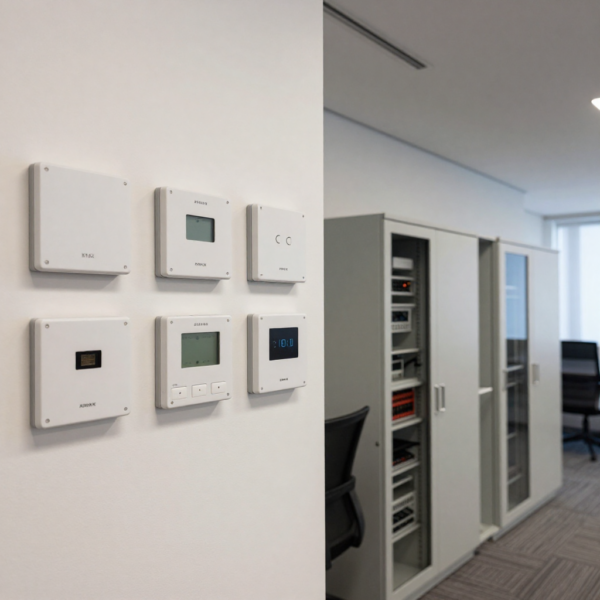
Planning KNX Networks for Large Commercial Buildings
The most important phase of a KNX installation is planning. Large commercial buildings should never be approached as scaled-up residential projects. Instead, they require deliberate system architecture based on building size, usage patterns, and long-term operational goals.
A structured KNX topology is essential. Large buildings should be divided into multiple areas and lines, typically aligned with floors, functional zones, or departments. This segmentation reduces bus traffic, limits the impact of faults, and allows maintenance to be carried out without affecting the entire building. It also simplifies future expansion, which is almost inevitable in commercial environments.
Addressing strategy must be defined early and documented clearly. Group addresses should follow consistent naming conventions that make sense to facility managers and technicians, not just the original integrator. Reserved address ranges should be left available for future devices, renovations, or tenant changes. When KNX Networks are planned this way, gateways such as the Jigsaw KNX Gateway (2 Users) can present system data in a clear, logical structure rather than exposing a confusing address map.
Power Supply Design and Installation Best Practices
Power stability is one of the most common causes of long-term KNX issues in commercial buildings. Inadequate or overloaded power supplies can lead to intermittent faults that are extremely difficult to diagnose once the building is operational.
Best practice in large KNX Networks is to distribute power supplies strategically across the building. Each KNX line should have its own dedicated power supply, and no supply should be loaded near its maximum capacity. Leaving spare capacity allows for future expansion and reduces heat-related stress on components.
Power supplies should be installed in accessible locations and clearly labelled. Their locations should be recorded in system documentation so maintenance teams can quickly identify and isolate issues. These seemingly simple steps dramatically reduce downtime during fault investigation and routine maintenance.
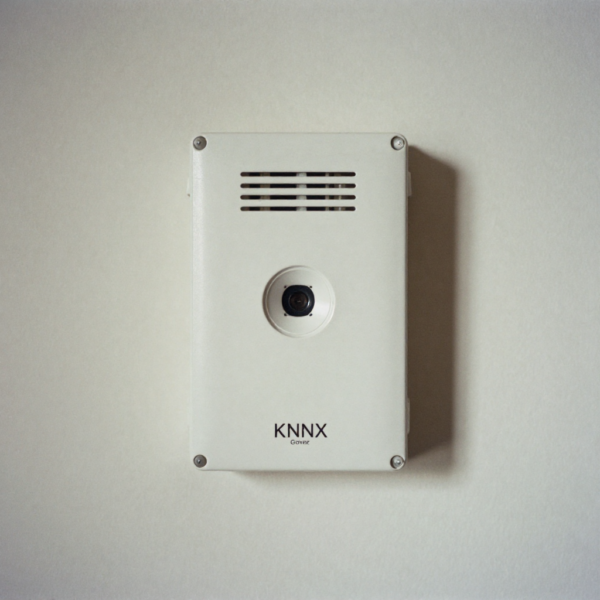
KNX Cabling Discipline in Commercial Environments
KNX cabling should be treated as part of the building’s permanent infrastructure, not as secondary low-voltage wiring. Certified KNX twisted-pair cable must be used consistently, polarity must be maintained throughout the installation, and routing should minimise interference from high-voltage circuits.
In large commercial buildings, poor cabling practices are often hidden behind finished walls and ceilings, making later corrections expensive or impossible. This is why careful installation and inspection during construction is critical.
Clear cable labelling and accurate as-built documentation are just as important as correct physical installation. Years after commissioning, this documentation allows technicians to understand the system quickly, reducing the risk of accidental damage and speeding up future modifications.
Commissioning KNX Devices Before Gateway Integration
A fundamental principle in professional KNX installation is layer separation. KNX field devices must always be commissioned, tested, and validated independently before any gateway or management system is introduced.
Lighting, HVAC, shading, and safety functions should operate reliably using only KNX logic configured in ETS. This ensures that the core automation system is stable and resilient. Once the KNX Network has been proven under real operating conditions, the Jigsaw KNX Gateway (2 Users) can be added as a management and access layer.
This approach ensures that the KNX system continues operating even if the gateway is offline, undergoing maintenance, or replaced in the future—an essential requirement in commercial buildings.

Installing the Jigsaw KNX Gateway (2 Users) in Commercial Projects
The Jigsaw KNX Gateway (2 Users) is designed to provide structured access and visibility into KNX Networks, not to replace KNX logic or act as a central controller. Understanding this distinction is critical during installation.
The gateway should be positioned logically above the KNX field layer. Core automation logic—such as lighting schedules, HVAC interlocks, and safety functions—must remain within KNX devices. This ensures that essential building functions do not depend on external software or servers.
Physically, the gateway should be installed in a secure communications cabinet with stable power, controlled access, and adequate ventilation. Network connectivity should be reliable and protected, reflecting the gateway’s role as a critical operational interface rather than a consumer device.
Network Security and IT Coordination
Commercial automation systems must comply with organisational IT and cybersecurity policies. KNX Networks should remain isolated from corporate IT infrastructure wherever possible, with gateways acting as controlled interfaces rather than direct connections.
The Jigsaw KNX Gateway (2 Users) should be placed on a dedicated network segment, typically within a VLAN, with firewall rules restricting access to authorised users only. Early coordination between KNX integrators and IT teams avoids conflicts later in the project and ensures compliance with security standards.
This separation also supports long-term maintainability, allowing IT and automation teams to work independently without compromising system integrity.

User Access Planning During Installation
Large commercial buildings involve many stakeholders, each with different responsibilities. Facility managers may require full system visibility, maintenance teams may need limited control access, and external contractors may require temporary permissions.
User access planning should be addressed during installation, not after handover. The Jigsaw KNX Gateway (2 Users) supports structured access, but roles and permissions must be defined clearly to prevent accidental system changes and improve accountability.
Well-planned access control also supports compliance requirements and simplifies auditing in regulated environments.
Optimising Performance in Large KNX Networks
As KNX Networks grow, performance management becomes increasingly important. Excessive group address chatter, unnecessary feedback objects, and poorly designed logic can reduce responsiveness and increase bus load.
Professional installations focus on minimising unnecessary communication while preserving essential feedback. Automation logic should remain distributed across KNX devices rather than centralised in gateways or servers. This preserves the inherent resilience of KNX and ensures that gateways receive clean, meaningful data rather than raw bus noise.

Testing Fail-Safe Behaviour and System Resilience
Commercial KNX installations must be tested under failure conditions. This includes scenarios where the gateway is offline, disconnected, or undergoing maintenance.
The KNX Network must continue operating normally in all cases. Lighting, HVAC, and safety systems should never depend on the gateway for basic operation. Testing these scenarios during commissioning confirms that the system architecture is correct and resilient.
Documentation, Handover, and Long-Term Maintenance
Documentation is a critical deliverable in commercial KNX projects. Complete ETS project files, network diagrams, gateway configurations, and access policies must be handed over clearly and accurately.
Good documentation protects the building owner’s investment, reduces reliance on individual installers, and ensures that future upgrades or expansions can be carried out efficiently. Maintenance considerations—such as accessible power supplies, clear labelling, and logical layouts—should be built into the installation from day one.
Why Large Sites Continue to Choose KNX Networks
Large commercial buildings continue to standardise on KNX Networks because they offer predictable engineering outcomes, vendor independence, long-term support, and structured commissioning processes. These qualities align with the operational realities of complex sites.
When combined with properly installed management tools such as the Jigsaw KNX Gateway (2 Users), KNX delivers both robustness and usability without compromising decentralised control.
Conclusion: Installation Is the Foundation of KNX Success
KNX Networks are widely used in large commercial buildings because they are engineered for scale, resilience, and longevity. These benefits are only realised when installation follows professional best practices—from early planning and topology design to gateway integration and documentation.
The Jigsaw KNX Gateway (2 Users) enhances KNX installations by providing structured access and operational visibility, but only when it is integrated thoughtfully and without undermining KNX’s decentralised strengths.
For integrators, consultants, and building owners alike, the conclusion is clear:
KNX success is built during installation—not after handover.
Buy the Jigsaw KNX Gateway (2 Users) for reliable KNX network monitoring and controlled user access