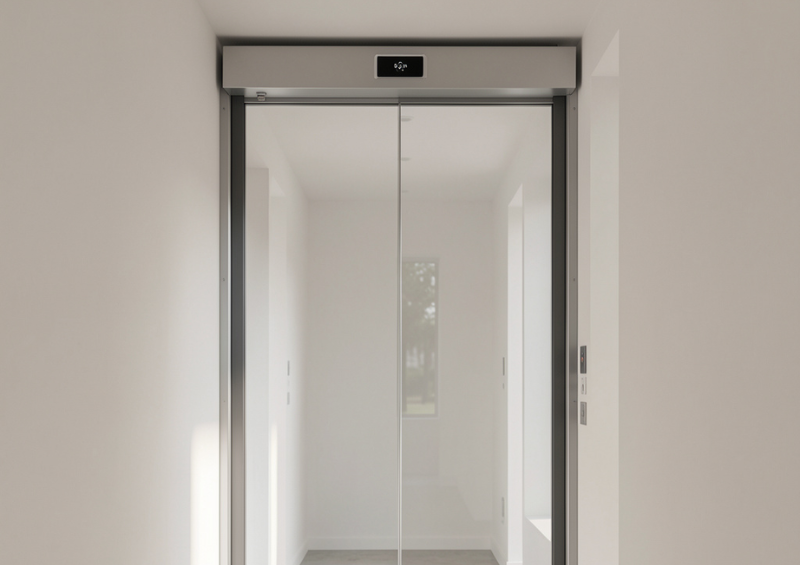
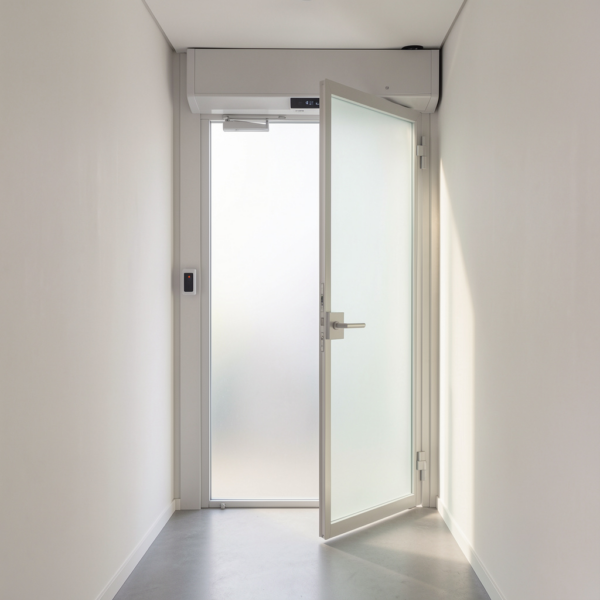
Narrow corridors are a reality in many buildings—from hospitals and clinics to offices, schools, apartments, and retail spaces. While they help maximize usable floor area, they often create friction in daily movement: doors collide with people, wheelchair access becomes difficult, and traffic slows down at peak times.
An Automatic Swing Door Opener solves these problems by transforming a standard hinged door into a smart, responsive entry point. With controlled opening angles, smooth motion, and touchless activation, these systems enhance accessibility, improve safety, and optimize the flow of people—even in tight spaces.
This in-depth guide explores everything you need to know about using automatic swing door openers in narrow corridors: how they work, key benefits, design considerations, installation best practices, maintenance, and future trends. If you’re planning a retrofit or a new build, this article will help you choose the right solution with confidence.
What Is an Automatic Swing Door Opener?
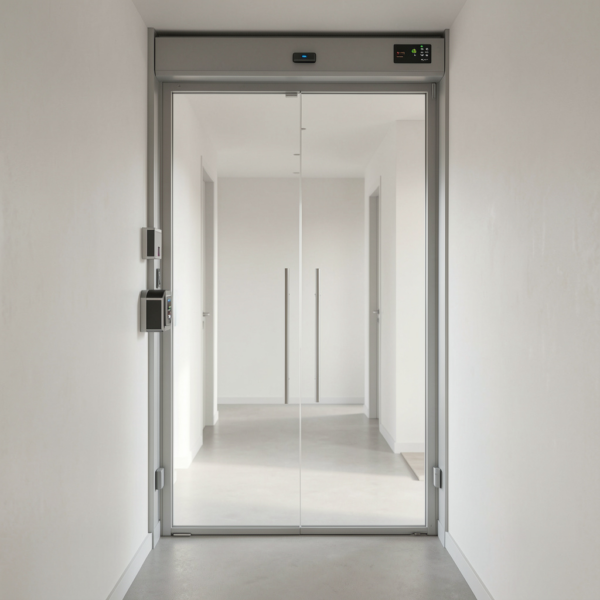
An Automatic Swing Door Opener is a motorized device that opens and closes a hinged door automatically. Unlike sliding doors, which require side clearance, swing doors rotate on hinges and are often easier to retrofit into existing door frames.
Activation methods typically include:
- Motion sensors (radar/infrared)
- Push buttons or touchless plates
- Remote controls or mobile apps
- Access control (RFID cards, keypads, biometrics)
Once triggered, the operator opens the door to a preset angle, holds it open for a defined time, and then closes it smoothly. Advanced models allow fine-tuning of speed, force, hold-open duration, and safety sensitivity.
Why Narrow Corridors Need Specialized Door Solutions
Standard doors are not designed with tight spaces in mind. In narrow corridors, they can create more problems than they solve.
Common challenges include:
- Obstruction of passage: A swinging door can block most of the corridor width.
- Accessibility barriers: Wheelchair users or people carrying items struggle with manual operation.
- Collision risk: Doors can swing into oncoming traffic with limited visibility.
- Bottlenecks: People queue while opening or holding doors.
An Automatic Swing Door Opener addresses these issues by delivering predictable, controlled movement and optional touchless operation, reducing friction in everyday use.
Key Benefits of Automatic Swing Door Openers in Tight Spaces
Universal Accessibility
Automatic doors remove the need for physical effort. This is critical for inclusive design and compliance with accessibility standards in healthcare, public buildings, and multi-residential developments.
Enhanced Safety
Integrated sensors detect obstacles and stop or reverse the door if something is in the path. Soft-start and soft-stop functions prevent sudden movements.
Space Optimization
You can limit the opening angle and choose the most efficient swing direction, preserving valuable corridor width.
Improved Traffic Flow
Automated opening reduces delays. In busy corridors, this translates into smoother movement and fewer queues.
Hygiene and Touchless Entry
Touchless activation minimizes contact—ideal for hospitals, labs, and food-related environments.
Professional Aesthetics
Modern operators are compact and sleek, contributing to a clean, high-tech look.
How Automatic Swing Door Openers Work
At a high level, the system combines sensing, control, and motion:
- Motor and drive mechanism: Powers the door movement.
- Controller: Interprets signals and executes programmed behavior.
- Sensors: Detect approach, presence, and obstacles.
- Activation devices: Buttons, keypads, or readers trigger the system.
Typical cycle:
- A user approaches or activates the device.
- The controller signals the motor to open the door.
- The door opens to the configured angle and holds.
- After the hold time, the door closes smoothly.
- Safety sensors monitor throughout to prevent contact.
Advanced systems adapt speed and force based on door weight, wind pressure, and usage patterns.
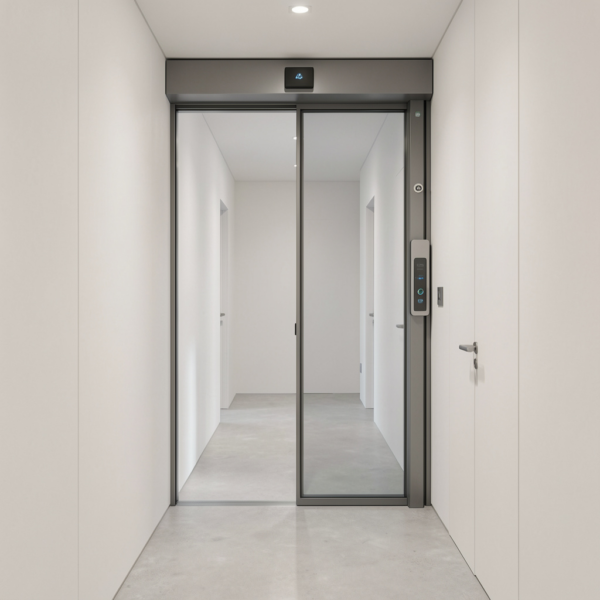
Types of Automatic Swing Door Openers
Low Energy Operators
Ideal for light to moderate traffic. They open more slowly and are energy-efficient—perfect for offices and residential settings.
Full Energy Operators
Built for high-traffic areas like hospitals and shopping centers. They open faster and can handle heavier doors.
Push-Button Activated
User-initiated opening via wall plates or wireless switches—useful where controlled activation is required.
Sensor-Based (Hands-Free)
Automatically detect movement for seamless entry—great for hygiene and convenience.
Access-Control Integrated
Combine with card readers, keypads, or biometrics for secure areas.
Choosing the Right Opener for Narrow Corridors
Selecting the right Automatic Swing Door Opener depends on several factors:
- Corridor width: Determines maximum opening angle and swing direction.
- Traffic volume: Guides whether to choose low or full energy operators.
- Door size and weight: Affects motor capacity and performance.
- User profile: Consider accessibility needs (wheelchairs, trolleys).
- Security requirements: May require integration with access control.
- Noise sensitivity: Offices and clinics benefit from quiet operation.
A proper site assessment ensures the system is tailored to your environment.
Design Strategies to Maximize Space
Optimize Swing Direction
Where possible, swing the door into a less congested area or recess it into a niche.
Limit Opening Angle
In tight corridors, a 70–90° opening can be sufficient and safer than a full 120–180° swing.
Use Offset Hinges or Special Arms
Certain operator arms reduce the footprint of the swing path.
Pair with Hold-Open Logic
In peak times, keeping doors open temporarily can reduce repeated cycles and congestion.
Consider Double-Leaf Configurations
For wider openings, coordinated double doors can improve flow without increasing obstruction.
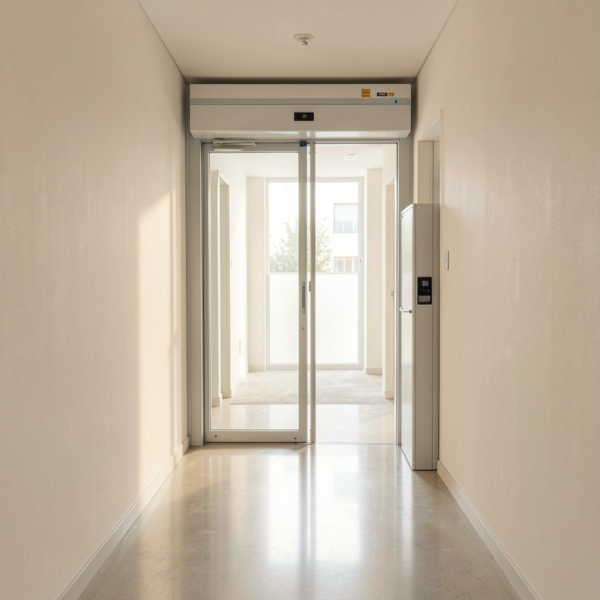
Installation Best Practices
- Accurate alignment: Misaligned hinges or frames lead to poor performance.
- Correct mounting height and arm geometry: Ensures smooth motion and durability.
- Sensor placement: Position approach sensors to avoid false triggers and blind spots.
- Cable management: Protect wiring from wear and interference.
- Thorough commissioning: Calibrate speed, force, and safety thresholds.
Professional installation is strongly recommended to ensure compliance and longevity.
Safety Features and Compliance
Modern systems include multiple layers of protection:
- Obstacle detection: Stops or reverses upon resistance.
- Presence sensors: Prevent closing if someone is in the doorway.
- Speed control: Adjustable opening/closing speeds.
- Manual override: Allows use during power outages.
- Emergency integration: Can interface with fire alarms for fail-safe behavior.
Always ensure compliance with local standards and accessibility regulations.
Applications Across Industries
Healthcare
Smooth movement for patients, beds, and equipment; improved hygiene with touchless entry.
Offices
Hands-free access between departments; improved workflow and professionalism.
Residential Buildings
Convenient access for residents, especially in shared corridors and entrances.
Retail
Welcoming, barrier-free entry that enhances customer experience.
Education
Safe, accessible movement for students and staff across campus facilities.
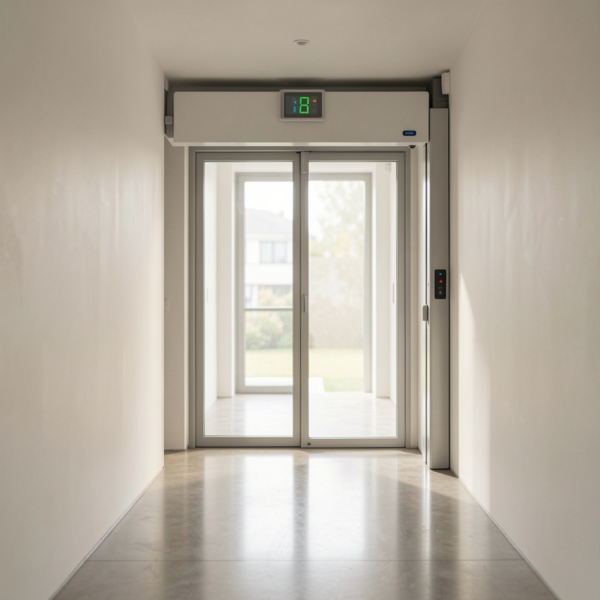
Integration with Smart Building Systems
An Automatic Swing Door Opener can be part of a larger ecosystem:
- Access control: Sync with card readers or mobile credentials.
- Intercom systems: Enable remote unlocking.
- CCTV: Coordinate entry events with video recording.
- Building management systems (BMS): Monitor usage and status.
Integration enables automation scenarios like scheduled locking, occupancy-based behavior, and remote diagnostics.
Maintenance and Longevity
Routine care keeps your system reliable:
- Inspect sensors and wiring regularly.
- Clean lenses and covers to ensure accurate detection.
- Lubricate mechanical parts as recommended.
- Check motor and arm wear over time.
- Test safety functions periodically.
Preventive maintenance reduces downtime and extends service life.
Common Challenges and Practical Solutions
While upfront costs vary by system type and installation complexity, the return on investment is compelling:
- Lower operational friction: Faster movement reduces delays.
- Reduced wear and tear: Controlled motion extends door life.
- Improved accessibility compliance: Avoids costly retrofits later.
- Enhanced property value: Modern, user-friendly infrastructure.
Over time, efficiency gains and user satisfaction outweigh initial expenses.
Energy Efficiency and Sustainability
Modern operators are designed with efficiency in mind:
- Low standby power consumption
- Adaptive speed control to minimize energy use
- Integration with BMS for scheduled operation
In green buildings, these features contribute to sustainability goals while maintaining performance.
Future Trends in Automatic Door Technology
The next generation of automatic doors will be even smarter:
- AI-assisted sensing: Better detection of intent and movement patterns.
- IoT connectivity: Remote monitoring, updates, and analytics.
- Predictive maintenance: Early alerts based on performance data.
- Enhanced cybersecurity: Secure communication and firmware protection.
These innovations will further improve reliability, safety, and user experience.
Best Practices Checklist
- Measure corridor width and plan swing direction carefully.
- Choose the right operator type based on traffic and door weight.
- Prioritize safety features and compliance.
- Ensure professional installation and commissioning.
- Schedule regular maintenance and inspections.
Conclusion: Unlock Efficiency in Narrow Spaces
Narrow corridors don’t have to limit functionality. With the right Automatic Swing Door Opener, you can transform tight spaces into efficient, accessible, and safe pathways. From improved traffic flow and hygiene to seamless integration with smart systems, automatic swing doors deliver real-world benefits across industries.
Whether you’re upgrading an existing building or planning a new project, investing in a well-designed automatic door solution ensures long-term performance, compliance, and user satisfaction.