In modern commercial and public buildings, entrances must do more than simply open and close. They must remain safe, accessible, and reliable under a wide range of conditions—including power failures, equipment faults, and emergency events. This is why redundancy and backup planning are essential in any professional automatic sliding door installation.
An automatic sliding door often sits on a critical path of travel, such as a main entrance, hospital corridor, or emergency egress route. If the system fails incorrectly, it can disrupt operations, create safety risks, and potentially violate building regulations. Conversely, a well-designed system will continue to provide safe egress and predictable behaviour even when components fail.
This in-depth guide explores how redundancy works in automatic sliding doors, what backup systems are available, how they should be designed and maintained, and what building owners and installers should prioritise to ensure long-term reliability.
What Is an Automatic Sliding Door?
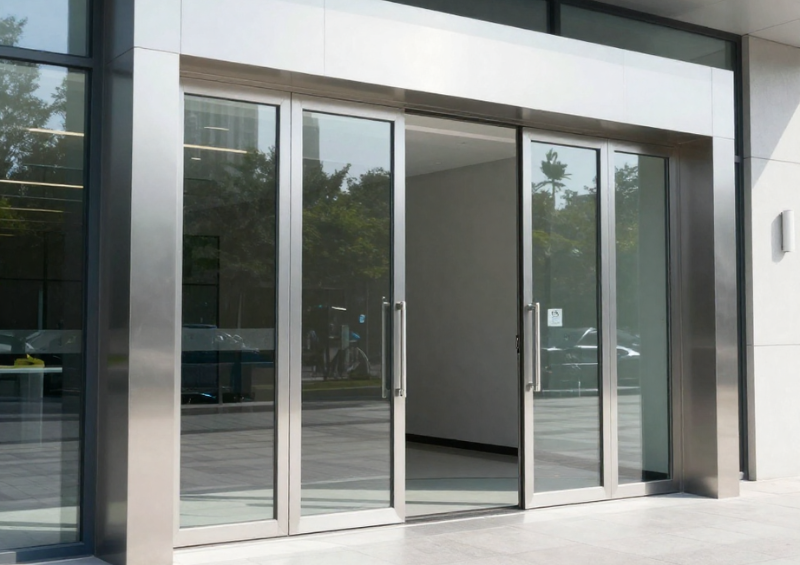
An automatic sliding door is a powered pedestrian entrance that opens horizontally along a track when triggered by motion sensors, push plates, or access control devices. These systems are widely used because they provide hands-free access, improve traffic flow, and support accessibility compliance.
Behind the smooth motion is a coordinated system of motors, controllers, sensors, safety devices, and mechanical components. Each part must function correctly for safe operation. Because these doors often serve high-traffic or life-safety roles, designers must assume that failures will occur at some point during the system’s lifespan.
Redundancy ensures that when failures do occur, the door behaves in a safe and predictable manner rather than becoming a hazard.
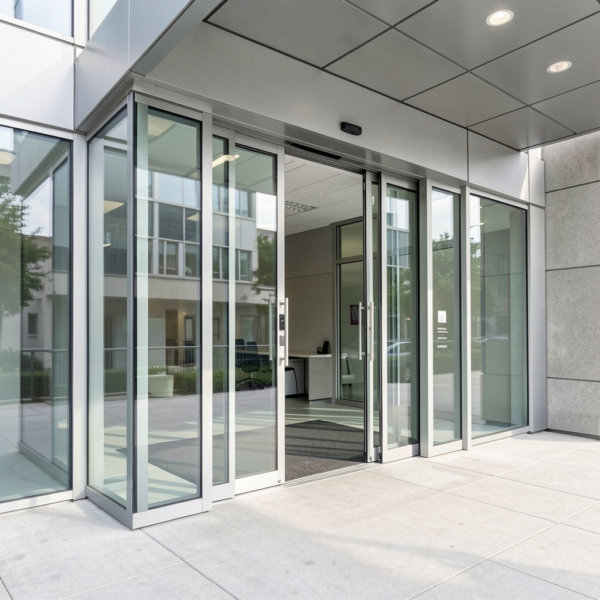
Why Redundancy Is Critical for Automatic Entrances
Redundancy means building additional layers of protection into a system so that a single fault does not create an unsafe condition. In the context of automatic sliding door systems, redundancy focuses heavily on maintaining safe egress and preventing entrapment.
Without proper backup strategies, failures can lead to doors that remain closed during emergencies, sensors that fail to detect pedestrians, or controllers that stop responding entirely. These scenarios can interrupt business operations and, more importantly, put building occupants at risk.
Well-designed automatic sliding door installations use multiple overlapping safeguards. These may include battery backup, fail-safe locking, redundant safety sensors, supervised control electronics, and manual override capability. Together, these layers create a resilient entrance system that continues to protect users even under abnormal conditions.
Common Failure Modes in Sliding Door Systems
Understanding redundancy begins with understanding what can go wrong. Automatic sliding door systems are exposed to both electrical and mechanical risks throughout their lifecycle.
Electrical issues are among the most common. Mains power outages, damaged wiring, failed power supplies, or controller faults can all interrupt normal operation. Mechanical wear is another reality, especially in high-traffic environments where belts, rollers, and tracks experience constant use.
Sensor-related problems also occur. Motion detectors can drift out of alignment, presence sensors may become obstructed by dust, and access control signals can fail due to network or hardware issues. Environmental factors such as wind, temperature changes, and debris can further complicate performance.
Because these risks are unavoidable over time, redundancy must be built into the automatic sliding door design from the beginning.
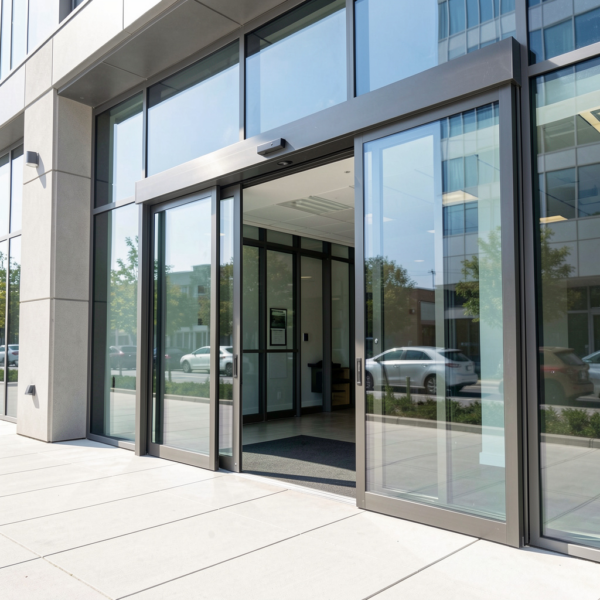
Fail-Safe Design Philosophy
Most professional automatic sliding door systems follow a fail-safe philosophy. Fail-safe means that when a fault occurs—particularly a power failure—the door defaults to the safest possible condition for occupants.
In pedestrian entrances, the safest condition usually means allowing free exit. This is why many systems are designed so that electric locks release when power is lost and the operator becomes manually movable.
Fail-safe behaviour typically includes automatic unlocking, motor back-drive capability, and safe shutdown of closing functions if safety sensors report a fault. Fire alarm signals also override normal operation to ensure the door responds appropriately during emergencies.
This philosophy is fundamental to modern automatic sliding door safety and is often required for code compliance.
Battery Backup Systems and Their Role
One of the most visible redundancy features in an automatic sliding door is the battery backup system. Battery backup provides temporary power when mains electricity is unavailable, allowing the door to continue functioning in a controlled way.
Depending on the configuration, the system may continue normal operation for a limited number of cycles, perform a single emergency opening, or move to a predefined safe position. In healthcare and critical facilities, battery backup often supports multiple cycles to maintain accessibility during short outages.
Battery sizing is an important design consideration. It must account for door weight, motor current, expected duty cycles, and the required hold-open duration. Undersized batteries are a common weakness in poorly specified systems.
When properly implemented, battery backup significantly improves both safety and operational continuity.
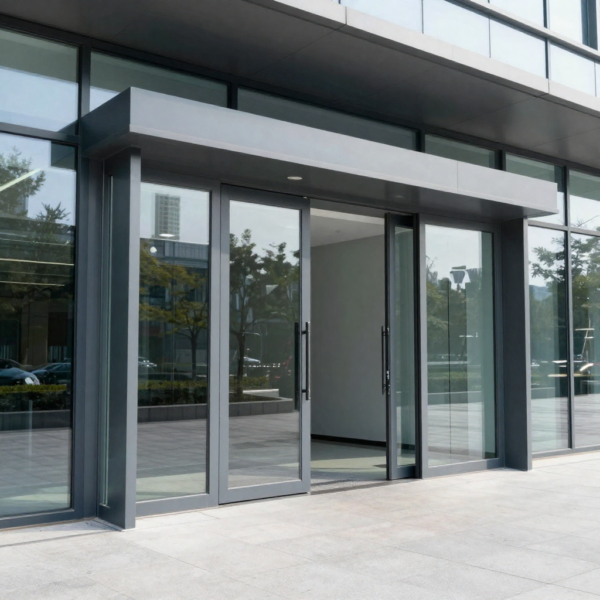
Manual Override and Breakout Capability
Even with battery backup in place, manual operation remains a crucial safety layer. Most automatic sliding door systems are designed so occupants can open the door by hand if the powered mechanism becomes unavailable.
Manual override typically relies on a back-driveable motor or a breakout mechanism that allows the door panels to slide or swing manually. The goal is to ensure that no special tools, keys, or technical knowledge are required during an emergency.
Good manual override design focuses on low opening force, intuitive operation, and smooth movement. If occupants struggle to move the door during a power outage, the redundancy strategy is incomplete.
Manual capability serves as the final safeguard in the redundancy hierarchy.
Redundant Safety Sensors and Detection Zones
Safety sensors are another critical area where redundancy is often applied. Automatic sliding door systems usually include motion sensors to trigger opening and presence sensors to prevent the door from closing on pedestrians.
High-quality installations often use overlapping detection zones or monitored safety inputs so that a single sensor failure does not immediately create a hazard. Some advanced operators continuously supervise sensor status and will inhibit door closing if a fault is detected.
In busy environments such as hospitals and shopping centres, additional threshold protection or light curtain systems may be used to provide enhanced coverage. The goal is to ensure that people in the doorway are reliably detected under all conditions.
Redundant sensing greatly reduces the risk of accidental contact.
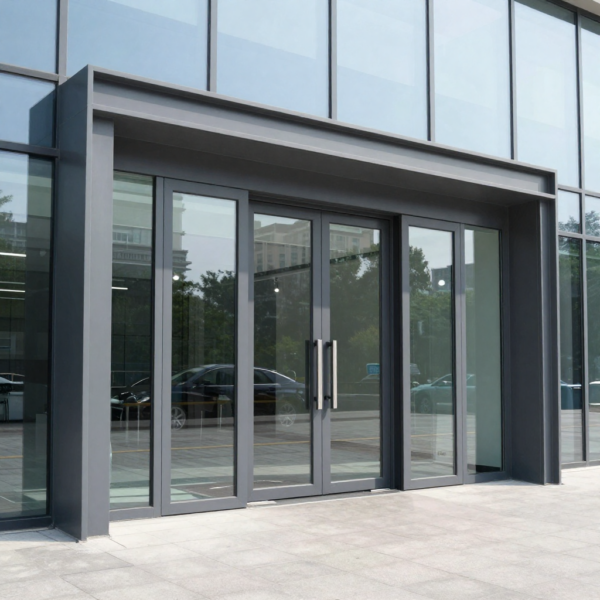
Fire Alarm Integration and Emergency Response
Fire system integration is one of the most important aspects of automatic sliding door redundancy. When the building fire alarm activates, the door must respond according to the fire engineering design.
In many cases, the automatic sliding door will open and remain open to support evacuation. In other scenarios—such as smoke compartmentation—the door may close under controlled conditions while still allowing manual egress.
The key requirement is that the fire alarm interface be hardwired, reliable, and regularly tested. Relying solely on software communication is generally not acceptable for life-safety functions.
Proper fire integration ensures the door behaves predictably during emergencies, which is essential for both compliance and occupant safety.
Power Supply Resilience Beyond Batteries
While battery backup is common, some facilities require additional layers of power redundancy. Hospitals, airports, and major commercial buildings may incorporate uninterruptible power supplies (UPS), generator-backed circuits, or dual power feeds.
These measures ensure the automatic sliding door continues operating even during extended outages. Dedicated emergency circuits are sometimes used for entrances that serve as primary evacuation routes.
When designing high-reliability entrances, power redundancy should be evaluated as part of the overall building resilience strategy rather than treated as an afterthought.
Intelligent Monitoring and Fault Reporting
Modern automatic sliding door systems increasingly include built-in diagnostics. These systems monitor motor performance, sensor status, battery health, and operating cycles.
For facility managers, this visibility is extremely valuable. It enables predictive maintenance, faster troubleshooting, and better compliance documentation. Some advanced systems can even send alerts when performance begins to degrade.
Remote monitoring is becoming more common in large facilities, allowing service providers to identify issues before they result in downtime. This trend is transforming redundancy from a purely reactive strategy into a proactive reliability tool.
Maintenance as a Critical Redundancy Layer
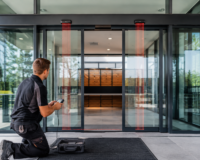
Even the most sophisticated automatic sliding door system cannot remain reliable without proper maintenance. Preventive servicing acts as an additional layer of protection by catching wear and misalignment early.
Routine inspections should verify smooth door travel, clean sensor lenses, healthy battery condition, and proper safety response. Over time, components such as belts, rollers, and batteries will naturally degrade, and timely replacement is essential.
Facilities that follow structured maintenance programs typically experience far fewer emergency failures than those that rely on reactive repairs.
Common Design and Installation Mistakes
Many redundancy failures are the result of avoidable planning errors. One frequent mistake is omitting battery backup in high-traffic entrances where continuity is important. Another is relying on a single safety sensor without proper monitoring.
Improper fire alarm integration is also a common compliance issue. Some installations provide manual override in theory but fail to ensure the door can be easily moved in practice.
Undersized power supplies, poor cable management, and lack of maintenance planning can further undermine system reliability. Attention to detail during design and commissioning is critical for long-term success.
When to Upgrade an Existing Automatic Sliding Door
Older automatic sliding door systems may lack modern redundancy features. If a system frequently experiences faults, lacks battery backup, or shows inconsistent sensor performance, an upgrade may be warranted.
Newer operators typically offer improved safety monitoring, smarter motor control, and better energy efficiency. They also integrate more easily with modern building management and access control platforms.
Upgrading is particularly worth considering in high-traffic facilities where downtime has significant operational impact.
See how to choose the right automatic sliding door kit
Future Trends in Automatic Sliding Door Reliability
The next generation of automatic sliding door systems is becoming increasingly intelligent. Brushless motors are improving efficiency and reducing wear. Smart battery management is extending backup reliability. Sensor fusion and AI-assisted detection are enhancing safety accuracy.
Cloud connectivity is also enabling remote diagnostics and predictive maintenance, allowing issues to be addressed before they cause failures. As buildings become smarter, automatic sliding door systems will play an increasingly connected role in overall facility resilience.
Conclusion
Redundancy and backup planning are fundamental to the safe and reliable operation of any automatic sliding door system. From battery backup and manual override to redundant sensors and intelligent monitoring, each layer contributes to maintaining accessibility and protecting occupants when faults occur.
For building owners and facility managers, investing in proper redundancy is an investment in safety, compliance, and business continuity. For installers and specifiers, careful design and thorough testing ensure the entrance performs correctly when it matters most.
In modern high-traffic environments, an automatic sliding door must be engineered not only for smooth daily operation but for dependable performance under every foreseeable failure condition.