Outdoor alarm sirens are one of the most visible and effective deterrents in any modern security system. A loud external alert combined with a flashing strobe can quickly draw attention, discourage intruders, and notify occupants or neighbours that something is wrong. However, the effectiveness of any outdoor siren depends on one critical factor that is often underestimated: reliable power.
If a siren loses power during a storm, blackout, or tampering attempt, its ability to warn and deter disappears instantly. This is why understanding the available power backup strategies for the Vision Z-Wave Outdoor Siren is essential for homeowners, installers, and security professionals.
The Vision Z-Wave Outdoor Siren is designed to be flexible and robust, but like any wireless security device, its performance in real-world conditions depends heavily on how it is powered and maintained. Outdoor environments introduce additional challenges such as temperature extremes, moisture, and limited physical access, making proper power planning even more important.
In this extended guide, we will explore how the Vision Z-Wave Outdoor Siren is powered, what backup options are available, how to maximise runtime and reliability, and how to design a resilient installation that continues working when it matters most.
What Is the Vision Z-Wave Outdoor Siren?
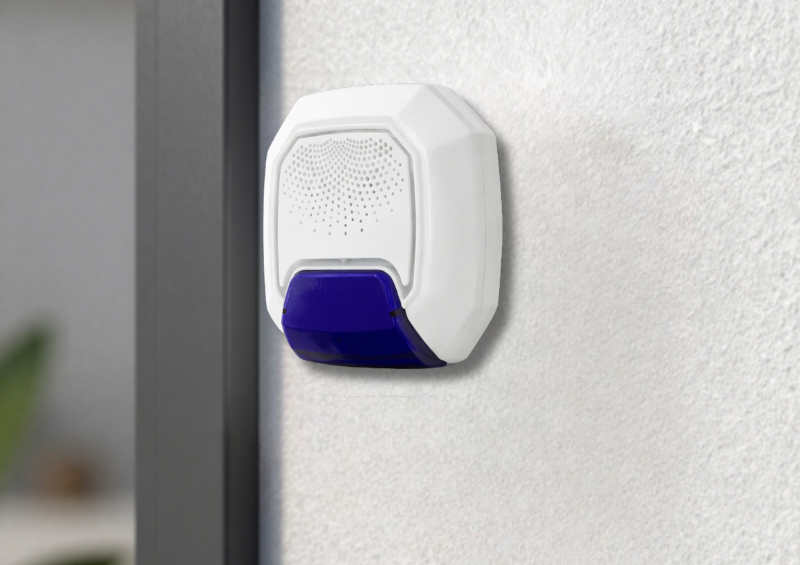
The Vision Z-Wave Outdoor Siren is a wireless security accessory designed to integrate with Z-Wave alarm systems and smart home hubs. Its primary role is to provide a high-decibel audible alarm and visual strobe alert when triggered by an intrusion, panic event, or automation rule.
Because it operates over the Z-Wave wireless protocol, the siren can be installed in flexible outdoor locations without the need for heavy signal wiring. This makes it popular for residential homes, small businesses, and light commercial deployments.
Typical Features
Most installations of the Vision Z-Wave Outdoor Siren include:
- Loud siren output (often 105–110 dB range)
- Integrated strobe light for visual alert
- Z-Wave Plus wireless communication
- Weather-resistant enclosure
- Tamper detection
- Low battery reporting
- External power support
- Internal battery backup
These capabilities make it a powerful deterrent—but only if the device remains powered and connected.

Why Power Backup Matters for Outdoor Sirens
Outdoor sirens are expected to operate during the worst possible conditions. Ironically, those same conditions are often when power problems occur.
High-Risk Moments for Power Loss
Power failures commonly happen during:
- Severe storms
- Grid outages
- Lightning events
- Intentional tampering
- Electrical faults
- Construction damage
If the Vision Z-Wave Outdoor Siren loses power during one of these moments, the alarm system may still trigger internally, but the external deterrent effect is lost.
Security Impact of Siren Failure
Without reliable backup:
- Intruders face less deterrence
- Neighbours may not be alerted
- Occupants may miss the alarm
- Insurance and compliance risks may increase
- System trustworthiness declines
For this reason, professional-grade installations always treat power backup as a core design requirement, not an optional extra.
How the Vision Z-Wave Outdoor Siren Is Normally Powered
The Vision Z-Wave Outdoor Siren supports flexible power configurations to suit different installation types.
Battery-Only Operation
In many residential setups, the siren operates entirely on internal batteries. This allows for fully wireless installation with minimal setup complexity.
Advantages
- No external wiring required
- Faster installation
- Flexible mounting location
- Lower upfront installation cost
Limitations
- Requires regular battery replacement
- Runtime depends on usage frequency
- Performance affected by temperature
- Higher long-term maintenance burden
Battery-only operation can work well in low-risk environments but must be actively monitored.
External DC Power Supply
The siren can also be powered using an external low-voltage DC supply. This provides continuous operating power while preserving the wireless communication benefits.
Advantages
- Stable continuous power
- Reduced battery drain
- More consistent long-term operation
- Lower maintenance frequency
Limitations
- Requires wiring
- Installation complexity increases
- Vulnerable if cable is cut (without battery backup)
For professional installations, external power is often combined with internal batteries.
Built-In Battery Backup: The Critical Safety Net
One of the most important reliability features of the Vision Z-Wave Outdoor Siren is its internal battery backup capability.
Automatic Switchover Behaviour
When properly configured:
- External power runs the siren during normal operation
- Internal batteries remain in standby mode
- If external power fails, the siren switches automatically
- Alarm and tamper functions continue
This seamless transition ensures the device remains operational even if power is interrupted.
Why Automatic Backup Matters
Manual intervention during an emergency is unrealistic. Automatic battery switchover ensures:
- No security gaps
- Continuous deterrence
- Protection against wire cutting
- Better resilience during storms
For outdoor security devices, this feature is essential.
Battery Technology Options and Performance
The choice of battery chemistry significantly affects real-world performance.
Alkaline Batteries
Often used in basic installations.
Pros
- Low upfront cost
- Widely available
- Easy to replace
Cons
- Shorter lifespan
- Poor cold-weather performance
- Voltage drops under load
- Higher leakage risk over time
Alkaline batteries are generally acceptable for mild climates and light usage.
Lithium Batteries
Strongly recommended for outdoor sirens.
Pros
- Much longer service life
- Excellent cold-weather performance
- Stable voltage output
- Lower self-discharge
- Better reliability outdoors
Cons
-
Higher upfront cost
For most outdoor deployments of the Vision Z-Wave Outdoor Siren, lithium batteries provide the best long-term value and reliability.

Designing a Hybrid Power Configuration
For maximum resilience, many installers implement a hybrid power design.
What Is Hybrid Power?
Hybrid power combines:
- External DC supply for daily operation
- Internal batteries for automatic backup
Benefits of Hybrid Setup
This approach provides:
- Continuous primary power
- Automatic failover protection
- Resistance to cable tampering
- Extended battery lifespan
- Higher overall system reliability
Recommended Use Cases
Hybrid power is ideal for:
- High-security homes
- Commercial premises
- Remote properties
- Harsh weather regions
- Insurance-sensitive installations
For most professional deployments, hybrid power is considered best practice.
Z-Wave Network Dependencies During Power Loss
Power planning must extend beyond the siren itself. Because the Vision Z-Wave Outdoor Siren relies on wireless commands, the broader Z-Wave ecosystem must remain functional.
Critical Supporting Devices
For the siren to activate during an outage:
- The Z-Wave hub must stay powered
- The alarm panel must remain online
- Z-Wave routing nodes should remain active
If the siren has power but the hub is offline, it may never receive the trigger command.
Best Practice: Whole-System Backup
Professional installations often include:
- UPS backup for the Z-Wave hub
- Battery-backed alarm panel
- Strategic placement of powered Z-Wave repeaters
This ensures the entire alarm chain remains intact.

Environmental Challenges for Outdoor Installations
Outdoor sirens face harsh conditions that directly impact power performance.
Cold Weather
Low temperatures reduce battery capacity significantly. Lithium batteries maintain performance far better than alkaline cells in cold climates.
Heat and Sun Exposure
Direct sun can:
- Accelerate battery degradation
- Increase internal temperature
- Shorten electronics lifespan
Mounting in shaded locations improves longevity.
Moisture and Rain
Although weather-resistant, long-term moisture exposure can affect seals and battery contacts. Proper installation height and positioning help mitigate risk.
Wind and Vibration
Loose mounting can cause intermittent power contact or premature wear. Always use secure, vibration-resistant mounting.
Monitoring Battery Health and Power Status
One major advantage of Z-Wave devices is remote diagnostics.
Typical Status Reports
The Vision Z-Wave Outdoor Siren can usually report:
- Battery level percentage
- Low battery alerts
- Power loss events
- Tamper alerts
- Device health status
Monitoring Best Practices
To maintain reliability:
- Enable low battery notifications
- Review device status monthly
- Replace batteries before full depletion
- Test siren after maintenance
Proactive monitoring prevents unexpected failures.

Maintenance Strategy for Long-Term Reliability
Even the best power design requires routine care.
Quarterly Maintenance
Every 3–6 months:
- Check battery status
- Trigger a test alarm
- Inspect enclosure seals
- Verify Z-Wave signal strength
- Confirm tamper switch operation
Annual Maintenance
Once per year:
- Replace batteries (or per manufacturer guidance)
- Inspect external wiring
- Clean housing
- Perform full system test
Documenting maintenance is especially valuable for commercial sites.
Common Power Backup Mistakes to Avoid
Many outdoor siren failures stem from preventable issues.
Relying on Battery Without Alerts
Always enable low-battery notifications.
Forgetting Hub Backup
A powered siren cannot activate if the controller is offline.
Using Low-Quality Batteries
Cheap cells often fail prematurely outdoors.
Poor Mounting Location
Avoid direct sun and water runoff zones.
Skipping Real-World Testing
Always simulate power loss during commissioning.
Avoiding these mistakes dramatically improves system reliability.
Choosing the Right Power Strategy for Your Site
Your ideal configuration depends on risk level and environment.
Low-Risk Residential
Battery-only may be acceptable if:
- Alerts are enabled
- Access is easy
- Climate is mild
- Outages are rare
Medium-Risk Residential
Recommended:
- Lithium batteries
- Regular monitoring
- Consider external power
High-Security Homes
Strongly recommended:
- Hybrid power
- Hub UPS backup
- Scheduled maintenance
Commercial and Critical Sites
Best practice:
- Hybrid power configuration
- Lithium batteries
- Full system backup
- Professional installation
- Documented maintenance
Future Trends in Outdoor Siren Power Systems
Outdoor security devices continue to evolve rapidly.
Ultra-Long-Life Lithium Packs
Multi-year battery life is becoming more common.
Predictive Battery Analytics
Future systems will forecast battery failure in advance.
Solar-Assisted Sirens
Some outdoor sirens are beginning to incorporate solar charging support.
Lower-Power Z-Wave Designs
Improvements in Z-Wave efficiency will extend runtime and reliability.
These innovations will further enhance devices like the Vision Z-Wave Outdoor Siren.
Conclusion
Reliable power is the foundation of effective outdoor alarm performance. The Vision Z-Wave Outdoor Siren offers flexible power options, but achieving true resilience requires thoughtful planning and proper maintenance.
By selecting the right battery chemistry, implementing hybrid power where appropriate, protecting the Z-Wave network, and monitoring device health proactively, you can ensure your outdoor siren remains operational when security matters most.
Whether for residential protection or commercial deployment, investing in the correct power backup strategy transforms your siren from a basic alert device into a dependable, always-ready security asset.