Upgrading a building’s communication infrastructure used to mean tearing out walls, replacing cabling, and committing to high installation costs. Many apartment buildings, office blocks, and mixed-use developments were wired decades ago with analogue intercom systems that no longer meet modern expectations.
Today, tenants expect high-definition video calls, smartphone access, remote unlocking, and integration with smart building platforms. Property owners expect reliability, scalability, and long-term value.
Bridging that gap is where 2-wire IP intercom systems come into play. Among the leading retrofit-ready solutions is the Akuvox 2-Wire IP Intercom Kit, designed to deliver full IP functionality over existing two-wire infrastructure.
However, choosing the right kit is only half the equation. Understanding network topology—how devices are connected, powered, and structured—determines whether your system will be stable, scalable, and future-proof.
This guide explains the topology of 2-wire IP intercom systems in detail and shows how the Akuvox 2-Wire IP Intercom Kit fits into real-world building environments.
Understanding 2-Wire IP Intercom Technology
Traditional analogue intercoms transmitted audio signals through simple wiring circuits. They were designed for voice-only communication and basic door release functionality. They were not built for video, IP routing, or network-based integration.
A 2-wire IP intercom system changes the game. It uses specialised signal conversion technology to transmit digital IP data across legacy two-conductor wiring. This means you can deploy modern IP-based features without replacing the existing cable backbone.
The Akuvox 2-Wire IP Intercom Kit includes conversion modules that translate Ethernet/IP traffic into signals suitable for two-wire transmission. On the other side, the signal is decoded back into IP data for indoor monitors or door stations.
The result is a hybrid infrastructure: physically old wiring, digitally modern communication.
What Is Network Topology in Intercom Systems
Network topology refers to the physical and logical arrangement of devices within a communication system. It determines how signals travel between components, how power is distributed, and how faults are isolated.
In a 2-wire IP intercom system, topology affects:
- Signal stability
- Video quality
- Audio latency
- Expansion capability
- Troubleshooting efficiency
- Long-term reliability
- Poor topology planning can lead to dropped calls, delayed video streams, or inconsistent device performance. Proper topology ensures smooth communication across the building.
The Two Layers of 2-Wire IP Topology
The topology of the Akuvox 2-Wire IP Intercom Kit operates across two layers.
The first layer is the IP network layer. This includes routers, switches, SIP servers, or cloud platforms.
The second layer is the two-wire distribution layer. This is where power and converted IP data travel across legacy cables to indoor monitors and door stations.
The gateway or distributor acts as a bridge between these two layers. Understanding how these layers interact is essential for installation planning.
Star Topology in 2-Wire IP Systems
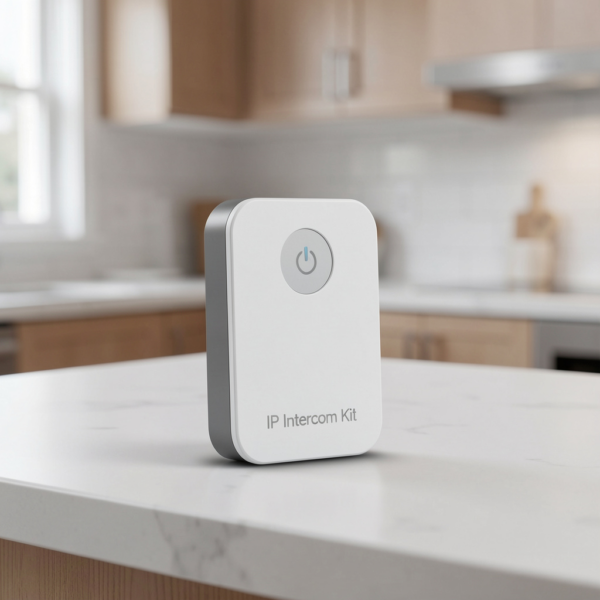
Star topology is one of the most stable and scalable configurations. In this setup, each indoor monitor connects directly back to a central distributor.
In the context of the Akuvox 2-Wire IP Intercom Kit, the central distributor or 2-wire switch acts as the hub. Each apartment or office unit runs its two-wire cable back to this hub.
This configuration offers several advantages.
Fault isolation is straightforward because if one line fails, only one endpoint is affected. Performance remains stable because bandwidth is distributed evenly. Expansion is also simpler because new endpoints can be added without affecting existing ones.
Star topology is ideal for new installations or structured retrofits where wiring can be rationalised.
Bus Topology in Legacy Buildings
Many older buildings were wired using bus topology. In this configuration, multiple units share the same cable path in a daisy-chain arrangement.
While the Akuvox 2-Wire IP Intercom Kit can operate within bus-style wiring, careful planning is required. Shared cable runs increase the risk of signal degradation if too many devices are connected to a single segment.
Bus topology is often unavoidable in retrofit projects. In such cases, installers must calculate load limits and cable distances to maintain performance.
Hybrid Topology in Real-World Installations
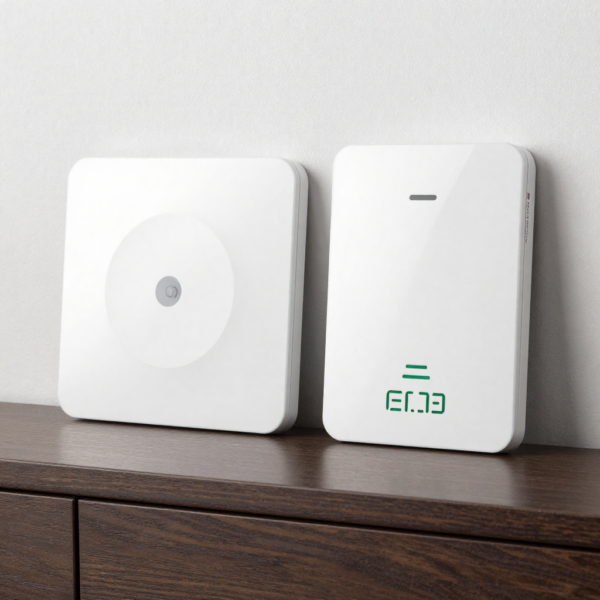
In practice, most buildings use hybrid topology. A central riser may use bus wiring between floors, while individual units use star wiring within apartments.
The flexibility of the Akuvox 2-Wire IP Intercom Kit makes it well suited to hybrid environments. Its modular design allows integration across varied wiring patterns without requiring total replacement.
Hybrid topology demands professional assessment but offers a balanced approach between cost and performance.
Power Distribution Across Two Wires
Unlike standard Ethernet-based intercoms that rely on PoE switches, 2-wire systems often deliver both power and data over the same pair.
This simplifies installation but introduces power management considerations.
Voltage drop must be calculated for long cable runs. Each monitor consumes power, and cumulative load can impact performance if not properly distributed.
The distributor modules in the Akuvox 2-Wire IP Intercom Kit are engineered to regulate power efficiently, maintaining stable voltage across connected devices.
Cable Distance and Signal Integrity
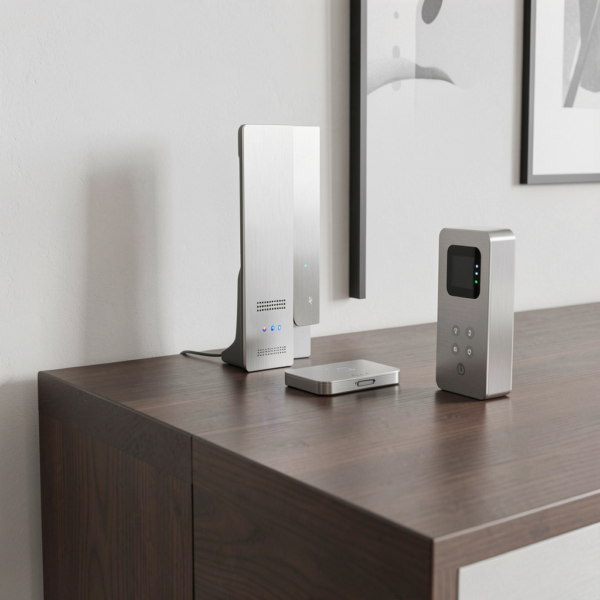
Cable length directly impacts performance. While 2-wire IP systems can operate over considerable distances, there are practical limits.
Long cable runs increase resistance and may reduce voltage at endpoints. Excessive distance can also introduce data instability.
When planning topology, buyers should evaluate:
- Total cable length per segment
- Number of connected monitors
- Power consumption per endpoint
- Cable quality and age
This analysis ensures that the system operates reliably from day one.
Integration with IP Networks
The IP side of the Akuvox 2-Wire IP Intercom Kit integrates with standard networking equipment. Once signals are converted, they behave like any other IP device.
This allows integration with:
- SIP PBX systems
- Mobile applications
- Cloud-based management platforms
- Access control systems
- Video recording servers
For larger installations, VLAN segmentation is recommended to isolate intercom traffic from general data networks.
Scalability and Future Expansion
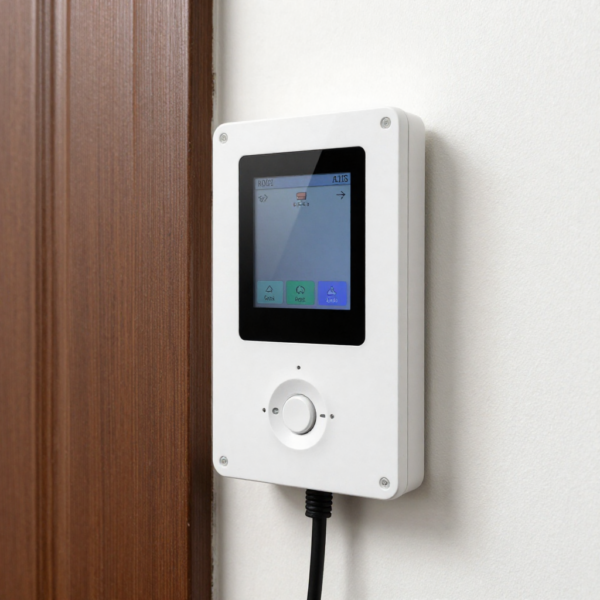
A well-designed topology allows for smooth expansion.
In star configurations, additional units can be connected to unused distributor ports. In bus-based environments, expansion may require additional segmentation or new distribution modules.
The modular nature of the Akuvox 2-Wire IP Intercom Kit supports phased deployment. This is especially useful in staged renovations or growing developments.
Fault Tolerance and Maintenance
Topology affects how quickly faults can be identified and resolved.
Star topology isolates faults to single endpoints. Bus topology may require tracing through multiple connections to locate issues.
For property managers, easier fault isolation reduces service time and cost.
Residential Deployment Example
In a mid-rise apartment building, a central equipment room houses the distributor and gateway. Two-wire cables run to each unit.
Indoor monitors connect directly to the distributor. The door station connects through the same infrastructure.
Residents use indoor monitors or smartphone apps to answer calls and unlock doors. The building manager accesses the IP layer for maintenance.
This is a typical deployment scenario for the Akuvox 2-Wire IP Intercom Kit.
Commercial Deployment Example
In office buildings, the intercom may integrate with access control and internal communication systems.
Hybrid topology may connect floor-level distributors to a central IP switch.
Integration with SIP allows desk phones or software clients to answer door calls.
This flexibility makes the Akuvox 2-Wire IP Intercom Kit suitable for mixed-use properties.
Security Considerations
Because 2-wire systems connect to IP networks, cybersecurity is critical.
Best practices include:
- Changing default credentials
- Enabling encryption where available
- Isolating intercom traffic via VLAN
- Regular firmware updates
Physical topology planning must be complemented by logical security planning.
Retrofit vs New Construction
In new construction, structured star topology is recommended for long-term scalability.
In retrofit scenarios, preserving existing wiring reduces cost and disruption. The Akuvox 2-Wire IP Intercom Kit is specifically designed for retrofit applications.
It allows property owners to modernise without structural renovation.
Common Buyer Mistakes
One common mistake is ignoring cable quality in older buildings. Corroded or damaged wiring can affect performance.
Another mistake is failing to consider future expansion during topology design.
Buyers should also avoid overlooking IP network planning, as bandwidth allocation impacts video performance.
Cost and Long-Term Value
While 2-wire IP solutions may require investment in distributors and conversion modules, they avoid the cost of full rewiring.
The Akuvox 2-Wire IP Intercom Kit delivers long-term value through:
- Reduced installation disruption
- Lower retrofit cost
- Modern IP functionality
- Scalable architecture
Over time, improved tenant satisfaction and operational efficiency justify the investment.
Preparing for Smart Building Integration
IP-based intercom systems are stepping stones toward broader smart building ecosystems.
Once IP infrastructure is in place, integration with automation platforms, surveillance systems, and cloud management becomes easier.
The Akuvox 2-Wire IP Intercom Kit enables this transition without forcing immediate full-network upgrades.
Final Thoughts
Network topology is the foundation of any successful 2-wire IP intercom deployment. Without careful planning, even high-quality hardware cannot deliver optimal results.
The Akuvox 2-Wire IP Intercom Kit provides the flexibility to adapt to star, bus, or hybrid wiring configurations while maintaining modern IP functionality.
For residential, commercial, and retrofit projects seeking reliable communication without structural overhaul, it represents a practical and future-ready solution.
Understanding topology ensures not only a successful installation but also a system that remains stable, scalable, and secure for years to come.