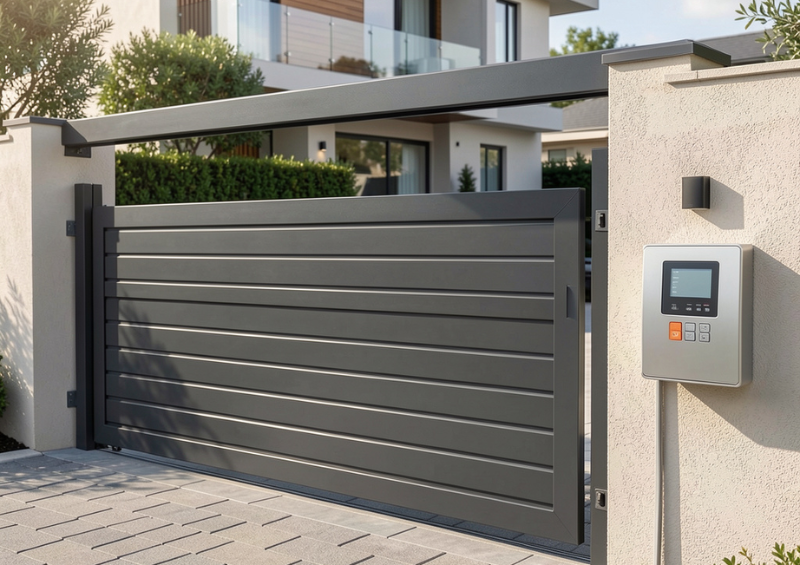
Automated sliding gates have become standard for modern perimeter security. From suburban homes to logistics depots and commercial complexes, property owners rely on automated gates to manage vehicle access safely and efficiently. While the gate motor often gets the spotlight, the real intelligence behind reliable operation sits inside a small but critical component: the control board.
In any Sliding Gate Automation system, the control board acts as the central decision-maker. It interprets commands, manages motor performance, monitors safety devices, and coordinates the entire opening and closing sequence. A well-designed control board delivers smooth, safe, and predictable gate movement. A poorly specified one can lead to nuisance faults, unsafe operation, or premature system failure.
This comprehensive buyer’s guide explains sliding gate automation control boards in depth. You will learn how they work, what features matter most, how to match them to your application, and how to future-proof your investment.
What Is Sliding Gate Automation
Sliding Gate Automation refers to the motorised operation of a gate that moves horizontally along a track or cantilever system. Instead of swinging inward or outward, the gate slides parallel to the fence line, making it ideal for properties with limited driveway depth or sloped terrain.
A complete system typically includes:
- Sliding gate motor
- Drive gear and rack
- Control board
- Safety devices
- Access control inputs
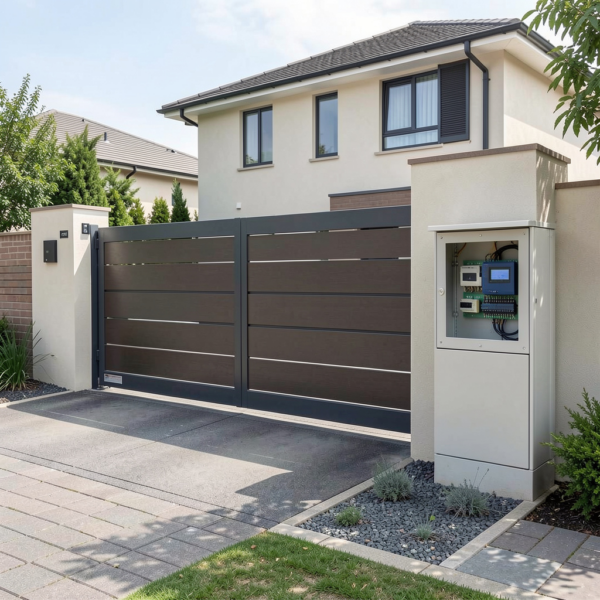
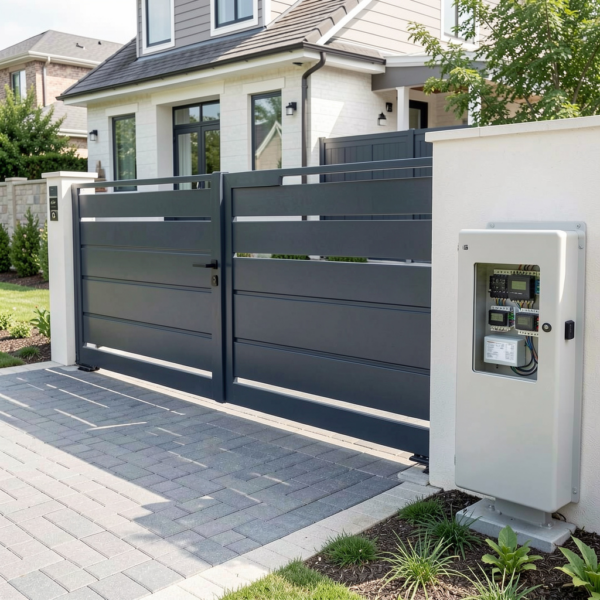
- Power supply and enclosure
While the motor provides torque, the control board governs behaviour. It determines when the gate starts, how fast it moves, when it slows down, and how it reacts to obstacles.
Why the Control Board Is the Most Important Component
Many buyers assume that motor power is the primary factor in gate performance. In reality, the control board has equal—if not greater—impact on reliability and user experience.
A high-quality Sliding Gate Automation control board provides:
- Precise motion control
- Consistent stopping positions
- Integrated safety logic
- Flexible access control compatibility
- Protection against overload and faults
- Diagnostics for faster servicing
Without intelligent control logic, even a powerful motor can produce rough movement, excessive wear, or unsafe operation.
How Sliding Gate Control Boards Work
At a basic level, the control board is an embedded electronic controller that processes inputs and drives outputs. However, modern boards perform far more sophisticated tasks than simple relay switching.
Input Processing
The board continuously monitors incoming signals from:
- Remote receivers
- Keypads
- Intercom systems
- Photoelectric beams
- Safety edges
- Loop detectors
- Limit switches
Each input is prioritised according to programmed logic.
Decision Logic
Once an input is received, the control board determines the appropriate action. For example, if the gate is closing and a safety beam is triggered, the board must immediately reverse direction.
Modern Sliding Gate Automation boards use microprocessors to manage these decision trees in real time.
Motor Drive Control
The board regulates motor voltage and direction using relays, triacs, or inverter-based motor drivers. Higher-end systems provide variable speed control for smoother operation.
Soft start and soft stop algorithms reduce mechanical shock and extend system life.
Core Functions of a Sliding Gate Automation Control Board
Opening and Closing Sequencing
The most visible function is coordinating the gate’s movement cycle. The board manages acceleration, full-speed travel, deceleration, and final positioning.
Proper sequencing reduces mechanical stress and ensures consistent performance across thousands of cycles.
Safety Device Integration
Safety is non-negotiable in modern Sliding Gate Automation.
The control board monitors multiple safety inputs simultaneously. If any device signals an obstruction, the system must react immediately.
Typical supported safety devices include:
- Photoelectric beams
- Pressure safety edges
- Current sensing obstacle detection
- Encoder feedback systems
Advanced boards allow independent configuration of each safety input.
Limit Management and Position Control
Accurate stopping points are critical. Overtravel can damage the gate or motor, while undertravel can leave the gate partially open.
Control boards use:
- Mechanical limit switches
- Magnetic sensors
- Encoder feedback
Higher-end systems with encoders provide more precise positioning and adaptive learning.
Auto-Close and Timing Logic
Auto-close functionality automatically shuts the gate after a preset delay. This improves site security and reduces the risk of gates being left open.
Modern boards allow adjustable timing, conditional closing, and integration with safety inputs.
Partial Opening (Pedestrian Mode)
Many Sliding Gate Automation systems support pedestrian mode, which opens the gate partially for foot traffic.
This reduces cycle time and wear while improving convenience.
Types of Sliding Gate Control Boards
Basic Residential Control Boards
These are designed for low-cycle home use. They typically support remotes, one set of safety beams, and basic timing functions.
They are suitable for:
- Private driveways
- Low-use rural properties
- Budget-conscious installations
However, they may lack advanced diagnostics or expansion capability.
Advanced Residential and Light Commercial Boards
This category represents the sweet spot for most installations.
Features typically include:
- Adjustable force control
- Multiple safety inputs
- Soft start and stop
- Battery backup support
- Pedestrian mode
- Improved diagnostics
Most modern homes and small businesses benefit from this level.
Heavy-Duty Commercial Control Boards
High-traffic environments demand industrial-grade logic.
These boards often include:
- Encoder-based control
- High duty cycle support
- Advanced fault logging
- Network connectivity
- Multi-user access integration
- Loop detector support
They are essential for warehouses, strata complexes, and logistics sites.
Key Features Buyers Should Prioritise
Soft Start and Soft Stop
This feature significantly reduces wear on:
- Motor gears
- Gate rollers
- Rack and pinion
- Gate structure
If long-term reliability matters, this feature is essential.
Obstacle Detection Technology
Modern Sliding Gate Automation boards use one or more of the following:
- Motor current sensing
- Encoder feedback
- Safety edge monitoring
Adjustable sensitivity allows proper calibration for different gate weights and environmental conditions.
Battery Backup Capability
Power outages are common in many regions. Without backup power, gates may fail in the open or closed position.
Battery-ready control boards maintain operation during outages and are strongly recommended for security-critical sites.
Diagnostic Feedback
Good diagnostics reduce service time and maintenance costs.
Look for boards that offer:
- LED status indicators
- Error codes
- Event memory
- Display panels (on premium models)
These features pay for themselves over time.
Duty Cycle Considerations
Duty cycle defines how frequently the gate is expected to operate within a given period.
Typical usage patterns:
- Residential: 10–30 cycles per day
- Light commercial: 50–150 cycles per day
- Heavy commercial: 300+ cycles per day
The control board must be paired with a motor rated for the intended duty level.
Installing a low-duty board in a high-traffic environment is one of the most common causes of premature failure.
Environmental Factors That Affect Control Boards
Sliding gates operate outdoors, often in harsh conditions.
Key environmental risks include:
- Heat exposure
- Moisture ingress
- Dust and insects
- Power surges
- Lightning strikes
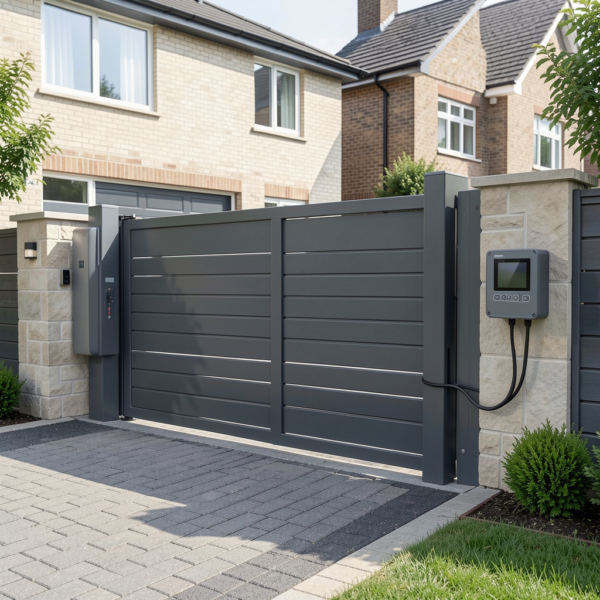
A quality Sliding Gate Automation control board should be housed in a properly rated enclosure with surge protection and adequate ventilation.
Integration with Modern Access Control Systems
Today’s gates rarely operate as standalone devices.
Modern control boards often integrate with:
- RF remote systems
- Keypads and PIN entry
- RFID and card readers
- Video intercoms
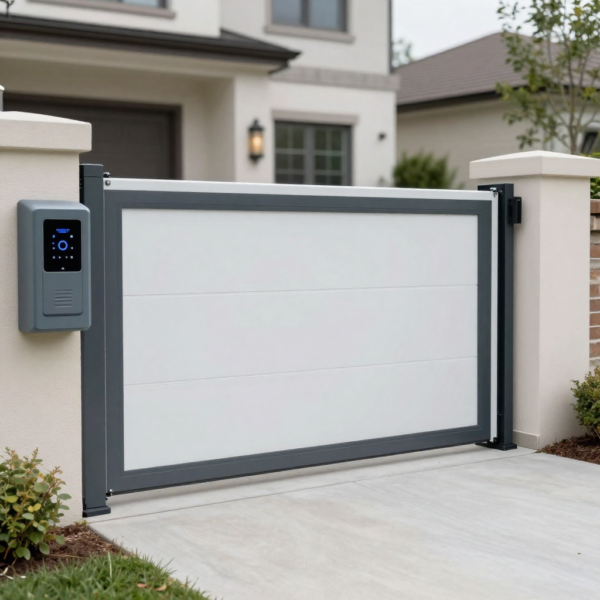
- Smartphone apps
- Home automation systems
Buyers should consider not only current needs but also future integration plans.
Installation Best Practices
Proper installation dramatically affects long-term performance.
Control boards should be:
- Mounted in weather-protected enclosures
- Installed with proper earthing
- Protected with surge suppression
- Wired using correctly rated cable
- Separated from high-voltage interference where possible
Professional installation is strongly recommended for most Sliding Gate Automation systems.
Common Buyer Mistakes
One of the biggest mistakes is focusing only on motor power while ignoring control board capability.
Another common error is failing to plan for future upgrades. Many sites later require keypad entry, intercom integration, or smart control.
Underestimating duty cycle is also a frequent issue in strata and commercial environments.
Residential Application Example
In a typical home, the control board manages remote access, safety beams, and auto-close timing.
Reliability, quiet operation, and battery backup are the main priorities.
A mid-range Sliding Gate Automation control board usually provides the best balance of cost and performance.
Commercial Application Example
Commercial sites require higher durability and more integration.
The control board may interface with:
- Vehicle loop detectors
- Time schedules
- Access control databases
- Multiple user credentials
In these environments, heavy-duty boards are strongly recommended.
Maintenance and Lifecycle Planning
All automated gates require periodic servicing.
Control boards with strong diagnostics simplify troubleshooting and reduce downtime.
Routine checks should include:
- Safety device testing
- Terminal tightness
- Moisture inspection
- Firmware updates where applicable
Preventive maintenance significantly extends system life.
Future Trends in Sliding Gate Automation
Control boards continue to evolve.
Emerging features include:
- Cloud monitoring
- Wi-Fi connectivity
- Smartphone configuration
- Predictive maintenance alerts
- Integration with smart property platforms
Buyers planning long-term installations should consider future-ready options.
Cost vs Long-Term Value
Cheaper control boards often lack flexibility and durability.
Investing in a quality Sliding Gate Automation control board typically results in:
- Smoother operation
- Better safety compliance
- Lower maintenance costs
- Longer system lifespan
- Easier upgrades
Over the life of the gate, this usually delivers better value.
Buyer’s Final Checklist
Before purchasing, confirm:
- Expected daily cycles
- Gate weight and length
- Required safety devices
- Access control needs
- Battery backup requirement
- Environmental exposure
- Future expansion plans
Matching the control board to real operating conditions ensures reliable performance.
Final Thoughts
The control board is the true command centre of any Sliding Gate Automation system. While the motor provides the physical movement, the control board delivers the intelligence, safety, and adaptability that determine long-term success.
Buyers who take the time to understand control board capabilities are far more likely to achieve smooth operation, strong safety performance, and lower maintenance costs over the life of the system. Whether you are automating a residential driveway or securing a high-traffic commercial entrance, choosing the right Sliding Gate Automation control board is one of the most important decisions you can make.