
In modern commercial security design, the multi-zone siren plays a strategic role. It’s not just about making noise when something goes wrong, but also about delivering zone-specific alerts that align with your broader security logic.
A multi-zone siren is an audible alert device, either indoor or outdoor, configured to respond to specific alarm zones within a commercial system. Instead of triggering every on-site siren for any event, zoning allows integrators to match alerts to the exact area of intrusion.
For security professionals working across warehouses, retail complexes, schools, medical centres, and industrial sites, outdoor sirens are a critical layer of protection. They create immediate visibility and audibility of a breach, deter intruders, and provide unmistakable notification.
When properly integrated, a multi-zone siren system becomes a proactive deterrence tool. And in high-risk environments, that distinction makes all the difference.
Understanding Commercial Alarm Zoning – What Makes a Multi-Zone Siren “Commercial-Ready”
How does commercial alarm zoning work in real-world environments? Zoning is the foundation that determines how alerts are triggered, prioritised, and escalated across a site.
What Is Commercial Alarm Zoning?
Commercial alarm zoning divides a property into separate detection areas, known as zones. Each zone represents a defined physical space or risk category within the premises.
For example, a commercial site may include:
- Perimeter fencing
- Car parks
- Loading docks
- Roller doors
- Warehouse storage areas
- Office spaces
- Server or plant rooms
When a sensor in one of these zones is triggered, the alarm panel identifies exactly where the event occurred. This information is critical for both on-site staff and monitoring centres to respond appropriately rather than react blindly.
Commercial alarm zoning is particularly valuable on larger properties where interior and exterior threats must be managed differently. A perimeter breach at 2 am requires a very different response compared to an internal office motion trigger during business hours.

Why Zoning Matters for Large Commercial Sites
Zoning enables integrators to apply layered security logic. Instead of a single blanket alarm response, the system can differentiate between high-priority and low-priority areas.
This enables:
- Targeted notifications
- Tiered escalation procedures
- Reduced panic for non-critical events
- More accurate reporting
Without proper zoning and a siren strategy aligned with those zones, outdoor alerts can be either overused or underutilised. Both scenarios reduce system effectiveness and can frustrate clients.
What Makes a Multi-Zone Siren “Commercial-Ready”?
Not all sirens are built to handle the demands of commercial environments. A residential-grade device may struggle with volume, durability, or flexibility in integration when deployed in larger facilities.
A commercial-ready multi-zone siren should meet several key criteria.
- First, it must provide sufficient sound output. Industrial and retail environments often have significant ambient noise, so a siren rated above 100 dB is typically required to ensure audibility across open yards or warehouse spaces.
- Second, outdoor durability is essential. Australian conditions can be harsh, with strong UV exposure, heavy rain, and high summer temperatures. A suitable siren must offer weatherproof construction and a solid IP rating to ensure long-term reliability.
- Third, integration flexibility is critical. Modern systems may use wired panels, hybrid setups, or wireless automation platforms. The siren must integrate smoothly within these ecosystems to support true commercial alarm zoning.
- Finally, tamper protection and battery backup are important in enterprise applications. A multi-zone siren should continue operating even if primary power is disrupted and should report tamper attempts to maintain system integrity.
Key Integration Considerations for Outdoor Sirens
Integrating outdoor sirens into a multi-zone commercial system requires careful planning. It’s not just about selecting a loud device; it’s about ensuring the siren enhances the zoning logic rather than complicating it.
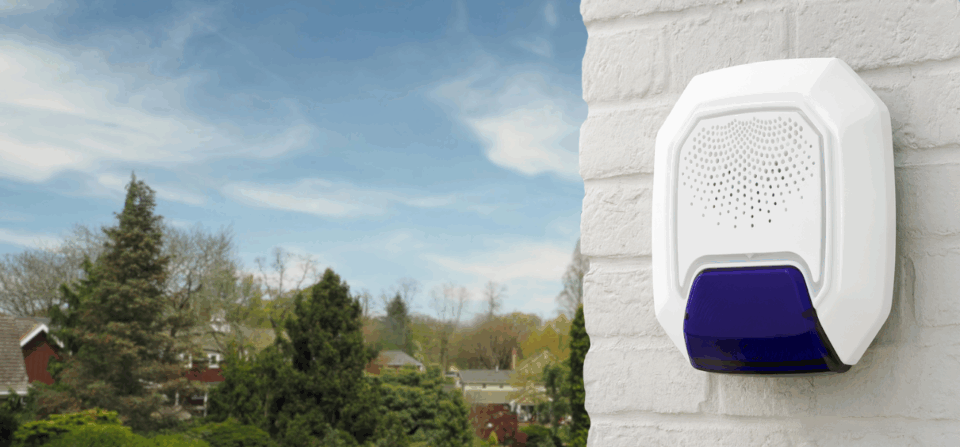
Power and Connectivity: Wired vs Wireless
Wired sirens remain common in traditional panel-based installations. They provide consistent power and are often preferred in new builds where cabling infrastructure is already planned.
However, wireless solutions, particularly those using Z-Wave, offer strong advantages for retrofit projects and facility expansions. Wireless sirens reduce installation time, eliminate trenching, and allow repositioning if site layouts change.
For integrators managing multi-building complexes, wireless flexibility can significantly reduce long-term labour costs.
Zone Mapping and Logical Assignment
Effective zone mapping is where a multi-zone siren truly shines. Each siren should be programmed to respond only to relevant zones.
For example, a breach of a perimeter fence may trigger an outdoor siren and strobe to draw immediate attention. An internal office motion event during business hours may only activate an internal alert.
By carefully aligning siren behaviour with zone logic, integrators can create layered responses that feel purposeful rather than chaotic.
Reducing False Activations
False alarms undermine credibility and can create compliance issues in some areas. Outdoor sirens should ideally be tied to verified triggers, such as dual-sensor activation or confirmed entry detection.
Smart configuration ensures the siren activates when it truly matters, preserving its deterrence value.
Placement Around Buildings and Perimeters
Placement plays a major role in performance. Outdoor sirens should be mounted high, visible, and positioned near likely entry points.
Avoid installing units behind signage, under deep eaves that block strobe visibility, or in areas where sound may be trapped. Even the best multi-zone siren cannot perform effectively if poorly positioned.
Benefits of Integrating Outdoor Sirens in Multi-Zone Systems
When integrated thoughtfully, outdoor sirens provide both practical and psychological advantages.
- Faster awareness for occupants and responders
An external siren immediately signals that an incident is underway. This accelerates response from security personnel, nearby tenants, or even neighbours who may report suspicious activity.
- Stronger deterrence at the perimeter
Many intruders are opportunistic. A loud, visible outdoor siren triggered at the perimeter often discourages further intrusion. The event becomes high-risk and highly visible in seconds.
- Clear visual and audible reinforcement
Combining strobes with high-output sound ensures alarm conditions are unmistakable. In large commercial spaces, this reinforcement prevents confusion and ensures that the seriousness of the situation is understood quickly.
- Increased client confidence
Enterprise-level clients expect layered protection. A properly configured multi-zone siren setup demonstrates thoughtful design and professional integration, enhancing system credibility and long-term client trust.

Case Study, Example Multi-Zone Commercial Setup
Consider a mid-sized distribution warehouse divided into four main zones: perimeter fencing, roller door access points, internal warehouse space, and administrative offices.
In this configuration, a perimeter breach triggers only the external siren and strobe. This immediately alerts the surrounding area without unnecessarily disturbing interior operations.
If a roller door is forced after hours, both the external siren and internal alerts activate, escalating the response. An internal warehouse motion trigger activates both sirens, recognising the higher threat level once an intruder has entered the building.
Following the implementation of a properly configured multi-zone siren strategy, the facility experienced faster response times from contracted patrol services. Staff also reported a clearer understanding of alarm events due to differentiated alert behaviour.
In another commercial retail strip scenario, visible outdoor sirens linked to perimeter zones reduced repeat break-in attempts within months. The deterrence factor alone changed offender behaviour.
These examples highlight that effective commercial alarm zoning is not just theoretical; it delivers measurable outcomes.
Choosing the Right Outdoor Siren for Your Multi-Zone System
Selecting the right siren is central to system performance. Integrators need a device that offers reliability, flexibility, and durability.
One strong option for wireless commercial environments is the Vision Z-Wave Outdoor Siren. It is designed for dependable performance in demanding conditions and integrates seamlessly within Z-Wave automation systems.
Key advantages include high-decibel output, an integrated strobe light for visual reinforcement, tamper detection, battery backup, and a weather-resistant housing suitable for Australian conditions.
Compared to generic sirens, a professionally supported Z-Wave solution provides improved configuration flexibility for commercial alarm zoning. It enables precise zone mapping and remote management, where supported by the control platform.
If you’re planning a commercial upgrade or new installation, it’s worth reviewing the technical specifications and integration benefits.

Installation Checklist for Integrators
A structured installation process ensures consistent results across projects.
- Start with a thorough pre-installation survey. Identify zone boundaries, assess ambient noise levels, and confirm mounting positions that maximise visibility and coverage.
- Next, map each zone to its corresponding siren response. Document escalation rules clearly so the client understands how the system behaves under different scenarios.
- For wireless systems, test signal strength carefully. Install repeaters where necessary to maintain reliable communication between the panel and the siren.
- Finally, conduct comprehensive testing and commissioning. Trigger each zone individually, verify correct siren activation, confirm strobe visibility in daylight, and document the configuration for handover.
Attention to detail at this stage protects your reputation and ensures long-term system reliability.
In Conclusion
Outdoor siren integration is not optional in commercial environments; it is a core element of effective commercial alarm zoning.
A properly designed multi-zone siren system enhances deterrence, accelerates response times, and strengthens overall site security. More importantly, it transforms the alarm system from a passive notification tool into an active protective measure.
For security integrators, careful planning around siren selection, placement, and zone logic ensures clients receive maximum return on investment. When zoning and siren behaviour align, the entire system performs at a higher level.
If you’re reviewing your next project, take the time to evaluate whether your siren strategy truly supports multi-zone performance. Smart integration today will deliver stronger, more credible security outcomes tomorrow.
Learn more about the Vision Z-Wave Outdoor Siren to determine how it can strengthen your next multi-zone siren deployment.