
Expanding a KNX System is one of the most important steps for homeowners, building managers, and integrators who want to scale automation beyond the basic setup. Many KNX installations begin small—perhaps just lighting, blinds, or HVAC—but the true advantage of KNX is how easily it can grow. As user needs increase, so does the demand for stable communication, additional devices, more network segments, and enhanced automation logic.
One of the most efficient ways to scale is by introducing new gateways, KNX lines, and backbone connections. Among the most powerful expansion tools available is the Jigsaw KNX Gateway (2 Users), a solution built to expand KNX logic, remote access, and system integration without replacing existing hardware.
This guide explains how to expand your KNX installation, when additional gateways are needed, and how to build extra KNX lines in a safe, standards-compliant way. Whether you are integrating smart lighting, security, climate control, shading, or energy management systems, these concepts help you design a KNX installation that performs reliably on any scale.
Understanding KNX System Scalability
A KNX System is designed around decentralised control, which means every device contains its own intelligence. This architecture makes KNX naturally scalable, as new modules can be added without impacting the existing network.
In most residential projects, a single line is enough to support lighting, climate, or blinds. However, as you expand into multi-room automation, large-scale projects, commercial buildings, or multi-floor installations, you inevitably reach the limits of a single line. This is when expansion via line couplers, area couplers, or additional gateways becomes necessary.
The ability to scale without rewriting the entire system is one of the reasons KNX remains the most preferred open protocol in high-end smart home and building automation projects.
Why You Need Additional Gateways and Lines
The first reason to expand your KNX lines is device quantity. A single KNX line supports up to 64 devices, and with a power supply you can increase this number to 256 devices per area. Large projects, especially hotels, apartment buildings, or mixed-use developments, regularly exceed these limits.
The second reason is functionality. As more systems integrate—energy management, CCTV, HVAC, access control, security panels—processing demand increases. Additional gateways help distribute load, manage logic, and maintain stable communication across the network.
The third reason is geographical layout. Buildings with long cable runs, separate floors, extended wings, or outdoor KNX areas require additional lines to maintain signal quality and avoid voltage drop.
Finally, user access and remote control requirements may also trigger the need for a dedicated gateway such as the Jigsaw KNX Gateway (2 Users), which gives homeowners or facility managers stable secure access to their KNX environment.
What the Jigsaw KNX Gateway (2 Users) Adds to Your System
The Jigsaw KNX Gateway (2 Users) is a powerful expansion tool that enhances both usability and technical performance. With support for two simultaneous users, it offers remote control, diagnostics, monitoring, and advanced automation without altering the existing KNX topology.
One of its greatest strengths is that it acts as a bridge between KNX and other smart ecosystems. As buildings increasingly integrate smart appliances, energy dashboards, or cloud-based features, the need for a high-performance gateway becomes essential. This gateway helps KNX installations evolve while still complying with KNX standards.
You can use the gateway to create new logic tasks, enable real-time device monitoring, adjust building settings, or diagnose issues—tools that make scaling easier and more intuitive for both integrators and experienced users.
When to Add a New KNX Line
A KNX line is a segment of the KNX bus that supports a group of devices. Adding new lines becomes essential in several scenarios.
If you reach device limits, a new line prevents overload. When a building’s layout creates long runs or signal challenges, a new line improves reliability. If devices on your network increase electrical load beyond safe limits, a separate line with its own power supply ensures stability.
Adding lines also increases system security, allowing different building zones—such as private residences and shared facilities—to operate independently while still communicating through line couplers.
Finally, adding dedicated lines for high-traffic automation systems like HVAC or energy-monitoring devices prevents congestion and ensures consistent system performance.
Understanding Line Couplers and Area Couplers
Line couplers link individual lines together while providing filtering to reduce unnecessary traffic. Area couplers operate at a higher level, linking multiple lines into broader KNX areas.
These couplers provide load balancing and segmentation to maintain clean communication. They help the network scale organically while keeping each segment manageable, especially in multi-floor buildings. Proper filtering ensures that only relevant telegrams pass between lines, improving efficiency and reducing packet collisions.
Choosing the right coupler ensures proper data flow and avoids bottlenecks as systems expand.
How to Plan Your KNX Expansion
Careful planning is essential when expanding a KNX system. Begin by identifying your future device requirements, then calculate total device counts to determine how many additional lines you will need.
Next, map out building zones to determine physical installation areas. Every KNX power supply must be properly sized, providing clean stable voltage to each line. Remote access is another factor; if you plan to control the system offsite, include a gateway such as the Jigsaw KNX Gateway (2 Users).
Finally, plan for future scalability by reserving space on DIN rails and leaving room for additional KNX lines to avoid costly rewiring later.
Integrating a Jigsaw KNX Gateway Into an Existing Installation
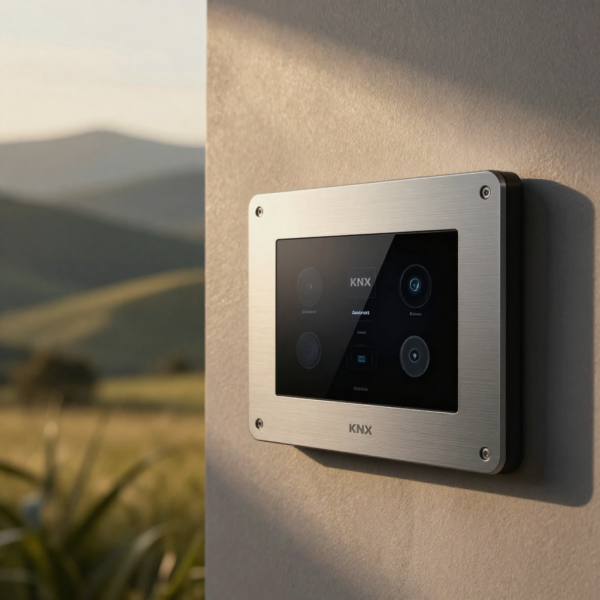
Integrating the Jigsaw KNX Gateway (2 Users) into an established system is straightforward. Once connected to the IP backbone or directly to a KNX TP line, it immediately becomes part of the system. You can access it via a secure interface to configure logic, view diagnostics, or manage devices.
This gateway enables stronger system visibility and automation control. Because it adheres to KNX standards, there is no need to modify existing wiring. Integrators simply enable IP routing or tunneling as needed. The gateway also provides remote access tools, so users can manage their building remotely with minimal configuration.
Adding New Gateways for Multi-Area Control
Large installations such as hotels or commercial buildings often require multiple gateways. Each area can be assigned its own gateway for load distribution, access separation, and improved reliability.
This structure simplifies programming and prevents single points of failure. Each gateway can independently monitor its area while still communicating with the overall KNX infrastructure.
Multiple gateways also increase user capacity—ideal for buildings that require different users or departments to control different zones.
Choosing Power Supplies for Additional Lines
Every new KNX line requires its own power supply. When adding new lines, power quality must be consistent. The standard voltage is 29V DC, and you must ensure power reserves are adequate.
Improper power supply selection is one of the most common causes of KNX malfunctions. You want a supply with integrated choke to prevent interference, and you must calculate voltage drop along the cable run. Large buildings often need multiple distributed supplies.
Ensuring stable power for each line is one of the most crucial steps in planning KNX expansion.
Common Mistakes When Adding New Lines
Several mistakes occur when expanding KNX installations. One of the most frequent is failing to account for device load. Overloading a line beyond its recommended limits risks communication failures.
Incorrect filtering on couplers may also allow unnecessary traffic, slowing down the network. Mixing too many high-traffic devices—such as metering modules—on the same segment may cause performance issues.
Poor documentation is another issue. Without a clear overview of how each KNX line is connected and labelled, maintenance becomes difficult. A proper installation plan avoids long-term complications.
Managing Traffic Across KNX Lines
Proper traffic management is essential when expanding a KNX network. As more devices join the system, telegrams increase. Filtering ensures the backbone carries only essential communication.
Segmenting HVAC, energy, lighting, and security systems also improves reliability. A large number of sensors, especially motion and climate sensors, generate continuous data. Careful segmentation prevents system congestion.
With good design and appropriate filtering, even massive KNX installations run smoothly without communication delays.
Upgrade your automation knowledge — Explore how KNX enhances smart security integrations
Comparing Line Couplers vs. Backbone Couplers
Line couplers and backbone couplers serve similar purposes but operate at different levels. A line coupler connects sub-lines or segments, whereas a backbone coupler connects entire areas or floors to the main KNX trunk.
Choosing between these devices depends on building size and device categories. For small homes, line couplers may be sufficient. Large commercial buildings typically require both types to maintain structured communication.
Understanding these layers helps installers build scalable and flexible KNX networks.
Monitoring Your Expanded KNX System
Once you expand your KNX system, monitoring becomes crucial. Tools such as the Jigsaw KNX Gateway (2 Users) provide in-depth diagnostics, enabling you to view telegram histories, device status, and line performance.
Monitoring ensures that new lines maintain proper operation and that power supplies operate within safe ranges. It also enables quick troubleshooting—an essential advantage when managing large automation networks.
Using monitoring tools prevents downtime and provides a clear overview of building automation performance.
Integrating IP Routers for KNX System Growth
IP routers are essential as KNX installations scale to larger sizes. They move communication from twisted-pair cabling to Ethernet, allowing faster and more flexible communication.
The Jigsaw KNX Gateway (2 Users) works seamlessly with IP routers, creating a strong backbone for complex automation. Using IP routers allows integrators to link multiple buildings, floors, or segments without compromising performance.
This modern approach improves scalability and reliability for commercial or luxury residential installations.
Conclusion
Expanding your KNX System with new lines and additional gateways is an essential part of building long-term, scalable home or commercial automation. With the right planning, KNX grows effortlessly—accommodating lighting, blinds, HVAC, security, access control, and energy systems without losing stability.
The Jigsaw KNX Gateway (2 Users) plays a central role in this process by offering advanced logic, remote access, and high-performance system monitoring. Whether you’re extending a single-family home, a multi-floor office, or a large commercial project, KNX expansion remains efficient, flexible, and reliable.
By adding new lines, coupling areas correctly, and integrating robust gateways, your KNX installation will continue to evolve alongside user needs—making KNX one of the most future-proof automation technologies available today.
Ready to upgrade your smart home?👉 Buy the Jigsaw KNX Gateway (2 Users) today and expand your KNX System with confidence.