

False alarms are one of the most common challenges faced by security integrators and monitoring providers. In large facilities such as warehouses, factories, and commercial buildings, alarm systems must detect real threats without triggering unnecessary alerts. Without proper false alarm reduction, frequent nuisance alarms can lead to costly responses and decreased trust in the system.
Modern commercial alarm systems are designed with advanced sensors and automation logic to improve detection accuracy. However, even the most sophisticated technology can generate false triggers if systems are poorly configured or deployed in unsuitable environments.
For security professionals working with industrial security infrastructure, implementing effective false alarm reduction strategies is essential. By combining proper system design and reliable devices, integrators can create smarter alarm deployments that protect assets while minimising unnecessary alerts.
Common Causes of False Alarms in Commercial Alarm Systems
Understanding why alarms trigger incorrectly is the first step toward effective false alarm reduction. In many cases, nuisance alarms occur because of environmental factors or configuration issues rather than actual security events. This is especially common in industrial environments where machinery, airflow, and temperature variations can influence sensor behaviour.
Below are several common causes of false alarms in commercial deployments.
- Poor sensor placement – Motion detectors positioned incorrectly often cause unnecessary triggers. Sensors aimed at HVAC vents, windows with changing sunlight, or high-traffic walkways may detect movement that isn’t related to a security threat.
- Environmental interference – Warehouses and outdoor areas frequently encounter wind, dust, rain, insects, and temperature fluctuations. These environmental factors can affect motion detectors, vibration sensors, or outdoor devices, leading to false activation.
- Improper sensitivity settings – Sensors configured with excessive sensitivity may be triggered by minor vibrations, slight temperature changes, or harmless environmental movement.
- Outdated or incompatible hardware – Legacy devices sometimes struggle to communicate accurately with newer smart alarm systems, resulting in unreliable signals or inconsistent detection.
- Human error – Incorrect employee arming or disarming procedures are a major contributor to false alarms. Staff entering restricted zones during armed periods can unintentionally trigger alerts.
- Unverified alarm triggers – Systems that activate sirens immediately after a single sensor event often generate more false alerts than systems that use verification logic.
Industrial facilities such as distribution centres or manufacturing plants often contain complex layouts with multiple zones, machinery vibrations, and changing environmental conditions. Without careful system design, these variables can cause frequent nuisance alerts.
Implementing thoughtful sensor placement, system configuration, and verification rules is critical for long-term false alarm reduction in professional security deployments.
The Cost of False Alarms for Security Providers and Clients
False alarms may seem harmless at first, but they create significant operational and financial consequences for both security providers and facility managers. Over time, repeated nuisance alerts can undermine the effectiveness of even the most advanced commercial alarm systems.
Several major impacts highlight why false alarm reduction is essential.
- Operational costs for monitoring providers: Each alarm event typically requires investigation by monitoring staff. When alarms trigger unnecessarily, response teams spend time verifying incidents that pose no actual risk.
- Municipal fines or penalties: Many cities impose fines for repeated false alarms that prompt emergency services to respond. These penalties can accumulate quickly for large commercial facilities.
- Reduced confidence among property managers: Frequent nuisance alerts often lead property managers to question the system’s reliability, especially when alarms occur during normal operating hours.
- Alarm fatigue: When staff receive too many alerts, they may begin to ignore notifications or assume alarms are not genuine. This behaviour can increase vulnerability during real incidents.
- Reputation impact for integrators: Security companies responsible for system design and installation risk damaging their professional reputation if clients experience persistent false alarms.
For industrial facilities that rely heavily on automated monitoring, maintaining strong alarm reliability is critical. Systems must provide accurate alerts so security teams can respond quickly to genuine threats.
Implementing strong false alarm reduction strategies not only reduces unnecessary response costs but also improves user confidence in the system’s ability to protect people, property, and assets.
Best Practices for False Alarm Reduction in Industrial Security Systems
Effective false alarm reduction requires a combination of smart technology, thoughtful design, and proper system maintenance. Security integrators working in industrial environments must consider how sensors interact with the physical space and operational activities within the facility.
The following best practices can significantly improve the performance and reliability of commercial alarm systems.
- Strategic sensor placement
Motion detectors and other sensors should be positioned away from airflow sources, reflective surfaces, or machinery that generates vibration. Proper placement reduces environmental triggers that can cause nuisance alarms.
- Use multi-sensor verification
Combining multiple detection methods helps confirm genuine threats. For example, an intrusion event may require both a door contact and a motion detector to activate before the alarm is triggered.
- Adjust detection thresholds
Sensors should be calibrated to match the environment in which they operate. Warehouses with forklifts or temperature fluctuations may require different sensitivity settings compared to office spaces.
- Implement entry and exit delays
Delays allow authorised staff to enter or leave protected areas without triggering alarms while the system is being armed or disarmed.
- Regular system maintenance
Scheduled maintenance ensures sensors remain reliable. This includes replacing batteries, updating firmware, and recalibrating devices to maintain consistent detection performance.
- User training for staff
Employees should understand how to arm and disarm systems correctly and know which areas are monitored. Proper training significantly reduces human-related alarm triggers.
- Remote monitoring and diagnostics
Advanced smart alarm systems allow integrators to monitor device status remotely. Diagnostics can identify failing sensors, communication issues, or abnormal activity before they result in false alarms.
Industrial facilities often operate around the clock, making reliable detection essential. By combining these best practices with modern wireless technologies, integrators can dramatically improve alarm reliability and minimise unnecessary alerts.
Strong false alarm reduction strategies ultimately create security systems that are both efficient and trusted by the people who rely on them.

Role of Outdoor Sirens in Verified Alarm Systems
Outdoor sirens play an important role in modern commercial alarm systems, particularly when used as part of verified alarm workflows. Instead of activating immediately after a single trigger, these systems confirm events using multiple sensors before issuing a visible and audible alert.
Once verification occurs, a siren acts as a powerful deterrent by notifying nearby personnel and discouraging potential intruders.
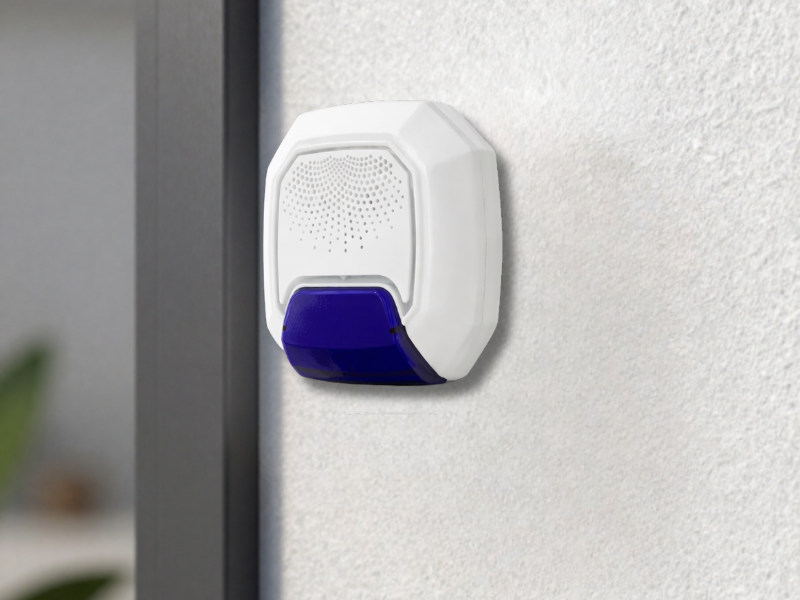
One example is the VISION Z-Wave Outdoor Siren, a wireless security device designed for integration with Z-Wave automation networks. When connected to compatible sensors and controllers, it becomes an effective component in professional alarm deployments.
Key benefits of integrating outdoor sirens include:
- Audible and visual deterrence – A powerful 115 dB siren combined with a flashing strobe provides immediate warning once an alarm is confirmed.
- Integration with Z-Wave sensor networks – The device can connect with motion sensors, door/window contacts, shock sensors, and flood detectors to verify alarm conditions.
- Wireless installation advantages – Battery-powered outdoor sirens simplify installation across commercial properties where running wiring may be difficult.
- Weather-resistant protection – An IP66-rated design allows reliable operation in harsh outdoor environments.
- Tamper alerts and low battery notifications – These features provide additional monitoring and help maintain system reliability.
The siren is compatible with controllers such as Fibaro Home Center 3, HomeSeer, and Alarm.com panels, enabling flexible integration with professional security systems.
When paired with multiple sensors, the siren activates only after genuine threats are confirmed. This verification approach supports stronger false alarm reduction while ensuring real security events receive immediate attention.
System Design Strategies for Large Commercial Sites
Large commercial facilities require carefully planned security architectures to maintain consistent detection performance. Professional integrators often deploy layered strategies to ensure alarms activate only when genuine threats occur.
These design methods also contribute to long-term false alarm reduction.
- Zoned alarm architecture: Dividing a facility into multiple detection zones helps isolate incidents and prevents a single sensor event from triggering a site-wide alarm.
- Layered detection systems: Perimeter sensors, access control devices, and internal motion detectors work together to monitor different security layers within the building.
- Verification rules: Alarm activation may require triggers from multiple sensors or zones before a response is initiated.
- Outdoor deterrent integration: Sirens, strobes, and automated lighting can activate when verified alarms occur, improving visibility and discouraging intruders.
- Remote monitoring platforms: Integrators can access real-time diagnostics and event logs, allowing faster troubleshooting and system optimisation.
- Scalable wireless infrastructure: Technologies such as Z-Wave enable easy expansion of security systems as facilities grow or operational requirements change.
By combining intelligent detection logic with scalable infrastructure, security professionals can create robust industrial security systems that maintain high reliability while minimising nuisance alerts.
In Conclusion,
False alarms remain one of the biggest challenges in modern commercial alarm systems. Frequent nuisance alerts can reduce system effectiveness and erode user confidence in security infrastructure.
Implementing strong false alarm reduction strategies, such as proper sensor placement, multi-sensor verification, and intelligent automation logic, significantly improves alarm reliability in industrial and commercial environments. Wireless technologies and integrated devices also make it easier for integrators to deploy scalable, efficient security systems.
Solutions like the VISION Z-Wave Outdoor Siren add a powerful deterrent layer while supporting verified alarm workflows.