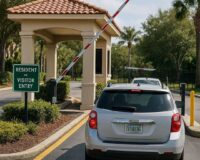
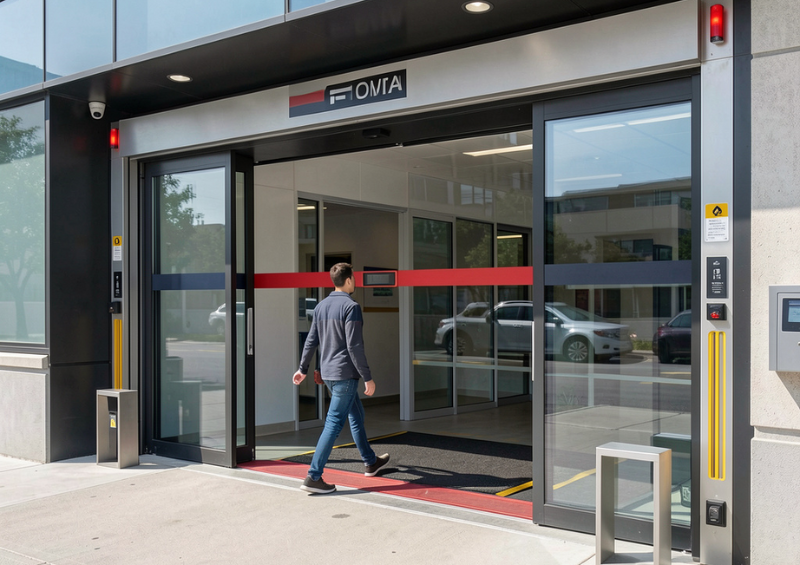
Automated gates are now widely used across residential communities, commercial properties, industrial sites, and critical infrastructure. While these systems offer convenience and controlled access, they also introduce safety risks if not properly designed and maintained. Accidents involving automatic gates—such as crushing, trapping, or impact injuries—are often linked to inadequate or poorly implemented safety mechanisms.
This is where Safety Sensors for Gates play a critical role. These sensors are not optional accessories; they are essential safety components designed to prevent injuries, protect property, and ensure compliance with safety standards. At the heart of effective gate safety lies one fundamental concept: fail-safe design.
This buyer’s guide explores fail-safe design principles in gate safety sensors, explains how different sensor technologies work, and provides practical guidance on choosing the right safety sensors for gates based on risk, environment, and application.
Understanding Safety Sensors for Gates
Safety Sensors for Gates are devices designed to detect people, vehicles, or obstacles in the path of an automatic gate and trigger an immediate response—such as stopping, slowing, or reversing gate movement. Their primary purpose is to prevent accidents during gate operation.
Unlike access control components that manage who can enter, gate safety sensors focus exclusively on protecting life and property. They operate continuously, often in the background, and must perform reliably under all conditions.
Modern gate safety systems typically use multiple sensors working together to create overlapping layers of protection. This redundancy is a key part of fail-safe design.
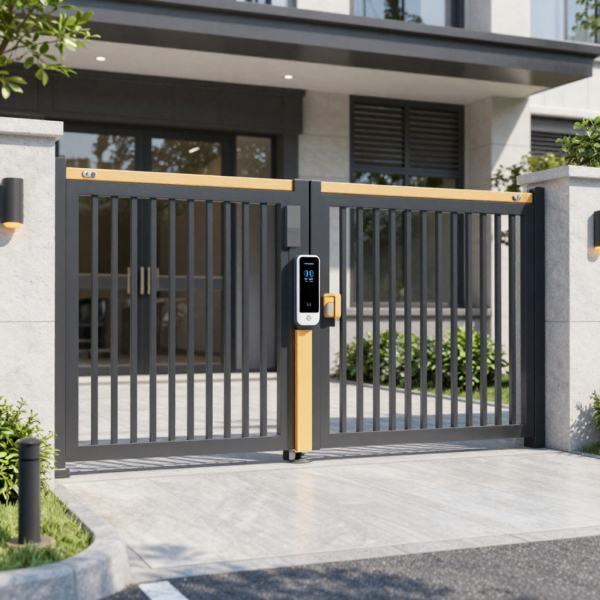
What Does Fail-Safe Design Mean in Gate Safety?
Fail-safe design refers to a system philosophy where failure results in a safe condition, not a dangerous one. In the context of safety sensors for gates, this means that if a sensor, cable, or controller fails, the gate should default to stopping or preventing movement rather than continuing to operate unsafely.
A fail-safe gate safety system is designed with the assumption that failures will happen. Instead of trying to eliminate every possible failure, it ensures that when something goes wrong, the system does not cause harm.
Fail-safe design principles are widely used in industries such as aviation, rail transport, and industrial automation—and they are equally critical for automated gate systems.
Why Fail-Safe Design Is Essential for Safety Sensors for Gates
Automated gates are powerful mechanical systems. A sliding or swing gate can weigh hundreds of kilograms and generate significant force. Without reliable safety sensors, even a brief malfunction can result in serious injury or damage.
Fail-safe design in safety sensors for gates is essential because:
-
Sensors operate in outdoor, harsh environments
-
Wiring and components can degrade over time
-
Power interruptions are common
-
Users may misuse or ignore warning signs
-
Environmental factors like rain, dust, heat, or insects can interfere with operation
Fail-safe design ensures that human safety is never dependent on perfect conditions.
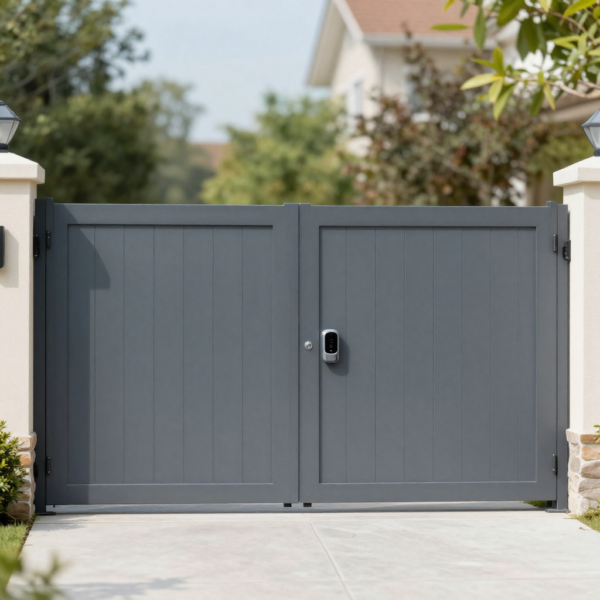
Common Risks Associated With Automated Gates
To understand why fail-safe design matters, it’s important to understand the risks that safety sensors for gates are designed to mitigate.
One major risk is crushing, where a person or vehicle is trapped between a moving gate and a fixed structure. Another is impact, where a gate strikes a person or object while opening or closing. There is also the risk of entrapment, particularly for children, pets, or pedestrians who may not understand gate movement.
Fail-safe safety sensors are designed to detect these scenarios early and prevent the gate from applying dangerous force.
Core Fail-Safe Design Principles in Gate Safety Sensors
Default-to-Safe Behavior
The most fundamental fail-safe principle is that the gate should stop or remain inactive if a sensor fails. Safety sensors for gates are typically designed as normally-closed circuits. If the circuit is broken due to damage, disconnection, or power loss, the gate controller interprets this as a fault and stops movement.
This ensures that a failed sensor does not silently disable safety protection.
Redundancy and Layered Protection
Relying on a single sensor is not considered best practice. Fail-safe gate systems use multiple types of safety sensors covering different zones and risk areas.
For example, photoelectric safety beams may protect the gate opening, while safety edges protect the leading edge of the gate. If one sensor fails, another can still prevent an accident.
Redundancy significantly reduces the likelihood of catastrophic failure.
Continuous Self-Monitoring
Advanced safety sensors for gates include self-monitoring features that constantly check sensor health, alignment, and signal integrity. If an abnormal condition is detected, the system generates a fault signal and disables gate movement.
Self-monitoring is especially important in commercial and industrial environments where gates operate frequently and under heavy loads.
Fail-Safe Power Management
Power failure is a common scenario. A fail-safe gate safety design ensures that loss of power does not result in uncontrolled gate movement.
In many systems, safety sensors are designed to remain active or signal a fault during power loss, while gates default to a safe state such as stopping or unlocking. Backup power systems may also be used, but fail-safe behavior should not rely solely on batteries.
Types of Safety Sensors for Gates and Their Fail-Safe Roles
Understanding sensor types helps buyers choose the right combination for a fail-safe system.
Photoelectric Safety Sensors
Photoelectric sensors, also known as safety beams, use infrared light to detect objects crossing the gate path. When the beam is interrupted, the gate stops or reverses.
From a fail-safe perspective, these sensors are typically wired so that loss of signal or misalignment triggers a fault condition. This prevents the gate from operating if the sensor is damaged or obstructed.
Photoelectric safety sensors for gates are widely used due to their reliability and fast response time.
Safety Edge Sensors
Safety edges are pressure-sensitive strips installed on the moving edge of a gate. When the edge contacts an object, the sensor sends a signal to stop or reverse the gate.
Fail-safe safety edges are designed so that cable breaks or internal faults result in a constant “triggered” state, preventing gate movement until the issue is resolved.
These sensors are particularly effective for preventing crushing injuries.
Induction Loop Detectors
Induction loops detect vehicles by sensing changes in electromagnetic fields. They are commonly used to prevent gates from closing on vehicles.
While induction loops are not always classified as primary safety sensors, fail-safe design ensures that loop faults prevent unsafe gate movement rather than allowing closure.
Laser Scanners and Advanced Presence Sensors
Laser scanners and presence detection sensors provide area-based protection rather than a single line of detection. They are often used in high-risk or high-traffic environments.
Fail-safe laser scanners continuously monitor internal diagnostics and disable output if faults are detected. Their complexity makes proper installation and configuration critical.
Standards and Regulations Influencing Fail-Safe Gate Sensor Design
Safety sensors for gates are governed by national and international safety standards. These standards emphasize fail-safe principles and risk-based design.
In many regions, automated gates must comply with machinery safety standards that require risk assessment, force limitation, and redundant safety measures. Compliance is not only a legal obligation but also a key consideration for liability and insurance.
Buyers should ensure that safety sensors are certified and suitable for use in regulated environments.
How Fail-Safe Design Improves Reliability Over Time
One of the biggest advantages of fail-safe safety sensors for gates is long-term reliability. Systems designed with fail-safe principles are more tolerant of wear, environmental exposure, and human error.
Instead of failing silently, fail-safe sensors make faults visible and actionable. This allows maintenance teams to address issues before accidents occur.
From a buyer’s perspective, fail-safe design reduces downtime, lowers liability risk, and improves overall system trustworthiness.
Buyer’s Guide: How to Choose Safety Sensors for Gates
Start With a Risk Assessment
Every gate installation is different. The first step in choosing safety sensors for gates is understanding the specific risks involved. Consider gate type, speed, weight, user profile, and environment.
Higher-risk environments require more robust and redundant fail-safe sensor configurations.
Choose Sensors Designed for Fail-Safe Operation
Not all sensors are designed equally. Look for safety sensors that explicitly support fail-safe wiring, self-monitoring, and fault signaling. Avoid consumer-grade products for commercial or industrial gates.
Fail-safe design should be built into the sensor, not added as an afterthought.
Consider Environmental Conditions
Outdoor gates are exposed to weather, dust, insects, and temperature extremes. Safety sensors for gates should be rated for the environment in which they are installed.
Fail-safe sensors should respond safely not only to mechanical failure but also to environmental interference.
Plan for Redundancy
A single sensor rarely provides adequate protection. Buyers should plan for multiple safety sensors covering different risk zones.
Redundant fail-safe sensors significantly improve safety without dramatically increasing complexity.
Verify Compatibility With Gate Controllers
Safety sensors must integrate properly with the gate controller. The controller should be capable of recognizing fault signals and enforcing safe behavior.
Fail-safe performance depends on the entire system, not just individual components.
Common Mistakes When Selecting Gate Safety Sensors
One common mistake is treating safety sensors as optional add-ons rather than core safety components. Another is choosing sensors based solely on price rather than reliability and certification.
Some installations rely on convenience sensors, such as vehicle detectors, as primary safety devices. This approach undermines fail-safe principles and increases risk.
Fail-safe design requires deliberate planning and correct component selection.
Cost Considerations for Fail-Safe Safety Sensors for Gates
Fail-safe safety sensors may cost more upfront than basic detection devices, but the long-term value is significantly higher.
Costs should be evaluated in terms of risk reduction, compliance, reduced liability, and avoided downtime. In many cases, the cost of a single incident far exceeds the investment in proper fail-safe safety sensors.
Buyers should view safety sensors for gates as a critical investment, not a discretionary expense.
Maintenance and Testing: A Key Part of Fail-Safe Design
Fail-safe design does not eliminate the need for maintenance. Regular testing ensures that safety sensors respond correctly to faults and obstructions.
Maintenance procedures should include simulated failures, such as disconnecting sensors to confirm that the gate stops operating. This verifies that fail-safe behavior is functioning as intended.
The Future of Fail-Safe Gate Safety Sensors
Gate safety technology continues to evolve. New sensors offer improved diagnostics, remote monitoring, and integration with smart building systems.
Despite technological advances, the core principle remains unchanged: when something fails, the system must default to safety. Fail-safe design will continue to be the foundation of effective safety sensors for gates.
Final Thoughts: Why Fail-Safe Design Should Drive Buying Decisions
When evaluating Safety Sensors for Gates, fail-safe design should be a top priority. A sensor that works most of the time is not enough. True safety comes from systems that protect people even when components fail.
By understanding fail-safe principles, sensor types, and buyer considerations, decision-makers can select safety sensors that not only meet compliance requirements but also deliver long-term reliability and peace of mind.
In gate safety, failure is inevitable—but injury is not. The right fail-safe safety sensors make all the difference.
Ready to improve gate safety and reduce risk? 👉 Request a quote for compliant gate safety sensors.