Mixed-use developments are becoming a defining feature of modern urban design. These buildings blend retail, office, and residential spaces into a single, dynamic environment. While this approach maximises land use and enhances convenience, it also introduces a unique challenge: managing shared entrances for very different user groups.
Residents expect privacy, security, and seamless access to their homes. Retail customers, on the other hand, prioritise ease of entry, fast movement, and a welcoming experience. Add delivery drivers, service personnel, and visitors to the mix. And you’ve got a complex ecosystem with competing needs.
This is where entrance automation for mixed use buildings becomes essential. Rather than relying on static, one-size-fits-all entry systems, automation enables a smarter approach. It balances accessibility with security and efficiency with control. The system ensures that every user group gets the experience they expect without compromising others. In this article, we’ll explore how automated solutions address these challenges in modern developments.
Understanding the Daily Traffic Flow in Mixed-Use Developments
To design effective entrance automation for mixed use buildings, first, let’s understand how traffic patterns shift throughout the day. Unlike single-purpose buildings, mixed-use spaces experience constant change.
In the morning, residential traffic dominates. People are heading out for work, school, or errands, while retail staff begin arriving to open shops. During this period, entrances must allow quick exits for residents while still maintaining secure access control.
By midday, the dynamic shifts. Retail foot traffic peaks as customers flow in and out of stores, cafés, and services. Entrances need to handle high volumes efficiently. There is a need for a hands-free operation to avoid congestion and ensure a smooth customer experience.
In the evening, the focus returns to residents. Commercial activity winds down, and secure access becomes a priority again as people return home. At the same time, delivery services and visitors may still require controlled entry.
These changing patterns highlight why static entry systems often fail. A fixed-access door or manual gate cannot adapt to fluctuating demand. In contrast, entrance automation for mixed use buildings provides a responsive solution. It can adjust access permissions, opening speeds, and control mechanisms based on real-time usage. This adaptability is key to maintaining both efficiency and security across all hours of operation.
What Makes Entrance Automation Truly Effective?
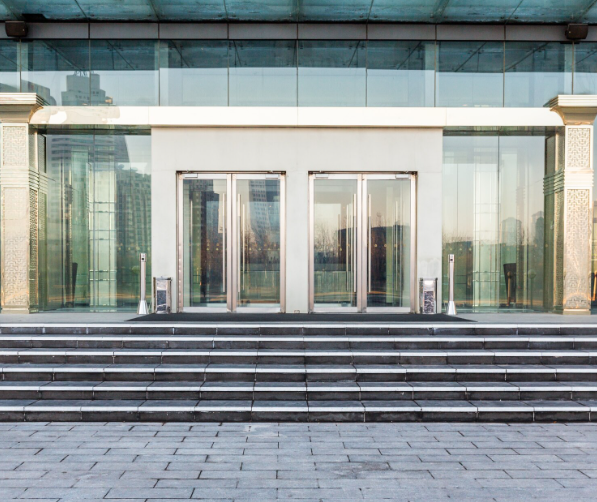
Planning a successful entrance automation for mixed use buildings isn’t just about installing automatic doors – it’s about meeting performance and functionality requirements.
- Access Control Segmentation
One of the most important features is the ability to separate access logic between user groups. Residents may use key fobs, mobile credentials, or secure intercom systems, while retail customers enjoy unrestricted entry during business hours. This segmentation ensures privacy without limiting accessibility.
- High Throughput Without Bottlenecks
Entrances must handle peak traffic smoothly. Fast-opening automatic doors, particularly sliding or telescopic systems, help maintain flow even during busy periods. Without this, congestion can quickly build up, negatively impacting both retail performance and resident satisfaction.
- Layered Security Approach
Security in mixed-use environments needs to be multi-layered. Public retail areas may remain open, but residential zones require controlled entry. Integrating mixed use building automatic doors with CCTV, alarms, and access control systems adds an extra layer of protection.
- Durability and Continuous Operation
These systems operate frequently – sometimes hundreds or thousands of cycles per day. That means they must be built for durability, with robust motors and components designed for continuous use, and weather resistance for external entrances.
- Compliance and Safety Standards
Safety is non-negotiable. Features like obstacle detection, emergency egress, and integration with fire safety systems ensure that automation enhances safety rather than compromising it.
Together, these elements form the backbone of effective entrance automation for mixed use buildings, ensuring that systems perform reliably under varying conditions.
Exploring the Best Entrance Automation for Mixed Use Buildings
There’s no one-size-fits-all solution when it comes to entrance automation for mixed use buildings. Instead, a combination of technologies is often used to address different entry points within the same property.
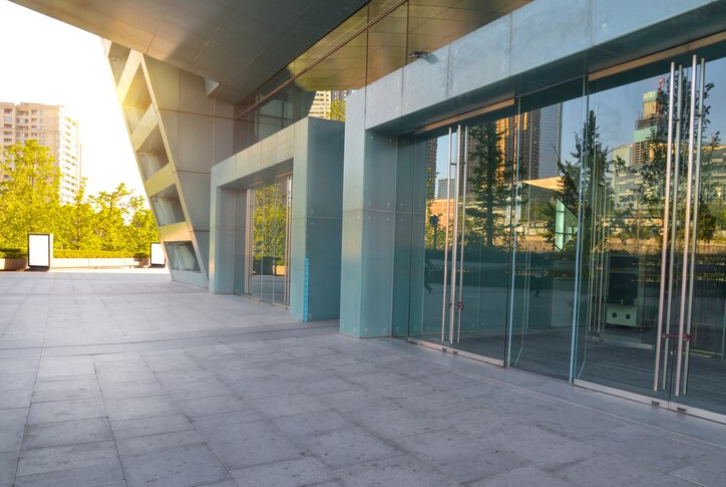
Automatic sliding doors are a staple for retail-facing entrances. They provide hands-free access, making them ideal for high-traffic environments where convenience is key. Customers can move freely in and out, and businesses benefit from a more inviting storefront.
Swing doors with controlled access are commonly used for residential entry points. These doors combine automation with security, often integrated with intercom systems or mobile access control. They allow residents to enter easily while keeping unauthorised users out.
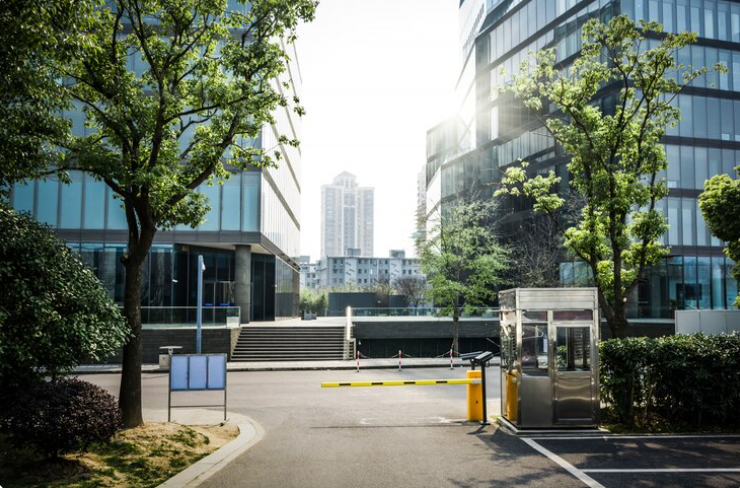
For developments that include parking or vehicle access, integrated gate systems are essential. Automated gates can manage vehicle entry separately from pedestrian traffic, reducing congestion and improving safety. Pedestrian pathways can then be equipped with controlled access points for residents and authorised visitors.
Smart entry panels and intercoms play a critical supporting role. They enable visitor management, allowing residents to grant access remotely via smartphone apps. This not only enhances convenience but also strengthens security by ensuring that all access is monitored and controlled.
By combining these solutions, developers can create a comprehensive entrance automation for mixed use buildings strategy that meets the needs of every user group.
Designing Entrances That Feel Effortless to Use
Even the most advanced entrance automation for mixed use buildings system can fall short if it’s poorly designed. Layout and user experience are just as important as the technology itself.
Poor entrance design often leads to congestion, confusion, and frustration. For example, if retail customers and residents are forced to use the same narrow entry point, delays are inevitable. Similarly, unclear access zones can create security risks and a less intuitive experience.
Effective design starts with clear zoning. Public and private areas should be visually and physically distinct, guiding users naturally towards the correct entry points. Doors, gates, and access controls should be positioned logically, based on how people move through the space.
Automation features can further enhance flow. Motion sensors allow doors to open seamlessly as people approach, while timed opening settings can be adjusted based on peak hours. Directional access control ensures that entry and exit points are used efficiently, reducing cross-traffic and bottlenecks.
Ultimately, the goal is to create an experience that feels effortless. Residents should feel secure and comfortable, while customers should enjoy a smooth, welcoming entry. When done right, entrance automation for mixed use buildings not only improves functionality but also elevates the overall perception of the building.
A Day in the Life of an Automated Mixed-Use Entrance
To truly understand the value of entrance automation for mixed use buildings, it helps to look at how it performs in a real-world scenario.
In the morning, residents exit through secure access-controlled doors using key fobs or mobile apps. At the same time, delivery drivers enter designated zones through controlled access points, ensuring that goods reach retail tenants without disrupting residential areas.
By midday, retail entrances are in full swing. Automatic sliding doors handle a constant flow of customers, opening and closing seamlessly to maintain efficiency. There’s no need for manual interaction, which keeps traffic moving and enhances the shopping experience.
As evening approaches, the retail residential entry system adapts. Retail traffic decreases, and access control becomes more prominent. Residential entrances prioritise security, requiring authentication for entry. Visitors can still gain access through intercom systems, with residents granting permission remotely.
Throughout the day, the system operates quietly in the background, adjusting to changing conditions. This adaptability is what makes entrance automation for mixed use buildings so powerful – it delivers the right balance of convenience, safety, and control at every moment.
Connecting Everything: Building a Smarter Access Ecosystem
Modern entrance automation for mixed use buildings doesn’t operate in isolation. Instead, it forms part of a broader, integrated building ecosystem.
- Integration with Smart Systems
Automated entrances can connect with centralised building management platforms, allowing operators to monitor and control access from a single interface. Compatibility with technologies such as Z-Wave, KNX, and Wi-Fi ensures seamless integration with lighting, security, and other smart systems.
- Mobile and Remote Access
Smartphones are becoming the new key. Residents can unlock doors, grant visitor access, and receive notifications – all from their devices. This adds a layer of convenience while maintaining strong security protocols.
- Data and Usage Insights
Automation systems can collect valuable data on traffic patterns and usage. Building managers can use this information to optimise operations, identify peak times, and improve overall efficiency.
- Scalability and Future-Proofing
As buildings evolve, so do their access needs. Modular automation systems allow for easy upgrades and expansion, ensuring that the solution remains relevant over time.
By embracing integration, entrance automation for mixed use buildings becomes more than just an entry system – it becomes a key component of a smart, connected environment.
Bringing It All Together: Smarter Access for Modern Living
Designing entrances for mixed-use developments is no small task. Balancing public accessibility with private security while maintaining smooth traffic flow entrance requires a strategic approach.
This is where entrance automation for mixed use buildings proves its value. By adapting to changing traffic patterns, segmenting access, and integrating with broader building systems, automation can meet the needs of every user group.
The benefits are clear: improved efficiency, enhanced security, and a better overall user experience. Residents feel safer, customers enjoy seamless access, and building managers gain greater control and insight.
Solutions from trusted brands like Beninca and Nice offer the reliability and scalability needed for these complex environments. As cities continue to grow and mixed-use developments become more common, smart access systems will only become more important.
If you’re planning or upgrading a development, now is the time to explore how Digital Home Systems can support your project with advanced gate & door automation solutions.