The security industry has evolved well beyond single alarm panels tucked away in a cupboard. Today’s commercial facilities and high-end residential builds are designed around a distributed security system, in which intelligence is shared across multiple interconnected devices rather than relying on a single central brain.
For security integrators, this shift is driven by practical demands for redundancy, scalability, and wireless resilience. Decentralised architectures reduce single points of failure and make expansion far easier, especially in multi-zone or multi-building projects.
A strategically deployed Z-Wave siren forms a critical alert layer, strengthening perimeter defence and enabling zone-based notification strategies. That helps align with modern distributed security design.
What Defines a Distributed Security Architecture?
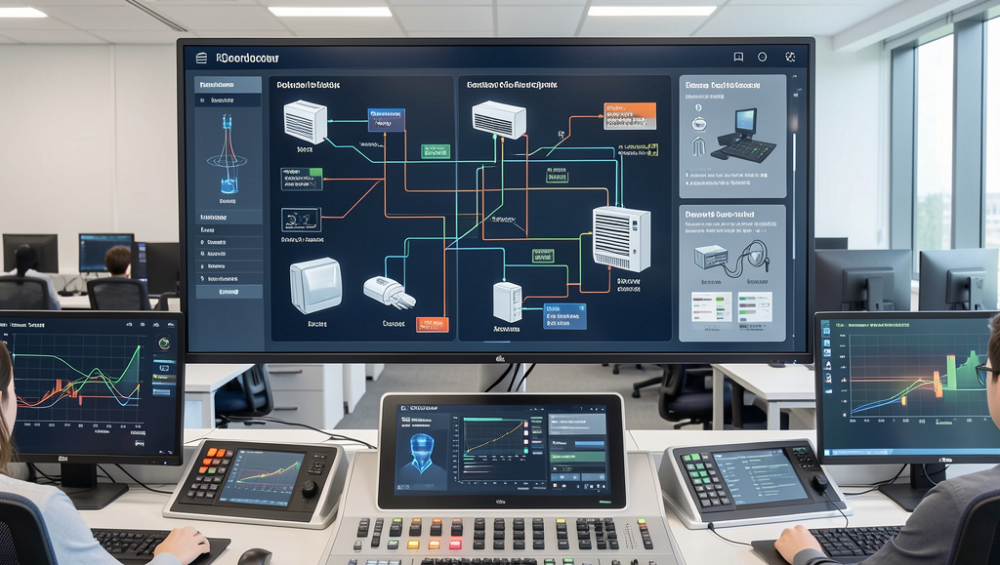
A distributed security system is built on the principle that detection, processing, and alerting should not be concentrated in a single device. Instead, these functions are decentralised across a network of intelligent components. Sensors detect events at the edge, controllers process logic across defined zones, and alert devices respond locally or globally depending on programmed rules.
This approach increases reliability and makes system design more flexible for integrators working on complex residential estates, warehouses, education facilities, or commercial campuses.
Key characteristics of distributed security systems include:
- Multiple intelligent detection nodes
Motion sensors, shock sensors, flood sensors, and door/window contacts operate independently while communicating across the same network. Because detection occurs at the source, the system can identify the exact zone and event type with greater accuracy. This improves response logic and reduces false alarm escalation by isolating incidents to specific areas rather than triggering blanket alerts.
- Localised decision-making
In a distributed security system, controllers and sometimes the devices themselves can execute logic at the zone level. This reduces reliance on a single processing unit and improves reaction times. For example, a warehouse zone can trigger its own alert sequence without affecting office areas, ensuring operational continuity where required.
- Wireless mesh communication (e.g., Z-Wave networks)
Z-Wave devices form a self-healing mesh network where powered devices repeat signals for others. This strengthens reliability across larger properties and allows outdoor devices to remain connected even if signal paths change. For integrators, this means fewer signal dropouts and greater placement flexibility.
- Redundant signal pathways
If one communication route fails due to interference or obstruction, the mesh automatically reroutes traffic. This redundancy dramatically reduces the risk of system-wide failure, a common weakness in traditional centralised alarm designs.
- Zone-based automation and alert triggers
Instead of one global alarm response, zones can be configured with unique triggers. A perimeter breach can activate external sirens only, while an internal intrusion may trigger layered alerts, including lighting and notifications. This granular control enhances both security precision and client satisfaction.
- Scalable expansion without rewiring
Wireless distributed security systems allow integrators to expand coverage without major structural changes. Additional sensors or sirens can be paired and configured through the controller, reducing labour costs and disruption, particularly valuable in retrofit environments.
These combined features make distributed architectures more resilient and adaptable, aligning perfectly with modern security expectations.
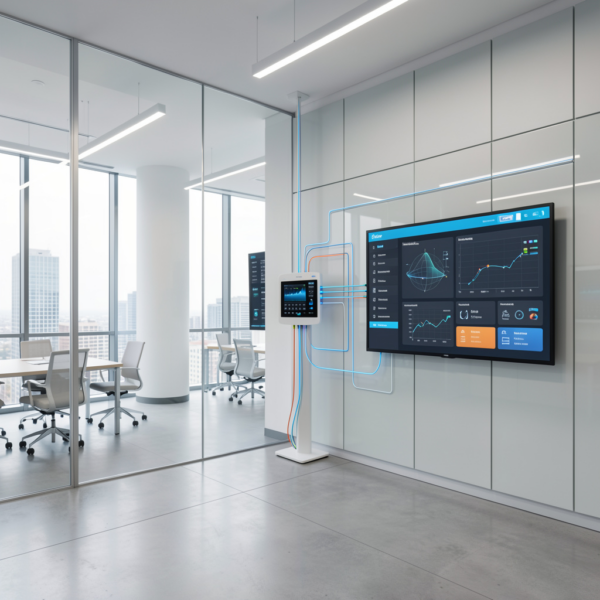
Why Outdoor Sirens Matter in Distributed Systems
Outdoor sirens are often viewed simply as loud alarm outputs, but in a distributed security system, they serve a strategic function within layered defence planning.
Perimeter deterrence is the first and most visible benefit. An external siren signals that the property is actively protected, discouraging opportunistic intruders before they attempt entry. When paired with motion or shock detection at boundary points, it becomes a frontline deterrent rather than a reactive measure.
In distributed security systems, decentralised sirens also reduce dependency on a single output device. Traditional systems often relied on one internal siren connected to a central panel. If that output failed, alerting was compromised. By distributing alert devices, including external sirens, integrators introduce redundancy into the notification layer.
Zone-based activation further enhances flexibility. A perimeter fence breach can trigger only the outdoor siren, minimising disturbance to occupants while maintaining deterrence. An internal breach after hours may activate both indoor and outdoor alerts for maximum escalation.
A properly positioned Z-Wave siren enhances response time by generating immediate audible and visual alerts at the edge of the property. In commercial environments such as storage facilities or logistics yards, this rapid perimeter response can significantly reduce incident severity.
Client expectations are also evolving. Commercial stakeholders increasingly request visible security features that demonstrate proactive protection, not just hidden panels.
Integration of Z-Wave Sirens into Distributed Security System
Z-Wave technology naturally supports distributed architectures through its mesh networking and strong controller compatibility. This makes integration of a Z-Wave siren both straightforward and highly flexible for professional installers.
Key integration benefits include:
- Seamless pairing with sensors
Z-Wave sirens can be directly associated with motion, shock, flood, and door/window sensors within the same ecosystem. For example, FIBARO devices integrate smoothly, enabling coordinated triggers without complex programming. This streamlines commissioning and reduces installation time.
- Mesh network range extension
Powered Z-Wave devices act as signal repeaters, extending network reach across large sites. This is especially important for outdoor sirens located on perimeter walls or at detached structures. The mesh ensures reliable communication even in challenging layouts.
- Zone-specific automation triggers
Integrators can configure sirens to respond only to designated zones or conditions. This allows highly customised alert strategies that align with site-specific risk profiles.
- Panic alarm functionality
Wireless buttons can be linked to immediately trigger the siren. Devices such as the FIBARO Z-Wave Button provide discreet emergency activation points in offices, reception areas, or medical facilities.
- Hybrid system integration
Z-Wave sirens can complement traditional wired alarm panels in hybrid setups. This enables phased upgrades where wireless devices extend coverage without replacing legacy infrastructure.
- Remote configuration and diagnostics
Through compatible controllers, integrators can monitor device status, adjust settings, and troubleshoot remotely. This reduces maintenance visits and enhances long-term service efficiency.
Such flexibility makes Z-Wave particularly well-suited to both retrofit and new-build distributed security systems.
Technical & Environmental Considerations for Outdoor Deployment
Outdoor sirens must be selected and deployed carefully to ensure long-term reliability and compliance:
- Sound Output (110+ dB recommended)
Commercial and industrial sites require a strong audible deterrence. A minimum output of 110 dB ensures alerts remain clearly audible across open spaces such as loading docks, car parks, or warehouse yards. Higher decibel ratings provide greater perimeter coverage and more effective intruder deterrence.
- Visual Alerting (Strobe Visibility)
A bright strobe significantly enhances daytime visibility and adds a second deterrent layer at night. Flashing light also helps first responders quickly identify the affected building or zone within larger complexes.
- Weather Rating (IP Certification)
Australian outdoor environments expose equipment to heavy rain, dust, heat, and UV radiation. An IP66 rating ensures the device is sealed against water ingress and dust penetration, protecting long-term functionality.
- Battery vs. Hardwired Options
Battery-powered sirens simplify installation and maintain operation during mains power outages. However, integrators must factor in maintenance schedules and ensure battery life aligns with service contracts.
- Tamper Protection
Built-in tamper switches detect attempts to remove or open the housing. When integrated with the controller, these alerts notify administrators immediately, preventing silent disablement.
- Low Battery Reporting
Controller-based battery monitoring allows proactive replacement before performance drops. This supports preventative maintenance models and reduces emergency call-outs.
- Placement Strategy
Sirens should be mounted at heights that discourage vandalism while ensuring effective sound projection. Consideration of building materials, obstructions, and coverage angles is essential to maximise effectiveness.
Thoughtful deployment ensures both compliance and optimal performance.
Product Spotlight: Vision Z-Wave Outdoor Siren in Distributed Architectures
The Vision Z-Wave Outdoor Siren serves as a practical example of how a perimeter alert device integrates into a distributed security system.
Delivering a 115 dB siren output, it provides strong audible deterrence suitable for residential estates, warehouses, and light commercial sites. The integrated blue flashing strobe reinforces visual notification, making alarm events immediately apparent.
Its Z-Wave Plus compatibility ensures seamless integration with Australian-certified (921.42 MHz) controllers, including platforms like the Fibaro Home Center 3. This allows straightforward pairing and scene configuration within existing Z-Wave ecosystems.
With an IP66 weather-resistant housing, the unit is designed for tough outdoor conditions. Its battery-powered operation, using four D batteries, supports up to two years of runtime, simplifying installation in remote perimeter areas.
Tamper alerts and low-battery reporting integrate directly into the controller, reinforcing distributed resilience and ensuring ongoing system visibility.

Designing Multi-Zone Alert Strategies with Z-Wave Sirens
One standout advantage of a distributed security system is its ability to implement advanced multi-zone alert logic.
A perimeter breach, such as gate vibration or fence shock detection, can trigger only the external siren. This creates immediate deterrence without disturbing internal occupants unnecessarily. In contrast, an internal intrusion event after business hours may activate both internal and external sirens, increasing escalation.
Flood detection scenarios can be handled differently. Rather than producing loud alarms, the system may activate a visual strobe and send remote notifications to facility managers. This avoids operational disruption while ensuring rapid response.
Controller-based scenes enable time-based rules, multi-sensor conditions, and integration with lighting or access systems. For example, external lights may flash alongside the siren to amplify visibility.
These layered strategies improve resilience and provide integrators with upsell opportunities for more sophisticated alert configurations.
In Conclusion,
Security design continues to evolve toward decentralised intelligence. A well-implemented distributed security system delivers improved reliability, flexibility, and scalability across commercial and advanced residential environments.
By decentralising detection and alerting, integrators reduce single points of failure and create adaptable, future-ready systems. Outdoor Z-Wave sirens play a vital role in perimeter deterrence and zone-based response logic.
Solutions such as the Vision Z-Wave Outdoor Siren demonstrate how wireless, weather-resistant, and controller-compatible devices strengthen distributed architectures. For integrators and alarm providers, specifying robust Z-Wave siren solutions is a practical step toward delivering resilient distributed security systems that meet modern client expectations.