
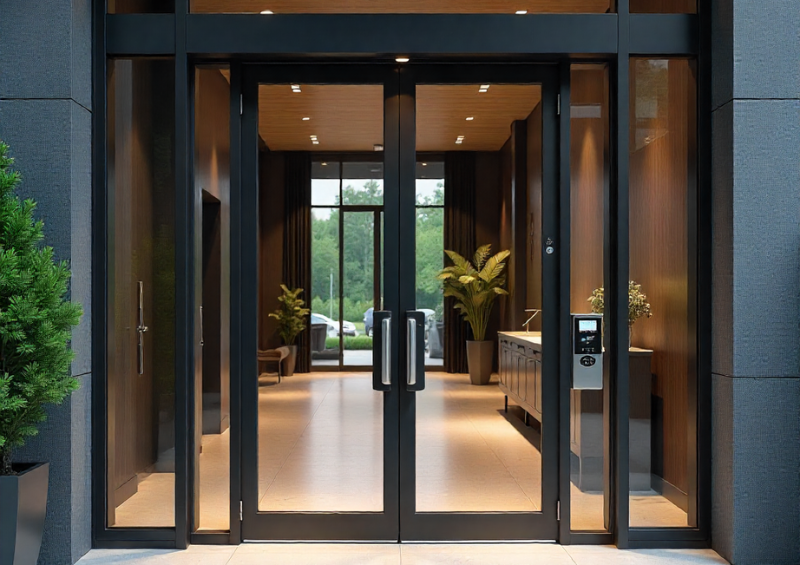
Access control is no longer a simple matter of locking and unlocking doors. Across commercial buildings, industrial sites, healthcare facilities, campuses, and multi-tenant properties, access control systems have become a critical layer of digital infrastructure. They now intersect with IT networks, cybersecurity policies, compliance frameworks, and broader building management strategies.
As a result, one of the most important architectural decisions organisations face today is whether to adopt cloud-based access control or local (on-premise) access control. This decision is no longer purely technical—it has strategic, financial, and security implications that can affect an organisation for many years.
This industry insights article explores how cloud-based and local access control systems differ, why the debate has intensified in recent years, and how security, reliability, and operational control vary between the two approaches. Rather than promoting one model over the other, the goal is to provide a realistic, experience-driven perspective on how these systems are actually used in the field.
The Evolution of Access Control Systems
Historically, access control systems were entirely local. Early systems relied on standalone controllers, hardwired readers, and physical credentials such as keys, cards, or fobs. Management was done on-site, and systems operated independently of external networks.
The rise of IP networking, cloud computing, and mobile credentials fundamentally changed this landscape. Access control began to move beyond physical security and into the domain of IT-managed infrastructure. Cloud platforms promised easier management, faster deployment, and lower upfront costs—particularly attractive to organisations managing multiple locations.
Today, both cloud-based and local models coexist, each shaped by different operational priorities. The debate between them reflects broader trends in enterprise technology, including cloud adoption, cybersecurity risk management, and digital sovereignty.
Defining Cloud-Based Access Control in Practice
Cloud-based access control systems centralise management, configuration, and data storage on remote servers. These servers are typically operated by the system manufacturer or a specialised cloud provider.
In practice, this means:
-
Administrators manage access via a web-based dashboard
-
User credentials and permissions are stored remotely
-
Access logs and analytics are processed in the cloud
-
Doors communicate with cloud services over the internet
Cloud-based access control systems are often marketed as “simpler” or “more modern,” but simplicity at the user interface level does not necessarily translate to simplicity at the architectural or security level.
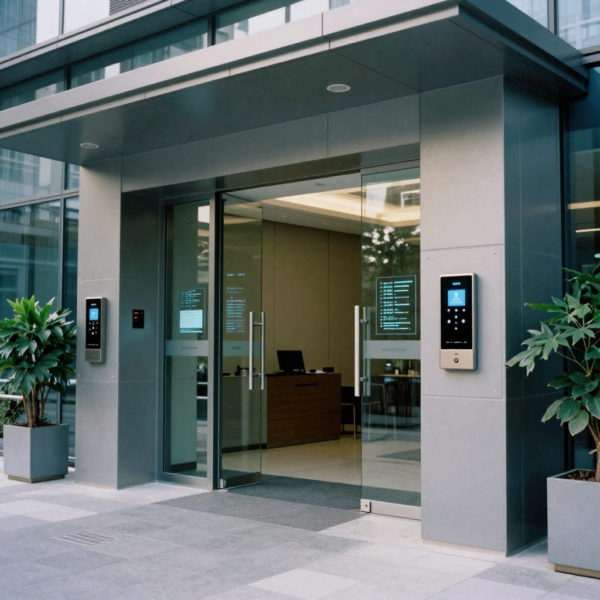
Defining Local (On-Premise) Access Control in Practice
Local access control systems keep intelligence and data within the physical site. Controllers, servers, or management PCs are installed on-site, and access decisions are made locally.
In real-world deployments:
-
Doors operate independently of the internet
-
Access rules are stored locally
-
Logs remain on-site unless exported
-
System updates are controlled internally
While sometimes perceived as “older” technology, modern local access control systems are highly sophisticated and continue to be the preferred choice in many high-security environments.
Architectural Differences That Matter in the Real World
From an industry perspective, the most important difference between cloud-based and local access control systems is where trust is placed.
Cloud-based systems place trust in:
-
Internet connectivity
-
Third-party infrastructure
-
Vendor cybersecurity practices
-
Long-term service availability
Local systems place trust in:
-
On-site hardware
-
Internal IT and security teams
-
Physical protection of infrastructure
-
Internal operational discipline
Neither approach is inherently superior. Each introduces different risk profiles that must be understood in context.

Operational Convenience vs Operational Control
One of the strongest arguments in favour of cloud-based access control systems is convenience. Administrators can manage doors, users, and permissions from anywhere without complex networking setups. For organisations with limited IT resources or distributed portfolios, this convenience can be transformative.
However, industry experience shows that convenience often comes with trade-offs. Cloud platforms abstract away system complexity, which can limit visibility into how decisions are made at the door level. When problems occur—such as latency, partial outages, or unexpected behaviour—diagnosis can be more difficult because core logic resides outside the site.
Local access control systems, by contrast, demand more upfront effort and technical involvement. But they provide deeper visibility, deterministic behaviour, and tighter control—qualities that many security professionals still prioritise.
Security Differences: Perception vs Reality
Security is often cited as the deciding factor when choosing access control systems, yet perceptions do not always align with reality.
Cloud Security: Strengths and Weaknesses
Cloud providers invest heavily in cybersecurity. Large providers often have dedicated security teams, regular penetration testing, encryption at rest and in transit, and redundancy across data centres.
However, cloud-based access control systems expand the attack surface:
-
Internet-facing services increase exposure
-
Credential management depends on vendor practices
-
A breach can affect multiple customers simultaneously
Additionally, organisations must trust that vendors will continue to prioritise security over time, even as business models evolve.
Local Security: Strengths and Weaknesses
Local access control systems reduce external exposure by keeping data on-site. There is no public cloud interface for attackers to target. However, local systems are only as secure as the organisation managing them.
Common weaknesses include:
-
Unpatched software
-
Weak internal access controls
-
Poor physical protection of servers
-
Inadequate backup strategies
From an industry perspective, neither cloud nor local systems are “secure by default.” Security outcomes depend on governance, process, and ongoing management.
Reliability and Resilience in Critical Environments
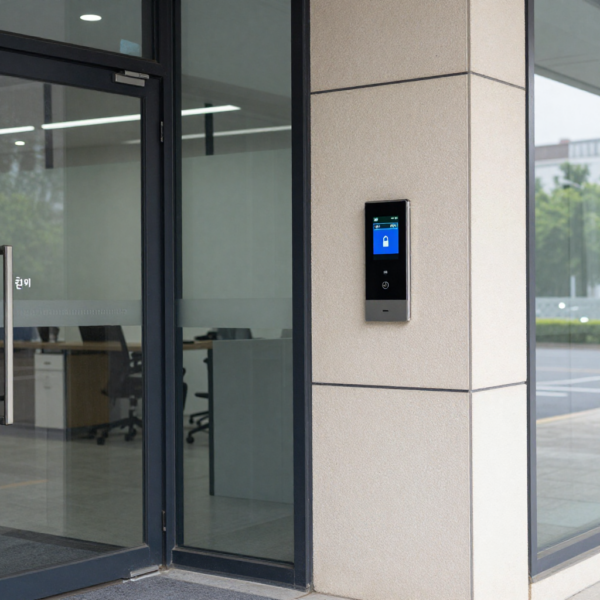
Reliability is where the difference between cloud-based and local access control systems becomes most tangible.
Cloud-based systems rely on:
-
Continuous internet connectivity
-
Stable vendor infrastructure
-
Correct implementation of offline modes
Most modern cloud systems include some form of offline operation, allowing doors to continue functioning temporarily during outages. However, advanced features such as real-time updates, logging, and remote changes may be unavailable.
Local access control systems operate independently of the internet. As long as power and local hardware remain operational, the system continues to function fully. This resilience is a key reason local systems remain dominant in critical infrastructure, industrial sites, and regulated environments.
Data Ownership, Sovereignty, and Compliance
Data governance has become a strategic issue for access control systems. Access logs can reveal sensitive information about personnel movement, working patterns, and security procedures.
Cloud-based access control systems store this data off-site, sometimes in different jurisdictions. For organisations subject to strict regulatory requirements, this raises questions about:
-
Data residency
-
Auditability
-
Legal jurisdiction
-
Long-term data access
Local access control systems simplify compliance by keeping data on-site. This does not eliminate compliance responsibilities, but it gives organisations direct control over how data is stored, accessed, and retained.

Cost Structures and Long-Term Financial Impact
Industry analysis consistently shows that cloud-based access control systems have lower upfront costs but higher long-term expenses due to subscription fees.
Local systems typically involve:
-
Higher initial capital expenditure
-
Lower ongoing licensing costs
-
Predictable long-term ownership
Over a 5–10 year period, total cost of ownership can differ significantly. For small or fast-growing organisations, cloud subscriptions may be acceptable. For large or stable organisations, recurring fees can become a significant budget consideration.
Scalability and Multi-Site Management
Cloud-based access control systems excel in multi-site scenarios. Centralised dashboards make it easy to manage users across many locations, standardise policies, and deploy changes quickly.
Local access control systems can scale effectively, but doing so often requires:
-
Additional servers
-
Site-to-site networking
-
More complex administration
Industry trends show that organisations with geographically dispersed assets increasingly favour cloud or hybrid models, while single-site or campus-style environments often prefer local systems.
Integration with Broader Security and Building Systems
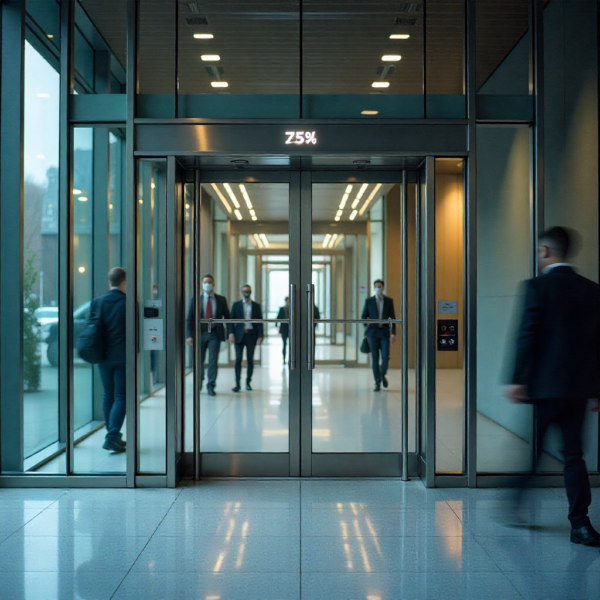
Modern access control systems rarely operate in isolation. Integration with CCTV, alarms, intercoms, identity management platforms, and building automation systems is now expected.
Cloud-based systems typically offer:
-
APIs
-
Software-level integrations
-
Easier connection to third-party platforms
Local systems offer:
-
Hardware-level integration
-
Deterministic performance
-
Tighter synchronisation with on-site systems
Integration requirements often influence system choice more than marketing claims.
The Rise of Hybrid Access Control Systems
Industry trends increasingly point toward hybrid access control systems as a practical compromise. Hybrid architectures combine:
-
Local decision-making at the door
-
Cloud-based management, analytics, or reporting
This approach preserves operational resilience while delivering many of the convenience benefits associated with cloud platforms. Hybrid systems are becoming particularly popular in commercial buildings, campuses, and enterprise environments.
Common Misconceptions in the Industry
Several misconceptions persist in discussions about access control systems:
-
Cloud systems are not automatically more secure
-
Local systems are not obsolete
-
Internet dependency is not always acceptable
-
Subscriptions are not always cheaper long-term
Industry experience shows that failures often stem from mismatched expectations rather than technology limitations.
Strategic Considerations for Decision-Makers
When evaluating access control systems, industry leaders recommend asking:
-
How critical is uninterrupted access?
-
What are our compliance obligations?
-
Who controls and audits security processes?
-
What is our tolerance for vendor dependency?
-
How will this system scale over 10 years?
These questions are more important than feature comparisons.
Industry Outlook: Where Access Control Is Headed
The future of access control systems is not exclusively cloud-based or local. Instead, the industry is moving toward:
-
Flexible architectures
-
Interoperability
-
Stronger cybersecurity frameworks
-
Greater emphasis on data governance
Organisations that choose adaptable systems today will be better positioned to respond to future requirements.
Conclusion: Choosing Access Control Systems with Clarity
The debate between cloud-based and local access control systems is not about old versus new technology. It is about control versus convenience, resilience versus flexibility, and ownership versus service dependency.
Cloud-based access control systems offer scalability and ease of management, while local systems provide autonomy, predictability, and data control. Neither approach is universally correct. The right choice depends on operational context, risk tolerance, and long-term strategy.
From an industry perspective, the most successful organisations are those that understand these trade-offs clearly and choose access control systems that align with their real-world needs—not just current trends.