Automatic gate planning for multi-unit developments is about designing a complete access ecosystem to ensure security, convenience, and efficiency. Nowadays, residential density is increasing, and shared driveways are becoming more common. Developers, strata managers, and installers must consider that multiple users interact with a single entry point.
Each user group has different needs that must be accommodated without compromising safety or flow. A well-planned system helps improve daily living and enhances property value. In this guide, we’ll explore the key challenges, design considerations, and best practices for creating a reliable shared driveway gate system.
Keep reading!
Key Challenges in Shared Driveway Gate Systems
An effective shared driveway gate system needs to address several practical and operational challenges. These issues become more complex as the number of users increases and space becomes limited. Below are common challenges in automatic gate planning for multi-unit developments.
- Multiple users, multiple access needs
In multi-unit developments, a single gate may serve dozens of residents along with their guests. Each group requires different levels of access, which can complicate system design. Residents need seamless entry, while visitors may require controlled or temporary access.
- Residents, visitors, delivery drivers, service personnel
Modern living involves frequent deliveries and service visits. A gate system must accommodate couriers, tradespeople, and emergency services without creating bottlenecks or requiring constant manual intervention.
- Traffic flow and congestion risks
Poorly designed systems can lead to queues, especially during busy periods. If the gate opens slowly or access control is inefficient, vehicles can quickly back up onto public roads.
- Peak-hour entry/exit bottlenecks
Morning and evening rush hours are critical stress points. Without proper planning, residents may experience delays that reduce overall satisfaction with the property.
- Limited space constraints
Urban developments often have narrow or short driveways, which restrict the types of gates that can be installed. Space limitations directly influence both gate selection and automation design.
- Security vs convenience balance
While it’s essential to prevent unauthorised access, overly complex systems can frustrate users. The goal is to maintain strong security without adding friction to everyday use.
- System reliability and uptime
High-frequency use demands robust equipment. A system failure can disrupt access for all residents, making reliability a top priority.
- Integration with broader building systems
Today’s gate systems are rarely standalone. They often need to connect to intercoms, CCTV, and smart home platforms, which requires careful integration planning from the outset.
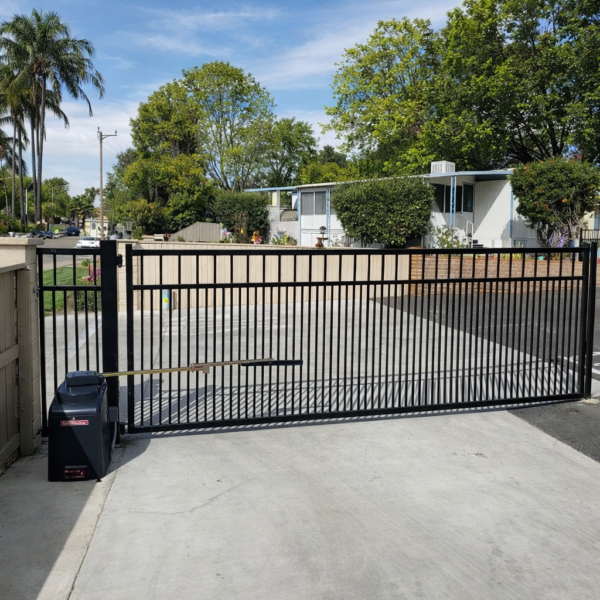
Core Considerations for Multi-Unit Entrance Planning
Effective automatic gate planning for multi-unit developments starts with a thorough understanding of the site and its operational requirements. Every property is unique, and a tailored approach ensures the system performs reliably under real-world conditions.
A comprehensive site analysis should always come first. This includes evaluating the physical layout, expected traffic patterns, and long-term usage needs. By identifying constraints early, designers can select solutions that deliver both performance and flexibility.
Key considerations include:
- Site layout analysis: Assess driveway width, slope, and vehicle turning radius. These factors determine what type of gate can be installed and how vehicles will approach and exit.
- Number of units and traffic volume: The more residents there are, the higher the demand on the system. This directly impacts motor selection, duty-cycle requirements, and access-control design.
- Entry/exit configuration: Decide between a single shared gate or separate entry and exit points. Dual-gate systems can significantly improve traffic flow but require more space and investment.
- Safety compliance: Ensure the system includes vehicle detection, pedestrian protection, and meets relevant safety standards. This is critical for both legal compliance and user safety.
- Power supply and backup requirements: Reliable power is essential. Backup batteries or fail-safe mechanisms ensure continued operation during outages.
- Future scalability: A good system should be able to grow with development. This includes adding new users, integrating additional technologies, or upgrading access methods.
- Modular system design: Choosing flexible, modular solutions allows for easier upgrades and customisation over time, reducing the need for costly replacements.
By addressing these factors early, developers can ensure their multi-unit entrance planning supports both current needs and future expansion.
Choosing the Right Gate Type for Shared Access
Selecting the right gate style is critical when it comes to automatic gate planning for multi-unit developments. The choice directly affects traffic flow, installation feasibility, and long-term performance in a shared driveway gate system.
Different gate types offer unique advantages depending on the site conditions:
- Sliding gates
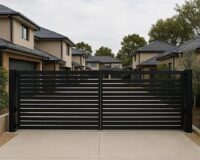
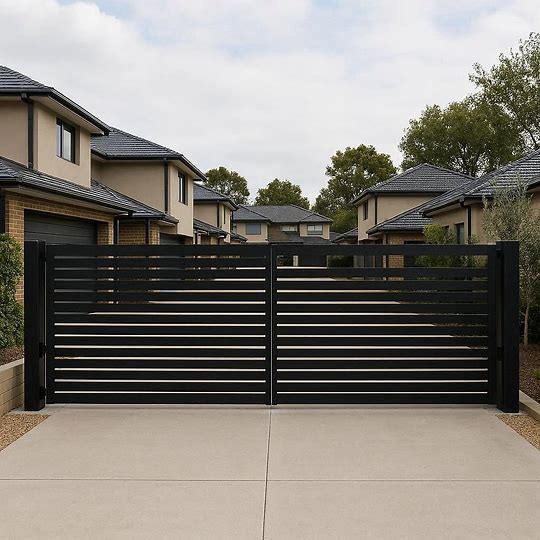
These are ideal for tight spaces and long driveways where swing clearance is not available. Sliding gates operate along a track and are well-suited for high-cycle use, making them a popular choice for busy multi-unit developments.
- Swing gates
A more traditional option, swing gates open inward or outward like a door. While aesthetically appealing, they require sufficient clearance and are generally better suited to low- to medium-traffic environments.
- Bifold gates
Bifold systems fold in sections, allowing for faster opening speeds and reduced space requirements. They are an excellent compromise where swing gates are desired, but space is limited.
- Telescopic sliding gates
Designed for wide entrances with restricted runback space, these gates use multiple panels that slide and stack neatly. They are particularly useful in developments with limited driveway length.
Ultimately, the right choice depends on the balance between available space, traffic demands, and user expectations. A well-selected gate type enhances both efficiency and the overall user experience.
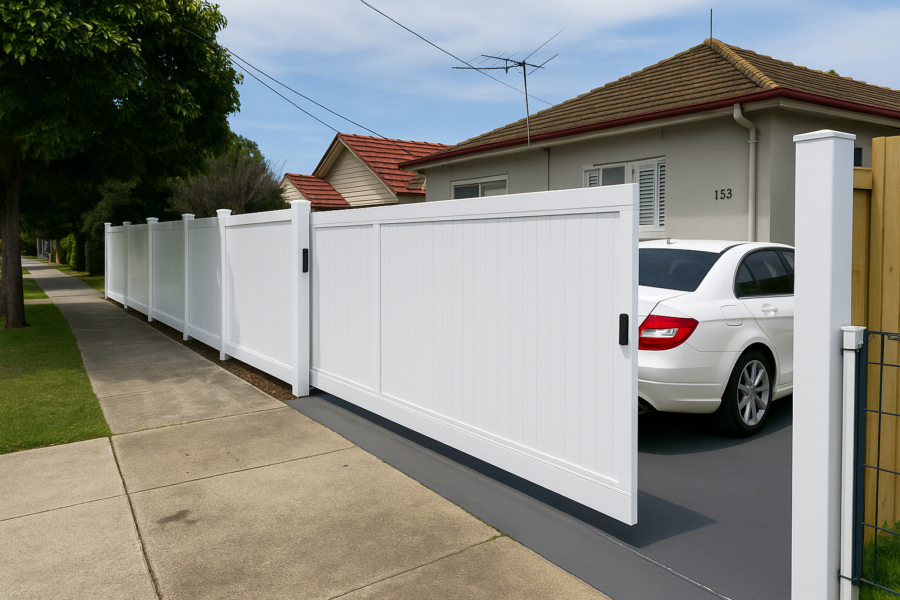
Access Control Strategies for Apartment Gate Access
Access control is a critical component of automatic gate planning for multi-unit developments. It determines how users interact with the gate and plays a major role in both convenience and security.
Modern systems offer a range of options that can be combined to suit different user groups:
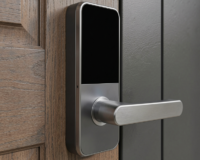
- Remote controls and key fobs – These are simple, reliable, and widely used by residents. They provide quick access with minimal effort, making them ideal for everyday use.
- Keypads and PIN access – Keypads are useful for temporary or shared access. For example, delivery drivers or short-term visitors can be given a PIN without needing physical devices.
- Mobile app / smart access systems – Increasingly popular, mobile-based access allows users to control gates via smartphones. These systems often integrate with broader smart home ecosystems for added convenience.
- Intercom and video entry systems – Essential for visitor management, intercoms allow residents to grant access remotely. Video functionality adds an extra layer of security by enabling visual verification.
- RFID and license plate recognition (LPR) – These advanced solutions are ideal for high-end or high-traffic developments. They provide seamless, hands-free access while maintaining strong security.
- Cloud-based access management – Cloud platforms enable property managers to monitor and control access remotely. They also simplify user management, especially in large developments with frequent tenant turnover.
The best approach to automatic gate planning for multi-unit developments often involves combining multiple access methods to create a flexible, user-friendly system. This ensures that all user groups can access the property efficiently without compromising security.
Automation System Design: Performance, Safety, and Reliability
In high-traffic environments, the performance and reliability of the automation system are just as important as the gate itself. Automatic gate planning for multi-unit developments must prioritise durability, safety, and consistent operation.
A key factor is the duty cycle, which indicates how often the system can operate without overheating or failing. Multi-unit developments require high-duty motors capable of handling frequent opening and closing throughout the day.
Safety is another critical consideration. Modern systems should include features such as obstacle-detection sensors that prevent the gate from closing on vehicles or pedestrians. Emergency manual override functions are also essential, allowing access during power failures or system faults. Soft-start and stop mechanisms help reduce wear and tear, extending the system’s lifespan while ensuring smooth operation.
Outdoor installations must also be built to withstand harsh conditions. Weather-resistant components protect against rain, dust, and temperature fluctuations, ensuring consistent performance over time.
Backup systems, such as battery packs or fail-safe modes, provide additional reliability. In the event of a power outage, these features ensure that residents are not locked in or out of the property.
Finally, long-term maintenance should not be overlooked. Choosing high-quality components and designing for easy servicing can significantly reduce downtime and operating costs over the system’s life.
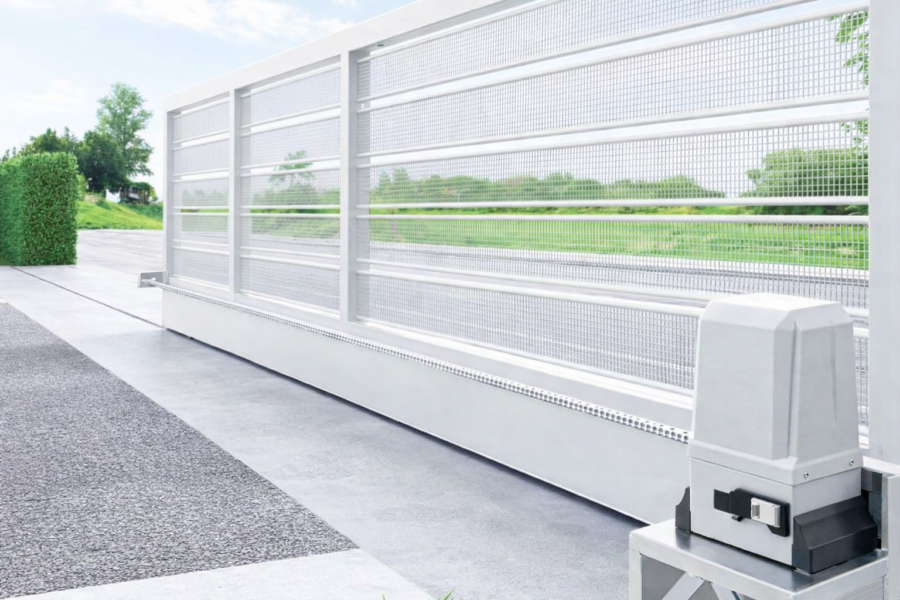
Best Practices for Automatic Gate Planning For Multi-Unit Developments
Successful installation plays a major role in the effectiveness of any shared driveway gate system. Even the best equipment can underperform if it is not installed correctly or thoughtfully.
Consider the following best practices:
- Plan entry and exit lanes clearly: Clearly defined lanes help prevent confusion and reduce the risk of collisions. Where possible, separate entry and exit points improve overall flow.
- Allow sufficient clearance: Ensure there is enough space for vehicles to approach, stop, and pass through the gate safely. Don’t forget to account for pedestrian access as well.
- Install safety loops and photocells strategically: These sensors detect vehicles and obstacles, preventing accidents and ensuring smooth operation. Proper placement is critical for effectiveness.
- Optimise opening and closing speeds: Faster gate operations reduce wait times and minimise congestion, especially during peak periods.
- Provide multiple access options: Redundancy is key. If one access method fails, others should still allow entry.
- Design for easy maintenance access: Technicians should be able to service the system quickly without disrupting residents.
- Work with experienced installers: Professionals familiar with multi-unit entrance planning can identify potential issues early and ensure the system is installed to a high standard.
In Conclusion,
Automatic gate planning for multi-unit developments requires security, convenience, and scalability. By addressing challenges such as traffic flow, space constraints, and diverse user needs, developers can enhance both functionality and user experience. In addition, the right combination of gate type, access control, and automation technology improves operational efficiency and adds long-term value to the property. For best results, it is recommended to work with experienced professionals and certified partners who can help deliver a tailored solution that meets the unique needs of any development.